
Reverse Mortgage When Aging Parent and Adult Child Both Relocate to Smaller Ontario Town
Moving aging parent and adult child to a smaller Ontario town for quality of life? Fund home purchase, renovations, and transition costs with a reverse mortgage.
What if both your aging parent and your adult child want to leave the city for a smaller Ontario town — better quality of life, lower housing costs, stronger community — but the relocation requires purchasing a home, renovations, and transition costs neither can afford alone? This is an increasingly common scenario: aging parents seeking quieter, more affordable communities, and adult children (often working remotely) ready to leave expensive urban centers. A reverse mortgage can fund the entire relocation, transforming a financial barrier into an opportunity for multi-generational fresh start.
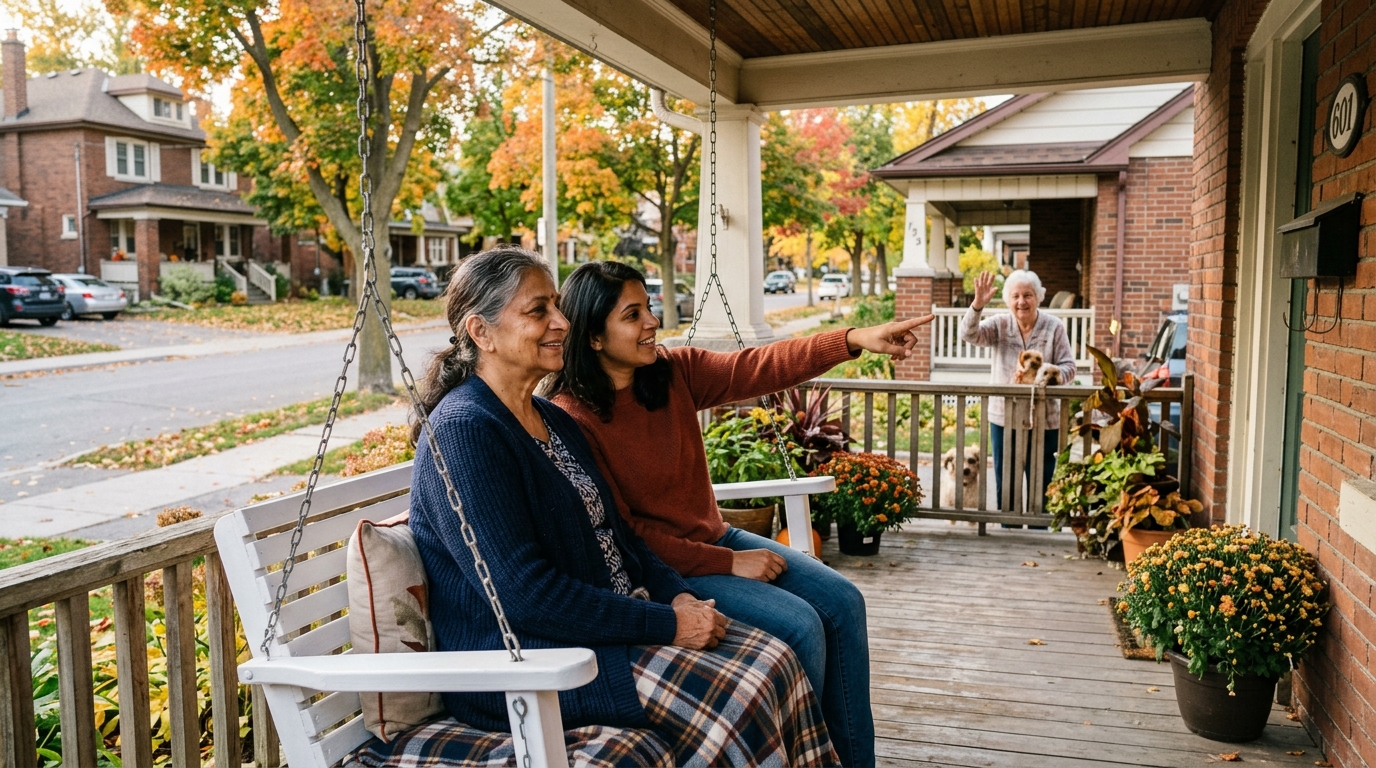
The Demographic Shift: Small-Town Aging in Ontario
Ontario's smaller towns are experiencing a renaissance driven by:
- Remote work: Adult children no longer tied to urban office locations
- Affordability: Housing costs 40–60% lower than Toronto, Ottawa, or Hamilton
- Walkability and community: Strong local networks, lower stress
- Healthcare consolidation: Regional medical hubs with specialized aging care
- Nature access: Outdoor recreation and stress reduction for aging parents
Towns like Peterborough, Guelph, Cornwall, and Belleville are seeing influxes of younger working families and aging retirees seeking quality of life over urban convenience.
| Cost Category | Large City (Toronto/Ottawa) | Small Town (Pop. 20,000–80,000) | Savings |
|---|---|---|---|
| Home purchase price (4BR) | $800,000–$1,200,000 | $400,000–$600,000 | $400,000–$600,000 |
| Property taxes (annual) | $4,000–$6,000 | $1,500–$2,500 | $2,500–$3,500 |
| Home repairs/maintenance (annual) | $3,000–$5,000 | $2,000–$3,500 | $1,000–$1,500 |
| Utilities (monthly) | $200–$300 | $120–$180 | $80–$120 |
| 10-year cumulative cost | $1,040,000–$1,560,000 | $520,000–$780,000 | $520,000–$780,000 |
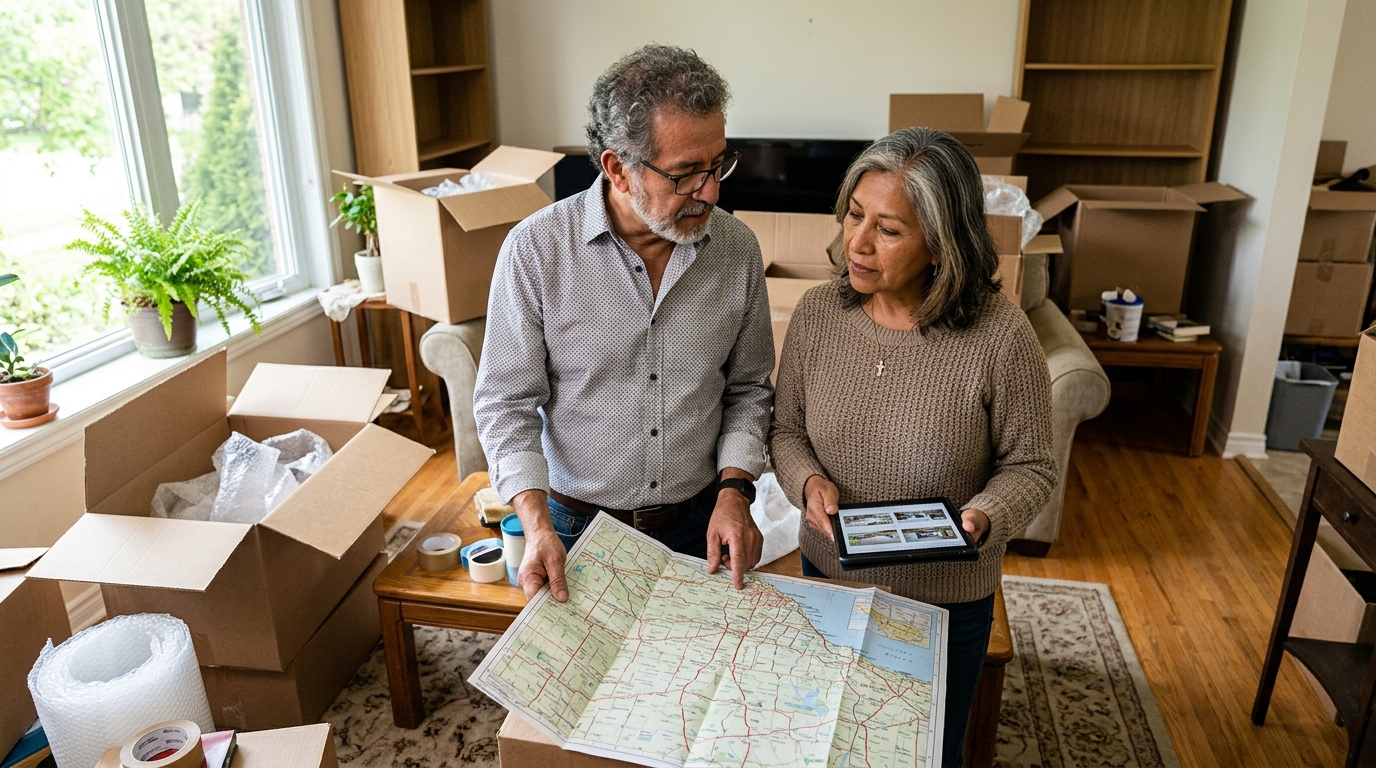
The Multi-Generational Relocation Challenge
Relocating an aging parent and adult child to a smaller town typically involves:
- Selling city home (takes 60–90 days, capital gains tax implications)
- Purchasing small-town home ($400,000–$600,000)
- Home renovations (accessibility for aging parent, space for adult child if shared housing)
- Transition costs (moving, deposits, setup)
The timing gap is critical: your aging parent can't wait 3 months to sell the city home; they need a smaller-town home NOW. A reverse mortgage bridges this timing gap.
| Transition Phase | Cost | Duration | Reverse Mortgage Role |
|---|---|---|---|
| Purchase small-town home (bridge to sale) | $400,000–$600,000 | Immediate | Down payment + closing costs |
| Renovate for aging-in-place + adult child space | $30,000–$80,000 | 6–12 weeks | Renovation funding |
| Moving and relocation costs | $8,000–$15,000 | 2–4 weeks | Movers, deposits, setup |
| City home holding costs (taxes, utilities, mortgage during sale) | $5,000–$15,000 | 60–90 days | Bridge to city home sale |
| Total transition capital needed | $443,000–$710,000 | — | — |
How Reverse Mortgage Solves the Timing Problem
Your aging parent's current home has substantial equity ($300,000–$500,000+). A reverse mortgage unlocks this equity immediately:
- Access equity without selling: Borrow against current home equity before it sells
- Buy small-town home immediately: No waiting 60–90 days for city home to sell
- Renovate for aging-in-place: Make the new home accessible while city sale proceeds
- Bridge costs: Cover utilities, taxes, mortgage on city home during sale period
- Repay from city sale proceeds: Once city home sells, use proceeds to pay off or significantly reduce reverse mortgage
This approach allows your aging parent to move immediately while maintaining flexibility around city home sale timing.
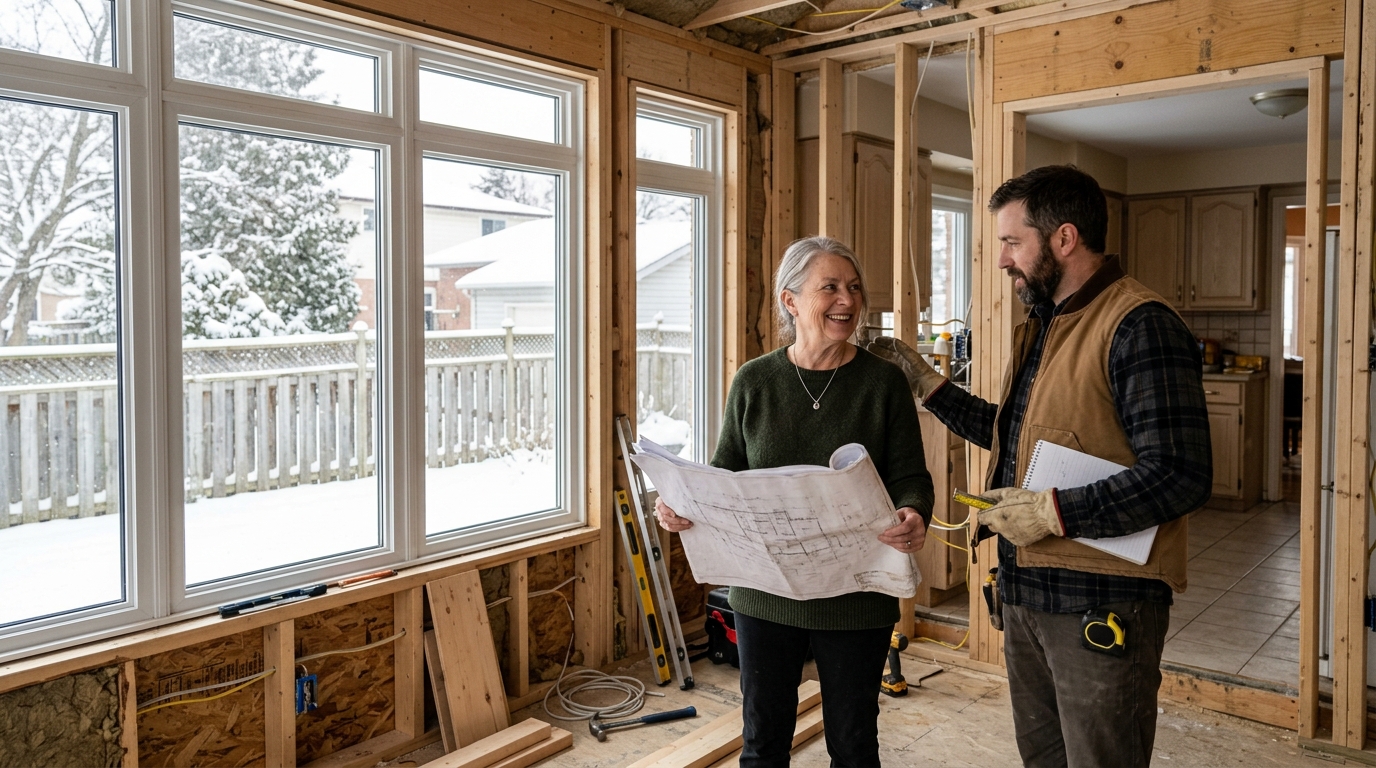
Small-Town Home Selection for Aging-in-Place
Look for homes with built-in aging-friendly features:
- Single-story or elevator access (no stairs)
- Accessible bathrooms (no major renovation needed)
- Good natural light (mental health benefit for aging)
- Yard space (gardening, outdoor activity)
- Proximity to healthcare (under 30 minutes to regional hospital)
- Town walkability (groceries, services accessible without car)
A reverse mortgage can fund initial purchase AND renovations to make the home perfect for your aging parent's specific needs.
Adult Child Integration and Housing Arrangement
Many families use this relocation to formalize multi-generational living:
- Adult child in accessory dwelling unit (ADU) — renovate garage or basement ($20,000–$40,000)
- Shared home with separate spaces — renovate to create independent bedroom/bath for adult child
- Separate cottage or small home on same property — if property is large enough
The reverse mortgage funds these renovations, allowing your adult child to live affordably while supporting your aging parent.
According to Statistics Canada (2023), multi-generational households are growing fastest in small-to-medium Ontario towns, where housing affordability and community quality of life support this arrangement. Reverse mortgages are increasingly used to formalize these living structures.
Tax and Ownership Considerations
- Capital gains on city home: If city home is principal residence, no capital gains tax
- New small-town home principal residence: Designate immediately to maximize tax-free growth
- Adult child co-ownership: Consider whether adult child owns share of new home (affects probate and tax implications)
- Reverse mortgage repayment timing: City sale proceeds typically exceed reverse mortgage balance, providing clean repayment
Consult a real estate lawyer and accountant before executing relocation to optimize tax position.
Small-Town Lifestyle and Health Benefits
Research shows aging adults who relocate to smaller communities experience:
- 30–40% reduction in stress and anxiety
- Improved sleep quality (lower noise, lower stress)
- Stronger social connections (walkability, community events)
- Lower healthcare costs (preventive care focus, lower medication use)
- Extended independent living (walkable access to services)
These health benefits compound over 10–20 years, potentially extending your aging parent's healthy independence by 5+ years.
Key Takeaways
- Multi-generational relocation to small Ontario towns requires $440,000–$710,000 in capital spanning home purchase, renovations, and transition costs
- Reverse mortgage solves the timing problem by providing immediate access to city home equity before sale
- Small-town living costs are 40–60% lower than major cities, generating $520,000–$780,000 in cumulative 10-year savings
- Adult child integration (shared housing, ADU, separate dwelling) can be formalized through reverse mortgage-funded renovations
- Health benefits of small-town aging (stress reduction, improved sleep, stronger community) support extended independent living
Frequently Asked Questions
How much money can I access from a reverse mortgage on my city home to fund a small-town purchase?
Most lenders allow 40–50% LTV (loan-to-value) for homeowners 55+. For a $1,000,000 city home, that's typically $400,000–$500,000. This amount typically covers down payment and closing costs on a $500,000 small-town home plus renovations. Rick Sekhon Reverse Mortgages can calculate your exact borrowing capacity.
What if the city home doesn't sell at expected price?
Reverse mortgages are non-recourse in Ontario — your liability is capped at home value. If the city home sells below the reverse mortgage balance (unlikely but possible), you're not liable for the difference. However, plan conservatively by borrowing 30–40% LTV, not the maximum 50%.
Can my adult child's income help qualify for traditional financing instead of a reverse mortgage?
Yes, if the adult child is employed and qualifies for their own mortgage. However, a reverse mortgage offers advantages: no monthly payment, faster closing (3–4 weeks), and flexibility to repay from city home sale proceeds. Consult with Rick Sekhon to compare options.
Does relocating to a smaller town affect my government benefits?
No. OAS, GIS, and CPP are based on your national status and income, not location. Small-town relocation doesn't affect eligibility or payment amounts.
What if we relocate, then decide to move back to the city?
A reverse mortgage provides flexibility. If you relocate then change your mind, you can sell the small-town home, repay the reverse mortgage, and purchase back to the city. There's no lock-in period.
Explore multi-generational housing arrangements →
Ready to Learn More?
Find out exactly how much you could unlock from your home — free and no obligation.
Related Articles
Reverse Mortgage for Multigenerational Home: Aging Parent Moving In With Adult Child and Grandchildren
Learn how to fund home accessibility and repairs when your aging parent moves in with you, your adult children, and grandchildren. Ontario guide for multigenerational housing.
Read →Moving Your Aging Parent to Ontario: Using a Reverse Mortgage to Fund the Transition
Help your aging parent relocate to Ontario for better care, healthcare access, and family proximity. Learn how a reverse mortgage can fund the move and support aging in place.
Read →Reverse Mortgage for Home Renovations: Aging in Place Guide for Ontario Seniors
Learn how to use a reverse mortgage to fund home renovations and modifications that let you age in place safely and comfortably in your Ontario home. Includes cost examples and step-by-step process.
Read →