
Reverse Mortgage for Multigenerational Home: Aging Parent Moving In With Adult Child and Grandchildren
Learn how to fund home accessibility and repairs when your aging parent moves in with you, your adult children, and grandchildren. Ontario guide for multigenerational housing.
What happens when your aging parent needs to move into your home, but it wasn't designed for three generations? Many Ontario families face this challenge: aging parents requiring care, adult children with their own families, and a single home that suddenly needs to accommodate everyone safely and comfortably.
A reverse mortgage can provide the funding to make this transition work without forcing your parent into institutional care or stretching your household finances to the breaking point.

Understanding Multigenerational Housing in Ontario
Multigenerational homes — where aging parents, adult children, and grandchildren live under one roof — are becoming more common in Ontario. According to Statistics Canada, multigenerational households increased by 20% between 2011 and 2021. This arrangement offers significant emotional and financial benefits, but it also demands careful planning and home modifications to ensure everyone's safety and independence.
When an aging parent with mobility challenges, cognitive decline, or serious health issues moves in, your home likely needs modifications that go far beyond cosmetic updates. These can include accessibility renovations, bathroom modifications, bedroom relocations, and safety systems — all of which carry substantial costs.
A reverse mortgage allows homeowners 55+ to access their home equity to fund these necessary modifications without selling the home or taking on traditional debt repayment obligations.
The True Costs of Welcoming an Aging Parent Into Your Home
Multigenerational housing isn't free. When you welcome an aging parent into a home where your adult children and grandchildren already live, you're typically facing:
| Modification Type | Typical Cost Range | Urgency |
|---|---|---|
| Bathroom accessibility (grab bars, walk-in shower, accessible sink) | $5,000–$12,000 | High |
| Main-floor bedroom setup or relocation | $8,000–$18,000 | High |
| Stair lift installation | $3,500–$7,000 | Medium-High |
| Accessibility entryway (ramp, handrails, threshold removal) | $2,000–$6,000 | High |
| Kitchen modifications for wheelchair access | $8,000–$20,000 | Medium |
| In-home care space setup (med station, bedside technology) | $3,000–$8,000 | Medium-High |
| Security and monitoring system | $1,500–$5,000 | Medium |
| Structural modifications (widened doorways, reinforced flooring) | $5,000–$15,000 | Varies |
Total estimated cost: $36,000–$91,000
This doesn't include ongoing care costs, home maintenance that's deferred, or the loss of your adult child's potential income if they reduce work hours to provide caregiving.
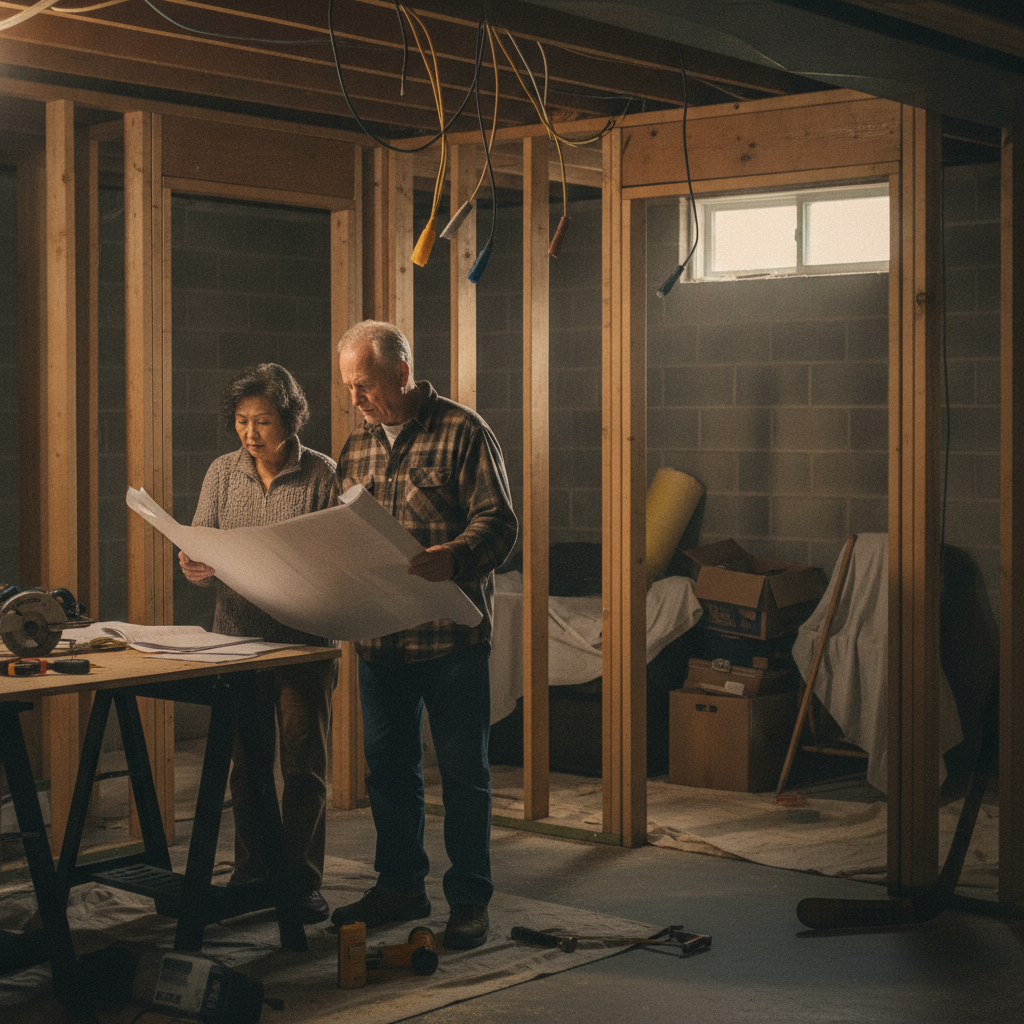
How a Reverse Mortgage Funds Multigenerational Housing
A reverse mortgage provides a lump sum or flexible line of credit based on your home's equity. For multigenerational households, this works in several practical ways:
Lump Sum for Immediate Renovations
If your aging parent's move is imminent and your home needs urgent modifications, a lump sum allows you to fund everything upfront. You get the money in one large payment, manage the renovation project cohesively, and avoid phased, piecemeal renovations that disrupt your household.
Line of Credit for Phased Modifications
If your parent's needs will evolve over time (mobility declining further, cognitive changes emerging), a reverse mortgage line of credit lets you draw funds as needed. You pay interest only on what you draw, giving you flexibility to adapt as circumstances change.
No Monthly Payments Required
Unlike a traditional home equity loan or HELOC, you don't make monthly payments on a reverse mortgage during your lifetime. This is crucial for multigenerational households where your adult child might already be helping with household costs, or where you're managing aging parent care expenses.
Protecting Your Home Equity in a Multigenerational Scenario
One major concern: in a multigenerational home with adult children living under your roof, how do you protect your home equity from their potential creditors, business liabilities, or future legal issues?
A reverse mortgage doesn't create this risk. Your adult children aren't co-borrowers. The reverse mortgage is your loan, secured against your home. However, you should:
✓ Keep clear documentation of who owns what in your household (which rooms, whose possessions)
✓ Discuss the reverse mortgage with adult children so they understand the loan terms
✓ Ensure your will or trust clearly specifies what happens to the home and remaining equity after your death
✓ Consult a family lawyer if adult children have significant assets or business interests that could be attached in lawsuits
According to the Financial Consumer Agency of Canada (FCAC), the reverse mortgage is secured only against the home itself — not against residents' personal incomes or assets.
Managing Care Responsibilities Across Generations
Multigenerational housing often means your adult children are involved in caring for your aging parent. This can create tension:
- Who pays for what? Your adult child might contribute to household expenses, but paying for your parent's accessibility renovations shouldn't fall entirely on them.
- Caregiving burden fairness — If you have multiple adult children, how do you fairly distribute caregiving and financial responsibilities?
- Long-term sustainability — If your parent's needs escalate, will your adult child continue providing care, or will you need to hire professional caregivers?
A reverse mortgage gives you the financial independence to:
- Fund accessibility modifications without requiring your adult child to go into debt
- Hire professional caregivers if your adult child's caregiving becomes overwhelming
- Maintain your own quality of life (and theirs) by having resources for respite care and family support
The Practical Steps to Get Started
1. Assess Your Aging Parent's Actual Needs
Before applying for a reverse mortgage, work with your aging parent's healthcare provider (doctor, occupational therapist, or geriatric care manager) to understand:
- What mobility aids or devices are required?
- What bathroom safety features are essential?
- Will your parent need ground-floor sleeping and living space?
- Are there cognitive support systems needed (medication reminders, fall detection)?
2. Get Renovation Quotes
Work with contractors familiar with accessibility renovations. Get 2–3 quotes that detail each modification, materials, labor, and timeline. This gives you a realistic number for your reverse mortgage application.
3. Calculate Your Home's Available Equity
The reverse mortgage amount depends on your age, home value, and current interest rates. At 55–64, you might access 25–35% of your home's value. At 65+, this increases to 40–50%. Online calculators at CHIP, Equitable Bank, and Home Trust can give you preliminary figures.
4. Speak with a Licensed Reverse Mortgage Specialist
Before committing, get independent advice from Rick Sekhon, a licensed reverse mortgage specialist in Ontario. Rick can explain:
- Which lender offers the best rates for your situation
- Whether a lump sum or line of credit makes more sense
- How the loan affects your government benefits (OAS, GIS)
- What happens to the home after your death and your adult child's inheritance
5. Complete Your Application
The reverse mortgage application process typically takes 4–6 weeks. You'll need:
- Property appraisal (the lender arranges this)
- Title search
- Home inspection
- Independent legal advice (mandatory in Ontario)
Once approved, you can access funds to begin your renovations immediately.
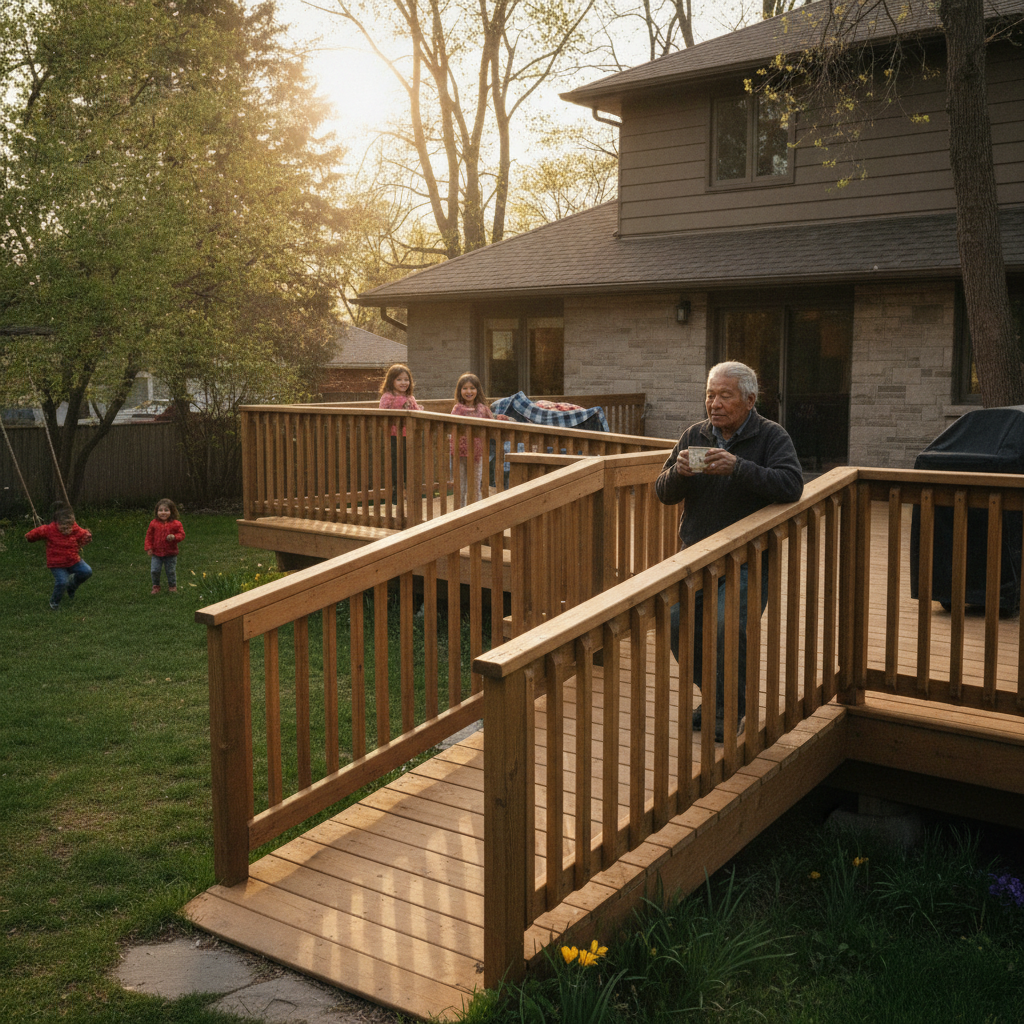
Long-Term Financial Planning for Multigenerational Homes
A reverse mortgage is a tool, not a cure-all. Here's how to plan wisely:
| Planning Step | Action | Benefit |
|---|---|---|
| Document inheritance intentions | Update will or family trust | Adult children know what to expect |
| Plan for escalating care costs | Budget for professional caregivers in 3–5 years | Avoid financial crisis later |
| Coordinate government benefits | Ensure aging parent's OAS/GIS remain unaffected | Maximize household income |
| Regular financial reviews | Meet annually with financial advisor | Adjust plan as circumstances change |
Frequently Asked Questions
Can I get a reverse mortgage if my adult child owns part of the home?
If your adult child is on the title as a co-owner, both owners must meet the age requirement (55+). If they're younger, you may need to remove them from title or explore other options. Speak with a lawyer and your reverse mortgage lender about your specific situation.
What happens to the reverse mortgage if I pass away and my aging parent still lives in the home?
Upon your death, the loan becomes due. Your adult children have typically 6–12 months to repay it by refinancing, selling, or paying from your estate. Your aging parent's legal status matters — if they're a resident but not an owner, they don't have direct claim to the home, which is why clear documentation is essential.
Will a reverse mortgage affect my parent's eligibility for government benefits like GIS?
Reverse mortgage proceeds are classified as loan advances, not income. Under CRA rules, they typically don't count toward GIS income tests. However, every situation is different. Consult with a tax professional or accountant before proceeding.
Can I reverse mortgage only part of my home to fund renovations?
No. A reverse mortgage is secured against the entire home. However, you only borrow what you need — if you need $50,000 for renovations and your home's available equity is $200,000, you borrow $50,000 and leave the rest untouched.
What if my aging parent needs to move to long-term care later?
The reverse mortgage remains your responsibility. If your parent moves to a nursing home or long-term care facility, you have up to 12 months to repay the loan. During that time, your adult child could refinance the home under their own name if they want to keep it, or the home could be sold to repay the lender.
Key Takeaways
| Scenario | Solution |
|---|---|
| Aging parent needs accessibility modifications | Reverse mortgage funds renovations without selling home |
| Multiple generations in one home | No monthly payments eases household budget strain |
| Adult child's caregiving becomes overwhelming | Funds available for professional caregiving support |
| Deferred home maintenance + aging parent needs | Address safety and accessibility comprehensively |
Ready to Explore Multigenerational Housing With a Reverse Mortgage?
Bringing your aging parent into your home with adult children and grandchildren is a profound act of love — and it deserves financial planning that matches its importance. A reverse mortgage gives you the flexibility and funding to make your home safe, accessible, and sustainable for everyone.
Contact Rick Sekhon Reverse Mortgages for a free consultation. Rick specializes in helping Ontario families navigate multigenerational housing challenges and can explain exactly how much funding you can access and what your long-term obligations look like.
Ready to Learn More?
Find out exactly how much you could unlock from your home — free and no obligation.
Related Articles
Multigenerational Family Compounds: Using a Reverse Mortgage to Keep Extended Family Together
Explore how Ontario homeowners can use a reverse mortgage to create or maintain multigenerational family compounds—housing parents, adult children, and grandchildren on one property.
Read →Reverse Mortgage for Multi-Generational Homes Ontario
How Ontario homeowners 55+ can use a reverse mortgage to fund basement suites, in-law suites, and ADUs for multi-generational living — with no monthly payments.
Read →Aging in Place with a Reverse Mortgage: Home Modification Guide
How Ontario seniors can fund aging-in-place home modifications with a reverse mortgage — costs, top modifications, grants, and a complete planning guide.
Read →