
Reverse Mortgage for First-Time Homebuyers at 70+: Finally Own Your Home in Retirement
Late-life first-time homeownership with a reverse mortgage. Buy a home without mortgage payments while preserving your fixed income.
You've rented your entire life. You never had the income stability or down payment to buy. Now, in your 70s, you have some savings, ready to transition from renting—but you can't qualify for a traditional mortgage without income proof, and you can't afford $2,000/month mortgage payments on CPP/OAS. A reverse mortgage can be your path to homeownership: buy a home, live mortgage-payment-free, and build equity in something finally yours.
The Hidden Population: Renters Who Become First-Time Homebuyers at 70+
Statistics Canada and Ontario housing data reveal a growing demographic: seniors 70+ buying their first home. This includes:
- Immigrants and newcomers (arrived after age 55, built savings over 15 years of work, now able to buy).
- Late-career professionals (independent contractors, self-employed, or gig workers who lacked traditional mortgage qualification until recent years).
- Savers who prioritized debt-free living (lived frugally, paid rent on time, accumulated down payment only after age 65).
- Divorced or widowed seniors (re-partnering or acquiring new housing after life changes).
The rental-to-ownership conversion opportunity:
| Scenario | Typical Situation | Reverse Mortgage Advantage |
|---|---|---|
| Renting at age 72 | Paying $1,800/month; rent increases 3%/year annually | Buying for $400,000 with no monthly mortgage payment |
| 30-year rent timeline (age 72–102) | Total rent paid: $864,000+ (including increases) | Owning home, leaving estate instead of paying landlord |
| Fixed income: CPP ($18,000) + OAS ($15,000) = $33,000/year | Cannot absorb $2,000/month mortgage ($24,000/year) | Reverse mortgage requires $0/month; fits fixed income |
The emotional factor: Renters often feel insecurity at 70+ ("Will the landlord raise rent? Will I be forced out?"). Owning a home, even with a reverse mortgage, provides psychological security and legacy.
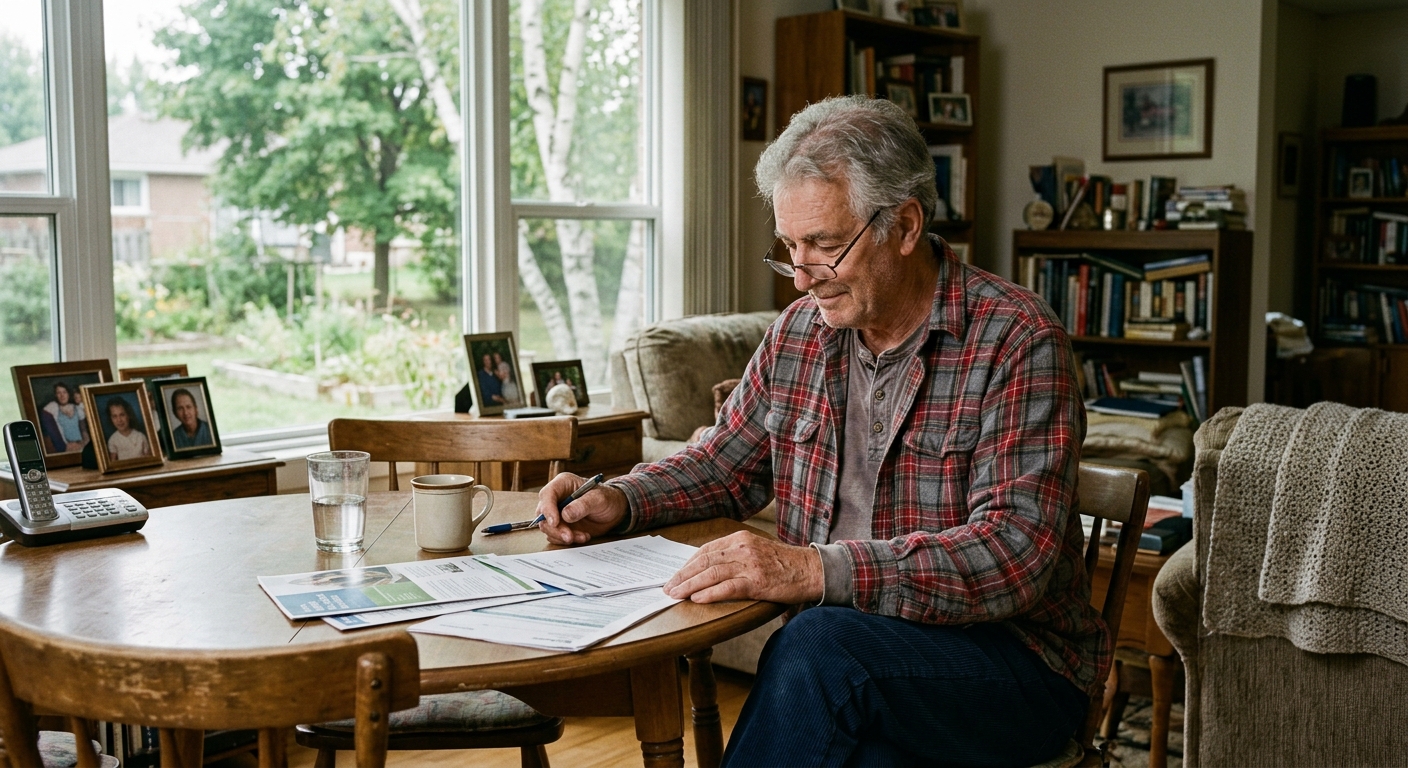
How a 70+ First-Time Buyer Uses a Reverse Mortgage to Purchase
Step 1: Gather Your Down Payment ($50,000–$150,000)
You've likely accumulated savings or have access to GIC maturity, inheritance, or pension lump-sum. This becomes your down payment.
Step 2: Find the Right Home ($300,000–$500,000)
You're likely looking in smaller Ontario cities or towns (Kingston, Barrie, Hamilton) where prices are lower than Toronto. You want:
- Single-story or accessible design (easier aging in place).
- No major repairs needed (home inspection critical).
- Reasonable property taxes and utilities.
Step 3: Structure the Purchase With a Reverse Mortgage
- Down payment: $80,000 (from your savings).
- Home price: $400,000.
- Mortgage needed: $320,000.
- Traditional mortgage: NOT available (requires income proof, monthly payment not affordable).
- Reverse mortgage: $320,000 at 6.5% interest, $0/month payment.
You buy the home using your down payment + reverse mortgage. You own it free of monthly payments.
| Scenario | Purchase Method | Monthly Payment | Impact on Fixed Income |
|---|---|---|---|
| Traditional mortgage (if qualified) | $320,000 over 25 years | $1,545/month | Impossible on $33,000/year |
| Reverse mortgage | $320,000 at 6.5%, no term limit | $0/month | Perfectly fits CPP/OAS |
| Continue renting | $1,800/month rent (rising 3% annually) | $1,800/month (increases to $2,300+ in 10 years) | Escalating burden on fixed income |
Outcome: You buy a home, own it, and your housing costs remain stable forever.
Case Study: Maria's Journey From Renter to Homeowner at 73
Maria, 73, immigrated to Canada at 57 from Portugal. She worked in housekeeping and childcare for 15 years, saving carefully. At 72, she had accumulated $85,000 in savings and wanted to stop renting and own something before she died.
She found a small bungalow in Barrie, Ontario, listed at $380,000. It was perfect: one story, accessible, good condition, $3,800/year property taxes.
Maria's situation:
- Savings: $85,000 (down payment).
- CPP income: $18,000/year ($1,500/month).
- No employment income: Retired 2 years prior.
- Traditional mortgage: Denied (no current employment income).
Maria accessed a reverse mortgage for $295,000 to cover the difference.
The purchase:
- Down payment: $85,000.
- Reverse mortgage: $295,000.
- Total: $380,000 for the home.
- Monthly payment: $0.
- Ownership: 100% hers.
Maria moved into her home. Her monthly housing cost ($0 mortgage + $317 property tax + $120 utilities) is $437/month. Her rent was $1,800/month.
10-year impact:
- If she'd continued renting: Total rent paid: $237,600 (with 3% annual increases). Age 83, still renting, no equity.
- With reverse mortgage: Monthly costs: $437. Home value (conservatively): $420,000. Equity: $420,000. She can leave it to her daughter; she owns something meaningful.
Qualifying for a Reverse Mortgage as a First-Time Buyer
Good news: Reverse mortgage qualification for first-time buyers 70+ is straightforward.
Lenders like CHIP, HomeEquity Bank, Equitable Bank, and Bloom Financial require:
| Requirement | Details |
|---|---|
| Age | 55+ (but most first-time buyers are 70+) |
| Home value | Minimum $200,000 (your home appraises at least this) |
| Home type | Single-family residential, condo (some restrictions) |
| Ownership | Clear title; no existing mortgage allowed at closing |
| Income | NONE required (biggest advantage for retirees) |
| Credit score | NONE required (retirees on fixed income may have no active credit) |
| Employment | NONE required |
What lenders DO require:
- Professional appraisal ($400–$600): Confirms home value.
- Title search ($150–$300): Confirms clear ownership.
- Home inspection (optional but recommended): Identifies needed repairs before purchase.
- Independent legal advice ($500–$1,500 in Ontario): Lawyer ensures you understand the loan.
Timeline: 30–45 days from application to home purchase completion.
Interest Costs: What You'll Actually Pay Over Time
One concern: If I borrow $295,000 at 6.5% interest and don't make payments, won't the balance explode?
Yes, it compounds. But let's look at realistic scenarios:
Scenario A: Maria borrows $295,000 at 6.5% (no payments)
| Year | Balance | Interest Accrued | Total Owed |
|---|---|---|---|
| Year 1 | $295,000 | $19,175 | $314,175 |
| Year 5 | $295,000 | $96,000 | $391,000 |
| Year 10 | $295,000 | $192,000 | $487,000 |
| Year 15 | $295,000 | $288,000 | $583,000 |
| Year 20 | $295,000 | $384,000 | $679,000 |
If Maria's home appreciates at just 2%/year (conservative), home value grows:
| Year | Home Value (2%/year growth) | Debt Owed | Equity |
|---|---|---|---|
| Year 1 | $388,000 | $314,000 | $74,000 |
| Year 5 | $419,000 | $391,000 | $28,000 |
| Year 10 | $462,000 | $487,000 | Negative (underwater) |
| Year 15 | $510,000 | $583,000 | Underwater |
| Year 20 | $562,000 | $679,000 | Underwater |
Critical insight: By year 10, if Maria hasn't sold or paid down the reverse mortgage, the debt exceeds the home value. However, she's also 83. If she sells the home at year 10 for $462,000, the reverse mortgage ($487,000) exceeds sale proceeds. She would owe the shortfall unless she has the no-negative-equity guarantee.
Ontario lenders (CHIP, HomeEquity Bank) offer the "no negative equity guarantee," which means: If the home sells for less than the debt owed, you or your estate owes NOTHING MORE. The lender absorbs the loss.
This is critical for first-time buyers at 70+. The no-negative-equity guarantee means:
- Even if home values decline.
- Even if your debt exceeds home value.
- You and your estate owe only the home's sale proceeds, never more.
Alternatives: Why Not Traditional Financing?
Why not just get a traditional mortgage as a 70+ first-time buyer?
You can't, usually. Here's why:
| Lender Requirement | 70+ First-Time Buyer Status |
|---|---|
| Proof of employment income | No current job = denied |
| Credit history | May be limited or thin if renting entire life |
| Debt-to-income ratio | CPP/OAS income too low to qualify for $320,000 mortgage |
| Mortgage insurance | Required if down payment <20%; unaffordable at age 70+ |
| Maximum amortization | Most banks cap at 25 years; at age 70, you'd be repaying to age 95 (risky for lender) |
| Age discrimination | While illegal, many lenders quietly deny seniors 70+ for mortgages |
Result: A reverse mortgage is often the ONLY financing option for 70+ first-time homebuyers.
Estate Planning: What Happens to the Home After You Die?
Your heirs inherit your home, but the reverse mortgage must be repaid from the sale proceeds.
Example: Maria's estate
- Maria dies at age 87.
- Home sells for $475,000 (modest appreciation over 14 years).
- Reverse mortgage balance: $525,000 (debt exceeds value).
- No-negative-equity guarantee applies: Lender absorbs $50,000 loss.
- Heirs receive: $0 (debt exceeds sale price).
This is the tradeoff: You achieve homeownership in your 70s, live payment-free, but you likely won't have equity to leave heirs IF you live 15+ years AND home appreciation doesn't outpace the compounding debt.
However: Some first-time buyers in their 70s plan differently:
- They expect to live only 10–12 more years (shorter lifespan expectations).
- Their home will appreciate enough to cover debt + leave equity.
- They're buying peace of mind and ownership, not leaving an inheritance.
This is a VALUES decision. If leaving an estate is important, a reverse mortgage at 70+ is not ideal. If securing housing and independence matter most, it's perfect.
Key Takeaways
- First-time homebuyers at 70+ can use reverse mortgages to buy homes without income proof or monthly mortgage payments.
- Down payment from personal savings + reverse mortgage covers full purchase price.
- Monthly costs (property tax, utilities) are far lower than rent, which increases 3%+ annually.
- Interest compounds if you don't pay, but no-negative-equity guarantee protects you and your estate from shortfall loss.
- By age 85, you likely won't have equity remaining IF you live 15+ years and home values don't appreciate enough.
- A reverse mortgage at 70+ is an ownership and independence play, not an estate-building strategy.
- CHIP, HomeEquity Bank, Equitable Bank, and Bloom Financial all offer reverse mortgages for 55+ first-time buyers.
Frequently Asked Questions
Can I get a traditional mortgage at 70+ as a first-time buyer if I have good savings?
Unlikely. Most banks cap mortgages at 25-year amortization; a 25-year mortgage at age 70 extends to age 95, which most lenders consider too risky. Savings alone don't overcome age-based denial. A reverse mortgage is designed for this scenario.
If I buy with a reverse mortgage and then want to sell within 5 years, what happens?
You can sell anytime. At sale, the reverse mortgage is repaid from proceeds. If you've built equity (home appreciated more than debt accrued), you pocket the difference. Example: Borrow $295,000, home appreciates to $420,000, sell after 5 years. Debt owed: ~$390,000. You receive: $30,000 (after agent fees). If debt exceeds sale price, no-negative-equity guarantee protects you.
Does a reverse mortgage prevent me from moving to a retirement home or long-term care later?
No, but you must sell the current home to pay off the reverse mortgage. If you move to assisted living or long-term care, your home is typically sold; reverse mortgage is repaid; remaining equity goes to beneficiaries. Plan for this when choosing the property.
Can my adult children help me pay down the reverse mortgage while I'm alive?
Yes. Reverse mortgages have no prepayment penalties. Your children can gift you money to pay down the balance, reducing compound interest. Example: Pay $50,000 down in year 5 reduces future interest significantly. This is smart estate planning.
What if my health declines and I can no longer maintain the home?
If you cannot maintain the property, it may be condemned or lose value, affecting your equity position. Home maintenance is YOUR responsibility as the owner. Budget for maintenance (repairs, roof, plumbing) from your income. A reverse mortgage line of credit can fund emergency repairs, but ongoing maintenance is your expense.
Am I building any equity in the home as I age, or is it all going to interest?
You build equity if home values appreciate faster than the reverse mortgage debt compounds. At 2% annual appreciation, debt compounding at 6.5% outpaces appreciation, so you're likely losing equity over time. The trade-off: You own the home and live payment-free, accepting that equity likely won't remain.
Ready to Learn More?
Find out exactly how much you could unlock from your home — free and no obligation.
Related Articles
Reverse Mortgage After Your Caregiver Retires: Restructuring Care and Rebuilding Independence
Your longtime caregiver is retiring. A reverse mortgage funds the transition to new care arrangements and helps you rebuild independence after years of dependence.
Read →Reverse Mortgage for Accessible Community Kitchen: Culinary Training and Aging in Place
Convert your home kitchen into an accessible commercial culinary training space. Reverse mortgage funds renovation while creating community impact.
Read →Reverse Mortgage to Launch Home-Based Tax Prep and Retirement Planning Business
Fund your home-based tax and retirement planning practice with a reverse mortgage. Serve aging Canadians while accessing home equity in Ontario.
Read →