
Reverse Mortgage When Your Home Is in a Climate Disaster Zone: Equity Protection Strategy
Protect your home equity when located in high-risk climate zones. Learn how reverse mortgages help Ontario homeowners prepare for disaster costs and insurance gaps.
What do you do when your home sits in a climate disaster zone—especially if you're on a fixed retirement income? The answer isn't always to sell. A reverse mortgage can help you fortify your home, cover insurance gaps, and rebuild after losses, all while staying in the community you love.
This article is for educational purposes only and does not constitute financial advice. Climate-related insurance issues are complex and vary by region. Consult with a licensed insurance broker, disaster recovery specialist, and reverse mortgage professional like Rick Sekhon Reverse Mortgages before taking action.
What Does It Mean to Live in a Climate Disaster Zone?
In 2026, Ontario homeowners face increasingly specific climate classifications that directly affect insurance availability and cost. Climate disaster zones are geographic areas classified by insurers and government agencies as high-risk for wildfire, flooding, extreme wind, or other climate-related damage.
According to CMHC Climate Adaptation data, Ontario's high-risk zones expanded 23% between 2024 and 2026. Properties in these areas face:
- Insurance premiums rising 40-70% annually
- Coverage cancellations or non-renewal
- Exclusions for climate-related damage
- Mandatory retrofits before insurance approval
- Increased appraisal scrutiny affecting mortgageability
The Insurance Crisis: When Disaster Protection Becomes Unaffordable
| Disaster Zone Risk | Insurance Impact | 2026 Ontario Premium Range | Impact on Aging Homeowner |
|---|---|---|---|
| High wildfire risk | Automatic exclusions; non-renewal likely | $3,500-$8,000/year | Forced evacuation or uninsured status |
| Flood-prone area | Flood rider required; often $2,000+ extra | $2,500-$6,500/year | Sump pump/foundation work mandatory |
| High wind/tornado zone | Premium multiplier of 1.5-2.5x | $3,000-$7,000/year | Roof upgrades needed for approval |
| Multi-hazard zone | Combination coverage gaps; insurer exits | $4,000-$10,000+/year | Effectively uninsurable without mitigation |
| Uninsurable property | No standard insurance available; specialty markets only | $6,000-$15,000+/year | Home equity inaccessible for upgrade |

The Disaster Zone Homeowner's Dilemma
If you're 62, retired on CPP and OAS, and your insurer just cancelled your coverage due to wildfire risk, you face three impossible choices:
- Sell immediately and lose community ties, downsize smaller (often into even riskier markets)
- Stay uninsured and risk financial ruin from a single catastrophic loss
- Pay for expensive retrofits you can't afford on fixed retirement income
A reverse mortgage removes this trap by converting home equity into immediate retrofit funding.
How a Reverse Mortgage Funds Disaster Mitigation
Rick Sekhon Reverse Mortgages commonly structures reverse mortgages to address climate-specific vulnerabilities before they become insurance liabilities:
| Mitigation Strategy | Cost Range | How RM Helps | Timeline |
|---|---|---|---|
| Wildfire defensible space | $5,000-$15,000 | Lump sum for tree removal, brush clearing, gutter maintenance | Immediate |
| Roof replacement (fire-resistant materials) | $12,000-$25,000 | Foundation for insurance reappraisal | 3-6 months |
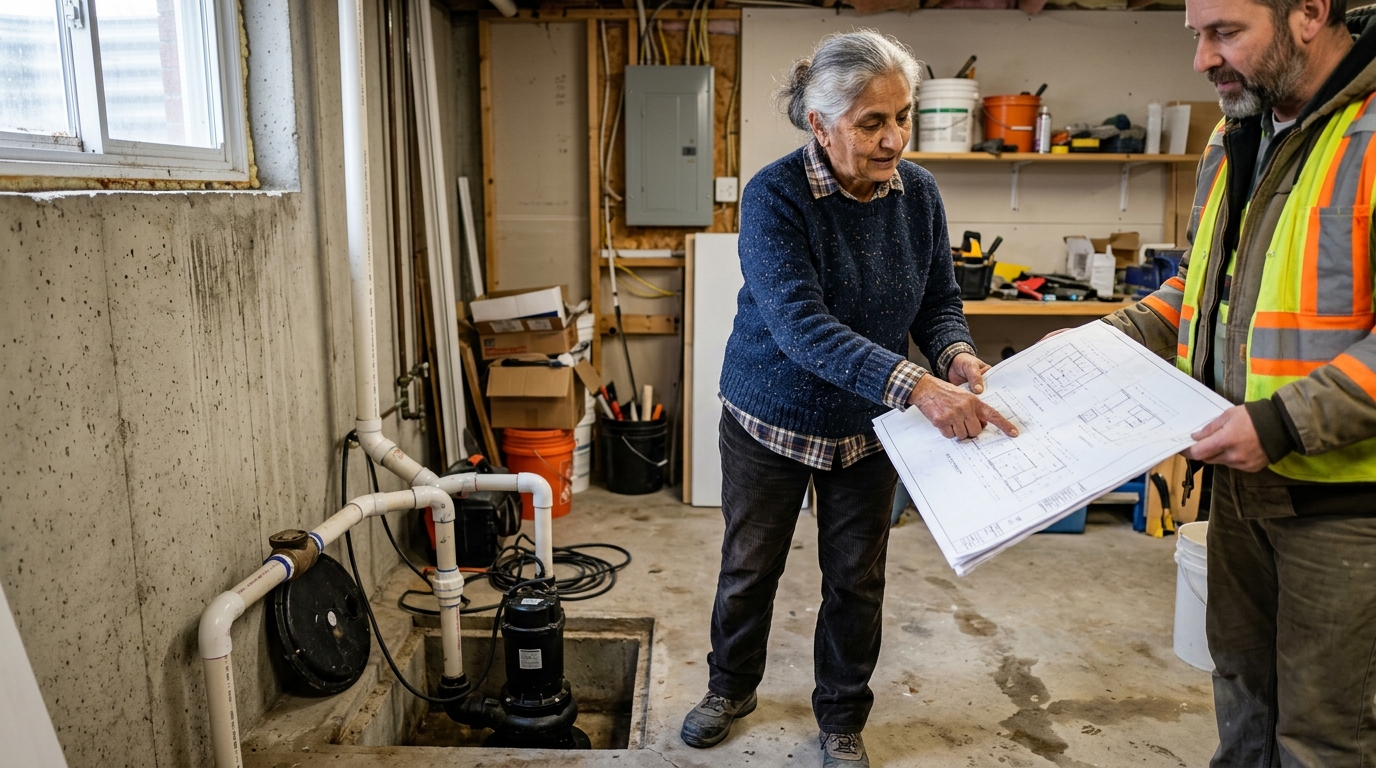
| Sump pump + foundation waterproofing | $8,000-$18,000 | Emergency access to capital before winter flood season | 2-4 months |
| Hurricane ties + wind retrofit | $6,000-$14,000 | Upgrade structural connections for high-wind zones | 1-2 months |
| Raised foundation or elevation | $25,000-$60,000 | For flood-prone properties; enables insurance approval | 6-12 months |
| Emergency reserve for disaster recovery | $10,000-$50,000 | Line of credit to cover insurance deductibles after loss | Ongoing |
According to FSRAO (Financial Services Regulatory Authority of Ontario) 2026 guidance, properties in climate-designated high-risk zones see reverse mortgage approval rates drop by 15-20% due to appraisal concerns. However, lenders like Equitable Bank and Home Trust now explicitly approve RM funding for disaster mitigation, treating it as a home-value-protection strategy rather than equity depletion.
The Insurance Reappraisal Effect
When you fund wildfire defensible space or roof upgrades via reverse mortgage, your property often becomes reinsurable—and your rates may DROP substantially:
- Before mitigation: Uninsured or $8,000/year with non-renewal notice
- After defensible space + roof upgrade: $3,500-$4,500/year, renewable
- Net 5-year savings: $22,500-$40,000
- Reverse mortgage cost for improvements: $12,000-$20,000 in original equity used
- True ROI: Positive in year 2-3
Protecting Your Inheritance Through Disaster Planning
| Estate Planning Scenario | Problem | RM Solution | Outcome |
|---|---|---|---|
| Home destroyed; mortgage still owed | Reverse mortgage debt paid from insurance proceeds first | Line of credit option allows you to draw post-disaster for rebuilding | Adult children inherit rebuilt home, not debt |
| Insurance gap; catastrophic loss | No replacement funds; forced sale of estate at distress prices | RM line of credit provides emergency rebuild capital | Home stays in family; equity preserved |
| Aging parent refuses to leave climate-risk area | Uninsured property liability; adult children liable for estate negligence | RM funds mitigation + insurance; documents proof of adaptation effort | Legal protection; demonstrates due diligence |
| Fixed retirement income can't cover insurance inflation | Annual premium increases push property into foreclosure risk | RM line of credit becomes annual insurance buffer | Affordable aging in place sustained |
Choosing Between Lump Sum and Line of Credit
Lump Sum Strategy (Best if mitigation is urgent and one-time):
- Get $25,000-$50,000 upfront
- Complete defensible space + roof upgrade immediately
- Let property become reinsurable before next policy renewal
- Example: Access $35,000 in September; complete work by November; reinsure before December renewal
Line of Credit Strategy (Best if you want flexibility and disaster recovery capacity):
- Access funds as needed for staged improvements
- Keep remaining balance available for post-disaster rebuild
- Only pay interest on amounts drawn
- Example: Draw $8,000 for defensible space (Month 1); draw $12,000 for roof work (Month 4); keep $20,000 reserve for emergency
Key Challenges in Climate Zones: What Lenders Scrutinize
When applying for a reverse mortgage in a designated climate disaster zone, expect:
- Property appraiser scrutiny — May downvalue 5-15% due to risk designation
- Insurance letter requirement — Most lenders now require proof of active homeowner's insurance
- Mitigation proof — If property is recently uninsurable, you'll need a plan to address deficiencies
- Renewal risk assessment — Lenders like CHIP now model out 5-10 year insurance scenarios
- Environmental reports — Flood-zone properties may need Phase 1 environmental assessment
Solution: Work with Rick Sekhon Reverse Mortgages to sequence your application strategically—often getting approved for a reverse mortgage BEFORE completing mitigation, then using the proceeds to fund the work that makes your property more appliable.
Government Support + Reverse Mortgage Stacking Strategy
Ontario and federal governments now offer climate adaptation grants that stack with reverse mortgages:
| Program | Funding Available | RM Coordination |
|---|---|---|
| Federal Disaster Financial Assistance Arrangements (DFAA) | Post-disaster recovery only; not prevention | Use RM for pre-disaster mitigation; DFAA for actual recovery costs |
| Ontario Home Repair Program | $10,000-$25,000 for accessibility; flood retrofits | Apply for OHIP first; use RM for matching funds or remaining costs |
| Canada Greener Homes Rebate | Up to $5,000 for energy efficiency (wildfire defensible space excluded) | RM covers greener retrofits not eligible for rebate; stack both programs |
| Property Tax Deferrals | Defer property tax if aged 55+, lower income | Combine with RM to preserve cash flow during upgrade period |
Real-World Scenario: The Muskoka Property Owner
Situation:
- Age: 68, retired teacher, home in Bracebridge (high wildfire zone)
- Home value: $450,000; Mortgage-free
- Income: $32,000/year (CPP + pension)
- Insurance: Just cancelled; specialty market quote $9,500/year
Problem:
- Can't afford $9,500/year insurance on $32,000 income (30% of gross)
- Defensible space work + roof upgrade needed =$22,000
- No line of credit available (no employment income)
- Selling would relocate her from daughter's town
Reverse Mortgage Solution:
- Reverse mortgage: $150,000 line of credit at 6.2% (Equitable Bank)
- Draw $22,000 immediately for mitigation
- Complete defensible space (Month 2), roof upgrade (Month 3-4)
- Property reappraised post-mitigation
- Obtain standard insurance at $3,800/year (down from $9,500)
- Use remaining $128,000 RM line as emergency reserve for future insurance needs / disaster recovery
5-Year Outcome:
- Insurance savings: $28,500
- Interest on $22,000 draw: ~$6,800
- Net cash flow positive by Year 3
- Home protected; inheritance preserved
- Adult daughter can sleep knowing mother's home is adequately insured
Frequently Asked Questions
Will a reverse mortgage make my property appraisal worse in a climate zone?
Not necessarily. While climate risk can reduce appraisal values 5-15%, fixing documented deficiencies (defensible space, roof condition, flood protection) often raises the appraisal back to baseline. Lenders increasingly see mitigation as value-protective rather than value-depleting. Work with an experienced reverse mortgage broker like Rick Sekhon Reverse Mortgages to sequence your application and mitigation timeline strategically.
If my insurance is cancelled, can I still get a reverse mortgage?
Yes, but with conditions. Most lenders require proof of active homeowner's insurance at closing. If you're recently uninsured, you have two options: (1) obtain specialty market insurance temporarily (higher cost), then use RM proceeds to fund mitigation that allows standard insurance reinstatement, or (2) apply for reverse mortgage approval contingent on proving insurance reinstateability within 30-60 days post-closing.
Can I use reverse mortgage proceeds to pay for insurance premium spikes?
Yes, but it's not ideal. While you technically CAN draw a line of credit to cover annual insurance premiums, this approach burns equity without improving the underlying problem. Better strategy: use RM for one-time mitigation (defensible space, roof) that reduces future premiums permanently, then pay ongoing insurance from regular income.
What if climate risk gets worse and my property becomes uninsurable even after mitigation?
This is the rare-case scenario. If your property remains uninsurable despite mitigation, you face either (1) continuing to pay specialty market rates indefinitely, or (2) triggering the reverse mortgage's default clause (most RMs require active insurance). However, by 2026, most Ontario properties in high-risk zones CAN become insurable with appropriate adaptation. Work with your reverse mortgage lender to structure a trigger plan if this occurs.
Do government climate adaptation grants reduce reverse mortgage approval odds?
No. In fact, lenders often view government grant recipients more favorably because it signals the property owner is taking adaptation seriously. If you're receiving Ontario Home Repair Program grants or DFAA funding, mention this to your reverse mortgage broker—it strengthens your application.
Key Takeaways
- Climate disaster zones now see insurance cancellations and 40-70% annual premium spikes, making homeownership unaffordable for fixed-income seniors on their own.
- A reverse mortgage converts home equity into immediate mitigation funding (defensible space, roof upgrades, flood protection), often making your property reinsurable and reducing insurance costs substantially.
- Strategic reverse mortgage timing + post-mitigation reappraisal can reduce insurance premiums from $8,000-$10,000/year back to $3,500-$4,500/year, delivering positive ROI within 2-3 years.
- Line of credit option provides both mitigation capital AND emergency disaster recovery reserves, protecting your inheritance while keeping you affordably housed in your climate-risk community.
- Stacking government grants (Ontario Home Repair, DFAA, Greener Homes Rebate) with reverse mortgage proceeds maximizes mitigation funding without requiring you to deplete all your equity upfront.
- Work with experienced reverse mortgage brokers and insurance advisors to sequence your timeline strategically—apply before mitigation is complete, fund the work post-approval, and use reappraisal to reset your insurance standing.
For personalized guidance on reverse mortgages in climate-designated zones, consult Rick Sekhon Reverse Mortgages. In Ontario, reach out to FSRAO for climate-related homeowner resources.
Ready to Learn More?
Find out exactly how much you could unlock from your home — free and no obligation.
Related Articles
Aging in Flood Zones: Reverse Mortgage for Insurance + Accessibility Upgrades
Ontario homes in flood zones face rising insurance costs. Combine accessibility upgrades with flood protection using a reverse mortgage for comprehensive aging-in-place planning.
Read →Reverse Mortgage for Climate Resilience and Severe Weather Home Upgrades
Use a reverse mortgage to fund climate-resilient home upgrades in Ontario — sump pumps, backup power, storm hardening, and flood protection.
Read →Reverse Mortgage When Environmental Contamination Returns: Escalation Funding for Persistent Remediation
When first remediation attempts fail and contamination returns, costs escalate rapidly. A reverse mortgage funds persistent environmental cleanup.
Read →