
Aging in Flood Zones: Reverse Mortgage for Insurance + Accessibility Upgrades
Ontario homes in flood zones face rising insurance costs. Combine accessibility upgrades with flood protection using a reverse mortgage for comprehensive aging-in-place planning.
Living in Ontario's flood-prone neighborhoods means facing dual financial pressures: skyrocketing home insurance and the need for accessibility modifications as you age. Many seniors find themselves choosing between financial protection and aging safely at home. A reverse mortgage can fund both comprehensive flood protection and accessibility upgrades, keeping you safe and insured.
Ontario's flood risk zones—including areas near the Great Lakes, Credit River valley, Humber River lowlands, and rural properties on floodplains—face rapidly rising home insurance premiums (up 35–60% since 2020). Simultaneously, aging parents need grab bars, step elimination, and bathroom modifications. Financing both is expensive. A reverse mortgage solves this by providing lump-sum funds for integrated home upgrades that address both flood risk and aging in place.
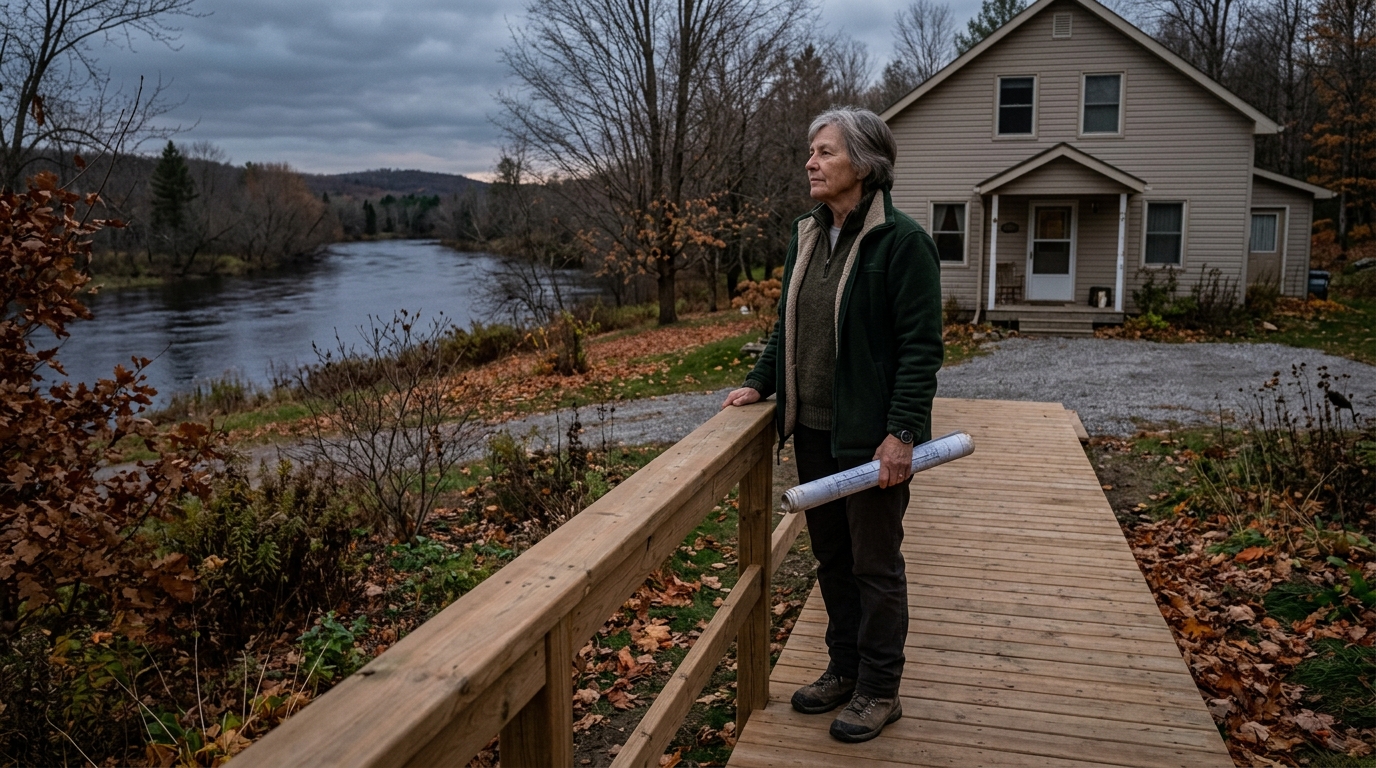
The dual cost burden in Ontario flood zones
Flood-prone homes face two escalating cost categories: insurance premiums and accessibility modifications—often exceeding $50,000–$80,000 combined.
Cost breakdown for flood zone aging in place
| Expense Category | Flood Zone Typical Cost | Non-Flood Zone Typical Cost | Annual Insurance Impact |
|---|---|---|---|
| Home insurance (annual) | $1,800–$2,800 | $900–$1,400 | +$900–$1,400/year in flood zone |
| Accessibility modifications | $15,000–$35,000 | $15,000–$35,000 | One-time, but insurance may increase |
| Flood-resistant upgrades (sump pump, backwater valve, foundation sealing) | $8,000–$15,000 | $0–$3,000 | May reduce insurance by 10–15% |
| Elevated HVAC/utilities (flood mitigation) | $5,000–$12,000 | $0–$2,000 | May reduce insurance by 5–10% |
| Total aging-in-place + flood protection | $28,800–$64,800 | $15,000–$40,000 | $900–$1,400 annual premium delta |
The problem: If insurance premiums rise from $1,200 to $2,200 annually while you need $30,000 in accessibility work, you're looking at $32,200 in immediate and ongoing costs. Many retirees cannot afford both.
According to OSFI (Office of the Superintendent of Financial Institutions), insurance gaps are a leading cause of home equity loss in flood-prone regions, as uninsured catastrophic damage forces emergency home sales.
How a reverse mortgage addresses both needs
A reverse mortgage allows your aging home to fund integrated upgrades:
- Flood mitigation (sump pump, backwater valve, elevated mechanicals, improved drainage)
- Accessibility modifications (ramps, grab bars, barrier-free bathrooms, elevators, step elimination)
- Insurance cost recovery (some flood-resistant upgrades reduce premiums by 10–15%, offsetting long-term costs)
Unlike a traditional line of credit (which requires income qualification and monthly payments), a reverse mortgage has no income or credit requirements and no monthly payments. You borrow against home equity, retain full ownership, and repay only when you move or pass away.
Flood zone properties and reverse mortgage eligibility
All properties qualify for reverse mortgages regardless of flood zone designation, but lenders assess risk:
✓ Homes in designated flood zones qualify fully
✓ Standard appraisal process applies
✓ Insurance must be available (lender requirement)
✓ Lenders may slightly adjust rates in high-risk zones (0.25–0.5% premium)
✗ Homes in uninsurable flood zones may be ineligible (rare in Ontario)
✗ Homes in active flood damage require repair before closing

Real-world scenario: Integrated flood + accessibility planning
Michael's situation (composite example):
Michael (age 68) lives in a Burlington home valued at $420,000, located in a flood-prone area near the Niagara Escarpment. His annual home insurance had risen from $1,200 (2019) to $2,400 (2026). He uses a cane due to arthritis and needed bathroom accessibility modifications ($18,000 estimated).
Problem: Michael's fixed CPP/OAS income was $28,000 annually. Adding $1,200 in extra insurance AND paying $18,000 for renovations from cash savings would deplete his emergency fund entirely.
Solution: Michael obtained a reverse mortgage of $120,000 at 5.1% interest. He used funds for:
- Backwater valve installation: $2,500
- Sump pump upgrade: $3,200
- Basement floor sealing: $4,100
- Accessible bathroom reno: $18,000
- Grab bars and accessibility equipment: $3,200
- Insurance recovery cushion: $8,000 (for one-time premium jumps)
Outcome: Michael's flood mitigation upgrades reduced annual insurance by approximately 12%, saving $288/year. His accessibility needs were met in full. The reverse mortgage balance accrued interest (approximately $131,000 after 4 years), but he remained in his home safely and insured.
Reverse mortgage vs. other funding options
| Funding Source | Accessibility Funding | Flood Protection Funding | Monthly Payment | Qualification Barrier |
|---|---|---|---|---|
| Reverse mortgage (lump sum) | ✓ Full funding | ✓ Full funding | None | Age 55+, home equity only |
| HELOC | ✓ Possible | ✓ Possible | Yes, based on income | Income/credit required; difficult if retired |
| Traditional home equity loan | ✓ Possible | ✓ Possible | Yes, based on income | Income/credit required |
| Home insurance premium financing | ✗ No | Partial (insurance only) | Yes, high interest | Income required |
| Savings/GIC withdrawal | ✓ If liquid | ✓ If liquid | None | Limited funds; tax implications (RRSP) |
For retirees with strong home equity but limited income, a reverse mortgage is the only option that funds both needs without monthly payments.
Insurance savings through flood mitigation
Certain flood-resistant upgrades lower annual insurance premiums:
| Upgrade | Typical Cost | Premium Reduction | Payback Period |
|---|---|---|---|
| Backwater valve | $2,000–$3,500 | 8–12% ($96–$288/year) | 7–15 years |
| Sump pump upgrade | $3,000–$5,000 | 5–8% ($60–$192/year) | 16–25 years |
| Foundation sealing | $4,000–$7,000 | 5–10% ($60–$240/year) | 17–30 years |
| HVAC elevation | $5,000–$10,000 | 10–15% ($120–$360/year) | 14–30 years |
While payback periods are long, these upgrades protect catastrophic loss (average flood damage claim: $30,000–$100,000+). From an insurance perspective, they are essential, not optional, in flood zones.
Practical implementation steps
Step 1: Confirm flood zone designation (Week 1) Check your property against Ontario's Flood Hazard Maps (available on your municipality's website). Understand your specific risk level and any local flood mitigation requirements.
Step 2: Get flood mitigation assessment (Week 2) Hire a certified flood mitigation contractor (not an insurance adjuster—they assess damage, not prevention). Typical assessment costs $300–$500 and identifies:
- Sump pump adequacy
- Basement perimeter drainage
- Foundation cracks or seepage
- HVAC/utility vulnerability
- Recommended upgrades
Step 3: Get accessibility assessment (Week 2) Consult an occupational therapist or certified aging-in-place specialist ($200–$400). They identify essential modifications:
- Bathroom accessibility (grab bars, threshold removal, roll-in shower)
- Stair elimination or ramp installation
- Lighting and flooring improvements
- Kitchen accessibility
Step 4: Contact reverse mortgage specialist (Week 3) Call Rick Sekhon Reverse Mortgages with:
- Your age and home value
- Flood zone confirmation
- Estimated accessibility needs
- Current insurance premium
Rick can provide a no-obligation quote on available equity and discuss withdrawal strategy (lump sum vs. monthly draws).
Step 5: Obtain home appraisal and quotes (Week 3–4) The reverse mortgage lender orders an appraisal. Simultaneously, gather formal renovation quotes from licensed contractors for flood mitigation AND accessibility work.
Step 6: Secure independent legal advice (Week 4) Required in Ontario. Your lawyer reviews the reverse mortgage agreement, explains terms, and confirms you understand the commitment. Cost is typically covered by the lender.
Step 7: Close and access funds (Week 5–6) Once approved, funds are available within 5–7 business days. Hire contractors and begin work.
Key Takeaways
- Flood-prone Ontario homes face dual escalating costs: insurance premiums rising 35–60% and accessibility modifications needed for aging in place
- Reverse mortgages fund both needs without monthly payments or income qualification, making them ideal for retirees in flood zones
- Flood mitigation upgrades reduce insurance premiums by 5–15%, offsetting long-term reverse mortgage costs
- All Ontario properties qualify for reverse mortgages, including flood zones, though lenders may assess risk slightly differently
- Integrated planning (flood + accessibility) creates synergistic benefits—you age safely while protecting your home and insurance coverage
- Rick Sekhon Reverse Mortgages specializes in complex home scenarios and can navigate flood zone considerations
Frequently Asked Questions
Does a reverse mortgage still qualify if my home is in a designated flood zone?
Yes. All properties qualify for reverse mortgages regardless of flood designation. Lenders may apply a slightly higher interest rate (0.25–0.5%) in very high-risk zones, but approval is not denied based on flood risk alone. Insurance must be available—homes in uninsurable zones are rare in Ontario.
Will my flood insurance premium affect the reverse mortgage amount?
No. The reverse mortgage is based on home value and your age, not insurance cost. However, flood insurance premiums are a monthly expense consideration. If premiums are rising, that's a reason to fund flood mitigation through a reverse mortgage—the upfront cost may reduce long-term insurance expenses.
Can I use reverse mortgage funds specifically for flood mitigation?
Yes. Reverse mortgage proceeds have no use restrictions. You can allocate funds entirely for flood protection, entirely for accessibility, or a combination. Your withdrawal strategy is flexible.
What if my home is damaged by flooding after I get a reverse mortgage?
The lender maintains a mortgage lien on the property. If significant damage occurs, you're obligated to repair it to maintain insurability. A reverse mortgage should not be obtained if flood damage risk is immediate and unmanaged. Mitigation upgrades come first.
How does flood zone status affect the home's appraised value?
Homes in flood zones may have slightly lower appraisals (5–15% discount), but the impact is modest if flood mitigation is in place. Modern underwriting considers risk-reduced homes favorably. Flood mitigation upgrades can actually increase appraisal in some cases because insurability improves.
Can I get a reverse mortgage to pay for flood insurance specifically?
Yes. Reverse mortgage proceeds can cover insurance premiums, mitigation costs, or both. Some borrowers use monthly draws ($1,000–$2,000) specifically to cover escalating insurance costs while aging in place.
Protect your home and your independence
Ontario's flood risk is real, and aging in place in vulnerable areas requires proactive planning. Don't choose between flood protection and accessibility—fund both through a reverse mortgage.
Contact Rick Sekhon Reverse Mortgages today to discuss your flood zone situation and available equity. A free consultation clarifies your options and how integrated planning protects your home, your insurance, and your ability to age safely in place.
Ready to Learn More?
Find out exactly how much you could unlock from your home — free and no obligation.
Related Articles
Reverse Mortgage for Climate Resilience and Severe Weather Home Upgrades
Use a reverse mortgage to fund climate-resilient home upgrades in Ontario — sump pumps, backup power, storm hardening, and flood protection.
Read →Reverse Mortgage for Home Renovations: Aging in Place Guide for Ontario Seniors
Learn how to use a reverse mortgage to fund home renovations and modifications that let you age in place safely and comfortably in your Ontario home. Includes cost examples and step-by-step process.
Read →Aging in Place with a Reverse Mortgage: Home Modification Guide
How Ontario seniors can fund aging-in-place home modifications with a reverse mortgage — costs, top modifications, grants, and a complete planning guide.
Read →