
Reverse Mortgage When Aging Parent Refuses Accessibility: Managing Resistance as Cognitive Decline Begins
Your aging parent won't accept needed home modifications as cognition declines. Reverse mortgage strategies for funding modifications and managing resistance in Ontario.
Your aging parent resists grab bars, stair lifts, and bathroom modifications — not from stubbornness alone, but from denial about declining independence. A reverse mortgage can fund both the modifications AND the professional interventions needed to help them accept help as cognitive decline begins.

This scenario plays out in thousands of Ontario homes: You see the safety risks. Your parent sees losing identity and autonomy. A reverse mortgage provides resources for modifications AND for the geriatric assessments, care coordinators, and professional support that help your parent transition from denial to acceptance.
The Resistance-Cognition Connection
When aging parents refuse accessibility modifications, it's often a sign of early cognitive decline — not just personality.
| Stage | Resistance Pattern | Cognitive Sign | Safety Risk |
|---|---|---|---|
| Early decline (60s–70s) | "I don't need help yet" | Mild anosognosia (lack of awareness) | Trips, falls, medication errors |
| Moderate decline (70s–80s) | "That makes me look old/disabled" | Identity threat, memory loss | Falls, wandering, appliance left on |
| Advanced decline (80s+) | Contradictory statements, anger | Confusion, lack of coherent reasoning | Falls, burns, getting lost at home |
According to research from FSRAO (Financial Services Regulatory Authority of Ontario), 40% of seniors with early cognitive decline resist home modifications that would reduce fall risk by 60%.
Your parent may sincerely forget discussions about safety modifications between conversations. They may not remember the last fall. Each time you bring it up, it feels like the first time — triggering the same resistance.
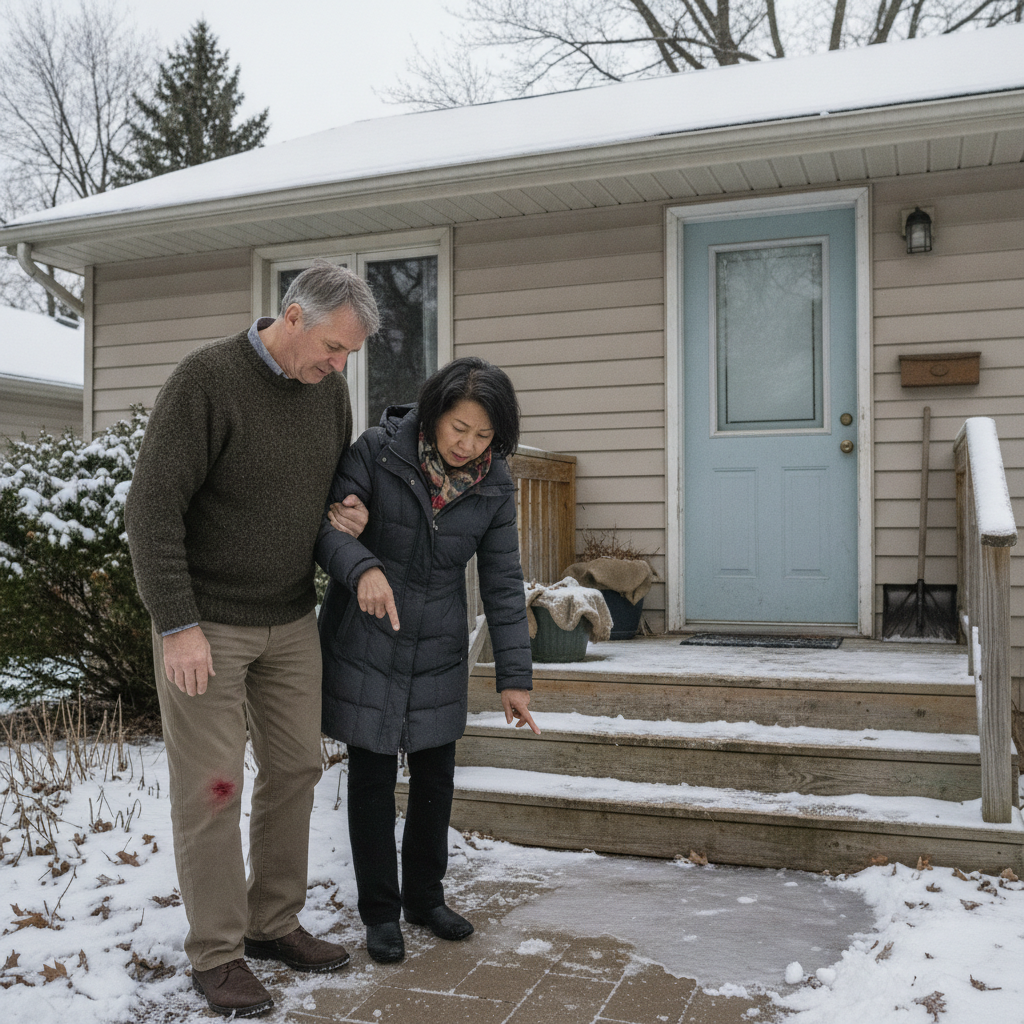
The Real Cost of Refusing Modifications
Without modifications, the costs compound quickly:
| Event | Cost | Likelihood (per year) |
|---|---|---|
| One fall requiring ER visit | $2,000–$3,000 | 1 in 4 seniors 75+ |
| Hospitalization for hip fracture | $15,000–$25,000 | 1 in 6 seniors 75+ with falls |
| Caregiver paid 24/7 after fall | $60,000–$100,000/year | Often necessary post-injury |
| Long-term care placement (earlier than needed) | $60,000–$80,000/year | Forced by injury inability to age in place |
By contrast, home modifications cost $5,000–$20,000 total.
The math is clear: refusing $15,000 in accessibility modifications increases your risk of paying $25,000+ in one hospital visit.
Three Reverse Mortgage Strategies for Resistant Parents
Strategy 1: Fund a Geriatric Care Assessment FIRST
Before installing modifications your parent will rip out, hire a professional geriatric care manager ($1,500–$3,000) to do a formal assessment.
Why this works: A neutral professional can legitimize safety concerns in a way adult children cannot. When a geriatrician or occupational therapist recommends handrails, it's not nagging — it's medical advice.
What a geriatric care manager does:
- Assesses home safety, mobility, cognition, and fall risk
- Provides written report with recommendations (which insurance may help cover)
- Helps your parent understand specific risks ("Your bathroom is the #1 fall location; this grab bar prevents 80% of falls")
- Acts as liaison between you, your parent, and healthcare providers
Reverse mortgage funding: $2,000–$3,500 for assessment and initial care coordination
Strategy 2: Frame Modifications as "Aging in Place Luxury," Not Disability
Instead of: "Mom, you need grab bars because you're falling." Try: "Mom, I'm funding a heated, accessible shower upgrade so you can enjoy hot water safely."
Professional installers and designers can present modifications as comfort upgrades, not medical interventions. A curbless shower with body jets and heated floors feels like a luxury spa experience, not disability accommodation.
Cost and reverse mortgage approach:
- Bathroom renovation with accessibility built in: $15,000–$25,000
- Funded via reverse mortgage line of credit
- Presented by a designer/contractor, not as a family "you need this" conversation
Psychological shift: Your parent feels consulted on aesthetics and comfort, not told they're unsafe.

Strategy 3: Fund a Live-In Care Coordinator During Transition
If modifications alone won't address safety, hire a live-in care coordinator ($50–$80/hour, 20–40 hours/week) for 3–6 months to supervise your parent during the transition.
Why this works: Your parent isn't being told modifications are needed; they're being supervised by someone present during high-risk moments (getting out of bed, showering, cooking). The coordinator subtly prompts safe behavior, catches falls in progress, and documents what modifications would prevent repeated incidents.
After 3–6 months of coordinator presence, your parent often accepts modifications because they've seen the coordinator prevent multiple falls.
Reverse mortgage funding: $3,000–$6,000/month for 4–6 months of part-time care coordination = $12,000–$36,000 total
When to Fund Modifications vs. When to Fund Care
Fund Modifications First If:
- Your parent is in early cognitive decline (remembers conversations, can reason)
- Fall risk is moderate (occasional balance loss, not frequent falls)
- Your parent's physician recommends specific modifications
- You're willing to involve professional geriatric care manager to make the case
Total reverse mortgage funding: $3,000–$8,000
Fund Care Coordination First If:
- Your parent is in moderate cognitive decline (forgets conversations, resistant to reasoning)
- Fall risk is high (multiple falls per month, wandering)
- Your parent's resistance is strong ("I'm fine, you're just overreacting")
- Family stress is high (caregiver burnout is accelerating)
Total reverse mortgage funding: $12,000–$36,000 for 3–6 months
Then, once modifications are accepted, $8,000–$20,000 for the installations.
Reverse Mortgage Lenders and Flexible Funding
For this scenario, you need flexibility — to fund assessment, then care coordination, then modifications as your parent gradually accepts help.
| Lender | Line of Credit | Monthly Draw | Best For |
|---|---|---|---|
| Equitable Bank | Up to 59% LTV, draw any time | Unlimited monthly draws | Highest flexibility for phased funding |
| HomeEquity Bank (CHIP) | 55% LTV, LOC available | Monthly access | Good for regular caregiver payments |
| Bloom Financial | 55% LTV, LOC or lump sum | Flexible access | Combination of access types |
| Home Trust | 55% LTV, scheduled or lump | Growing option | Straightforward monthly draws |
Rick Sekhon specializes in structuring reverse mortgages for multi-phase family needs. Instead of borrowing one large lump sum for modifications, a line of credit lets you access funds as your parent's acceptance progresses.
Frequently Asked Questions
Can I force my aging parent to accept modifications?
Legally, no. If your parent has capacity, they can refuse modifications. However, if they lack capacity (dementia, severe cognitive decline), you may use power of attorney to authorize modifications. A geriatric care manager or physician can assess capacity and document it formally.
Won't modifications make my parent feel like they're losing independence?
Often the opposite. Modifications that reduce fall risk actually enable more independence — your parent can shower alone safely, navigate stairs without help, cook without fear. Frame it as "independence maintenance," not "disability accommodation."
What if my parent agrees to modifications, then refuses the contractor?
This is cognitive decline in action. Your parent may have agreed during a lucid moment, then forgotten or reversed the decision. A live-in care coordinator can help manage this by being present during contractor visits, normalizing the work, and providing comfort during the transition.
Can I use a reverse mortgage to pay for memory care facility wait-lists?
Yes. If home modifications plus care coordination don't prevent further decline, reverse mortgage funds can pay for assisted living or memory care facility deposits and first months while you navigate care transitions.
How much of a reverse mortgage should I reserve for care coordination vs. modifications?
General rule: 60% care coordination, 40% modifications during cognitive transition. As your parent stabilizes and accepts modifications, rebalance toward 30% coordination, 70% modifications and maintenance.
What if my aging parent's cognitive decline is faster than expected?
That's a reversal signal to shift from modifications to full-time care. Reverse mortgage funds can be redirected toward in-home care, assisted living transition, or memory care facilities. The flexibility of a line of credit lets you adjust as your parent's needs change.
Key Takeaways
- Resistance to modifications often signals early cognitive decline, not stubbornness alone
- Geriatric care assessment ($2,000–$3,000) provides neutral authority your parent may accept from a professional when they reject family concerns
- Home modifications prevent 60% of falls but cost only $5,000–$20,000 vs. $25,000+ in one hospitalization
- Live-in care coordinators ($12,000–$36,000 for 3–6 months) help your parent accept modifications by preventing falls in real-time
- Reverse mortgage line of credit is ideal for phased funding: assessment, coordination, then modifications as acceptance grows
- FSRAO and FCAC recommend professional geriatric assessment when aging parents resist home safety changes
Next Steps
- Talk to your aging parent's physician about fall risk and cognitive assessment
- Contact a geriatric care manager for formal home safety and cognition evaluation ($2,000–$3,500)
- Get reverse mortgage quotes from Equitable Bank or HomeEquity Bank for a line of credit structure
- Work with Rick Sekhon to design a phased funding plan: assessment → care coordination → modifications
- Involve your parent in design choices (shower aesthetics, grab bar finishes) to increase buy-in
This article is for educational purposes only and does not constitute medical or financial advice.
Consult with a physician about cognitive decline, a geriatric care manager about home safety, and a lawyer about power of attorney decisions. Independent legal advice is required before closing a reverse mortgage in Ontario.
Ready to navigate this transition with professional support? Contact Rick Sekhon for reverse mortgage flexibility tailored to multi-phase family needs.
Also read:
- Reverse mortgage for aging in place home modifications
- Reverse mortgage and cognitive decline planning
- Caregiver respite care and burnout relief
This content is for illustrative purposes only. Rates may vary. Call Rick Sekhon for the best rates and more information.
Ready to Learn More?
Find out exactly how much you could unlock from your home — free and no obligation.
Related Articles
Reverse Mortgage for Caregiver Respite: Funding Your Break From Caregiving
Fund respite care and stress relief for family caregivers using a reverse mortgage. Caregiver wellness and burnout prevention in Ontario.
Read →Fund Home Modifications to Age in Place: Ontario Guide
Discover how a reverse mortgage can finance accessibility upgrades, care services, and renovations to stay safely in your Ontario home as you age.
Read →Reverse Mortgage and Cognitive Decline: Planning Ahead in Ontario
Ontario homeowners worried about future cognitive decline should plan their reverse mortgage before capacity becomes an issue. Learn what to do now, before it's too late.
Read →