
Reverse Mortgage When Aging Parent Becomes Primary Caregiver to Adult Child With Terminal Illness
Support aging parent as primary caregiver to dying adult child. Reverse mortgage funds palliative care, home modifications, respite care.
Your adult child has been diagnosed with a terminal illness. They want to die at home, surrounded by family. You're their primary caregiver—but you're in your late 70s, living on a fixed income, and their care costs are crushing your budget. In-home palliative care, medical equipment, respite care, and home modifications aren't luxuries—they're essential to their dignity and your ability to sustain caregiving without collapse. A reverse mortgage can provide the funds without forcing you to abandon your home or sacrifice your own aging needs.
The Hidden Cost of At-Home Palliative Care for Terminal Adult Children
When an adult child chooses to die at home under their aging parent's care, costs emerge that most families underestimate:
| Care Element | Monthly Cost | Annual Cost | Duration (Typical) |
|---|---|---|---|
| Palliative care nursing (2× weekly) | $1,500–$2,500 | $18,000–$30,000 | 6–12 months |
| Medication management (opioids, comfort meds) | $300–$800 | $3,600–$9,600 | 6–12 months |
| Respiratory/suction equipment rental | $200–$400 | $2,400–$4,800 | 3–6 months |
| Hospital bed, lift, commode, wheelchair | $150–$400 | $1,800–$4,800 | 3–9 months |
| Respite care (caregiver relief, 1–2 weeks/month) | $800–$1,500 | $9,600–$18,000 | 6–12 months |
| Home modifications (ramps, bathroom safety) | $2,000–$8,000 | One-time | Immediate |
| Increased utilities (heating, AC, medical equipment) | $100–$200 | $1,200–$2,400 | Duration |
| Grief counseling/social work | $100–$300 | $1,200–$3,600 | 6–12 months |
Total first-year cost: $38,000–$73,200
For an aging parent on CPP/OAS ($25,000–$35,000/year), this is catastrophic. Selling the home or abandoning at-home care are the only alternatives—until a reverse mortgage is considered.
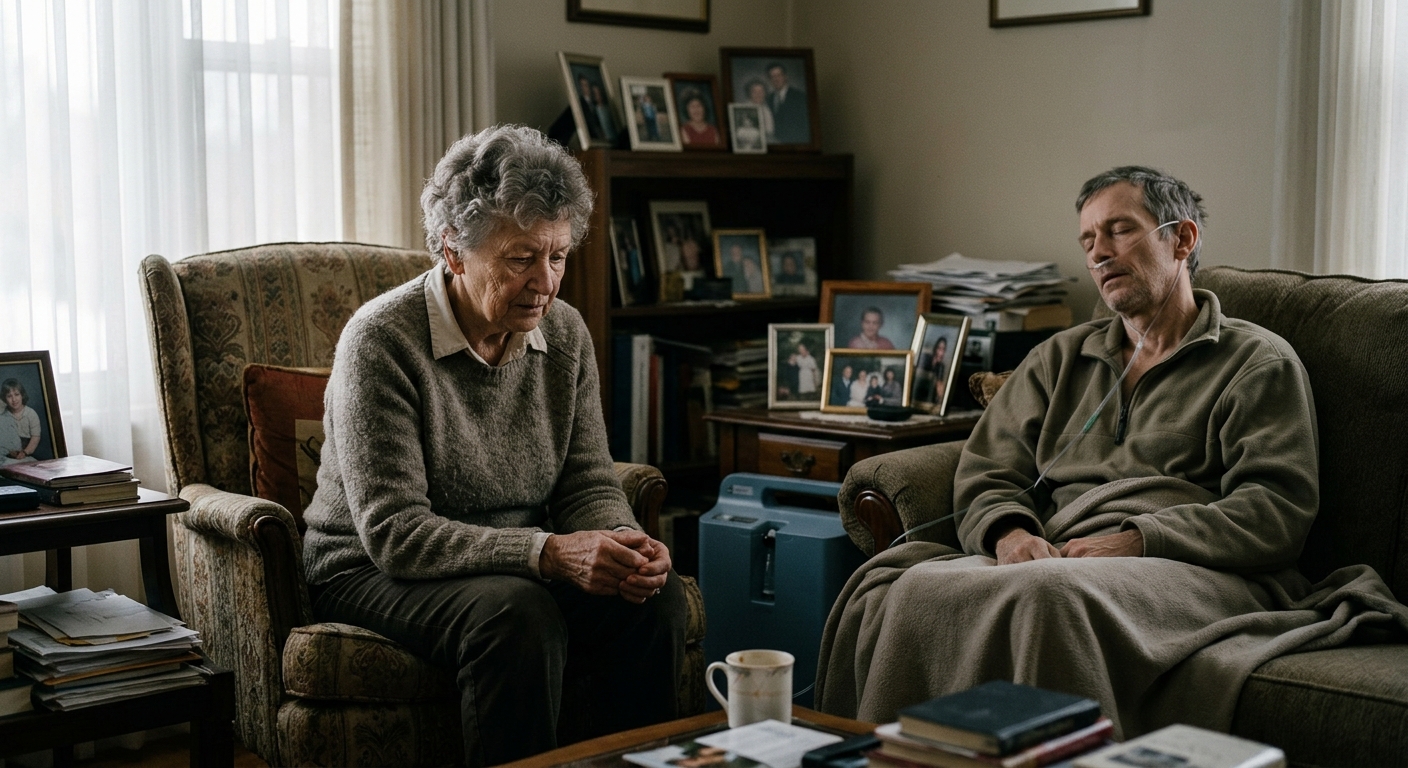
Why Aging Parents Become Primary Caregivers to Terminal Adult Children
Adult children choose to die at home for reasons rooted in love, autonomy, and family values:
- Fear of institutional depersonalization: Nursing homes prioritize efficiency; home prioritizes individual relationships.
- Desire to spend final months with spouse and children (if adult child has a family): Home care enables this.
- Specific wishes (music, pets, spiritual practices): Easier to honor at home than in facility.
- Avoiding hospital bureaucracy and isolation: Especially post-pandemic, many prefer home.
Aging parents step into primary caregiver roles because:
- Adult child's spouse cannot manage alone (also grieving, may have young children).
- Adult child's siblings live far away (Ontario's dispersed families).
- Healthcare system assumption: "Family will manage" without adequate support.
- Cultural or spiritual values: Some families view parent-as-caregiver as sacred duty.
The result: An aging parent (already managing their own health declines) takes on 24/7 caregiving for a dying child. Without financial and logistical support, they collapse.
Reverse Mortgage Solution: Funding At-Home Palliative Care for Terminal Adult Child
A reverse mortgage can fund the full cost of at-home death with dignity for your adult child. Here's how:
Immediate Lump Sum ($30,000–$50,000) for:
- Home modifications (ramp, bathroom safety, bedroom adjustments).
- Medical equipment purchase or deposit (hospital bed, lift, suction machine).
- Initial palliative care nurse hiring (2–3 months of care).
- Immediate respite care setup (1–2 weeks to give you relief).
Line of Credit ($50,000–$100,000) for:
- Monthly palliative care nursing draws ($1,500–$2,500/month).
- Ongoing respite care as needed ($800–$1,500/month).
- Equipment replacements and upgrades.
- Grief counseling and caregiver support.
Total reverse mortgage needed: $80,000–$150,000 (depending on home value and disease trajectory).
Case Study: Patricia's Last Months With Her Son
Patricia, 78, widowed, owned a $420,000 home in Ontario. Her son, 52, was diagnosed with stage 4 pancreatic cancer. His prognosis: 6–12 months.
His wife worked full-time and had two teenage children (ages 14 and 16). His wish: to die at home, surrounded by his family, not in a hospital or care facility.
Patricia was his primary caregiver. She received a small CPP ($18,000/year). Her son's employment benefits covered some care, but there was a gap of $3,000–$5,000/month.
Patricia considered:
- Sell the home, move to an apartment, use proceeds for care: Lose the only place her family could gather during his dying months. Emotionally devastating.
- Let him go to a nursing home: Against his wishes and her values.
- Deplete her modest savings within 3–4 months: Then what?
Instead, Patricia accessed a reverse mortgage line of credit for $120,000 against her home equity.
What the reverse mortgage funded:
- Palliative care nurse: $1,800/month (vs. $2,500 at premium agencies; she found a community program).
- Medical equipment: $3,200 (hospital bed, lift, suction equipment, wheelchair).
- Respite care (her niece was paid $15/hour to relieve Patricia 2 afternoons/week): $600/month.
- Home modifications (bedroom wheelchair access, grab bars, accessible bathroom): $4,500.
- Grief counseling for the family: $300/month.
Over his 9-month illness trajectory, Patricia drew approximately $22,000 from the $120,000 available. When he died, she had used $22,000 + accrued interest (~$23,500 total).
The outcome:
- Her son died at home, in the bedroom he'd slept in as a child, surrounded by his wife, children, and mother.
- Patricia's home remained hers; she had only borrowed against 5.6% of her equity.
- After his death, his estate contributed $10,000 to the reverse mortgage balance as gratitude.
- Patricia had $110,000 still available for her own aging care needs.
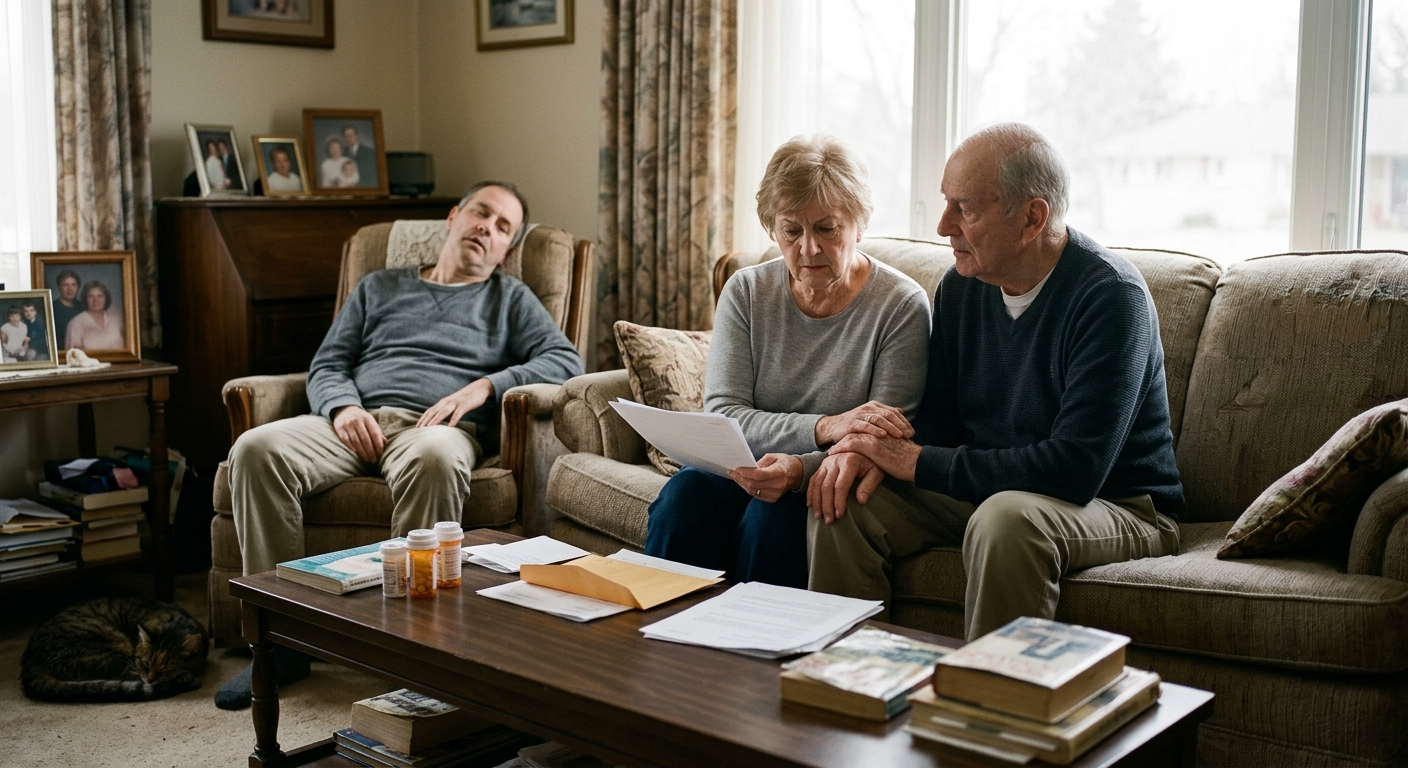
Managing the Emotional and Practical Boundaries
Aging parents who become primary caregivers to terminal adult children face extraordinary emotional strain. A reverse mortgage should be paired with boundary-setting and family communication:
Before Committing to At-Home Care
Have honest conversations with your adult child and their spouse:
- "How long do we think the care period will be?" (Helps estimate costs and your own capacity.)
- "What help do you need from me specifically?" (Be clear you cannot be the sole caregiver 24/7.)
- "What are my limits, and when do we switch to professional support?" (Exhausted caregivers make mistakes; plan for respite.)
- "What financial support will the estate provide?" (Does your child's insurance, savings, or estate reimburse some costs?)
Hire Professional Care Early, Not Late
The biggest mistake aging parents make: trying to manage alone to save money, then burning out and requiring emergency hospitalization themselves.
Professional support to hire immediately:
- Palliative care nurse (even 2×/week): Manages medication, monitors symptoms, prevents emergencies.
- Respite caregiver (1–2 afternoons/week): Gives you essential breaks.
- Social worker or grief counselor: Helps the whole family process dying.
A reverse mortgage should fund these from month 1, not month 6 when you're collapsed.
Health and Caregiver Burnout: The Unseen Cost
According to Health Canada and caregiver support organizations, 60–70% of adult children caregivers to aging parents experience burnout; the rates are even higher for aging parents caring for adult children because the role is role-reversed and psychologically traumatic.
Signs of caregiver burnout:
- Insomnia, loss of appetite, weight loss.
- Increased pain in your own chronic conditions.
- Difficulty concentrating; forgetfulness.
- Resentment or irritability (even toward the dying child).
- Isolation from friends and other family.
A reverse mortgage funds respite care, which is the #1 prevention for caregiver burnout.
| Respite Care Type | Cost/Month | Benefit |
|---|---|---|
| In-home respite (caregiver comes to your home) | $600–$1,200 | You can leave; your child remains in familiar space |
| Adult day program (if child is mobile) | $50–$100/day (part-time) | Structured activity; you get daytime break |
| Palliative day center | Free–$300/day | Specialized services; family gets time alone |
| Overnight respite (caregiver stays overnight) | $150–$250/night | Uninterrupted sleep for you (critical) |
| Weekend respite (another family member, paid) | $200–$500/weekend | Full separation for 2 days |
A reverse mortgage should explicitly fund 1–2 respite breaks/month. This is not luxury—it's survival.
Estate Coordination: Asking for Help From Your Dying Child's Estate
A sensitive but necessary conversation: Does your adult child's estate (including life insurance, savings, pension benefits) have funds to reimburse some caregiving costs?
Common estate sources:
- Life insurance (from employer or personal policy): Often $50,000–$250,000.
- Pension lump-sum survivor benefits (if employed): May be substantial.
- Savings or investments: Your child may have assets.
- Estate insurance (specifically purchased to cover care/funeral): Increasingly common.
What to ask: "If I fund your at-home care with a reverse mortgage against my home, can your estate reimburse some of this? I want to know upfront so I can plan."
Many adult children with terminal illnesses have already thought about this and feel guilt that their dying is a financial burden. Asking directly honors their autonomy and allows them to contribute to their own death with dignity.
According to CMHC and palliative care organizations, families who coordinate estate reimbursement experience less resentment and financial stress post-death.
Grief Counseling and Post-Death Support
A reverse mortgage should also fund grief support for the entire family, not just care during the illness.
| Grief Support | Cost | Benefit |
|---|---|---|
| Individual grief counseling (ongoing) | $120–$200/session | Processing your loss; rebuilding identity |
| Family grief group | Free–$50/session | Shared experience; isolation prevention |
| Complicated grief therapy | $150–$250/session | If grief becomes stuck or traumatic |
| Spiritual/chaplain support | Free–$100/session | Meaning-making and faith processing |
Aging parents often neglect their own grief after the funeral, returning to caregiving mode (even though there's no one to care for). Counseling is essential and should be funded in advance.
Key Takeaways
- At-home palliative care for terminal adult children costs $38,000–$73,200 in the first year; aging parents on fixed incomes cannot bear this alone.
- A reverse mortgage of $80,000–$150,000 funds full at-home care without requiring home sale or family sacrifice.
- Professional palliative care and respite care are essential from the start; a reverse mortgage makes them affordable.
- Honest family conversations about costs, estate reimbursement, and caregiver limits are critical.
- Respite care is burnout prevention; fund it generously from the reverse mortgage.
- Post-death grief counseling should also be funded, as aging parents face complex, prolonged grief.
- Rick Sekhon Reverse Mortgages helps aging parents structure reverse mortgages specifically for terminal adult child care.
Frequently Asked Questions
If my adult child dies and there's money left in the reverse mortgage line of credit, can I keep it?
Yes. The reverse mortgage balance becomes due when you pass away or move out of the home, not when your child dies. Any unused credit remains available for your own aging care or can be left to your estate. You do not have to draw the full amount.
Does my adult child's life insurance death benefit go toward paying the reverse mortgage?
No, unless you explicitly arrange it with the estate. Your reverse mortgage is your debt, secured against your home. Your child's insurance or estate is separate. You could choose to use insurance proceeds to pay down the reverse mortgage, but you're not required to.
Will using a reverse mortgage to fund my adult child's care affect my OAS or GIS benefits?
No. Reverse mortgage proceeds are not counted as income by CRA. Your OAS and GIS benefits are unaffected. However, if you have significant savings, those DO count toward GIS asset limits—this is a separate issue from the reverse mortgage.
What if my adult child's illness is longer than expected and I exhaust the reverse mortgage funds?
A reverse mortgage line of credit allows you to access only what you need. If the illness lasts longer than anticipated, you can apply for an increased line of credit (subject to appraisal and lender approval). Most lenders allow modest increases without full re-application.
Can my adult child's spouse or adult grandchildren help contribute to reverse mortgage repayment after death?
Yes. The reverse mortgage is your legal obligation, but family members can choose to contribute to repayment from the estate or their own funds. Many families do this as a form of gratitude to the aging parent. There's no legal requirement, but it's a common and meaningful gesture.
If I remarry after my adult child's death, does the new spouse have any responsibility for the reverse mortgage?
No. The reverse mortgage is secured against your home and is your personal debt. A new spouse is not liable unless they specifically sign documents agreeing to co-borrower status (which is rare for reverse mortgages). However, upon your death, the reverse mortgage must be repaid from your estate before any assets pass to beneficiaries.
Ready to Learn More?
Find out exactly how much you could unlock from your home — free and no obligation.
Related Articles
Reverse Mortgage After Your Caregiver Retires: Restructuring Care and Rebuilding Independence
Your longtime caregiver is retiring. A reverse mortgage funds the transition to new care arrangements and helps you rebuild independence after years of dependence.
Read →Reverse Mortgage for Accessible Community Kitchen: Culinary Training and Aging in Place
Convert your home kitchen into an accessible commercial culinary training space. Reverse mortgage funds renovation while creating community impact.
Read →Reverse Mortgage to Launch Home-Based Tax Prep and Retirement Planning Business
Fund your home-based tax and retirement planning practice with a reverse mortgage. Serve aging Canadians while accessing home equity in Ontario.
Read →