
Reverse Mortgage to Fund Aging Parent's Adult Literacy Program: Education for Second-Language Seniors
Support aging parent returning to school for literacy, GED, or English-language proficiency. Reverse mortgage funds education and independence.
Your aging parent arrived in Canada as an immigrant in their 50s or 60s. They worked hard—housekeeping, agriculture, caregiving—but never formalized their education or English proficiency. Now, in their 70s, they're tired of limited job prospects, difficulty with government paperwork, and embarrassment when they can't read medication labels. They want to complete a GED or English-language program to improve dignity and independence. But they're on a fixed income, and tuition is out of reach. A reverse mortgage can fund their education—an investment in their dignity and your peace of mind.
The Hidden Population: Aging Immigrants Without Formal Education
Ontario has a significant population of older immigrants without high school credentials:
- First-generation immigrant arrivals (1970s–1990s): Many came from countries with disrupted education systems or fled conflicts, arriving with limited formal schooling.
- Economic barriers to education: Worked full-time (often multiple jobs) to establish foothold; no time for school.
- Language barriers: Spoke native language at home; English proficiency plateaued at "survival level."
- Age-related barriers: Less access to adult education programs; ageism in schools.
| Demographics | Situation | Education Need |
|---|---|---|
| Immigrant who left school at age 14 | Now 72; works as agricultural laborer | Wants GED to understand legal documents, medications |
| Newcomer (age 58 on arrival) | Worked as housekeeper for 15 years; native language at home | Wants English conversation skills; currently isolated |
| Refugee senior (age 55+ on arrival) | Trauma interrupted schooling; formal education disrupted | Wants literacy in both native language and English |
| Adult who never attended school | Cultural or economic barriers prevented education in home country | Wants basic literacy (reading, writing); now age 75 |
According to Statistics Canada, approximately 25–30% of Canadian seniors 65+ with immigrant status did not complete secondary (high school) education. Many are still working or wish to study but believe they're "too old."
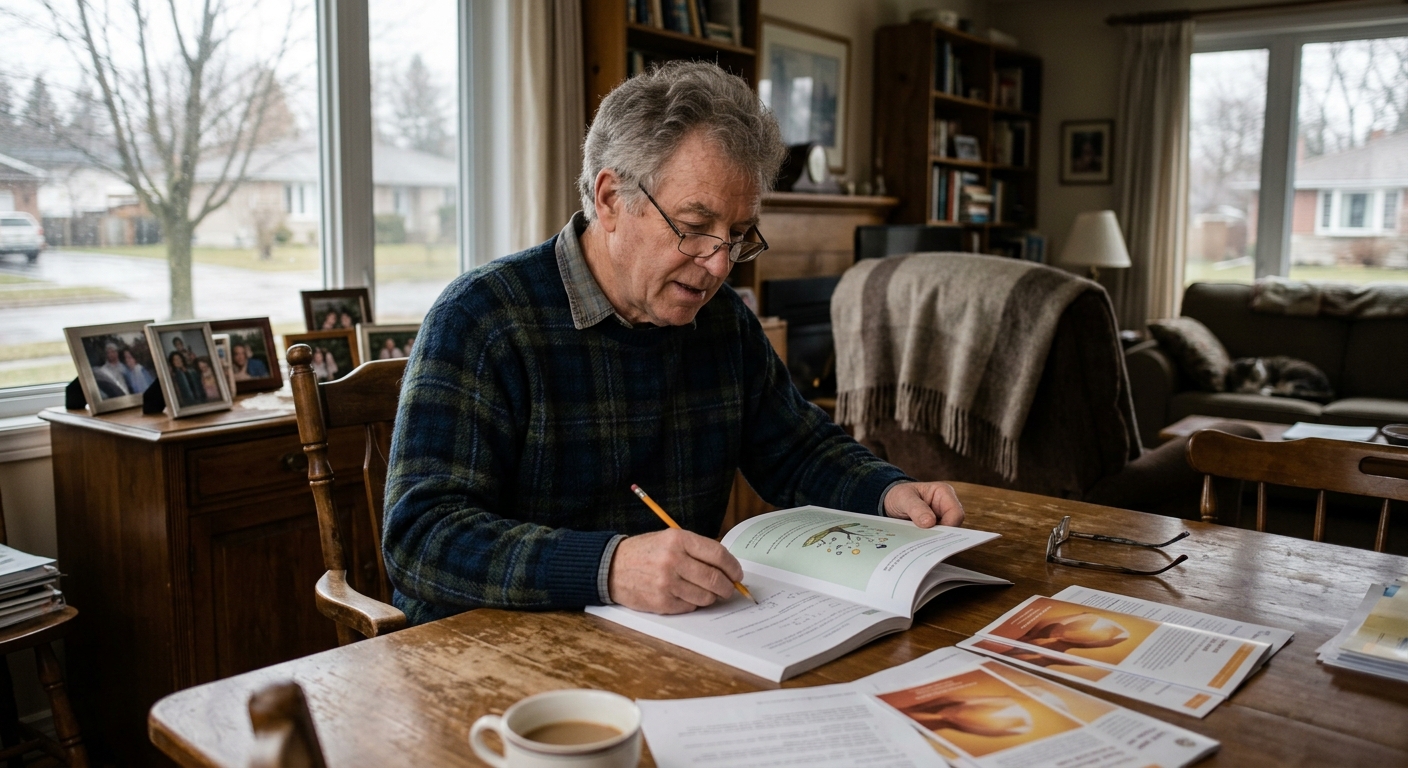
The Cost and Benefits of Aging Adult Literacy Programs
Adult literacy and GED programs in Ontario are surprisingly affordable, but costs accumulate:
| Program Type | Duration | Cost per Program | Additional Costs | Total Investment |
|---|---|---|---|---|
| English conversation class (community center) | 12 weeks (1–2×/week) | $150–$300 | Transportation, childcare if needed | $200–$500 |
| Adult literacy (non-profit, low-barrier) | 12–24 weeks | Free–$400 | Transportation, materials | $100–$500 |
| GED prep course | 12–16 weeks | $300–$800 | GED exam fee ($125–$150) | $500–$1,000 |
| ESL (English as Second Language) college program | 4–8 weeks intensive | $1,200–$3,000 | Textbooks, materials, exam prep | $1,500–$3,500 |
| Full GED completion (including prep + exam) | 16–24 weeks | $800–$2,000 | Support services, tutoring | $1,500–$3,000 |
| University continuing education (ESL/conversation) | 12 weeks | $400–$800 | Textbooks, materials | $600–$1,200 |
The benefits of successful completion:
- Literacy: Can read medication labels, legal documents, safety instructions (prevents dangerous mistakes).
- Employment opportunities: Moves from precarious low-wage work to positions requiring basic education credentials.
- Independence: Can navigate government systems, banking, healthcare without asking for help.
- Dignity and confidence: Major psychological boost; many adult learners report renewed sense of purpose.
- Social connection: School programs provide community and reduce isolation (particularly important for aging immigrants).
According to Ontario Literacy Coalition, seniors who complete adult education programs report:
- 50% increase in employment prospects (some return to part-time work).
- 70% reduction in feelings of isolation.
- Improved health outcomes (engagement, cognitive stimulation, social connection).
Case Study: Maria's GED Journey at 74
Maria, 74, immigrated to Canada from Honduras at age 53. She'd left school at age 12 (family poverty). She worked 20 years in housekeeping, then as a caregiver. She spoke Spanish at home and broken English at work.
Maria's challenges:
- Couldn't read English medication labels (took wrong doses; hospitalized once due to confusion).
- Couldn't fill out government forms (asked her daughter to do it; daughter resented the burden).
- Limited employment prospects (could only do laborer/care positions; made minimum wage).
- Isolated (spoke Spanish at home; didn't socialize; felt embarrassed about illiteracy).
Maria's son, 48, and his aging mother (now living with him) knew her situation was unsustainable. She wanted to complete a GED and improve her English before she became too old.
The barrier: Cost. Maria's son made $45,000/year (middle-class family), but Maria had $12,000 in personal savings. A GED program cost $2,000; ESL lessons $1,500/year. Maria was on CPP ($18,000/year); she couldn't afford both education and living expenses.
Maria's son and his wife (Maria's daughter-in-law) owned a home worth $420,000 with a $100,000 mortgage. They offered to fund her education with a reverse mortgage, though they were concerned about the extra debt.
The solution:
- They accessed a reverse mortgage for $30,000 against their equity.
- Used $8,000 for Maria's GED prep course + tutoring ($2,000).
- Used $3,500 for intensive ESL program (4 weeks).
- Used $2,500 for one-on-one English conversation tutoring.
- Used $1,000 for books, exam fees, materials.
- Reserved $13,000 as emergency fund and for ongoing support.
Maria's education timeline:
- Month 1–3: GED prep (12 weeks, 2×/week).
- Month 4: GED exam (passed on first attempt; score: 157/200—adequate).
- Month 5–6: Intensive ESL program (4 weeks, full-time).
- Month 7–12: Ongoing conversation tutoring (2×/week).
The outcome (one year later):
- Maria achieved a GED (high school equivalency).
- Her English improved from "survival level" to "functional conversational."
- She found a part-time job (30 hours/week) as a care aide at a seniors' home ($18/hour = $28,000/year, vs. $16/hour before = $20,000/year).
- Additional income: $8,000/year.
- She gained confidence; made friends in her ESL class; reduced isolation significantly.
Financial impact:
- Maria's son repaid the reverse mortgage using her additional income ($250/month) + family contribution ($150/month).
- Within 3 years, they'd paid down $14,400 of the $30,000.
- Maria's mother lived with them, healthier and more engaged than before.
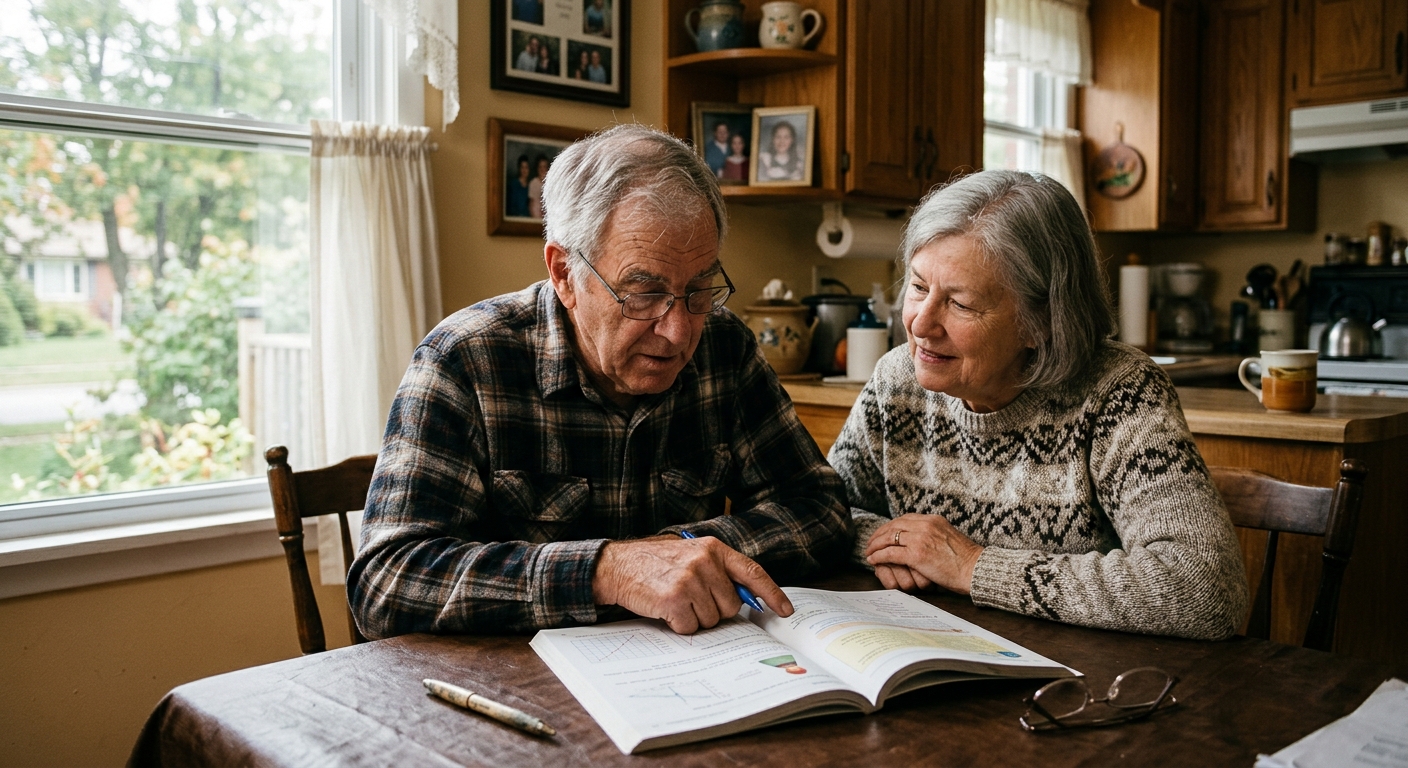
Program Options: What's Available in Ontario for Aging Learners
Ontario has multiple pathways for aging immigrants seeking literacy and educational support:
| Program | Provider Type | Cost | Accessibility for Seniors |
|---|---|---|---|
| Community Adult Literacy Program (CALP) | Community organizations, libraries | Free–$300 | High (designed for low-barrier access; often wheelchair accessible; seniors welcome) |
| Community and Immigrant Services (CIS) ESL Programs | Nonprofit immigration agencies | Free–$500 | Very high (culturally sensitive; some offer elder-specific groups) |
| College ESL/GED Programs | Community colleges (Humber, Centennial, George Brown, etc.) | $1,200–$3,000 | Medium (some colleges offer flexible scheduling; less affordable) |
| GED Online (Prep + Exam) | Self-paced or instructor-led online | $300–$1,200 | Medium (requires computer access; some seniors lack comfort) |
| Settlement agency literacy programs | Toronto, Ottawa, Montreal settlement agencies | Free–$200 | Very high (refugee-focused; sensitive to trauma; many serve aging population) |
| University Continuing Education (ESL/Conversation) | University of Toronto, McMaster, UOIT | $400–$800/course | Medium (intimidating for some; but excellent instruction) |
| Public library literacy programs | Ontario Public Library network | Free–$150 | Very high (accessible, welcoming, seniors comfortable) |
Most programs offer:
- Flexible scheduling (evenings, weekends, part-time options).
- Free or low-cost childcare (if needed).
- Transportation assistance or online options.
- Cultural sensitivity and diverse instructor backgrounds.
Gaps:
- Long waitlists (popular programs have 6–12 month waits).
- Limited offerings in rural Ontario.
- Ageism (some programs designed for working-age adults; less welcoming to 70+).
Addressing Ageism and Stigma: Supporting Your Aging Parent
Many aging immigrants hesitate to pursue education due to:
- Age stigma: "I'm too old to learn."
- Language anxiety: Fear of speaking English in front of younger classmates.
- Shame: Embarrassment about illiteracy after a lifetime of work.
- Family pressure: Adult children saying "Don't bother, you're retired now."
How to support your aging parent as they pursue education with reverse mortgage funding:
-
Reframe it as dignity and independence: "This is for YOU—your health, your confidence, your ability to understand your own life."
-
Choose age-friendly programs: Look for programs with mixed-age groups or specifically for seniors.
-
Offer transportation and logistics support: Drive them to class, help sign up, organize materials.
-
Celebrate progress: Every completed lesson, every conversation, every quiz passed is a victory.
-
Connect them with classmates: Help them build friendships in the program (combat isolation).
-
Normalize education at any age: Talk positively about lifelong learning; counter ageism messages they've internalized.
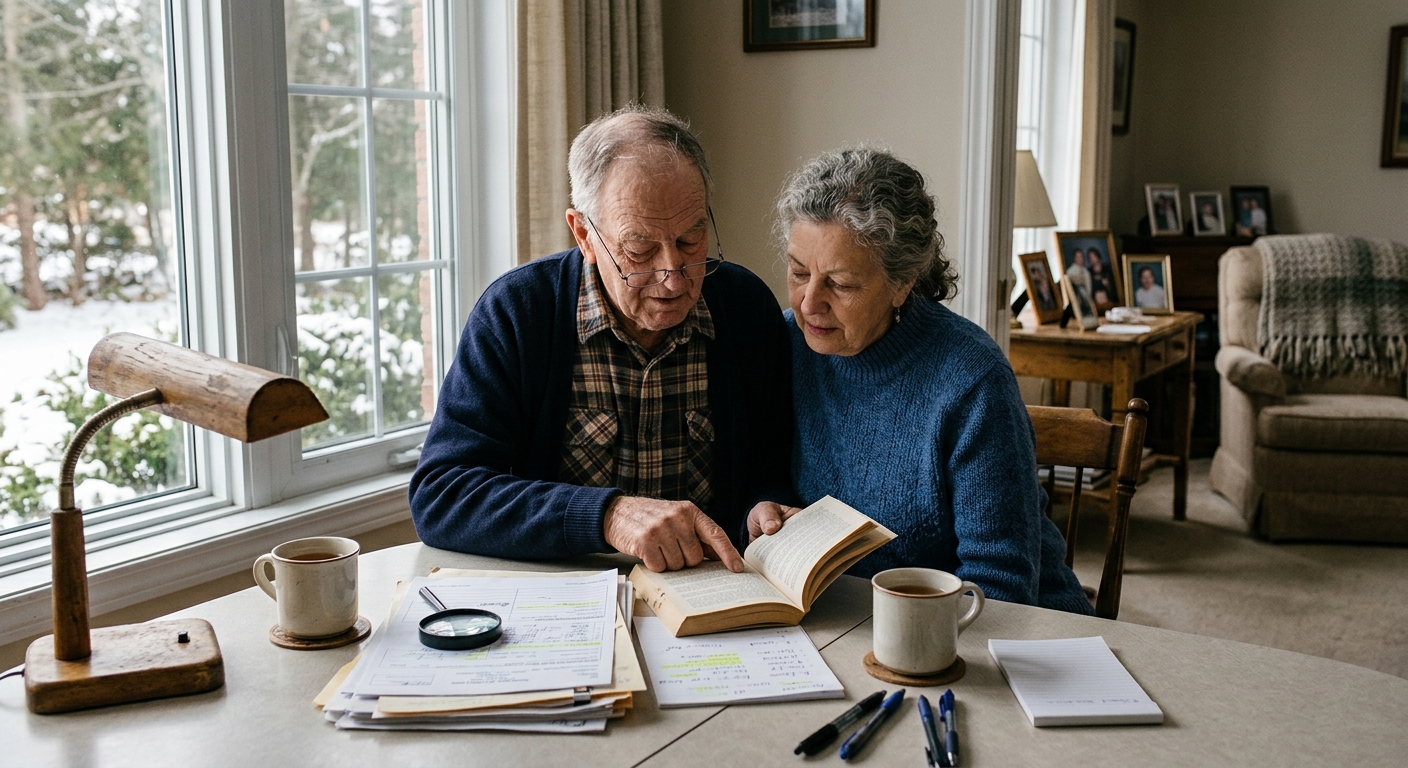
Health and Cognitive Benefits: The Science
Beyond employment and dignity, adult education has measurable health benefits for aging adults:
| Health Outcome | Research Basis | Impact for Aging Immigrants |
|---|---|---|
| Cognitive function preservation | Harvard, Cambridge studies | Learning new language/skills prevents cognitive decline; protects against dementia |
| Mental health improvement | Gerontology literature | Social connection through school reduces depression by 40–50%; combats isolation |
| Physical activity increase | Public health research | Regular school attendance = more out-of-home activity; improves physical health |
| Medication adherence | Healthcare studies | Reading labels correctly = fewer medication errors; better health management |
| Reduced hospitalization | Ontario Health data | Engaged, educated seniors have 20–30% fewer emergency visits |
The reverse mortgage is not just education funding; it's a health and longevity investment.
Estate Planning and Legacy: Education as Part of Your Legacy
Some adult children fund a parent's education as part of broader legacy planning:
- Education is the one asset a parent carries forever: Unlike money spent on care, education is portable and permanent.
- Younger grandchildren see Grandma/Grandpa in school: Powerful message about lifelong learning.
- Increased independence delays costly care: An educated, engaged aging parent may age in place longer, reducing need for assisted living.
Consider discussing with your aging parent: "What would you like to learn before you retire completely? Let's make it happen."
Key Takeaways
- Many aging immigrants (25–30% of seniors 65+ with immigrant status) lack high school credentials; education improves dignity, employment, and independence.
- Adult literacy and GED programs cost $500–$3,000; reverse mortgage funding makes them accessible for seniors on fixed incomes.
- Education has measurable health benefits (cognitive preservation, mental health, reduced isolation, better medication adherence).
- Ontario has multiple program options (libraries, settlement agencies, colleges, universities); costs range from free to $3,000.
- Reversing mortgage specifically to fund a parent's education is a powerful legacy investment, improving their health and independence.
- Rick Sekhon Reverse Mortgages helps families fund aging parent education as part of broader aging-in-place strategies.
Frequently Asked Questions
If my aging parent goes back to school and gets a job, will that income affect their CPP or OAS benefits?
Yes, partially. Employment income counts as income for OAS clawback purposes (OAS is clawed back 15% for every dollar earned over $90,997 in 2026). However, CPP (Old Age Security) continues regardless. She should consult Service Canada to understand the specific impact based on her income level.
Can a reverse mortgage cover full program costs including living expenses while my parent is in school?
Yes. If your parent needs to reduce work hours or stop working to attend school full-time, a reverse mortgage line of credit can cover tuition plus living expense gaps. Draw only what's needed, and unused credit remains available.
Are there government grants or subsidies for aging adult education programs?
Some programs are free or heavily subsidized (community centers, libraries, settlement agencies). Ontario colleges offer some grants for low-income students, but most require application. Your parent should ask the program directly about funding support before you commit a reverse mortgage.
If my aging parent attends school and becomes more independent, can they contribute to reverse mortgage repayment?
Yes. If she finds employment or increases income through education, part of that income can go toward repaying the reverse mortgage. Many families set up repayment plans (e.g., $200/month once employment begins).
What if my aging parent starts school and realizes it's not for them—can I get a refund?
Most programs offer withdrawal without penalty in the first 1–2 weeks. Beyond that, tuition is usually non-refundable. However, the reverse mortgage has no penalties; you only pay interest on amounts used. If she drops out after 4 weeks and you've spent $500, you owe the reverse mortgage $500 + interest, not the full program cost.
Can my aging parent apply directly for a reverse mortgage to fund their own education?
Yes, if they're 55+ and have home equity. However, most aging parents on fixed income prefer that their adult children apply (if the property is in the adult child's name). Consult a reverse mortgage specialist about options based on your family's situation.
Ready to Learn More?
Find out exactly how much you could unlock from your home — free and no obligation.
Related Articles
Reverse Mortgage After Your Caregiver Retires: Restructuring Care and Rebuilding Independence
Your longtime caregiver is retiring. A reverse mortgage funds the transition to new care arrangements and helps you rebuild independence after years of dependence.
Read →Reverse Mortgage for Accessible Community Kitchen: Culinary Training and Aging in Place
Convert your home kitchen into an accessible commercial culinary training space. Reverse mortgage funds renovation while creating community impact.
Read →Reverse Mortgage to Launch Home-Based Tax Prep and Retirement Planning Business
Fund your home-based tax and retirement planning practice with a reverse mortgage. Serve aging Canadians while accessing home equity in Ontario.
Read →