
Reverse Mortgage for Aging Boomers With Undiagnosed Long COVID: Home Modifications for Permanent Post-Viral Disability
Create accessible homes for undiagnosed long COVID, post-viral ME/CFS, and emerging post-pandemic disabilities. Reverse mortgage for mysterious illness housing.
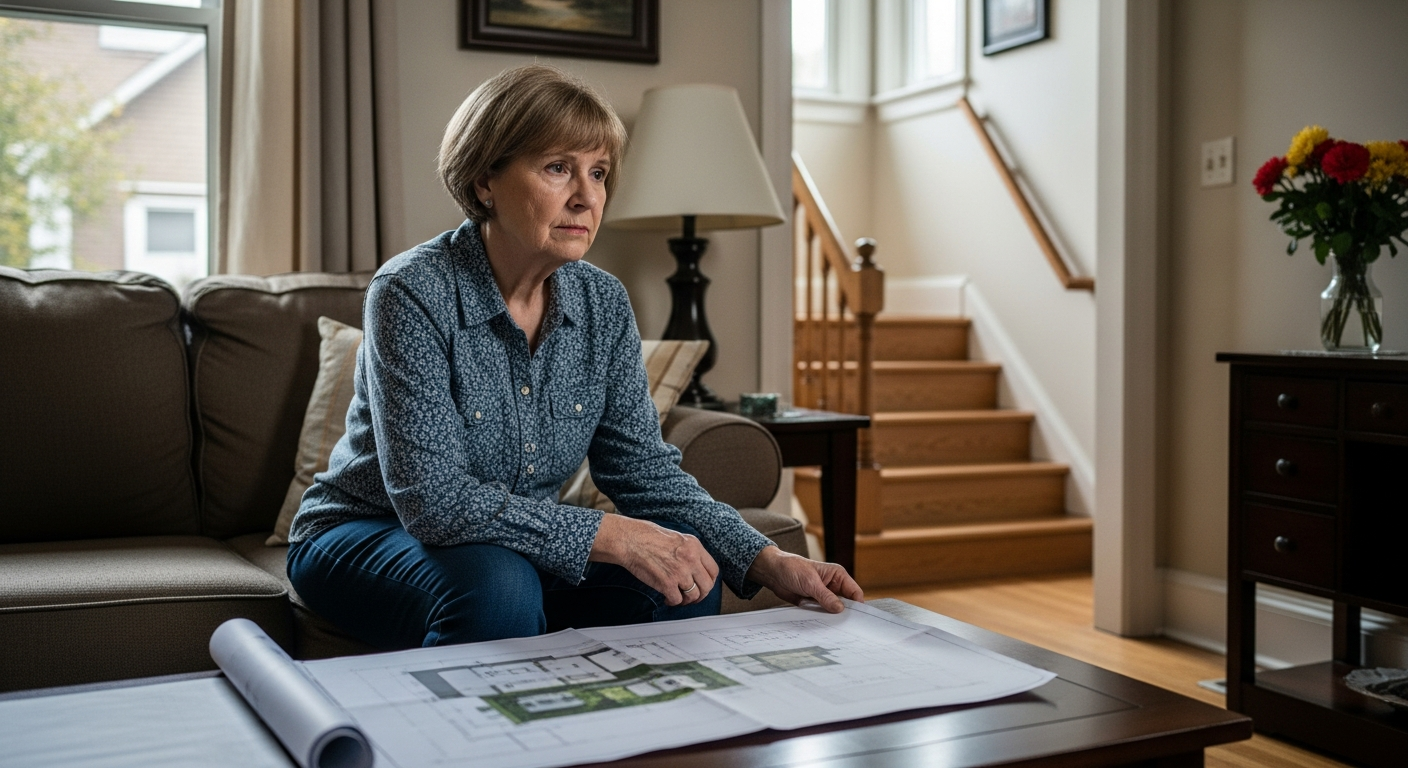
You're 64, had a mild COVID infection two years ago, and you've never recovered. Chronic fatigue, cognitive fog, exercise intolerance, and mysterious pain transformed you from active professional to disabled. Doctors call it "post-COVID condition" or dismiss it as psychological. You can't work anymore. Your home wasn't designed for someone who can barely climb stairs without triggering a two-week "crash."
A reverse mortgage funds the specialized home modifications—single-level accessibility, minimal exertion design, quiet spaces, modified lighting—that allow you to live safely and independently with a disability that doesn't yet have a clear name or treatment.
The Invisible Epidemic: Long COVID Disability in Ontario
Long COVID and related post-viral conditions are emerging as a significant disability category—and aging adults are disproportionately affected.
Key epidemiology:
- 5–10% of COVID survivors develop persistent symptoms (Canadian data, 2024)
- Boomers age 55–70 have longer symptom duration than younger cohorts
- 40% of long COVID patients become unable to work (University of Toronto study)
- Most don't qualify for disability benefits (symptoms are "invisible"; tests appear normal)
- Home accessibility modifications remain unfunded because disability status is unclear and benefit eligibility is restricted
The cruel paradox: you're disabled (unable to work, requiring home modifications), but government and insurance systems don't recognize the condition. You're forced to self-fund accessibility modifications while managing the financial impact of lost income.
A reverse mortgage converts your home equity into the accessibility infrastructure that allows you to function independently with a disability that the system still doesn't fully acknowledge.
Long COVID and Post-Viral Disability Housing Needs
Long COVID creates specific housing challenges that differ from typical aging-in-place accessibility:
| Accessibility Need | Traditional Aging | Long COVID / ME/CFS | Housing Solution | Cost |
|---|---|---|---|---|
| Mobility | Stairs hard; need handrails | Stairs triggering; need single-level living | Single-floor layout OR bedroom/bathroom on main level | $15,000–$50,000 |
| Exertion intolerance | Walking distance limited; need close parking | Walking 20 feet can trigger symptom crash; need pacing design | Layout minimizing steps/effort between essential rooms | $5,000–$20,000 |
| Cognitive fog ("brain fog") | Memory decline; need reminders | Severe decision-making impairment; need environment that requires minimal choices | Simplified, organized spaces; minimal visual clutter | $2,000–$8,000 |
| Light sensitivity | General brightness preference | Fluorescent/LED lights triggering migraines/sensory overload | Dimmable, warm-spectrum lighting throughout | $3,000–$8,000 |
| Sound sensitivity | General noise; hearing aids possible | Sound echoes, traffic, appliance noise triggering symptom spikes | Sound dampening; quiet zones; isolated bedroom | $4,000–$15,000 |
| Temperature dysregulation | Aging brings cold tolerance | Extreme temperature sensitivity; uncontrolled sweating/chills | Zone-controlled HVAC; individual temperature control | $5,000–$12,000 |
| Sleep dysfunction | Difficulty sleeping; melatonin helps | Non-restorative sleep; light-blocking essential | Blackout bedding; light-blocking windows; environmental controls | $3,000–$8,000 |
| TOTAL LONG COVID HOUSING RETROFIT | $37,000–$101,000 |
Compare to traditional aging-in-place modifications (ramps, handrails, bathroom safety): $15,000–$30,000. Long COVID housing is more complex because mobility isn't the primary barrier—energy regulation, sensory tolerance, and cognitive function are.
Why Traditional Disability Benefits Don't Cover Long COVID Housing
Most aging adults assume disability benefits (CPP-D, ODSP) would fund housing modifications. They don't—or barely.
Disability benefit reality in Ontario:
- CPP-D provides income (~$1,200–$1,500/month) but no housing modification funding
- ODSP provides income (~$1,200/month) but rarely funds home accessibility (requires pre-approval; highly restrictive)
- Most provincial accessibility grants focus on mobility disabilities (wheelchairs, ramps) not energy-regulation disabilities (lighting, sound dampening)
Long COVID, being "invisible" and not yet fully recognized, falls between categories. You're disabled but systems don't categorize you properly. You need housing modifications but programs don't fund them.
A reverse mortgage fills this gap—converting home equity into the accessibility infrastructure that you must self-fund because systems won't.
Structuring Home Modifications for Long COVID Energy Regulation
Unlike traditional accessibility (which is permanent), long COVID housing modifications can be somewhat phased and adjusted as symptoms evolve.
Phase 1 (Weeks 1–4): Critical symptom management
- Single-level bedroom + bathroom access ($8,000–$15,000 — either bedroom relocation or install main-floor bedroom/bathroom)
- Lighting retrofit: dimmable, warm-spectrum throughout ($3,000–$8,000)
- Bedroom sound dampening ($2,000–$5,000)
- Outcome: Safe sleeping + minimal exertion for essential daily activities
Phase 2 (Weeks 5–12): Exertion reduction
- Layout optimization: move essential items (food, water, bathroom) closer to bedroom ($3,000–$10,000 renovation)
- Temperature control: individual thermostats per zone ($4,000–$8,000)
- Outcome: Daily living requires 40–50% less physical exertion
Phase 3 (Months 4–6): Cognitive and sensory optimization
- Visual clutter reduction: built-in storage, organization systems ($2,000–$5,000)
- Further sensory isolation: additional sound treatment, window upgrades ($3,000–$8,000)
- Outcome: Cognitive fog is slightly reduced; sensory triggers are minimized
Total first-year cost: $25,000–$59,000 (varies by current home layout and symptom severity)
The "Invisible Disability" Financial Crisis
Long COVID patients face a brutal financial squeeze: they're unable to work (lost income: $40,000–$80,000 annually) but don't qualify for disability benefits (systems say they're not disabled enough).
Typical scenario: 64-year-old with long COVID
| Financial Element | Impact | How Reverse Mortgage Helps |
|---|---|---|
| Lost work income | Can't work; lost $50,000/year | Reverse mortgage funds living expenses during benefits application (6–12 months) |
| CPP-D application delay | Takes 6–18 months to get approved; often denied initially | Reverse mortgage provides bridge income while waiting for approval |
| Disability benefit shortfall | If approved, CPP-D covers only $1,200–$1,500/month (not enough) | Reverse mortgage supplements income gap |
| Home modification costs | $25,000–$60,000; can't pay from lost income | Reverse mortgage funds modifications directly |
| Medical costs (private therapy, testing) | $2,000–$8,000/year not covered by OHIP | Reverse mortgage can fund experimental treatments, testing |
A reverse mortgage addresses ALL of these pressures simultaneously—bridging the income gap, funding modifications, and supporting medical needs during the crisis period when employment is lost but disability benefits haven't yet kicked in.
Addressing the "Mysterious Illness" Stigma
Long COVID remains controversial. Many physicians are skeptical; some patients face disbelief from family; stigma is real.
This matters for reverse mortgage planning: you might feel shame about accessing home equity for a disability that "doesn't look real" or that "others don't fully believe in."
Reality check: Post-viral disabilities are real. ME/CFS affects thousands of Canadians. Long COVID is being studied at major research institutions. Your disability is legitimate whether or not the system fully recognizes it yet.
A reverse mortgage is a tool, independent of societal validation. Your home equity should serve your actual living needs.
Coordinating With Disability Benefits
When (and if) you're approved for CPP-D or ODSP, you'll have to coordinate with your reverse mortgage:
Important: Reverse mortgage proceeds are loans, not income. They don't affect CPP-D or ODSP eligibility. This is one advantage over other funding sources—you can access home equity without triggering benefit complications.
According to FSRAO, long COVID patients can:
- Apply for reverse mortgage to fund housing modifications
- Apply separately for disability benefits (takes 6–18 months)
- Once benefits approved, continue reverse mortgage arrangement (it's not affected)
This dual approach lets you avoid the worst-case scenario: needing housing modifications NOW but waiting 18 months for disability benefit approval.
Planning for Permanent Disability vs. Recovery
Here's the uncertainty: long COVID might resolve, or it might be permanent. Home modifications should reflect realistic planning, not false hope.
Framework:
- Reversible modifications (lighting retrofit, paint, temporary sound dampening): OK to invest immediately, even if uncertain about permanence
- Semi-permanent modifications (single-level bedroom creation, HVAC zoning): Make sense if you've been symptomatic for 1+ year (more likely to be permanent)
- Permanent modifications (full bathroom renovation, structural change): Only if symptoms have been stable for 2+ years (more confidence in permanence)
This phased approach prevents over-modifying early (during uncertainty) while ensuring critical modifications exist immediately.
Estate Planning With Long COVID Disability
If you're young enough (55–65) that you might live another 25–30 years with long COVID, estate planning is important:
Key considerations:
- Reverse mortgage becomes debt that your estate must repay
- Home passes to heirs with reverse mortgage lien against it
- Heirs can refinance the reverse mortgage, sell, or pay from estate assets
- Modify your will to reflect this reality (don't assume heirs inherit free and clear)
Consult a family lawyer about estate planning that accounts for potential long-term disability and reverse mortgage debt.
Key Takeaways
- Long COVID and post-viral disabilities create specific housing needs (energy regulation, sensory control, exertion minimization) different from traditional aging accessibility
- Modifications cost $25,000–$60,000 but are largely unfunded by disability benefits (CPP-D, ODSP) because long COVID isn't yet fully recognized by systems
- Reverse mortgages let you access home equity immediately for modifications, while waiting 6–18 months for disability benefits approval
- Phased modification approach (critical first, exertion reduction second, sensory optimization third) reduces over-spending during period of uncertainty
- Invisible disabilities don't require visible justification—your home equity should serve your actual living needs
Frequently Asked Questions
If I have long COVID and eventually recover, am I stuck with a reverse mortgage for modifications I don't need anymore?
You keep the modified home. The modifications (lighting, single-level bedroom, temperature control, sound treatment) remain; you pay interest on the borrowed amount. However, a recovered person might not "need" these modifications—but many find them valuable anyway (lower energy use, quieter home). Your estate inherits the reverse mortgage debt, which is paid from home sale or other assets.
Will CPP-D application be harder if I already have a reverse mortgage?
No. Reverse mortgage debt doesn't affect CPP-D eligibility. CPP-D cares about work capacity, not finances. However, some forms ask about assets/debts; be honest but understand it's not a disqualifying factor.
Can I get a reverse mortgage if my long COVID diagnosis is disputed or unclear?
Yes. Reverse mortgages don't require a specific diagnosis—only home equity. Lender approval depends on home value and your age, not medical status. This is actually an advantage: you can access funds immediately while waiting for diagnostic clarity or benefits approval.
If I use a reverse mortgage to modify my home for long COVID and it helps me return to part-time work, do I have to repay the mortgage?
No. Reverse mortgage repayment is due when you die, move to long-term care, or sell your home—not when your circumstances improve. If you recover and return to work, you simply have a reverse mortgage with growing debt. You could then make voluntary payments to reduce the balance, but you're not required to.
Should I apply for disability benefits and a reverse mortgage at the same time, or one first?
Start with reverse mortgage. Disability applications take 6–18 months. During that wait, use reverse mortgage for housing and living expenses. Once approved for CPP-D or ODSP, the disability income helps; reverse mortgage debt continues independently. No conflict; both work together.
Can I use a reverse mortgage to fund experimental long COVID treatments not covered by OHIP?
Yes. Reverse mortgage funds can be used for any legal purpose, including private medical treatment. However, be cautious about experimental treatments—some are unproven. Consult medical professionals about which treatments are evidence-based before funding.
Ready to Learn More?
Find out exactly how much you could unlock from your home — free and no obligation.
Related Articles
Reverse Mortgage for Accessible Community Kitchen: Culinary Training and Aging in Place
Convert your home kitchen into an accessible commercial culinary training space. Reverse mortgage funds renovation while creating community impact.
Read →Reverse Mortgage to Launch Home-Based Tax Prep and Retirement Planning Business
Fund your home-based tax and retirement planning practice with a reverse mortgage. Serve aging Canadians while accessing home equity in Ontario.
Read →Reverse Mortgage for Retirement Community Entrance Fees: Active Adult Transitions
Fund retirement community move without forced downsizing. Ontario guide for 55+ aging in place now, transitioning later to active adult communities.
Read →