
Reverse Mortgage to Fund Adult Child's Registered Dietitian Education and Credentials
Help your adult child pursue registered dietitian (RD) credentials with reverse mortgage funding. Support nutrition science education, internships, and licensing. Ontario healthcare career.
What if your adult child is passionate about nutrition science and preventing chronic disease, but the cost of becoming a registered dietitian (RD) feels financially out of reach? Dietitian education in Canada is rigorous and expensive — requiring a specialized Bachelor's degree, supervised practice program (internship), and national licensing exams. The total investment spans 4–5 years and costs $40,000–$80,000. Yet registered dietitians in Ontario earn strong, stable income ($55,000–$85,000+) and face consistent job demand as healthcare systems recognize nutrition's role in disease prevention. A reverse mortgage enables parents to fund this healthcare career pathway without burdening an adult child with education debt.
This guide explains how Ontario homeowners 55+ can use a reverse mortgage to support an adult child pursuing registered dietitian credentials.
The Canadian Dietitian Education Pathway and Costs
Becoming a registered dietitian in Canada requires specialized education, practical training, and licensing — a pathway distinct from general nutrition or health coaching.
The Registered Dietitian Credential Requirements
| Education Component | Duration | Cost (Ontario) | Details |
|---|---|---|---|
| Bachelor of Science in Nutrition | 3–4 years | $20,000–$35,000 | University programs; may overlap with other degrees |
| Supervised Practice Program (SPP/Internship) | 6–12 months | $10,000–$20,000 | Practical training in clinical, community, or foodservice settings; increasingly unpaid positions |
| Examination for Dietitian Registration (EDR) | Preparation + exam | $1,500–$3,000 | National licensing exam; study materials and application fees |
| Continuing Professional Development | Ongoing | $500–$1,000/year | Annual registration maintenance and credentialing |
| Total investment (credential acquisition) | 4–5 years | $31,500–$58,000 | Total before employment begins |
Additional costs often include:
- Clinical placement travel and accommodation
- Professional association fees ($200–$400/year)
- Specialized equipment (for foodservice or clinical roles)
Notably, many supervised practice programs are unpaid or low-paid (interns earning $12,000–$18,000 during their internship year). Parents often bridge this income gap to enable their child to complete training.
Income and Job Security for Registered Dietitians in Ontario
| Career Stage | Typical Income | Work Settings |
|---|---|---|
| Entry-level (newly licensed) | $50,000–$60,000 | Hospitals, community health, schools, private practice |
| 5 years experience | $60,000–$75,000 | Established practices, senior clinical roles, management |
| 10+ years (senior roles, specialists) | $75,000–$90,000+ | Hospital leadership, private practice ownership, consulting |
Registered dietitians face strong job demand driven by:
- Aging population requiring medical nutrition therapy
- Chronic disease management (diabetes, heart disease, obesity)
- Healthcare system focus on preventive nutrition
- Workplace wellness programs across sectors
Unlike some healthcare fields, dietitian job security is high, and income stability is predictable.
According to Statistics Canada, registered dietitian positions are projected to grow 15–20% over the next decade, outpacing overall job growth and reflecting sustained demand for nutrition expertise in healthcare and wellness.
Why Parents Fund Dietitian Education: The Impact and Values Alignment
Dietitian Work Addresses Critical Health Issues
Registered dietitians work on:
- Chronic disease prevention — Nutrition intervention reduces risk of diabetes, heart disease, stroke
- Pediatric nutrition — Supporting healthy child development and preventing obesity in youth
- Senior nutrition — Maintaining health and independence in aging populations
- Specialized medical nutrition — Managing kidney disease, cancer, gastrointestinal disorders, allergies
- Public health — Food security, nutrition education, community health improvements
Each dietitian impacts hundreds or thousands of people across their career, contributing to population health outcomes.
Financial Return on Investment (Living Legacy)
A registered dietitian earning $65,000–$75,000 annually will generate $2.6–$3 million in lifetime earnings over a 40-year career. Funding $40,000–$60,000 in education costs is a 43–75x return on investment.
Values Alignment: Supporting Health-Focused Careers
Parents funding dietitian education are supporting:
- Evidence-based healthcare
- Preventive medicine and wellness
- Sustainable food systems and nutrition
- Advocacy for vulnerable populations' nutrition access
- Scientific rigor in health information (countering diet fads and misinformation)
For parents valuing health, science, and community contribution, funding a child's dietitian career is aligned investment.
How Reverse Mortgage Funding Enables Dietitian Credentials
The Barrier: Expensive, Unpaid Training Year
Most RD candidates face a critical financial gap: the supervised practice program (internship) year. Many programs are unpaid or minimally paid ($12,000–$18,000), yet living expenses continue ($20,000–$25,000/year). Candidates often:
- Work part-time while completing unpaid internship (reducing focus on clinical training)
- Take student loans ($15,000–$25,000 just for the internship year)
- Rely on family financial support
A reverse mortgage removes this barrier.
The Reverse Mortgage Solution
A reverse mortgage enables:
✓ No credit check — Approval based on age (55+) and home equity
✓ No monthly payments — Borrow against home equity; repay only after sale or death
✓ Flexible timing — Draw funds as tuition and expenses arrive
✓ Full-time focus — Child completes unpaid internship without part-time work distraction
✓ Debt-free graduation — No student loan burden at career start
Financial Model: Funding Dietitian Credentials via Reverse Mortgage
| Timeline | Financial Position |
|---|---|
| Year 0: Undergraduate nutrition studies begin (tuition: $7,000/year) | Home equity: $400,000; RM balance: $7,000 |
| Year 3: Bachelor's degree completed; supervised practice program begins (unpaid, living costs: $22,000) | Annual RM draw: $22,000; RM balance: ~$32,000 (including interest) |
| Year 4: SPP completed; exam passed; RD license acquired; starts earning $55,000/year | RM balance: ~$35,000; Child's annual income: $55,000 |
| Year 5: Dietitian employed, earning $60,000; RM balance continues at $37,500 (growing with interest) | Annual income: $60,000; RM balance: ~$37,500 |
Outcome: The parent invested $50,000–$55,000 (including interest) in reverse mortgage funding. The child graduated debt-free and began earning $55,000+ annually. Over a 40-year career, the child will earn $2.2+ million — a massive multiplier on the parental investment.
Step-by-Step: Funding Dietitian Education
Step 1: Confirm Your Child's Commitment and Academic Readiness
Before accessing a reverse mortgage, verify:
- Is your child genuinely interested in nutrition science and healthcare?
- Have they completed prerequisites (biology, chemistry, biochemistry, or equivalent)?
- What universities are they targeting? (Ryerson, University of Toronto, McMaster, Western, etc.)
- Have they researched the SPP (supervised practice program)? Acceptance is competitive; not all applicants are placed immediately.
This prevents funding a child who later changes fields or struggles with science-based coursework.
Step 2: Research Dietitian Programs and Costs in Ontario
Ontario universities offering dietitian (nutrition science) degrees:
- Ryerson University — Bachelor of Applied Science in Nutrition
- University of Toronto — Bachelor of Science in Nutritional Sciences
- McMaster University — Bachelor of Health Sciences (Nutrition)
- Western University — Bachelor of Medical Sciences (Nutrition)
- University of Guelph — Bachelor of Science in Nutritional Sciences
Each program has different tuition, prerequisites, and SPP pathway structures. Research 2–3 options before funding.
Step 3: Assess Your Home Equity and Reverse Mortgage Capacity
Meet with Rick Sekhon Reverse Mortgages to understand:
- Your home's current value (approximate)
- Your age and spouse's age (55+ required)
- Estimated borrowing power
- Whether you can comfortably accommodate $40,000–$60,000 in reverse mortgage funding without overextending
A $500,000 home for a 67-year-old homeowner typically yields $275,000+ in borrowing capacity — sufficient for dietitian education while preserving flexibility.
Step 4: Establish Family Funding Expectations
Be explicit about:
- Amount funded — Undergraduate tuition + SPP living costs + exam fees (e.g., $50,000)
- What's covered — Tuition, textbooks, SPP living costs, exam fees
- What's not covered — Discretionary spending, travel, lifestyle
- Timeline — Funding drawn annually, per semester, or as needed
- Post-graduation — Is this a gift or loan? If loan, will child repay from future earnings?
Clear expectations prevent misunderstandings if your child's program path changes.
Step 5: Complete Reverse Mortgage Application
Timeline: 30–45 days from application to funding
Major lenders serving Ontario include CHIP, Equitable Bank, Bloom Financial, and Home Trust — all can fund education programs including dietitian training.
Process includes:
- Home appraisal ($300–$500)
- Age verification
- Independent legal advice (ILA) meeting
- Lender approval and fund disbursement
Step 6: Coordinate Funding with Education Timeline
Once approved:
- Draw initial funds for undergraduate Year 1 tuition
- Set line-of-credit balance for subsequent years and SPP funding
- Track draws to align with tuition bills and program expense timing
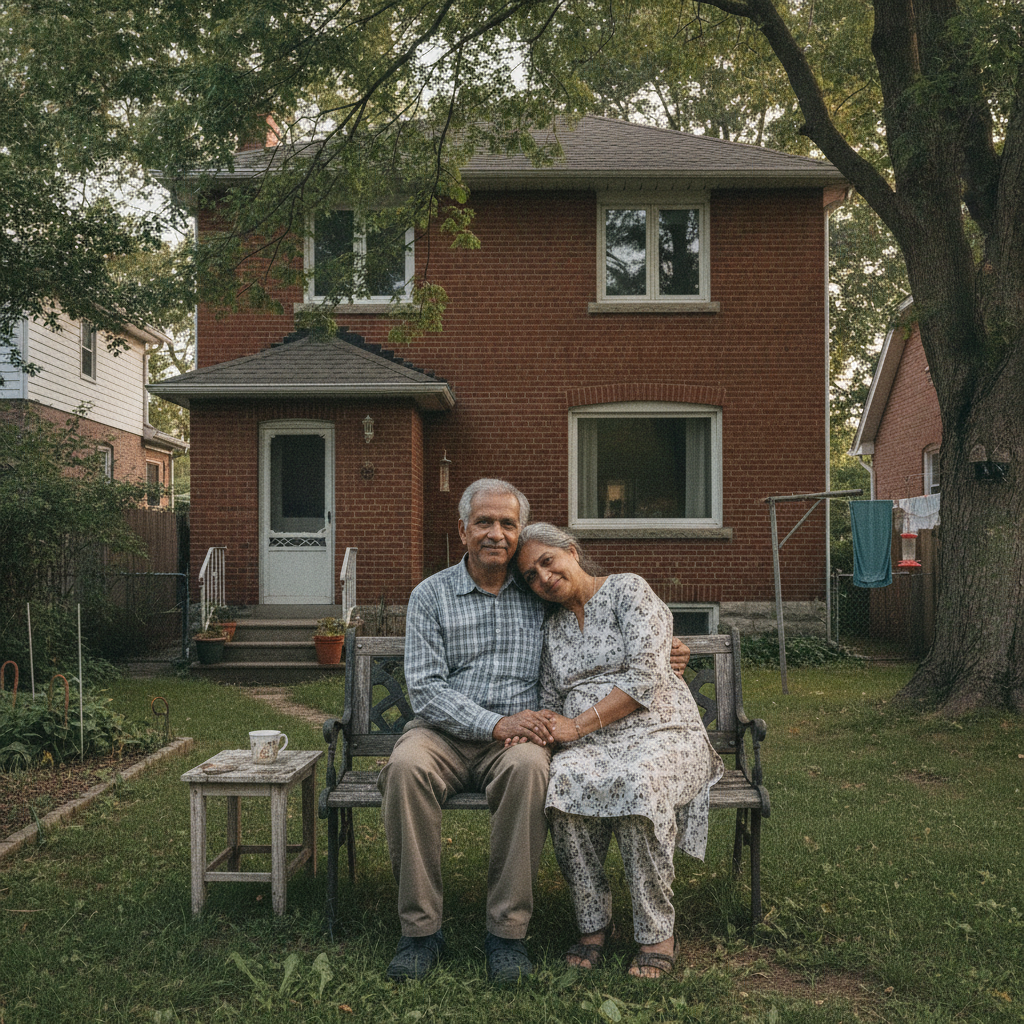
Case Study: The Patel Family's Investment in Priya's Dietitian Career
Scenario: Patel couple (ages 68 and 65) own a $520,000 home in Toronto mortgage-free. Their daughter Priya, age 22, is accepted to University of Toronto's Bachelor of Science in Nutritional Sciences program. Priya is passionate about nutrition's role in preventing Type 2 diabetes in South Asian communities.
| Component | Amount |
|---|---|
| Home value | $520,000 |
| Reverse mortgage borrowing capacity (age 68, 55% LTV) | $286,000 |
| Priya's education costs: | |
| - Bachelor's tuition (3 years at $8,000/year) | $24,000 |
| - SPP internship living costs (1 year, internship is unpaid) | $22,000 |
| - Professional association, exam, licensing | $2,000 |
| - Interest cost (6% over 4 years) | $7,600 |
| Total funded through reverse mortgage | $55,600 |
| Priya's starting RD salary (Toronto hospitals) | $56,000 |
Outcome: Patels access a $55,600 reverse mortgage against their primary home to fund Priya's dietitian education. Priya graduates debt-free, passes her RD licensing exam, and begins earning $56,000 annually as a registered dietitian in a Toronto hospital. Over a 40-year career, Priya will earn approximately $2.4+ million and serve thousands of patients with diabetes and nutrition-related conditions. The Patels' home equity is reduced by ~10%, a worthwhile trade for launching their daughter's healthcare career aligned with her values.
Tax and Benefits Implications
Tuition Tax Credits for Your Child
If Priya claims her own tuition credits (or transfers unused credits to her parents), those credits reduce personal income tax. This doesn't directly offset reverse mortgage costs, but it provides some tax relief in the education years.
Government Benefits Unaffected
Reverse mortgage proceeds are loan advances (not income). Your CPP, OAS, or GIS eligibility remains unaffected. Your child's future income is from RD employment (normal taxable income), not reverse mortgage proceeds.
Student Loans (Avoided)
By funding education via reverse mortgage, Priya avoids federal and provincial student loans. The $40,000–$50,000 in avoided student debt means:
- No monthly loan repayment ($400–$600/month for 10+ years)
- No interest on student loans ($8,000–$12,000 over repayment)
- Better credit profile and debt-to-income ratio for future mortgage applications
- Psychological benefit: debt-free career start improves mental health and focus
Risks and Realistic Considerations
Academic Performance Risk
Not all nutrition science students complete their degrees or pass SPP competency assessments. If your child struggles with chemistry, biochemistry, or fails SPP requirements, the funding is spent and equity is accessed regardless of outcome.
Mitigation: Confirm genuine academic readiness (strong high school science grades, comfort with rigorous coursework) before funding.
SPP Placement Uncertainty
After completing a Bachelor's in Nutrition, students must be accepted to a supervised practice program (internship) to become registered. Not all applicants are placed immediately; some wait 1–2 years or attend programs outside Ontario.
Mitigation: Research SPP placement rates for your child's chosen university and plan for potential timing extensions.
Career Path Shifts
Some graduates complete RD credentials but shift careers (leaving nutrition, pursuing entrepreneurship, moving abroad). If this happens, the funding is irreversible and your equity is accessed regardless.
Mitigation: Discuss genuine long-term commitment to dietitian work before funding.
Frequently Asked Questions
How much does dietitian education cost in Ontario in 2026?
Undergraduate nutrition science degree: $20,000–$35,000 over 3–4 years depending on university. Supervised practice program living costs (internship year): $15,000–$25,000 (internship is unpaid or minimally paid). Total: $35,000–$60,000. Major lenders serving Ontario (CHIP, Equitable Bank, Bloom Financial, Home Trust) can fund this.
How long does it take to become a registered dietitian in Ontario?
Typically 4–5 years: 3–4 years for Bachelor's degree + 6–12 months for supervised practice program (internship) + time for licensing exam. Some students complete faster with co-op programs; others take longer if SPP placement is delayed.
Will my child's dietitian income offset the reverse mortgage cost?
Yes. A newly registered dietitian in Ontario earns $55,000–$65,000. Over a 40-year career, income accumulates to $2.2–$2.8 million. The $50,000–$60,000 reverse mortgage investment is roughly 2% of lifetime earnings — a worthwhile investment in your child's career foundation.
What if my child doesn't get accepted to a supervised practice program immediately?
Some graduates wait 1–2 years before SPP placement. Plan additional reverse mortgage funding ($15,000–$20,000) to bridge this gap if your child needs to take bridging work or relocate for SPP opportunity.
Can I use a reverse mortgage to fund dietitian education if I have a traditional mortgage?
No. You must own your home mortgage-free (or nearly so) to qualify for a reverse mortgage. If you carry a traditional mortgage, you'd need to pay it off first or explore other educational financing options.
Do I lose government benefits if I fund dietitian education via reverse mortgage?
No. Reverse mortgage proceeds are loan advances (not income). Your CPP, OAS, or GIS eligibility is unaffected.
What happens to my reverse mortgage if I pass away during my child's education?
The reverse mortgage remains against your home. Your estate is responsible for repaying the balance. If you own life insurance, those proceeds can repay the loan. If not, your home may need to be sold to settle the debt. Plan accordingly with estate documents and potentially purchase life insurance if reverse mortgage funding is substantial.
The Living Legacy Dimension: Supporting Healthcare Careers
Funding an adult child's registered dietitian education is a living legacy investment in:
- Healthcare innovation — Dietitians are advancing nutrition science and disease prevention
- Population health — Each RD impacts hundreds or thousands of patients over a career
- Family values — Supporting science, evidence-based medicine, and community health
- Generational stability — Debt-free career start improves financial security for your child and grandchildren
- Professional contribution — RDs are respected healthcare professionals with strong job security
This is a meaningful, values-aligned investment.
The Bottom Line: Affordability Meets Healthcare Career
Dietitian education is rigorous and expensive, but the career combines meaningful impact, stable income, and growing job demand. A reverse mortgage enables parents to fund this healthcare pathway without burdening their child with education debt or derailing their own retirement.
Ready to Learn More?
Find out exactly how much you could unlock from your home — free and no obligation.
Related Articles
Reverse Mortgage to Fund Your Adult Child's Nursing Credentials and Healthcare Career Training
Learn how to use your home equity to invest in your adult child's nursing license, professional certifications, and healthcare career—creating a permanent legacy of opportunity.
Read →Reverse Mortgage for Adult Child's Postgraduate Education: Master's & Certifications
Help your adult child earn a master's degree or professional certification with a reverse mortgage. Fund education without cosigning debt—Ontario strategy for parents of adult learners.
Read →Living Legacy: Gift Home Equity to Adult Children While You're Alive
How Ontario seniors can gift home equity to adult children during retirement using a reverse mortgage. Includes tax strategies and family planning considerations.
Read →