
Reverse Mortgage for Adult Child's Fashion and Apparel Brand: Launching an Independent Label
Fund your adult child's independent fashion brand—design, sampling, inventory, and marketing. Launch a sustainable apparel business with home equity, not personal debt.
Does your adult child have fashion design talent but lack capital to launch an independent apparel brand? A reverse mortgage can fund design development, sample production, inventory manufacturing, e-commerce setup, and marketing—allowing them to build a sustainable fashion business without personal debt or co-signing risk.
The fashion industry generates $390 billion annually in North America. Yet independent apparel brands require 18–36 months of unprofitable investment before reaching sustainable revenue. Your home equity bridges this critical gap, letting your child focus on design and brand-building instead of juggling retail jobs.
Why Fashion Brand Startups Require Significant Capital
Unlike digital products, physical apparel requires upfront manufacturing investment:
Product development:
- Fashion design software and samples: $2,000–$5,000
- Pattern grading and digital files: $500–$2,000
- Prototype production (10–50 units per style): $3,000–$8,000
Manufacturing and inventory:
- First manufacturing run (minimum 100–300 units per style): $8,000–$25,000
- Quality control and sampling: $1,000–$3,000
- Shipping and logistics: $1,500–$4,000
Brand and e-commerce:
- Logo, branding, packaging design: $2,000–$5,000
- E-commerce website and payment processing: $1,500–$3,000
- Photography and product shoots: $2,000–$6,000
Marketing and launch:
- Social media advertising: $2,000–$8,000
- Influencer partnerships or PR: $2,000–$10,000
- Trade show booths or pop-ups: $1,000–$5,000
Total startup investment: $25,000–$75,000 before first sales.
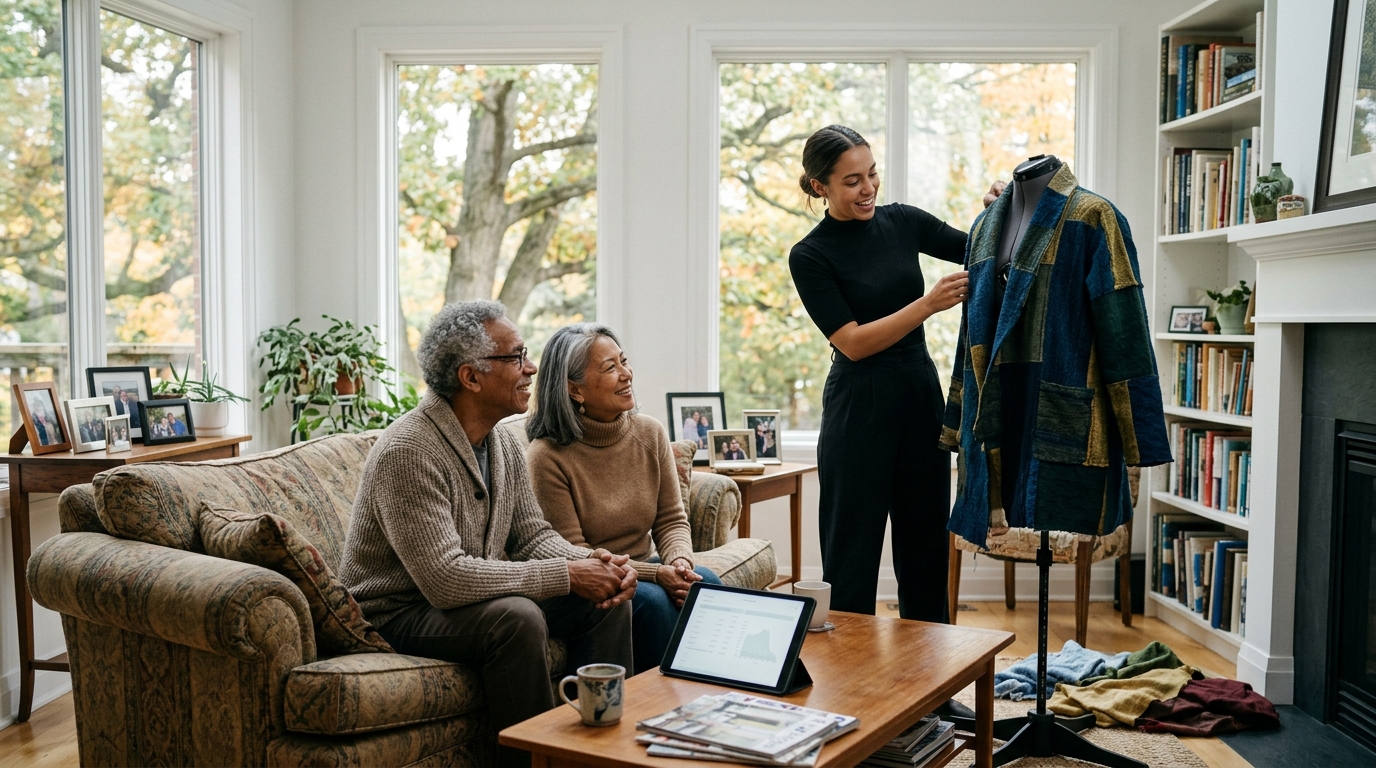
Reverse Mortgage Funding Strategy for Apparel Brands
A reverse mortgage line of credit is ideal for fashion startups because you can draw funds across the development timeline—not all at once.
Phased approach:
- Months 1–3: Draw $3,000–$5,000 for design development and sampling
- Months 4–6: Draw $12,000–$20,000 for first manufacturing run
- Months 7–8: Draw $5,000–$10,000 for branding and e-commerce
- Months 9–12: Draw $3,000–$8,000 for initial marketing and influencer partnerships
Advantage: Interest accrues only on amounts drawn, and timing aligns with your child's product roadmap. If they discover the first design doesn't resonate, they haven't overspent before validating market demand.
Fashion Brand Funding vs. Traditional Financing
| Funding Method | Startup Cost | Interest Rate | Monthly Payments | Your Child's Debt |
|---|---|---|---|---|
| Reverse Mortgage (your equity) | $30,000–$60,000 | 5.50–6.50% | None until sale/death | None—parent owes |
| Fashion-Specific Startup Loan | $20,000–$50,000 | 8.00–12.00% | Yes—18–36 months | Child is primary debtor |
| Personal Bank Loan (Child co-signs) | $20,000–$50,000 | 7.00–10.00% | Yes—monthly | Shared liability |
| Crowdfunding (Equity) | Variable | 0% interest but equity loss | None | Child dilutes ownership 5–30% |
| Angel Investor | $25,000–$100,000 | 0% but equity stake | None upfront (revenue share later) | Child may lose creative control |
Why reverse mortgage wins: Your child has zero personal debt, lender doesn't require proof of pre-existing revenue, and you maintain full discretion over funding amounts and timeline.
Case Study: From Design Portfolio to Sustainable Label
Claire, 67, Ontario homeowner; adult daughter Sophie launched sustainable apparel brand
Sophie had a fashion degree and 3 years' experience as an assistant designer at a fast-fashion company. She had a vision for a sustainable, ethical apparel line—zero-waste designs, organic fabrics, fair-trade manufacturing. She left her job to pursue it full-time but had zero startup capital.
Sophie's plan: design 5 core styles, produce first run of 150 units each, launch e-commerce site, target $5,000/month revenue by month 12.
Startup funding needed: $48,000
- Design & prototyping: $5,000
- First manufacturing run (organic cotton, fair-trade labor): $28,000
- Branding & e-commerce: $6,000
- Photography & initial marketing: $9,000
Sophie had a strong portfolio but zero business revenue, making traditional startup loans impossible. Claire had $320,000 home equity.
Claire's reverse mortgage strategy:
- Applied for $60,000 reverse mortgage line of credit with Equitable Bank at 5.90%
- Drew $6,000 immediately for design finalization and supplier vetting
- Drew $30,000 for first manufacturing run with 2-month production lead time
- Drew $8,000 for website, branding, and photography (month 3)
- Set up automated $2,000/month draws (months 4–6) for launch advertising and influencer partnerships
Year 1 result:
- Launched website month 4 with 5 core styles (sustainable shorts, organic tees, ethical jackets)
- Month 6 revenue: $1,200 (pre-launch influencer orders)
- Month 12 revenue: $4,800 (exceeded Sophie's $5,000 goal)
- Total draws from RM: $52,000 at 5.90% interest
Year 2:
- Sophie's revenue hit $7,500/month; she began repaying $1,500/month to Claire's RM
- Expanded to 3 new styles based on customer feedback
- Reached profitability: operating costs covered by sales
By Year 3:
- Revenue sustained at $8,000–$10,000/month
- Sophie had repaid $36,000 of the original $52,000 borrowed
- Claire's reverse mortgage balance was $16,000, on track to be paid off in 2 years from ongoing repayments
Estate outcome: Claire's home remains secure. When she passes, Sophie's sustainable fashion business funds the remaining RM balance from profits.
Managing Risk and Setting Clear Expectations
According to the U.S. Bureau of Labor Statistics, 50% of fashion startups fail within 3 years due to undercapitalization and poor financial management. Clear family agreements prevent conflict and protect both generations.
Best practices:
-
Document the funding arrangement: Draft a family loan agreement specifying (a) total amount, (b) interest rate (typically 0% for family), (c) repayment trigger (e.g., "after revenue reaches $3,000/month"), (d) what happens if the business fails.
-
Create monthly reporting: Have your child send you a simple monthly summary (revenue, expenses, cash on hand). This keeps everyone informed and prevents surprises.
-
Set draw limits: Agree on maximum draws per month. If Sophie needs more, she must make the case with updated revenue projections or business metrics.
-
Establish milestones: Tie continued draws to progress: "We continue monthly draws through month 8. If revenue hasn't reached $2,000/month by month 9, we pause and reassess."
-
Plan for failure: Discuss: "If the brand doesn't reach sustainable revenue by month 18, do we shut down, pivot, or extend the timeline?" Be honest upfront.
Tax and Government Considerations
Reverse mortgage proceeds are not income: The $60,000 you borrow is a loan. Your CPP and OAS remain unaffected.
Your child's business income is taxable: When Sophie earns $8,000/month from apparel sales, that's her taxable business income. She'll file Schedule 8 (self-employment) and pay income tax on net profit (revenue minus all deductible business expenses).
Repayments don't create tax deductions: If Sophie repays you $1,500/month, that's not a business expense—it's a personal loan repayment. However, salaries to contractors, fabric suppliers, shipping costs, and e-commerce platform fees are all deductible.
GST/HST threshold: If Sophie's revenue exceeds $30,000/year, she must register for HST and collect sales tax on her products.
Key Takeaways
- Fashion startups cost $25,000–$75,000: Design, prototyping, manufacturing, branding, and launch marketing are all essential and expensive.
- Line of credit aligns with product development: Draw funds as your child needs them—design phase, manufacturing, branding, marketing—not all upfront.
- Your child avoids personal debt: They focus on building the brand, not servicing monthly loan payments.
- Reverse mortgage doesn't require pre-existing business revenue: Traditional lenders won't touch fashion startups; you bridge this gap.
- Clear family agreements prevent conflict: Document expectations around draws, repayment, milestones, and failure scenarios.
- Sustainability-focused brands have strong margins: Fair-trade, ethical, and eco-conscious apparel commands 40–60% profit margins—higher than fast fashion.
Frequently Asked Questions
What if my adult child's fashion brand doesn't sell well enough to become profitable?
Your child has zero personal debt obligation—the reverse mortgage remains your debt against your home. If the brand fails, you've invested in their dream but face no immediate consequences. The debt rolls into your estate when you pass.
Can I limit my draws and still retain home equity after the RM closes?
Yes. If you approve a $60,000 RM but only draw $40,000, you've used 67% of your approved amount. The remaining $20,000 is available as a line of credit if your child needs an emergency investment later. You only pay interest on the $40,000 drawn.
How do I handle repayment if my child's brand becomes successful?
Create a family loan agreement specifying repayment terms before you draw. Many parents use: "After monthly revenue reaches $4,000, redirect 30% to repayment." This rewards your child's success while preventing open-ended debt.
Does business failure protect my child's personal credit?
Business debt doesn't appear on personal credit because it's in the business name (if it's a corporation). Your reverse mortgage is in your name, not your child's business. Their credit is completely unaffected by the business or the RM arrangement.
What if I need the reverse mortgage funds for my own retirement later?
You can request additional draws from your approved RM (up to the total approved amount). However, if you've already drawn heavily and interest is accumulating, you may want to prioritize your own needs over future draws for your child's business.
Can my child take out their own business loan once the fashion brand is profitable?
Absolutely. Once Sophie has 2+ years of business revenue, she can refinance from the RM to a traditional business line of credit. At that point, your reverse mortgage can be repaid from her business loan, and your home equity is restored.
Ready to fund your adult child's fashion brand ambition? Contact Rick Sekhon Reverse Mortgages for a consultation on phased funding for independent apparel entrepreneurs.
Ready to Learn More?
Find out exactly how much you could unlock from your home — free and no obligation.
Related Articles
Reverse Mortgage for Adult Child's Veterinary Technology Program and Career Support
Fund your adult child's veterinary technician or vet assistant certification program. Support their healthcare career without student loans or personal debt.
Read →Reverse Mortgage for Adult Child's Renewable Energy and Solar Technician Certification
Fund your adult child's solar and renewable energy technician certification. Support a green careers transition without personal student debt. Fast-growing, high-earning field.
Read →Reverse Mortgage for Aging Parent's Home-Based Pottery and Ceramic Art Studio Business
Launch a home-based pottery business in retirement. Fund kiln, wheel, supplies, and studio setup with reverse mortgage. Create art, income, and community in your home.
Read →