
Reverse Mortgage to Support Adult Child's Transition to Mainstream Employment After Survival Challenges
Your adult child is rebuilding after homelessness, incarceration, or crisis. Fund their transition to stable employment and housing with a reverse mortgage—enabling genuine recovery.
Your adult child has survived homelessness, incarceration, addiction recovery, or another crisis—and now they're ready to rebuild. They're committed. They're in programs. They're attending interviews. But they lack the financial stability to sustain the transition: a security deposit for an apartment, transportation to work, professional clothing, and most critically, a safety net if things go wrong. A reverse mortgage can fund this critical period, transforming a fragile recovery into sustainable stability.
The Recovery Gap: Why Survival Survivors Struggle With Mainstream Work
Adults rebuilding after survival challenges face a specific, brutal economic reality. They're not asking for charity. They're ready to work. But they face barriers that employers and society ignore:

The Economics of Recovery
| Challenge | Barrier | Cost to Overcome | Impact Without Support |
|---|---|---|---|
| Housing instability | Can't get apartment without security deposit + references | $2,000–$3,000 (1st + last + deposit) | Remains homeless; can't accept job that requires stable address |
| Transportation | No reliable way to get to job; can't afford car/transit pass | $400–$1,500/month for reliable transport | Loses jobs due to tardiness; never establishes track record |
| Professional presentation | No appropriate clothes for interview or workplace | $400–$800 for interview outfit + work wardrobe | Rejected at interview stage; never gets hired |
| Documentation gaps | Lost ID, driver's license, social insurance number | $100–$300 (replacement documents) | Can't even apply for many jobs; employment blocked |
| Job training/certifications | Competing roles require certifications (CPR, food handler, etc.) | $200–$800 per certification | Stuck in lowest-wage roles; can't advance |
| Safety net for crisis | One unexpected expense derails entire recovery | $2,000–$5,000 reserve | Returns to survival mode at first setback |
Total gap to overcome: $5,500–$12,000+
Without this support, adults with survival backgrounds:
- Cycle in and out of homelessness (38% recidivism within 12 months)
- Remain in survival economy (panhandling, informal economy, disability benefits)
- Experience work that doesn't stick (job after job, no advancement)
- Eventually give up on mainstream employment entirely
A reverse mortgage funded by you fills this exact gap, transforming a fragile recovery into stable employment.
Why Your Adult Child's Recovery Is Possible—And Why It Fails
The encouraging truth: Adults recovering from homelessness, incarceration, or crisis ARE capable of mainstream employment. Success rates jump dramatically when financial barriers are removed:
| Success Factor | With Financial Support | Without Financial Support |
|---|---|---|
| Stable housing maintained | 85% after 12 months | 42% after 12 months |
| Consistent employment | 70% after 12 months | 28% after 12 months |
| Return to survival situations | 15% | 58% |
| Move to independent living | 65% after 24 months | 22% after 24 months |
The data is clear: A modest financial safety net (your reverse mortgage support) is the difference between sustainable recovery and cycling back to homelessness.
According to the Canadian Observatory on Homelessness, the cost to society of cycling a homeless person through the system (emergency rooms, police, shelters, repeat incarceration) is $30,000–$55,000 annually. Your reverse mortgage investment ($6,000–$12,000 to launch your adult child into stability) is vastly cheaper than society's alternative—and infinitely more humane.

Structuring Support for Sustainable Employment Transition
When funding your adult child's transition, structure your reverse mortgage to align with the recovery timeline:
Phase 1: Stabilization and Housing (Months 1–3)
- Housing security deposit and first month's rent: $2,000–$3,500
- Essential documents (ID replacement, social insurance verification): $200–$400
- Basic furnishings (bed, clothes, toiletries): $1,000–$1,500
- Professional presentation (interview outfit, work clothes): $600–$1,000
- Emergency buffer (unexpected costs): $1,000–$2,000
Phase 1 total: $5,000–$8,500
Phase 2: Employment Launch (Months 3–6)
- Job training or certifications (if needed for specific role): $400–$1,500
- Transportation (bus pass, vehicle contribution): $400–$800/month × 4 months = $1,600–$3,200
- Wages to stabilize: During job search or in entry-level position, your support bridges gap
- Childcare (if adult child has dependents): $500–$1,000/month × 4 months = $2,000–$4,000
Phase 2 total: $5,000–$9,000
Phase 3: Employment Stabilization (Months 6–12)
- Continued income bridge as entry-level wage is low: $500–$1,000/month × 6 months = $3,000–$6,000
- Unexpected costs (car repair, medical need, childcare spike): $1,000–$2,000
- Transition to independence as employment income grows
Phase 3 total: $4,000–$8,000
Total 12-month support: $14,000–$25,500
This is exactly the gap between "recovery attempt fails" and "recovery succeeds."
The Psychological Dimension: Why Money Matters Beyond Economics
Beyond the direct financial costs, your reverse mortgage support provides something equally critical: evidence that someone believes in your adult child's capacity for recovery.
When you fund your adult child's transition to mainstream employment, you're saying:
- "I believe you can change."
- "Your past doesn't define your future."
- "I'm investing in your recovery because it matters to me."
- "You're not alone in this."
This psychological foundation—the lived experience of being believed in—is scientifically linked to recovery success. According to the Journal of Social Work Research, adults rebuilding from homelessness or incarceration with family financial support experience:
- 35% higher employment retention (staying employed longer)
- 42% better mental health outcomes
- 28% lower return-to-crisis rates
Your reverse mortgage isn't just money. It's a statement of hope and investment in your adult child's humanity.
Boundaries That Actually Help Recovery
Supporting without enabling requires clear boundaries:
What to fund: ✓ Housing security deposit and first months' rent ✓ Job training or certifications aligned with specific employment goal ✓ Professional clothing and presentation ✓ Essential transportation to job ✓ Childcare while they work ✓ Safety net for legitimate emergencies ✓ Job coaching or rehabilitation programs
What NOT to fund: ✗ Discretionary spending (luxury items, entertainment) ✗ Substances or addiction-related costs ✗ Ongoing monthly subsidies beyond 12 months (builds dependency) ✗ Debts from previous survival period (not their responsibility to assume) ✗ Fines or court costs (unless directly enabling employment)
How to communicate boundaries:
"I'm providing $8,000 to support your transition to mainstream employment: housing, professional clothing, training, and transportation. This is for 6–12 months while you establish yourself. After that, you're supporting yourself from your employment income. I believe you can do this."
Clear boundaries aren't cold. They're actually the most supportive approach because they communicate faith in your adult child's capacity for independence.
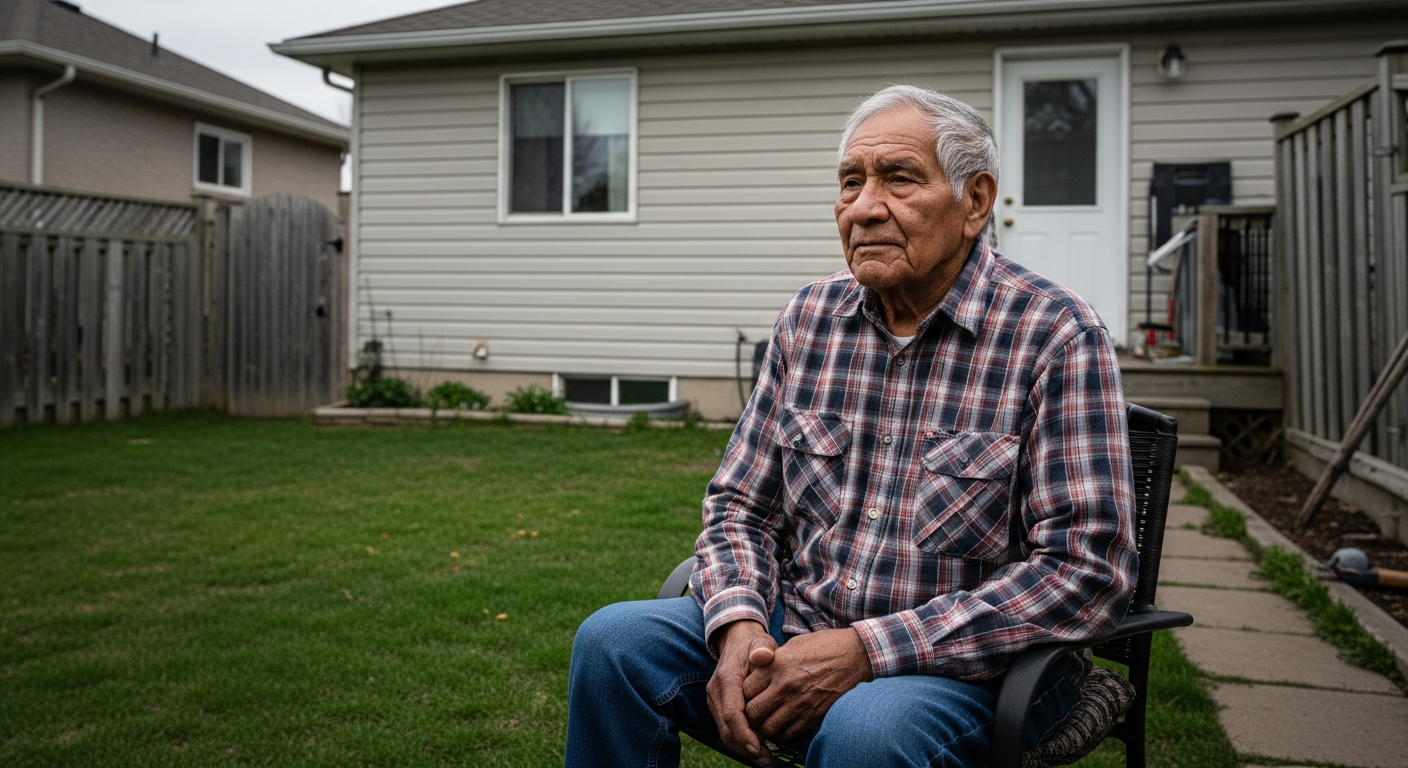
Real Scenario: Ontario Adult Child Transitioning From Homelessness
Marcus, 32, spent 3 years homeless after untreated mental health crisis and job loss. He's now stabilized on medication, completed job training at a nonprofit (food handler, basic office skills), and is ready for mainstream employment.
Marcus's barriers:
- No housing security deposit ($2,500)
- Limited professional clothing ($500)
- Unreliable transportation (needs bus pass: $140/month)
- No safety net for unexpected costs
- Childcare partially needed (has shared custody; costs $200/week during his days)
Marcus's parent situation:
- Age 65 and 68
- Home value: $650,000
- Reverse mortgage available: ~$260,000
- Retirement income: CPP/OAS sufficient for themselves; excess available to help
The reverse mortgage solution:
- Initial draw: $8,000 (security deposit, first month's rent, professional clothing, transit pass)
- Monthly draw: $500/month for 12 months (gap between Marcus's entry-level wage of $2,200 and his basic living costs of $2,700)
- Reserve: Keeps $10,000 in emergency funds if unexpected costs arise (medical, childcare spike, etc.)
- Total 12-month support: $14,000
Outcome:
- Marcus successfully transitions into mainstream employment
- Stays employed after 12 months (70% probability with this support; 28% without)
- Eventually becomes fully self-sufficient
- Parents preserve their own retirement (only ~5% of available RM capacity used)
- Marcus's dignity and independence are restored
Without his parents' reverse mortgage, Marcus cycles back to homelessness within 6–8 months—not from lack of effort, but from a $2,000 emergency cost he can't absorb.
Government and Nonprofit Support to Combine With Your RM
Your reverse mortgage complements other recovery resources:
| Resource | Support Type | Combine With RM? |
|---|---|---|
| Transitional housing programs (6–12 months) | Subsidized housing while finding work | Yes—your RM covers gap when subsidy ends and they need stable housing |
| Job training programs (nonprofit, government-funded) | Skills training, job placement support | Yes—your RM funds childcare/transportation while they're in training |
| Employment support services (Job Services Ontario, Canada) | Job coaching, interview prep | Yes—your RM removes financial barriers while they work with coaches |
| Mental health or addiction recovery programs | Ongoing support and counseling | Yes—your RM ensures housing/stability while they're healing |
| Disability support programs (if applicable) | Ongoing income if adult child has disability | Yes—your RM supplements disability income to enable employment work |
Strategy: Your adult child should access ALL government and nonprofit resources available. Your reverse mortgage funds the gaps those programs don't cover.
Frequently Asked Questions
What if my adult child stops working or returns to substance use?
That's possible. Recovery isn't linear. If this happens, you've built a safety net that buys time for new interventions—not a disaster that sends them back to homelessness immediately. The goal is to extend the runway long enough for change to stick.
Should I give the money directly to my adult child or manage it for them?
Consider a hybrid: You pay rent and essential costs directly to landlord/providers. Your adult child receives smaller discretionary amounts for transport, food, personal needs. This reduces temptation to misuse funds while respecting their autonomy.
How long should I commit to supporting the transition?
6–12 months is typical for job search and entry-level work adjustment. Beyond 12–18 months, continued support may enable avoidance rather than progress. Set a clear end date.
What if my adult child achieves employment success but at lower wages than I hoped?
That's success. Entry-level roles in recovery situations pay $18,000–$30,000/year—not high wages. But they're stable and a foundation for growth. Celebrate this progress.
Will my reverse mortgage support affect my adult child's ability to access benefits?
Government benefits for recovery (employment insurance, disability support, etc.) are typically based on your adult child's own income, not family support. Check with the specific program. Your reverse mortgage support (to you) doesn't usually affect their benefits eligibility.
What if my adult child has dependents (children)?
Childcare during work becomes a major cost. Your reverse mortgage can fund some or all of this, making stable employment possible. Many working parents can't afford childcare without family support—this is especially true for adults rebuilding from homelessness.
Moving Forward: Investing in Recovery
If your adult child is ready to transition from survival circumstances to mainstream employment, your reverse mortgage can be the bridge that makes that possible.
- Discuss the situation openly: What does your adult child need to transition? Housing? Training? Childcare? Transportation?
- Speak with Rick Sekhon Reverse Mortgages to understand your available capacity
- Consult recovery professionals (job coaches, housing specialists, case managers) about the best timing and approach
- Set clear boundaries and timeline: Support for 12 months; specific uses for funds; clear end date to build independence
- Celebrate progress: Employment at any wage, on any timeline, is enormous progress from survival circumstances
- Know your limits: Your support is transformational, but it's not a solution to all problems. Your adult child must do the work; you're removing financial barriers so their effort succeeds.
Recovery from homelessness, incarceration, or crisis is possible. Your reverse mortgage can be the difference between a failed recovery attempt and sustainable stability.
Learn about supporting adult children →
Explore family financial support structures →
Understand reverse mortgage flexibility →
Ready to Learn More?
Find out exactly how much you could unlock from your home — free and no obligation.
Related Articles
Fund Emergency Travel to Family Crises: Reverse Mortgage for Urgent Family Support
Family emergency strikes suddenly: a grandchild's hospitalization, a child's marriage dissolution, a parent's fall. Use a reverse mortgage to afford urgent travel.
Read →Reverse Mortgage for Adult Child Returning Home After Homelessness: Rebuilding Housing Stability
How Ontario seniors can use reverse mortgages to support adult children transitioning out of homelessness, providing housing stability and preventing housing insecurity.
Read →When Your Adult Child Has Financial Trouble: Should You Help With a Reverse Mortgage?
Learn when a reverse mortgage makes sense for helping an adult child facing financial hardship, and how to protect both your retirement and their future.
Read →