
Reverse Mortgage Payment Options: Lump Sum vs Monthly vs Flexible Access
Understand reverse mortgage payout methods in Ontario. Compare lump sum, monthly income, flexible access, and which works best for your retirement.
One of the most flexible aspects of reverse mortgages is how you receive the funds. You're not locked into a single payment method — Ontario homeowners can choose what works best for their retirement needs.

This guide breaks down the three main payment options and shows you how to choose.
The Three Main Payment Methods
Option 1: Lump Sum
How it works: You receive the entire approved amount in a single deposit to your bank account.
Typical use cases:
- Paying off high-interest debt
- Funding major renovations
- Creating an investment portfolio
- Settling a legal or financial obligation
Example:
- Approved for $300,000
- You receive $300,000 − $1,795 setup fee = $298,205 deposited to your account
- You can use it as you see fit
Advantages:
- Full funds available immediately
- No ongoing paperwork or draws
- Simple to understand and manage
- Interest accrues only on what you've actually used
Disadvantages:
- Large lump sum can be psychologically overwhelming
- Risk of spending too quickly
- Interest compounds on the full amount from day 1
- If you don't need all the funds immediately, you're paying interest on money sitting in the bank
Best for: Debt consolidation, one-time major expenses, creating a readily-available emergency fund
Option 2: Monthly Income Payments
How it works: Instead of receiving all funds upfront, the lender pays you a fixed monthly amount for a specified period (5, 10, 15, or 20 years) or for life.
Typical use cases:
- Supplementing fixed pensions
- Creating predictable monthly retirement income
- Reducing lump-sum impact on investments
- Mirroring your spending pattern
Example:
- Approved for $300,000
- You elect to receive $1,500/month for 20 years
- Lender deposits $1,500 to your account every month
- After 20 years, payments stop (or you can switch to a different option)
| Monthly Payment Amount | Total over 20 Years | Age at End |
|---|---|---|
| $1,000/month | $240,000 | +20 years |
| $1,500/month | $360,000 | +20 years |
| $2,000/month | $480,000 | +20 years |
Advantages:
- Predictable monthly income (helps with budgeting)
- Interest accrues only on funds you haven't yet received
- Forces disciplined spending
- Works well for replacing declining pension income
Disadvantages:
- Less money available if an emergency occurs
- If you pass away before the payment period ends, remaining payments may not go to heirs (depends on plan structure)
- Less flexibility if your needs change
- You're locked into the payment schedule
Best for: Supplementing retirement income, replacing a pension you've lost, maintaining monthly cash flow certainty
Option 3: Flexible Access / Line of Credit
How it works: The lender establishes a credit line equal to your approved borrowing capacity. You draw funds as needed, when needed — much like a home equity line of credit, but with no monthly payments required.
Typical use cases:
- Home repairs and renovations (draw as phases complete)
- Healthcare and care costs (as they arise)
- Creating an emergency reserve
- Legacy planning (reserve funds for family gifts)
Example:
- Approved for $300,000 flexible access line
- Year 1: You draw $50,000 for bathroom renovations
- Year 2: You draw $25,000 for furnace replacement
- Year 5: You draw $100,000 to help grandchild with education
- Total drawn: $175,000; remaining available: $125,000
- You're only paying interest on the $175,000 actually used
Advantages:
- Maximum flexibility — only pay interest on what you actually use
- Emergency funds available when needed
- Can adapt to changing circumstances
- Unused funds continue to earn interest for you (via lower lender claims)
Disadvantages:
- Requires discipline not to over-draw
- Available amount may decrease over time if not managed carefully (depending on interest accumulation)
- No fixed monthly budget — you must decide when to draw
- Interest rates can be variable on some plans (vs fixed monthly plans)
Best for: Homeowners with unpredictable needs, those who want to preserve some equity, long-term care planning
Comparison at a Glance
| Feature | Lump Sum | Monthly Payments | Flexible Access |
|---|---|---|---|
| Funds received | All at once | Regular monthly payments | Draw as needed |
| Best for | Debt payoff, renovations | Income supplement | Unpredictable needs |
| Interest cost | Full amount, day 1 | Only on funds drawn | Only on funds drawn |
| Flexibility | Low (received upfront) | Moderate | High |
| Budgeting | You control all spending | Set monthly amount | You manage frequency |
| Emergency access | Immediate (you have it) | Request additional funds (may not qualify) | Immediate (pre-approved) |
Real-Life Scenarios: Which Option Makes Sense?
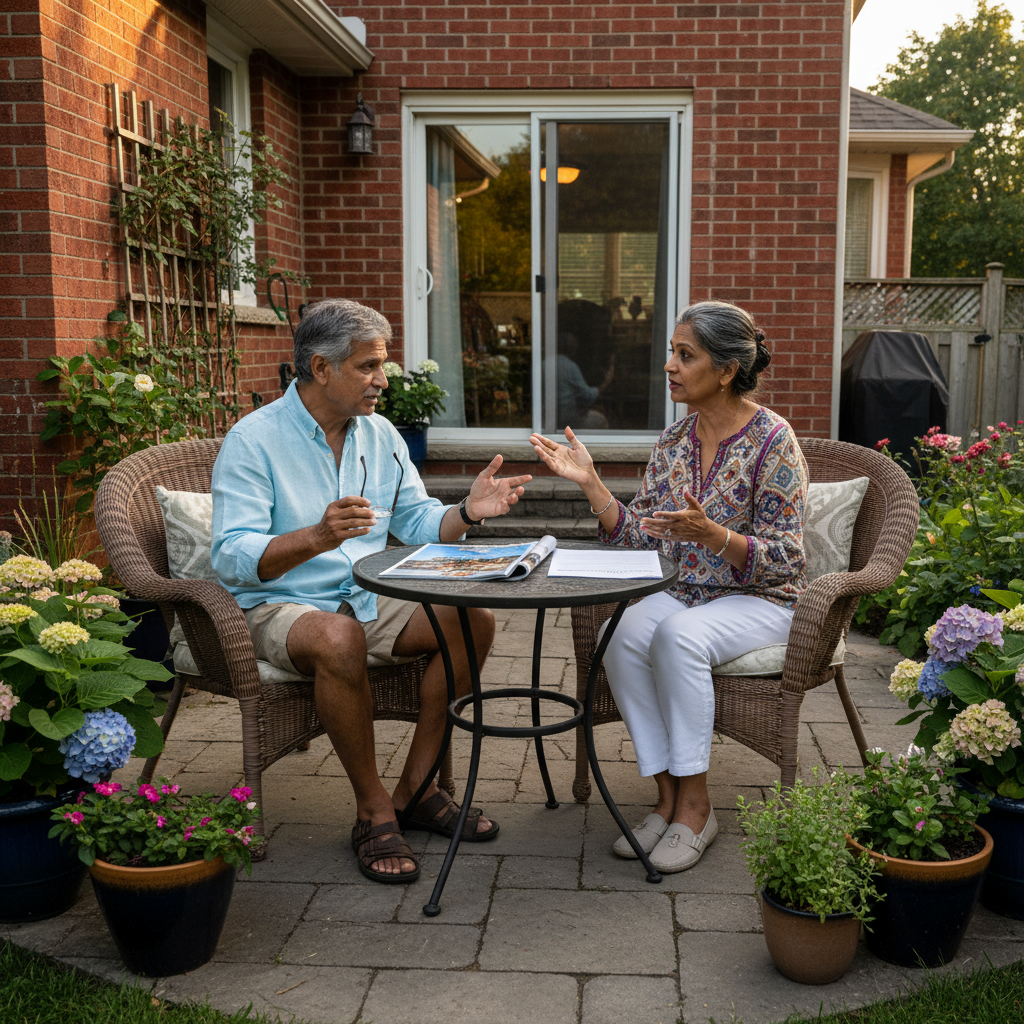
Scenario 1: Robert Wants to Eliminate Debt
Situation:
- Age 70, receives $18,000/year CPP
- Has $120,000 credit card debt (8% interest = $9,600/year)
- Home worth $600,000, approved for $270,000 reverse mortgage
- Wants to simplify retirement
Best choice: Lump sum
- Borrow $120,000 to pay off credit cards
- Save $9,600/year in credit card interest
- Return remaining $150,000 to lender (reduce reverse mortgage size)
- Result: Clear debt, keep interest savings for living expenses
Scenario 2: Margaret Needs Predictable Income
Situation:
- Age 72, receives $15,000/year CPP
- Lost her spousal support (widowed)
- Needs an additional $20,000/year for living expenses
- Home worth $500,000, approved for $250,000
Best choice: Monthly payments
- Set up monthly payment of $1,667 ($20,000/year)
- This supplements CPP for predictable total of $35,000/year
- Payments continue for 15 years, then reassess
- Result: Predictable income stream without spending discipline needed
Scenario 3: David Planning Long-Term Care
Situation:
- Age 68, in good health
- Wants funds available for home renovations, long-term care, or gifts to grandchildren (unpredictable timing)
- Home worth $700,000, approved for $350,000
- Wants maximum flexibility
Best choice: Flexible access
- Establish $350,000 line of credit
- Draw $30,000 for accessible bathroom (Year 1)
- Draw $40,000 for in-home care costs (Year 4)
- Reserve remaining $280,000 for future care needs or family gifts
- Result: Money available when needed, interest only on amounts used
Hybrid Approach: Combining Options
Some lenders allow you to combine methods:
Example:
- Take $100,000 as a lump sum (pay off immediate debt)
- Take $1,200/month for 20 years (supplement income)
- Keep $50,000 in flexible access for emergencies
This creates a balanced approach: immediate debt relief, predictable income, and emergency backup.
Important Considerations
Interest Rate: Fixed vs Variable
- Monthly payment plans: Usually offer a fixed rate (rate guaranteed for the entire payment period)
- Lump sum plans: Can be fixed or variable (check your lender)
- Flexible access plans: Often variable, but ask about fixed-rate options
A variable rate means the lender's profit margin could change, affecting your rate (though this is rare and regulated).
What Happens If You Pass Away?
- Lump sum: Funds you received are yours. Your estate repays the full reverse mortgage balance. Any remaining funds go to heirs.
- Monthly payments: Payments stop upon your death. Any remaining approved amount is forfeited. Your estate repays the balance on what you actually drew.
- Flexible access: Unused available funds are forfeited. Your estate repays the balance on what you actually drew.
Early Draws or Requests
- Lump sum: Not available — you received everything upfront
- Monthly payments: You can request a lump-sum advance, but this may reduce or end monthly payments
- Flexible access: You can request additional draws anytime (within your approved limit), with minimal paperwork
Frequently Asked Questions
Q: Can I switch payment methods after closing the reverse mortgage?
A: This depends on your lender. Some allow you to switch from lump sum to monthly payments later (though you'd lose interest savings). Others don't allow changes. Clarify this before you close.
Q: If I choose monthly payments and pass away in year 3 of a 20-year plan, do my heirs get the remaining payments?
A: This depends on the plan structure. Some plans pay remaining amounts to your estate; others don't. This is a crucial detail to clarify with your lender.
Q: Which option costs the least in interest?
A: Flexible access, because you only pay interest on funds you've actually used. However, if you need certainty and spend the lump sum on debt elimination (saving interest elsewhere), lump sum might be cheaper overall.
Q: Can I take a partial lump sum and partial monthly payments?
A: Yes, many lenders offer this. For example, $100,000 lump sum + $500/month for 20 years. Ask about this flexibility.
This article is for educational purposes only and does not constitute financial advice.
Speak to a licensed mortgage professional. Independent legal advice is required before closing a reverse mortgage in Ontario.
Which payment option fits your retirement? Get your free Ontario Reverse Mortgage Guide →
Also read:
- How much can you borrow with a reverse mortgage?
- CHIP Income Advantage review
- Reverse mortgage eligibility in Ontario
This content is for illustrative purposes only. Rates may vary. Call Rick Sekhon for the best rates and more information.
Ready to Learn More?
Find out exactly how much you could unlock from your home — free and no obligation.
Related Articles
How Much Can You Borrow With a Reverse Mortgage in Ontario?
Calculate your reverse mortgage borrowing capacity. Includes LTV limits by lender, age factors, and examples for different Ontario home values.
Read →Reverse Mortgage Eligibility in Ontario: Complete 2026 Guide
Everything Ontario homeowners need to know about qualifying for a reverse mortgage in 2026. Covers age requirements, home equity, property types, and the application process.
Read →Reverse Mortgage for Aging Parent as Paid Research Subject Matter Expert: Knowledge Work in Retirement
Monetize expertise as aging parent becomes paid research SME for universities. Reverse mortgage bridges income while building knowledge-sharing business.
Read →