
Reverse Mortgage for Accessible Seasonal Cottage: Multi-Generational Summer Gatherings in Ontario
Fund cottage accessibility upgrades and renovations with reverse mortgage. Keep your seasonal home accessible for aging parents and grandchildren. Ontario cottage guide.
What if you own a beloved family cottage in Ontario but worry that aging parents and your own mobility challenges will force you to abandon it? Cottage ownership represents more than property — it embodies family tradition, seasonal refuge, and the backdrop for multi-generational memories. Yet cottages are often less accessible than primary homes: steep stairs to bedrooms, narrow bathrooms, sloped entrances, and remote locations far from urgent healthcare. A reverse mortgage on your primary home can fund significant accessibility upgrades to your seasonal property, enabling your entire family — aging parents, yourself, grandchildren — to enjoy the cottage safely and comfortably for decades to come.
This guide explains how Ontario homeowners can use a reverse mortgage to fund cottage accessibility modifications and keep seasonal homes part of multigenerational family life.
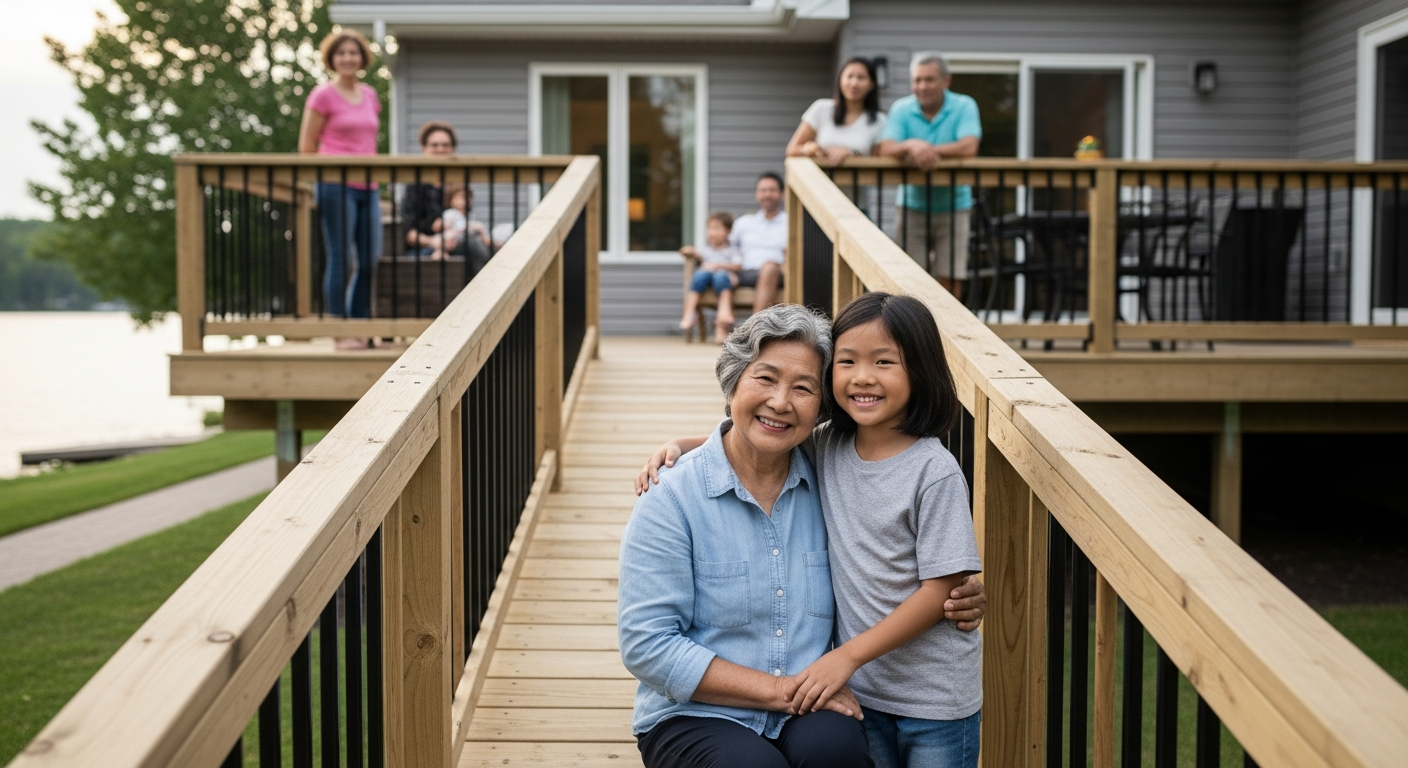
The Cottage Accessibility Challenge in Ontario
Ontario's cottage country — Muskoka, Parry Sound, Georgian Bay, Kawarthas, Muskokas — features hundreds of seasonal homes built in earlier decades when accessibility wasn't a design priority.
Common Cottage Accessibility Gaps
| Accessibility Need | Typical Cottage Problem | Impact on Aging Family |
|---|---|---|
| Main floor bedroom | 2–3 upstairs bedrooms only | Older adults can't climb stairs; forced to sleep downstairs on couch |
| Main floor bathroom | Bathroom upstairs or outbuilding | Older adults face dangerous stair navigation; possible falls |
| Accessible entryway | Steps with no ramp; narrow door | Walkers and wheelchairs can't enter |
| Grab bars and safety fixtures | Few or none installed | Slips and falls in bathrooms; shower hazards |
| Pathway and outdoor access | Uneven ground, dock stairs, rough terrain | Mobility-limited family excluded from dock, boats, outdoor activities |
| Lighting and visibility | Poor interior and exterior lighting | Older adults with vision decline navigate unsafely |
| Bedroom accessibility | Narrow doorways; difficult-access closets | Adults with mobility aids can't enter or use bedrooms |
Families often respond by stopping cottage visits as parents age, turning the property into an underused investment rather than a gathering place.
The Financial Gap
Cottage accessibility upgrades typically cost $15,000–$50,000 depending on scope:
| Upgrade Type | Typical Cost |
|---|---|
| Main-floor bedroom conversion (one upstairs bedroom moved down) | $15,000–$30,000 |
| Accessible bathroom renovation (grab bars, no-step shower, widened door) | $8,000–$15,000 |
| Ramp and entryway accessibility | $3,000–$8,000 |
| Accessible main-floor bathroom addition | $20,000–$35,000 |
| Interior pathways and lighting upgrades | $2,000–$5,000 |
| Deck and dock accessibility modifications | $5,000–$12,000 |
Many cottage owners hesitate to invest because the cottage is seasonal; upgrading a property you use 8–12 weeks per year feels indulgent compared to primary home needs.
According to the Canadian Accessible Tourism Initiative, 40% of Ontario cottage owners over 65 have reduced or stopped seasonal property visits due to accessibility barriers. Yet accessibility upgrades increase property value by 5–8% on average, making them a sound investment beyond family benefit.
How a Reverse Mortgage Funds Cottage Accessibility
The Advantage of Reverse Mortgage Funding
A reverse mortgage on your primary home can fund upgrades to your seasonal cottage:
✓ Separate property financing — Your primary residence remains the collateral; the cottage is improved without new mortgage
✓ No credit checks — Approval based on primary home equity and age, not creditworthiness
✓ No monthly payments — Borrow against primary home equity; repay only after sale or death
✓ Flexible use — Reverse mortgage proceeds can be used for any purpose, including vacation property improvements
✓ Preserves liquidity — You don't deplete savings for cottage upgrades; you preserve retirement reserves
This strategy is particularly valuable for empty-nesters who own both primary and seasonal homes; the primary residence's strong equity can fund both properties' needs.
The Financial Model
| Component | Amount |
|---|---|
| Primary home value | $550,000 |
| Cottage value (separate property) | $350,000 |
| Reverse mortgage borrowing on primary home (age 69, 55% LTV) | $302,500 |
| Cottage accessibility upgrades needed | $35,000 |
| Interest cost (6% over 5 years) | $6,500 |
| Total cost to primary home equity | $41,500 |
Outcome: You fund $35,000 in cottage accessibility from your primary home's reverse mortgage, keeping the cottage accessible for the next 20 years of family gatherings. Your primary home equity is reduced by ~7.5% — a manageable trade for preserving your family's seasonal tradition.
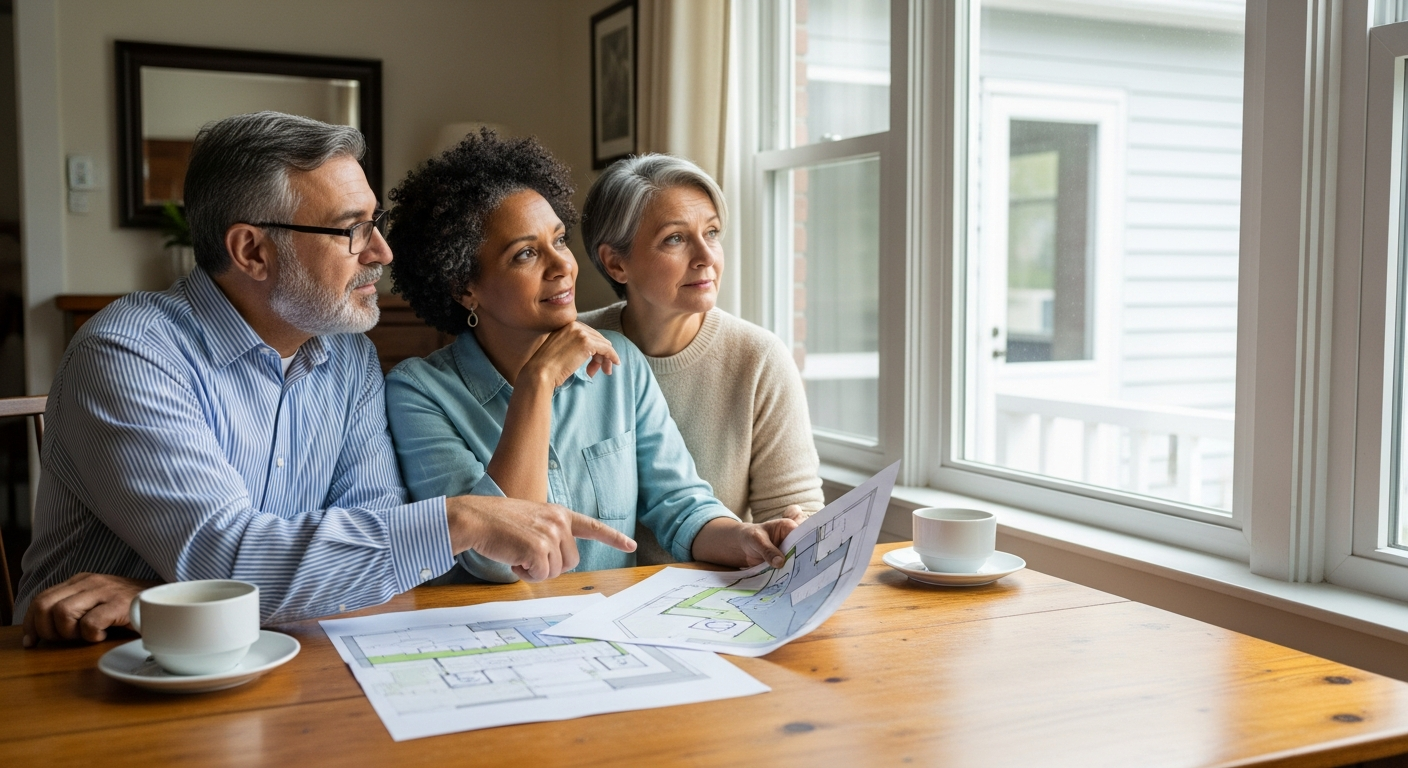
Cottage Accessibility Improvements: Where to Invest
Priority 1: Main-Floor Bedroom Access (Highest Impact)
Challenge: Aging family members can't navigate stairs; forced to sleep downstairs on uncomfortable furniture.
Solution: Convert one upstairs bedroom to main floor, or add a spacious main-floor bedroom with en-suite accessible bathroom.
Cost: $15,000–$30,000 depending on structural changes needed
Family impact: Elderly parents sleep comfortably in dedicated bedroom; grandchildren have upstairs bedrooms; multi-generational harmony.
Priority 2: Accessible Main-Floor Bathroom (Critical Safety)
Challenge: Bathrooms upstairs or limited accessibility; older adults fear falls navigating stairs with towels and nighttime urgency.
Solution: Create or renovate a main-floor bathroom with:
- No-step, curbless shower with grab bars
- Accessible vanity (height-adjustable or lower counter)
- Toilet with grab bars; comfort height (17–18 inches)
- Wide doorway (36+ inches) for walkers
- Non-slip flooring
- Adequate lighting
Cost: $8,000–$15,000
Family impact: Safe, dignified bathroom access for older adults; reduces fall risk by 80%+ compared to stair-dependent upstairs bathrooms.
Priority 3: Entryway and Pathway Accessibility
Challenge: Steps with no ramp; uneven ground; narrow doors; walkers and wheelchairs can't enter.
Solution:
- Install ramp (or widen steps with railings) to main entry
- Widen exterior doors to 36+ inches
- Create smooth, well-lit pathways from parking to main entry
- Grade and landscape to prevent trip hazards
Cost: $3,000–$8,000
Family impact: Relatives with mobility aids, walkers, or wheelchairs can independently enter and exit cottage.
Priority 4: Outdoor Access (Docks, Decks, Gathering Spaces)
Challenge: Steep dock stairs; uneven deck surfaces; family members with mobility limitations excluded from water activities and outdoor dining.
Solution:
- Rebuild dock with ramped access or seated entry points
- Reinforce deck rails and add grab bars in key locations
- Create smooth pathways from cottage to deck/dock
- Install outdoor lighting for evening safety
Cost: $5,000–$12,000
Family impact: Multi-generational use of water, boating, and outdoor gathering spaces; inclusion of older adults and grandchildren with mobility challenges.
Case Study: The Morrison Family's Cottage Transformation
Scenario: The Morrison family owns a 1970s cottage on Georgian Bay (sleeping 8) and a primary home in Ottawa (value $480,000, mortgage-free). Three generations use the cottage: parents (ages 73 and 70), adult children with partners, and 7 grandchildren. Recently, aging mother broke her hip; the cottage's stairs became dangerous and exclusionary.
| Component | Amount |
|---|---|
| Primary home value | $480,000 |
| Reverse mortgage borrowing (age 73, 55% LTV) | $264,000 |
| Cottage improvements needed: | |
| - Convert upstairs bedroom to main-floor suite | $20,000 |
| - Renovate main-floor bathroom (accessibility) | $10,000 |
| - Add ramp and improve entry | $5,000 |
| - Dock accessibility upgrades | $8,000 |
| Total cottage accessibility investment | $43,000 |
Outcome: The Morrisons access a $43,000 reverse mortgage against their primary home to make their cottage fully accessible. Grandmother can now sleep comfortably on the main floor, use the accessible bathroom independently, and access the dock with assistance. Family gatherings expand from 2–3 visits per year to 6–8, spanning holiday weekends and summer weeks. The cottage remains the family's gathering place for the next 20 years. Primary home equity is reduced by ~9% — a worthwhile trade for preserving and enhancing family tradition.
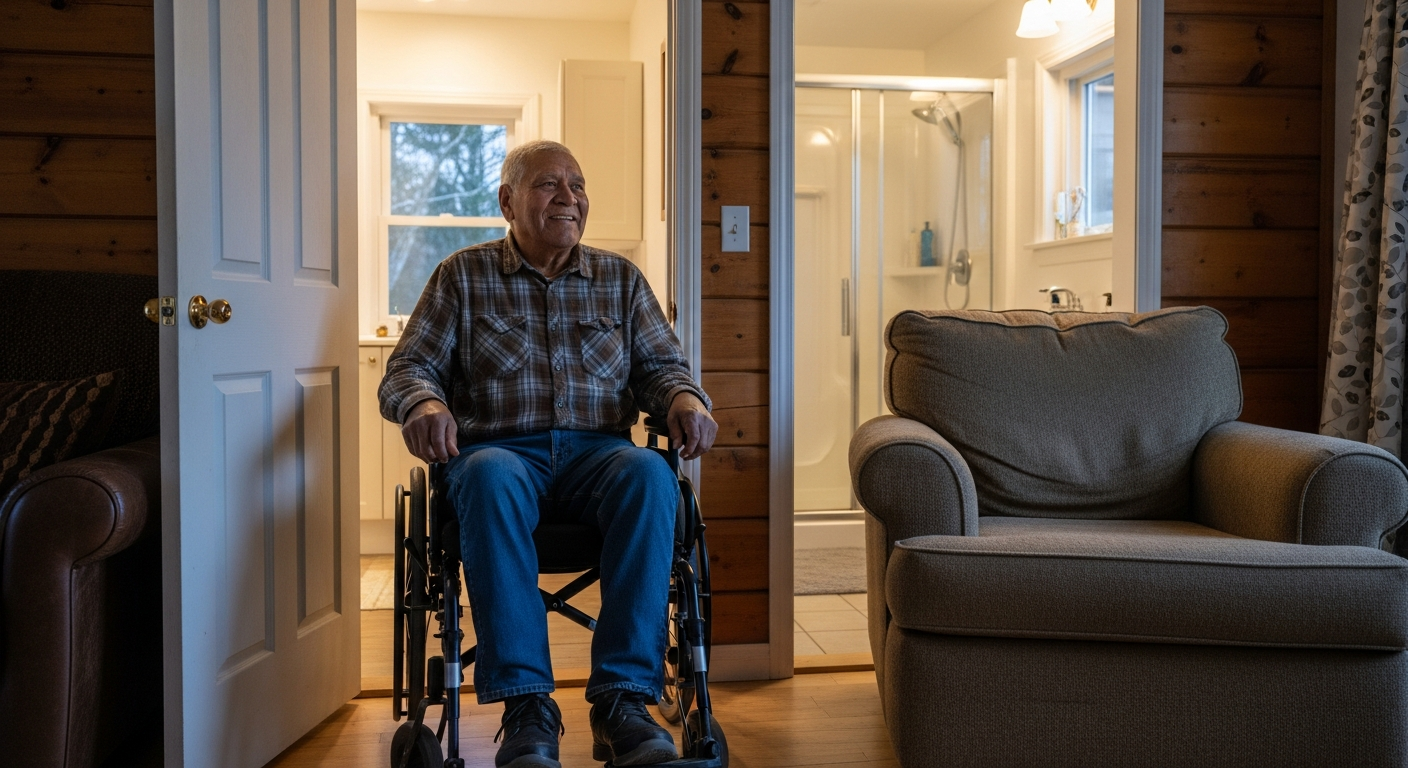
Tax and Benefit Implications
Principal Residence Exemption (Important)
The principal residence exemption (capital gains tax exemption) applies to your primary residence. Your cottage, as a secondary property, may be subject to capital gains tax on appreciation when sold.
Tax implication: If your cottage appreciates $100,000 while you own it, you owe capital gains tax (50% inclusion rate, then your marginal tax rate) on sale. The reverse mortgage doesn't change this, but it's worth understanding.
Property Tax and Assessment
Accessibility upgrades to your cottage (ramps, bathrooms, etc.) typically increase property assessed value. Ontario's property tax is based on current value, so improvements may increase annual property tax by $200–$500 depending on scope and location. Factor this into long-term cottage ownership costs.
Cottage Inheritance and Probate
When you pass, your cottage's value is included in your estate for probate calculation. The reverse mortgage balance (owed against your primary residence) is a separate debt that your estate must repay from primary home equity. Your cottage passes to beneficiaries with inherited accessibility features intact — an advantage for future generational use.
Risks and Realistic Considerations
Interest Costs Compound
A reverse mortgage at 6% compounds interest on borrowed funds. For a $43,000 cottage improvement loan:
- After 5 years: ~$8,000 in interest
- After 10 years: ~$18,000 in interest
- After 20 years: ~$50,000+ in interest (if never repaid)
This is acceptable if your family uses the cottage 20+ more years. It's less attractive if you expect to sell the cottage or retire the property within 5–7 years.
What If You Stop Using the Cottage?
Circumstances change. Aging parents pass away; family relationships shift; travel preferences evolve. If you stop using your cottage and decide to sell, the reverse mortgage balance (against your primary home) must still be repaid. Cottage improvements don't reduce primary home debt.
Maintenance and Operating Costs
Accessibility improvements don't reduce ongoing cottage costs: property tax, dock maintenance, heating, water system upkeep, insurance. Multi-generational use increases utility consumption and wear. Budget for these growing costs as your cottage becomes more actively used.
Frequently Asked Questions
Can I use a reverse mortgage on my primary home to improve my seasonal cottage?
Yes. Reverse mortgage proceeds can be used for any purpose, including vacation property improvements. The lender lends against your primary home's equity; the funds improve a secondary property.
How much does it cost to make an older Ontario cottage accessible?
$15,000–$50,000 depending on scope. A main-floor bedroom conversion and accessible bathroom renovation typically costs $25,000–$35,000. Entrances, pathways, and dock upgrades add $8,000–$20,000.
Will cottage accessibility improvements increase the property's resale value?
Yes. Accessibility upgrades typically increase cottage value by 5–8% ($17,500–$28,000 for a $350,000 cottage). If you sell, improvements are recouped in selling price. If you leave the cottage to heirs, improvements enhance property inheritance value.
What if I have a mortgage on my cottage — can I still use a reverse mortgage on my primary home for cottage improvements?
Yes. The reverse mortgage is based on your primary home's equity. However, verify with the reverse mortgage lender that cottage improvements don't interfere with their collateral. In most cases, they don't — lenders care about primary residence value, not secondary property.
Will cottage improvements affect my CPP, OAS, or GIS?
No. Reverse mortgage proceeds are loan advances (not income). Your government benefits are unaffected. The cottage is an asset, but its improvement doesn't create taxable income.
What happens to the cottage when I move to long-term care or pass away?
The cottage becomes part of your estate. Your beneficiaries inherit the cottage with its accessibility improvements intact. They also inherit the reverse mortgage debt against your primary residence (which must be repaid from primary home proceeds or other estate assets). Net inheritance benefit to beneficiaries is positive: they get an improved property while the primary residence debt is settled from its sale.
The Legacy Dimension: Preserving Family Traditions
Cottage ownership represents more than real estate — it's the backdrop for decades of family memories, traditions, and multi-generational bonding. Making your cottage accessible isn't just a practical upgrade; it's a legacy investment in:
- Keeping grandparents included in family traditions as they age
- Enabling cousins and siblings of all abilities to gather together
- Preserving the annual family pattern (summer cottaging) even as family composition changes
- Modeling accessibility values — showing grandchildren that inclusion and adaptation matter
- Extending family tradition — grandchildren may one day bring their own children and grandchildren to the improved cottage
Accessible cottages become multigenerational anchor points for families.
The Bottom Line: Cottage Access for Life
Aging shouldn't mean abandoning your family's seasonal home. A reverse mortgage on your primary residence enables meaningful accessibility upgrades to your cottage, preserving it as a gathering place for three (or four) generations.
The investment is modest compared to the 20+ years of family moments enabled.
Ready to Learn More?
Find out exactly how much you could unlock from your home — free and no obligation.
Related Articles
Aging in Place with a Reverse Mortgage: Home Modification Guide
How Ontario seniors can fund aging-in-place home modifications with a reverse mortgage — costs, top modifications, grants, and a complete planning guide.
Read →Reverse Mortgage on a Cottage or Vacation Property in Ontario (2026)
Can you get a reverse mortgage on a cottage in Ontario? Learn why vacation properties don't qualify, plus strategies to unlock equity using your primary home.
Read →Reverse Mortgage for Aging in Place With Fibromyalgia: Home Modifications for Invisible Illness
Fund home modifications for aging with fibromyalgia. Reverse mortgage enables accessible design for pain management, energy conservation, and quality of life.
Read →