
Reverse Mortgage for Accessible Multigenerational Homes: Multiple Disabilities, One Home
Fund accessibility modifications when multiple family members have disabilities. Learn how a reverse mortgage enables shared housing with aging parents and disabled adult children.
Your aging parent is moving in with you. Your adult child has a mobility disability. Your spouse has hearing loss. Your home wasn't designed for multiple accessibility needs—yet now it must accommodate everyone safely and independently. Retrofitting a home for multiple disabilities is expensive and complex, but multigenerational accessible housing is often the most practical and humane solution. A reverse mortgage provides the capital to transform your home into accessible space for your entire family's needs.
The Multigenerational Accessibility Challenge
Multigenerational homes with multiple disabilities present unique challenges:
Multiple Accessibility Needs Under One Roof
- Aging parent: Mobility limitations, balance issues, vision changes
- Adult child with spinal cord injury: Wheelchair accessibility, full bathroom modifications
- Another family member: Hearing loss, vision impairment, cognitive disability
- Home designed for none of these: Standard home lacks ramps, accessible bathrooms, smart systems, assistive devices
Why Shared Housing with Multiple Disabilities
- Caregiving efficiency: Multiple disabilities in one home = coordinated support
- Financial necessity: Separate housing unaffordable; cost of care multiplies
- Family preference: Aging parent doesn't want assisted living; adult child supported at home
- Care quality: Family members understand each other's needs better than strangers
Complexity of Multi-Disability Accessibility
Different disabilities require different modifications:
| Disability | Key Modifications | Cost |
|---|---|---|
| Mobility/wheelchair | Ramps, accessible bathrooms, wider doors, accessible kitchen | $30,000–$60,000 |
| Vision impairment | Lighting, contrast, large controls, smart home systems | $10,000–$25,000 |
| Hearing loss | Visual alerts, hearing loops, communication systems | $5,000–$15,000 |
| Cognitive disability | Clear wayfinding, simple controls, safety features | $5,000–$20,000 |
| Chronic pain/limited stamina | Seating, rest areas, accessible layout | $10,000–$25,000 |
Layering modifications for multiple disabilities simultaneously is expensive, complex, and requires professional coordination.
Financial Reality of Multi-Disability Accessibility
A home accessible for multiple disabilities costs substantially more than standard aging-in-place modifications:
- Standard aging in place: $15,000–$35,000 (grab bars, accessible bathroom, minor modifications)
- Single wheelchair accessibility: $40,000–$80,000 (ramps, lifts, accessible bathrooms, wide doorways)
- Multiple disabilities: $60,000–$150,000+ (coordinated accessibility for 2–3 family members)
- Smart home integration: Additional $20,000–$50,000 for systems supporting multiple disabilities
Reality: Properly accessible multigenerational home often costs $100,000–$200,000 to retrofit.
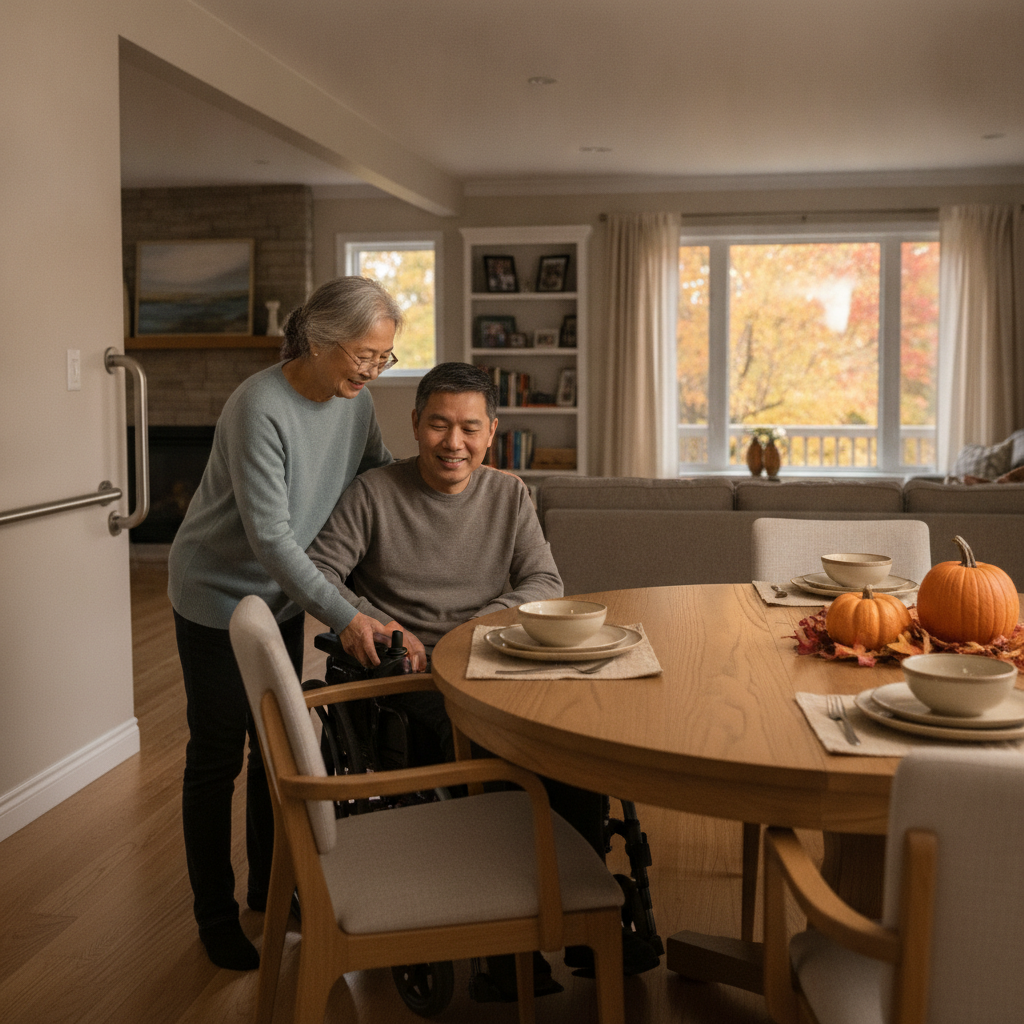
Accessibility Modifications for Multiple Disabilities
Wheelchair/Mobility Accessibility (for any family member with mobility limitation)
- Ramps: Single ramps replacing stairs; $5,000–$15,000 per entrance
- Widened doorways: Minimum 32" clear width; $1,000–$3,000 per doorway
- Accessible bathrooms: Roll-in shower, grab bars, accessible sink; $15,000–$35,000 per bathroom (multiple may be needed)
- Lowered counters: Kitchen and bathroom counters; $3,000–$8,000
- Accessible bedroom: Roll-under bed, accessible closet; $5,000–$15,000 per bedroom
- Stair lifts or elevators: If multi-story; $10,000–$30,000+ (elevators $50,000–$100,000+)
- Turning radiuses: Hallways and rooms need 5-foot turning radius; layout may require walls moved
- Parking and turnaround: Accessible parking and vehicle turnaround space
- Cost: Comprehensive mobility accessibility: $40,000–$100,000+
Vision Accessibility (for aging parent with declining vision or family member with vision impairment)
- Lighting: Bright, glare-free lighting throughout; LED upgrades and smart controls; $5,000–$15,000
- Color contrast: High-contrast edges, stairs, switches; paint and hardware upgrades; $2,000–$8,000
- Large-print controls: Oversized buttons, labels, thermostat; $500–$2,000
- Smart home integration: Voice controls, motion detection, smart lighting; $8,000–$25,000
- Flooring and obstacles: Remove tripping hazards; consistent flooring; $5,000–$15,000
- Wayfinding: Clear pathways, markers, distinctive spaces; $2,000–$5,000
- Cost: Vision accessibility modifications: $15,000–$45,000
Hearing Accessibility (for aging parent with hearing loss or family member with deafness)
- Visual alert systems: Doorbell, phone, smoke detector alerts with lights/vibration; $2,000–$8,000
- Hearing loops: Room-based assistive listening systems; $3,000–$10,000
- Captioning systems: TV, video captioning; $500–$2,000
- Text-to-speech systems: Smart home voice systems with display; $1,000–$5,000
- TTY/relay phones: Video relay services, accessible phones; $500–$2,000
- Communication systems: Inter-room communication for family; $1,000–$3,000
- Cost: Hearing accessibility modifications: $8,000–$30,000
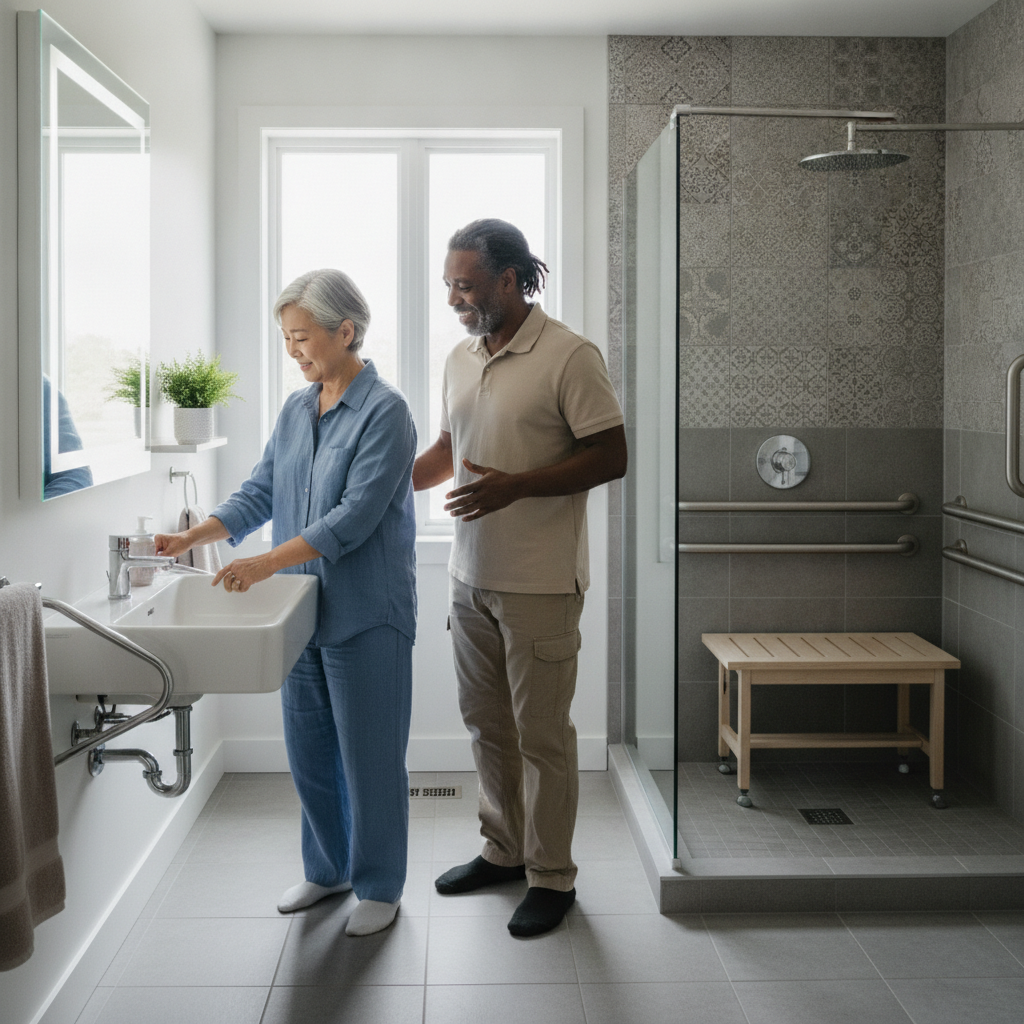
Bathroom Accessibility (Often highest cost; may need multiple accessible bathrooms)
Single accessible bathroom serving multiple family members with different needs:
- Accessible toilet: Raised height, grab bars, easy transfer; $1,500–$4,000
- Accessible shower: Roll-in, zero-threshold, grab bars, seating, non-slip; $8,000–$20,000
- Accessible sink: Lowered, roll-under, lever handles; $2,000–$5,000
- Storage and organization: Accessible shelving, drawers; $1,000–$3,000
- Flooring: Non-slip, easy clean, accessible thresholds; $2,000–$5,000
- Lighting and ventilation: Bright, accessible controls; $1,500–$4,000
- Mirror and personal care: Adjustable-height mirrors, accessible medication storage; $1,000–$3,000
- Single bathroom modification: $18,000–$45,000
Multiple accessible bathrooms: Often necessary when family members have different schedules and needs
- Baseline: Primary bathroom fully accessible as above; $20,000–$45,000
- Secondary bathroom: Partially accessible (grab bars, accessible fixtures, shower chair); $10,000–$20,000
- Guest/visitor bathroom: May need minimal accessibility; $3,000–$8,000
- Total for 2–3 bathrooms: $35,000–$80,000+
Kitchen Accessibility
- Counters: Mix of heights (standard 36", lowered 32–34" for wheelchair user); $5,000–$15,000
- Appliances: Front-load washer/dryer, accessible oven, accessible refrigerator; $3,000–$10,000
- Sink and faucet: Lever handles, accessible height, space underneath; $2,000–$5,000
- Storage: Accessible cabinets, pull-out shelving; $2,000–$8,000
- Flooring: Non-slip, easy-clean; $2,000–$5,000
- Lighting: Task lighting for visual clarity; $1,000–$3,000
- Cost: Comprehensive accessible kitchen: $15,000–$45,000
Smart Home and Technology Integration
Smart systems can serve multiple disabilities simultaneously:
- Voice control systems: Amazon Alexa, Google Home; $500–$2,000
- Smart lighting: Motion-detection, voice-controlled, automated schedules; $3,000–$10,000
- Smart climate control: Programmable, voice-controlled thermostats; $1,500–$4,000
- Smart locks and entry: Voice-controlled, app-enabled door locks; $1,000–$3,000
- Visual and audio alerts: Smart doorbell, smart security system with visual alerts; $2,000–$8,000
- Fall detection and monitoring: Wearable devices, smart home monitoring; $1,000–$5,000
- Accessible entertainment: Captioned TV, accessible sound systems; $2,000–$8,000
- Integrated smart home system: Professional design and installation; $10,000–$30,000
- Cost: Complete smart home accessibility ecosystem: $20,000–$60,000
Bedroom Modifications (May need 2–3 accessible bedrooms)
-
Accessible primary bedroom: For aging parent or mobility-limited family member
- Roll-under bed, accessible nightstands, clear floor space for mobility aids
- Accessible closet with pull-down rods, accessible lighting/controls
- Easy-access bathroom nearby
- Cost: $8,000–$20,000 per bedroom
-
Secondary accessible bedrooms: For other family members with disabilities
- May have different accessibility needs than primary bedroom
- Cost: $5,000–$15,000 per additional bedroom
Living and Common Spaces
- Seating and rest areas: Multiple rest areas for people with different stamina/pain levels; $3,000–$10,000
- Open floor plan: Removing walls for wheelchair accessibility, circulation space; $5,000–$20,000
- Flooring: Consistent, non-slip flooring throughout; $5,000–$15,000
- Lighting: Comprehensive, flexible lighting for vision accessibility; $5,000–$15,000
- Climate control: Accessible thermostats, zone heating/cooling; $3,000–$8,000
- Wayfinding and signage: Clear pathways, large signage, color contrasts; $2,000–$5,000
- Cost: Accessible living spaces: $15,000–$45,000
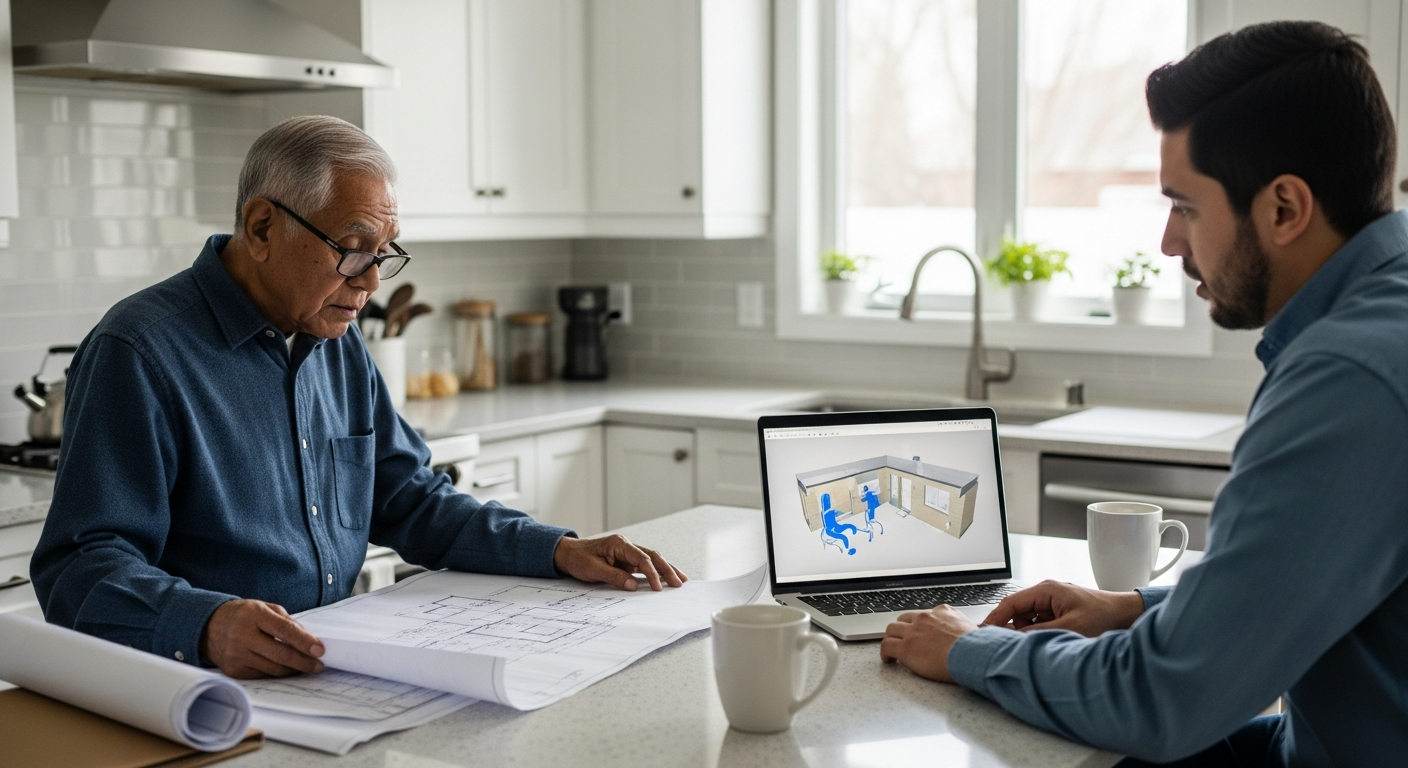
Building a Multi-Disability Accessibility Plan
Phase 1: Assessment and Priority Setting (Month 1)
Before starting modifications, understand all family members' accessibility needs:
Comprehensive Accessibility Audit
- Each family member: Specific disabilities, functional limitations, accessibility needs
- Priority areas: Which spaces most critical? (Bathroom, bedroom, kitchen, entry)
- Timeline: Is aging parent moving in immediately or in 6 months?
- Future needs: Will disabilities progress? Plan for future needs
- Professional assessment: Occupational therapist evaluation ($500–$1,500) identifies specific needs
Prioritization Matrix
| Space | Family Member | Urgency | Cost | Order |
|---|---|---|---|---|
| Bathrooms | Aging parent, adult child | Critical | $45,000 | Phase 1 |
| Bedrooms | Aging parent, adult child | Critical | $30,000 | Phase 1 |
| Entry/ramps | Adult child (wheelchair) | Critical | $15,000 | Phase 1 |
| Kitchen | Family member with vision loss | Important | $20,000 | Phase 2 |
| Smart home | All family members | Important | $30,000 | Phase 2 |
| Common spaces | All family members | Supporting | $20,000 | Phase 3 |
Phase 2: Reverse Mortgage Strategy (Month 1–2)
- Total accessibility need: $150,000–$200,000 for full multi-disability accessibility
- Reverse mortgage amount needed: Typically $120,000–$180,000
- Your home equity: Can you access sufficient funds?
- Professional coordination: Budget for occupational therapist, contractor oversight
Phase 3: Implementation Timeline (Month 3–12)
Months 1–3: Critical Infrastructure
- Bathrooms: Full accessibility for aging parent and adult child with mobility needs ($45,000)
- Bedroom: Accessible primary bedroom ($15,000)
- Entry: Ramps and accessible entry ($15,000)
- Subtotal: $75,000
Months 3–6: Primary Spaces
- Kitchen: Accessible for aging parent and family members ($20,000)
- Smart home systems: Serving multiple disabilities ($30,000)
- Additional bedroom: If needed ($15,000)
- Subtotal: $65,000
Months 6–12: Finishing and Integration
- Common spaces: Accessible living areas ($20,000)
- Flooring and environmental updates ($15,000)
- Final adjustments and testing ($10,000)
- Subtotal: $45,000
Total Implementation: $185,000 over 12 months with reverse mortgage line of credit
Real-World Example: The Martinez Family
Their Situation
- Parent (age 76): Aging in place; hearing loss, mobility limitations
- Adult child (age 38): Spinal cord injury; wheelchair user; needs full accessibility
- Spouse: Works full-time; supports caregiving when possible
- Home: 1980s bungalow designed for none of these needs
Critical Needs
- Wheelchair ramps to all entrances
- Fully accessible primary bathroom (aging parent)
- Fully accessible secondary bathroom (adult child)
- Bedroom modifications for both
- Kitchen accessible for aging parent
- Smart home system for hearing loss and mobility support
Cost Estimate
- Bathrooms (2): $55,000
- Bedrooms (2): $30,000
- Kitchen: $20,000
- Ramps and entry: $15,000
- Smart home systems: $35,000
- Flooring and modifications: $20,000
- Total: $175,000
Reverse Mortgage Solution
- Accessed $175,000 reverse mortgage at 5.5%
- 12-month implementation with experienced accessibility contractor
- Coordinated modifications serving multiple family members simultaneously
Outcome
- Aging parent can visit bathroom and bedroom independently
- Adult child has full wheelchair accessibility
- Smart home systems serve hearing loss and mobility needs
- Family living together safely, independently, with dignity
- Parent's reverse mortgage cost manageable; enables family to stay together
Important Considerations
Contractor Quality and Coordination
Multi-disability modifications require experienced, coordinated contractors:
- Occupational therapist: Essential for understanding accessibility needs ($100–$250/hour; 20–40 hours typical)
- General contractor: Experience with accessibility modifications critical
- Specialists: Plumbers, electricians, carpenters familiar with accessibility standards
- Project management: Single coordinator managing multiple specialists prevents conflicts
Code Compliance and Safety
Accessibility modifications must meet building codes:
- Ontario Building Code: Specific requirements for accessible housing
- ADA Standards (if any US-based family): Different requirements apply
- Permits: May need municipal permits for major modifications
- Inspection: Final inspection confirms compliance and safety
Measuring Success
After modifications complete, assess:
- Independence: Can each family member navigate home independently?
- Safety: Are there any remaining hazards or concerns?
- Function: Can activities of daily living be performed?
- Dignity: Do modifications feel normalized or emphasize disability?
- Family dynamics: Does accessible home support family relationships?
Future Modifications
Disabilities may progress; modifications may need updating:
- Progressive vision loss: Additional lighting may be needed
- Mobility deterioration: Fall prevention features become more critical
- New family members: Additional bedrooms may need accessibility
- Technology updates: Smart home systems become outdated; refresh every 5–10 years
Key Takeaways
- Fully accessible multigenerational homes serving multiple family members typically cost $100,000–$200,000, compared to $15,000–$35,000 for standard single-person aging-in-place modifications.
- Bathrooms are usually the highest single cost, with a single accessible bathroom running $18,000–$45,000 and a two-to-three bathroom accessible home reaching $35,000–$80,000+.
- Reverse mortgage draws for these projects are typically $120,000–$180,000, funded through a line of credit that can be released in phases as construction progresses.
- Smart home systems—voice control, smart lighting, visual alerts—can serve mobility, vision, and hearing needs simultaneously, typically costing $20,000–$60,000 for a fully integrated ecosystem.
- An occupational therapist assessment ($500–$1,500, or $100–$250/hour for 20–40 hours of consultation) is essential before construction to avoid layering modifications that conflict with each other.
- All reverse mortgage funds are tax-free loan advances, and no repayment is due until the home is sold, all borrowers pass away, or everyone moves out permanently.
Frequently Asked Questions
How much reverse mortgage funding do most families need for multi-disability home modifications?
Most families need $120,000–$180,000 to cover comprehensive accessibility for two or three family members with different disabilities. This typically funds critical bathrooms, bedrooms, entry ramps, and a portion of kitchen and smart-home upgrades, phased over 6–12 months.
Can one reverse mortgage cover accessibility needs for multiple family members at once?
Yes. A reverse mortgage line of credit can be drawn in stages as each phase of construction is completed, allowing you to fund bathrooms, bedrooms, ramps, and smart-home systems for an aging parent and a disabled adult child within a single borrowing arrangement rather than taking out separate loans.
Who qualifies for a reverse mortgage to fund these renovations?
In Canada, every person named on the property title must be at least 55 years old to qualify. Lenders including HomeEquity Bank and Equitable Bank base the amount you can borrow—generally 15–59% of the home's appraised value—on your age, the home's value, and its location.
Does a reverse mortgage require monthly payments to fund ongoing renovations?
No. Reverse mortgages do not require monthly payments; interest accrues on the amount drawn and is repaid when the home is eventually sold, the last borrower passes away, or the home is permanently vacated. This makes it practical for families managing tight monthly budgets while caregiving.
Will building multiple accessible bathrooms and bedrooms lower my home's resale value?
Generally no—accessible features like walk-in showers, wider doorways, and ramps are increasingly viewed as valuable, especially in a market with an aging population. Ontario Building Code-compliant modifications, properly permitted and inspected, tend to be seen as upgrades rather than liabilities.
How do I prioritize which accessibility modifications to fund first with limited reverse mortgage proceeds?
Start with the modifications tied to safety and daily independence—accessible bathrooms, bedrooms, and entry ramps are typically Phase 1 priorities. Kitchen accessibility and smart home integration are usually Phase 2, with common living spaces and finishing touches in Phase 3, based on a professional accessibility audit.
Moving Forward
If you're creating multigenerational accessible housing:
- Assess all family members' needs: Don't focus only on obvious disabilities
- Get professional evaluation: Occupational therapist identifies specific needs
- Prioritize critical spaces: Bathrooms, bedrooms, entries first
- Plan for layering: Multiple disabilities require coordinated modifications
- Budget realistically: $150,000–$200,000 typical for full accessibility
- Find experienced contractor: Quality and coordination essential
- Use smart systems: Technology can serve multiple disabilities simultaneously
- Plan for future needs: Disabilities evolve; design for progression
Multigenerational accessibility is complex and expensive, but the alternative—separate housing requiring constant care coordination—is often more costly and emotionally damaging. A reverse mortgage that funds proper accessibility allows your family to live together with dignity, independence, and mutual support.
With thoughtful design, quality contractors, and comprehensive accessibility modifications, your multigenerational home can safely accommodate multiple disabilities. Your reverse mortgage makes that possible.
Ready to Learn More?
Find out exactly how much you could unlock from your home — free and no obligation.
Related Articles
Reverse Mortgage When Adult Child Becomes Disabled and Requires Caregiver Support
How to fund ongoing caregiver costs when your adult child acquires disability through illness or injury. Ontario reverse mortgage guide for mid-life caregiving.
Read →Home Accessibility on a Budget: Must-Have Modifications for Aging in Place
Guide to affordable home accessibility modifications for aging in place in Ontario. Reverse mortgage funding for critical safety upgrades.
Read →Reverse Mortgage for Multi-Generational Homes Ontario
How Ontario homeowners 55+ can use a reverse mortgage to fund basement suites, in-law suites, and ADUs for multi-generational living — with no monthly payments.
Read →