
Reverse Mortgage for Accessibility Audit Before Renovation: Getting Design Right First
Fund a professional accessibility assessment before renovating — prevent costly design mistakes that make modifications ineffective or incomplete.
How much of your renovation budget will be wasted on modifications that don't solve actual accessibility problems? Many seniors renovate reactively, fixing problems they encounter. A professional audit identifies EVERY accessibility barrier upfront — preventing expensive design mistakes.
A reverse mortgage funds a comprehensive accessibility audit BEFORE renovation, ensuring modifications directly address your actual barriers and maximize the value of every construction dollar spent.
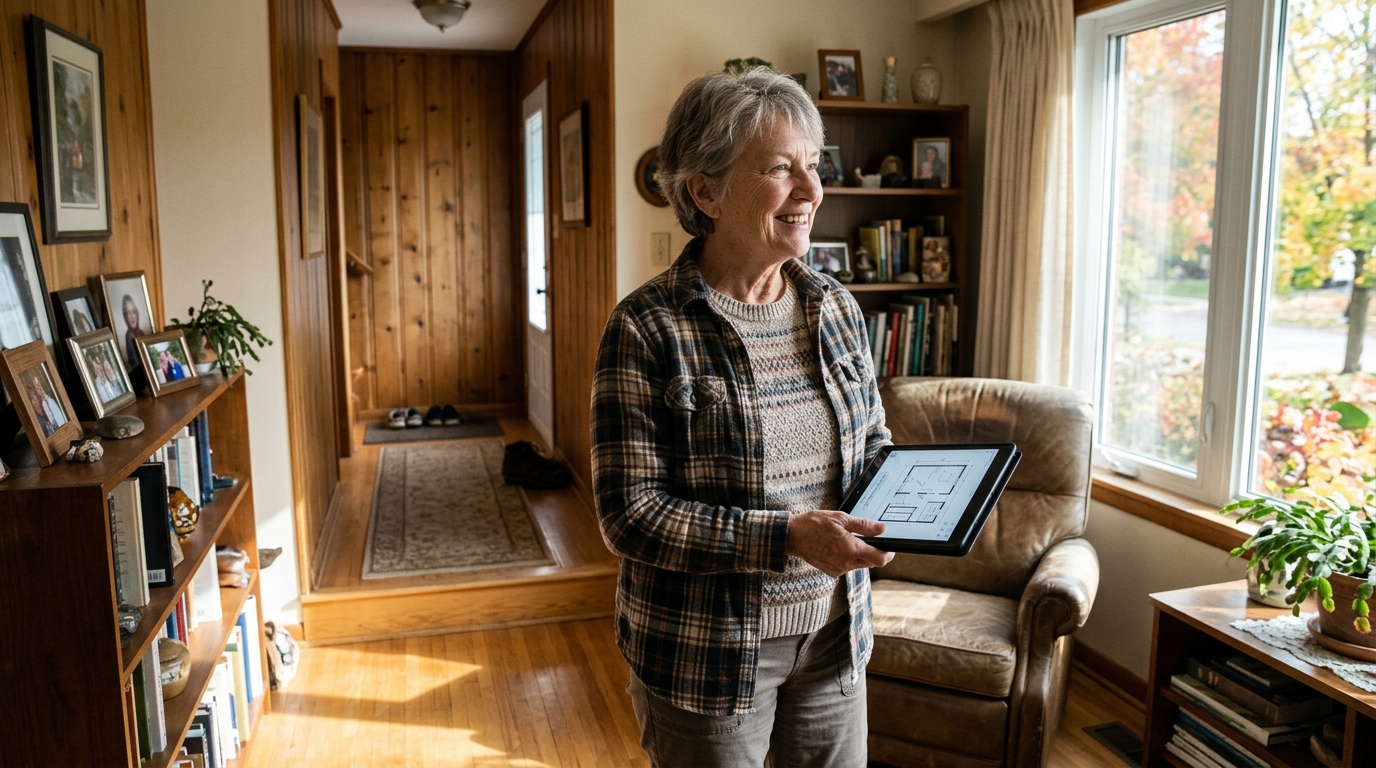
Why Most Accessibility Renovations Miss Critical Barriers
Seniors typically renovate reactively:
- "The stairs are hard to navigate" → Install grab bars (but stairs remain steep)
- "The bathroom is cramped" → Widen the doorway (but toilet is still difficult to access)
- "The kitchen is too high" → Lower cabinets (but counter is now too low for wheelchair users)
Reactive design solves ONE problem at a time, often creating new problems. A professional accessibility audit prevents this by identifying ALL barriers holistically.
| Barrier Type | Missed During DIY Renovation | Professional Audit Catches | Impact of Missed Barrier |
|---|---|---|---|
| Lighting | Dim hallways OK for sighted | Insufficient for low-vision aging | Fall risk; isolation in home |
| Door clearance | 32" opening seems adequate | Wheelchair/walker needs 36-42" | Access failure; independence loss |
| Bathroom layout | Toilet seat height raised | No grab bars; unsafe space around toilet | Falls; bathroom accidents |
| Kitchen workflow | Lowered counters added | No seated workspace; difficult reach zones | Cooking abandonment; nutrition impacts |
| Threshold height | Ramped entry step | Floor transitions throughout home | Tripping hazard; access restricted |
| Stair design | Railings added | Depth/height non-standard; unsafe gripping | Injury risk; isolation upstairs |
Professional audits catch 40-60% MORE barriers than DIY renovations, preventing expensive mistakes after construction begins.
What a Professional Accessibility Audit Includes
A certified accessibility auditor evaluates:
- Mobility barriers — Doors, stairs, transitions, slopes, clearances
- Sensory barriers — Lighting, contrast, sound, signage
- Cognitive barriers — Layout complexity, wayfinding, safety hazards
- Strength/reach barriers — Counters, cabinets, appliances, controls
- Balance/stability barriers — Flooring, handholds, seating support
- Environmental barriers — Temperature, air quality, accessibility of utilities
Audit deliverables:
- Written report identifying all barriers (prioritized by impact)
- Renovation recommendations (specific, costed)
- 3D floor plan showing accessible routes and modified spaces
- Implementation sequencing (what to fix first/last)
- Estimated costs per modification
- Contractor recommendations for accessible design specialists
Cost of audit: $1,200-2,500 (Ontario) Cost of renovation mistakes: $10,000-50,000+ (rework, partial redesign)
Audit ROI is immediate: Every dollar spent on assessment saves $5-20 in avoided rework.
Financing the Audit With Reverse Mortgage
A reverse mortgage accessible via line of credit provides immediate funds for professional assessment:
Funding approach:
- Access reverse mortgage (or open line of credit if you already have one)
- Advance $2,000-3,000 for accessibility audit
- Auditor completes assessment (3-4 weeks typical)
- Renovation plan finalized (based on audit recommendations)
- Additional advances authorized for construction (once plan is clear)
Benefit: Your audit is completed BEFORE renovation dollars are committed. Construction plans are based on professional recommendations, not guesses.
How Audit Results Drive Renovation Priorities and Budgets
An audit typically identifies 15-25 accessibility barriers. Your renovation prioritizes based on:
| Priority Level | Barriers Addressed | Timeline | Estimated Cost |
|---|---|---|---|
| Critical | Fall risk (uneven floors, stairs, bathroom), entrapment (doors too narrow) | Immediate (Year 1) | $15,000-35,000 |
| High | Mobility access (door widening, ramps), bathroom safety (grab bars, accessible toilet) | Year 1-2 | $20,000-40,000 |
| Medium | Kitchen accessibility (lowered counters, reachable storage), lighting (brighter bulbs, switches) | Year 2-3 | $10,000-25,000 |
| Lower | Comfort (thermostat access, entertainment controls), appearance (contrast, signage) | Year 3+ | $5,000-15,000 |
| Deferred | Non-essential modifications; revisit if circumstances change | TBD | TBD |
Example: Bathroom renovation without audit (reactive):
- Grab bars installed: $800
- Toilet seat raised: $500
- Doorway widened: $4,000
- Total: $5,300
- Missing: Flooring slip resistance, proper lighting, sink accessibility, shower seat, ventilation
- Result: Bathroom still unsafe; expensive rework needed
Example: Bathroom renovation WITH audit (professional design):
- Flooring (non-slip): $3,000
- Grab bars (strategically placed): $1,200
- Accessible toilet/bidet: $2,500
- Shower seat + transfer bars: $2,000
- Lighting upgrade: $1,500
- Sink accessibility: $1,800
- Ventilation: $1,000
- Total: $13,000
- Result: Fully accessible bathroom; no rework needed
- Net cost of audit: $2,000 (prevented $10,000+ in mistakes)
Timing: When to Audit Before Renovation
Audit early; renovate once. Timing is critical:
| Situation | Timing | Why |
|---|---|---|
| Aging in place proactively | Age 55-62, before mobility decline | Time to prioritize and budget modifications over years |
| Recent diagnosis (arthritis, mobility loss) | Within 3 months | Acute needs identified; modifications can begin immediately |
| Scheduled major renovation (kitchen, bathroom) | 3-6 months before construction | Audit recommendations integrated into larger project |
| Caregiver moving in | Before cohabitation | Assessment confirms home can accommodate both household members safely |
| Post-fall recovery | Within 30 days of discharge | Accident identified specific barriers; audit confirms full scope |
Early audits prevent emergency renovations (expensive, disruptive, incomplete). Planned audits align with contractor availability and seasonal construction.
According to CMHC, 35% of home accessibility renovations require rework within 2 years because initial design didn't address actual barriers. Professional audits reduce rework to 5%.
Key Takeaways
- Professional accessibility audits identify 40-60% more barriers than DIY assessment
- Audit cost ($2,000-3,000) prevents renovation mistakes ($10,000-50,000+)
- Reverse mortgage funds audit upfront, before renovation commitment
- Audit results drive renovation priorities and realistic budgeting
- Early audits prevent emergency renovations and expensive rework
- Comprehensive design ensures modifications actually solve accessibility problems
- Phased renovation plan extends costs over years while addressing critical needs first
Getting Started With Professional Accessibility Audit
- Contact accessibility consultant in Ontario (search "certified accessibility consultant" or "universal design specialist")
- Request preliminary consultation (often free 30-minute phone call)
- Schedule in-home assessment (2-3 hours typical; full walkthrough with detailed notes)
- Review audit report with family and healthcare providers
- Develop renovation plan based on audit recommendations
- Contact Rick Sekhon Reverse Mortgages to fund both audit and subsequent renovations
Professional audit + phased renovation = lasting accessibility improvements without costly redesigns.
Frequently Asked Questions
How long does a professional accessibility audit take?
The in-home assessment typically takes 2-3 hours. The auditor walks through every room, tests doors/stairs/transitions, and documents barriers. The written report with recommendations takes an additional 1-2 weeks to prepare. Total timeline from booking to final report: 2-4 weeks.
Do I need to hire an accessibility specialist, or can an occupational therapist do the audit?
Both can audit home accessibility. Occupational therapists focus on function and safety; accessibility consultants focus on design standards and universal design principles. Many certified accessibility consultants have OT backgrounds. Ensure whoever you hire has certifications in accessibility assessment (search "Certified Universal Design Practitioner" or provincial accessibility consultant associations).
Will the audit recommend expensive renovations I can't afford?
A good auditor prioritizes barriers by safety risk and impact on independence. Critical barriers (fall risk, entrapment) are addressed first; nice-to-have modifications (cosmetic contrast, minor convenience) are deferred. You decide which recommendations to implement based on budget and urgency.
Can I use provincial accessibility grants to pay for the audit?
Yes. Ontario offers Accessibility Tax Credit and various grants for home modifications. Some grants require professional assessment as part of the application. Check with your local Service Ontario office or Ontario Ministry of Health for current programs. Reverse mortgage audit funding can be reimbursed once grant is approved.
If I do the audit now but don't renovate for 2 years, will the recommendations still be valid?
Mostly yes. Accessibility principles don't change year to year. However, some technology recommendations (smart home controls, accessible appliances) may evolve. Request "revisit clause" in audit contract: if more than 18 months pass before renovation, auditor provides brief update at minimal cost.
Can I use the audit report to get contractor bids, or do I need to hire the auditor's recommended contractors?
Use the report to get independent bids. The audit recommendations are yours to share with any contractor. Recommended contractors listed in the report are suggestions only; you can hire any licensed contractor. Get 2-3 quotes based on audit specifications to ensure competitive pricing.
Ready to Learn More?
Find out exactly how much you could unlock from your home — free and no obligation.
Related Articles
Reverse Mortgage for Professional Accessibility Assessment: Proactive Home Safety Evaluation
Fund professional home accessibility assessment with reverse mortgage. Plan aging-in-place modifications before crisis.
Read →Aging in Place with a Reverse Mortgage: Home Modification Guide
How Ontario seniors can fund aging-in-place home modifications with a reverse mortgage — costs, top modifications, grants, and a complete planning guide.
Read →Reverse Mortgage for Aging in Place With Fibromyalgia: Home Modifications for Invisible Illness
Fund home modifications for aging with fibromyalgia. Reverse mortgage enables accessible design for pain management, energy conservation, and quality of life.
Read →