
Property Development Threat: Reverse Mortgage When Future Transit/Construction Impacts Value
Protect your home equity when nearby development threatens property value. Use reverse mortgage to access equity before appraisal impact in Ontario.
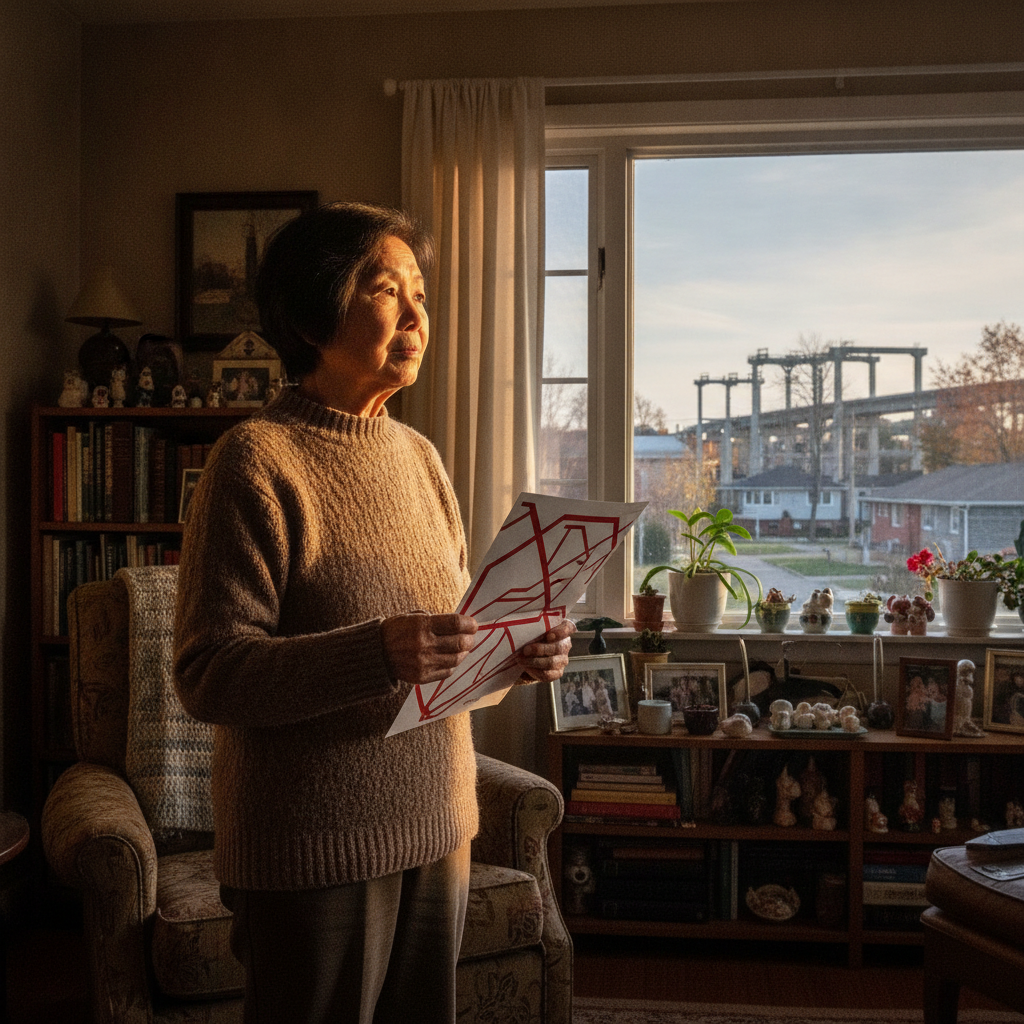
Your neighborhood is changing. You've learned that transit infrastructure, commercial development, or industrial projects are planned within blocks of your home. You're concerned this will reduce your property value. Your home is currently appraised at $700,000, but you fear development could reduce it to $550,000 in 3-5 years. Should you access your equity now, before development is complete and appraisals reflect the impact? A reverse mortgage allows you to capture current equity before neighborhood-level changes affect your home's value.
How Development Impacts Home Values
Real estate values are deeply tied to neighborhood characteristics: noise, traffic, views, aesthetic appeal, and perceived "desirability." Major development projects—highways, commercial centers, industrial zones, transit stations—can significantly reduce single-family home values in adjacent areas.
Historical Examples of Development Impact on Ontario Homes
| Development Type | Nearby Home Impact | Value Reduction | Timeline |
|---|---|---|---|
| New major highway/expressway | Noise, vibration, pollution | 15-25% reduction | 2-4 years post-opening |
| Large commercial/retail center | Increased traffic, parking, lights | 10-20% reduction | 3-5 years completion |
| Industrial zone expansion | Noise, pollution, truck traffic | 20-30% reduction | 5-7 years operational |
| Transit station (heavy rail) | Construction disruption (ongoing) | 10-15% reduction during construction | Stabilizes post-opening |
| Waste/recycling facility | Odor, traffic, community perception | 25-35% reduction | Permanent |
Homes directly adjacent to development suffer the most. Even homes 200-500 meters away can experience 10-20% value reduction due to noise, traffic, visual impact, or perception of neighborhood decline.
According to Statistics Canada research on Ontario residential property values, homes within 400 meters of newly completed major highway construction experienced average value reductions of 16% compared to market growth in similar homes 1km+ away during the same period.

The Appraisal Gap: Acting Before Values Drop
Here's the financial reality: As development projects progress, property appraisals begin reflecting the anticipated impact. By the time construction is actually underway, your home's appraised value has often already declined significantly.
Timeline: How Appraisals React to Development Announcements
| Development Stage | Appraisal Impact | Timeline | Your Action |
|---|---|---|---|
| Announcement phase | Minimal (5-10% reduction) | Years 1-2 | Act now—equity still strong |
| Zoning approval + funding confirmed | Moderate (10-15% reduction) | Years 2-4 | Window closing—accelerate RM |
| Construction begins | Significant (15-25% reduction) | Years 4-7 | Too late—equity reduced |
| Construction complete | Stabilized (values adjust) | Year 7+ | Recovery slow (10-15 years) |
If your home is currently worth $700,000 and you know development is coming, the window to access equity is NOW—before appraisers start factoring in the negative impact.
By waiting 2-3 years for construction to begin, your home may appraise at $600,000, reducing accessible equity by $100,000. A reverse mortgage accessed today captures that full $700,000 value; waited until construction, it captures only $600,000.
Using a Reverse Mortgage to Protect Equity
A reverse mortgage allows you to:
- Access current equity immediately — before appraisal impact catches up
- Lock in a favorable appraisal — reverse mortgages are appraised once; values don't re-appraise downward
- Use proceeds strategically — relocate, renovate, or invest in more stable assets
- Maintain housing flexibility — you're not forced to sell during construction
Strategic Reverse Mortgage Timing
| Your Situation | Action | Benefit |
|---|---|---|
| Development announced but not approved | Apply for RM now | Captures full current value |
| Zoning approved, construction 18-24 months away | Apply immediately | 6-12 months before major appraisal decline |
| Construction beginning in 3-6 months | Apply urgently | Last window before appraisal impact |
| Construction already underway | Consider relocation | RM may not help; new home may be better |
The key: Act early, before market perception shifts appraisals downward.

Case Study: Capturing Equity Before Development Impact
Robert and Patricia own a 1970s bungalow in suburban Toronto valued at $800,000. They're fully retired, and the home is paid off.
In early 2024, they learn that a new GO Transit station is planned for 2026-2027, one block from their home. The project has been approved, funded, and is entering planning/construction phase.
Their decision point: Should they access their equity now or wait?
Option 1: Wait Until Construction Ends (2027-2028)
- Late 2026: Development impact begins—appraisals decline to ~$720,000 (10% decline)
- Late 2027: Construction ongoing—appraisals further decline to ~$680,000 (15% total)
- Late 2028: Transit opens, values stabilize at ~$700,000 (12% below current)
- If they applied for RM at this point: $280,000 accessible equity
- Lost equity: $80,000
Option 2: Apply for Reverse Mortgage Now (2024)
- Immediate appraisal: $800,000
- Accessible equity: $320,000-$400,000
- Draw $300,000 immediately
- By late 2026-2028, as values decline, their reverse mortgage balance doesn't change—they've already captured the equity
- Preserved equity: $300,000 in accessible funds
Robert and Patricia apply for a reverse mortgage immediately. They draw $300,000, which they invest in a GIC earning 4.5% annually. Even if their home's value drops to $680,000, they've already secured their equity in liquid, income-producing form.
Over 5 years, the $300,000 earns approximately $70,000 in interest, more than offsetting the reverse mortgage interest costs and home value decline.
When NOT to Use a Reverse Mortgage Against Development Risk
Reverse mortgages are not appropriate if:
- ✗ Development is speculative or 10+ years away (appraisals won't decline yet)
- ✗ You plan to move within 2-3 years regardless
- ✗ You're already experiencing financial stress (adding debt is risky)
- ✗ You have other ways to access equity (HELOC, home equity loan)
- ✗ Your home is substantially depreciated already
However, if development is imminent (announced, approved, funded) and you want to age in place, a reverse mortgage can protect your equity and provide strategic flexibility.
Parallel Strategies: Reverse Mortgage + Other Protections
A reverse mortgage isn't your only option. Consider combining it with:
- Community advocacy — work with neighbors to influence development design to minimize impact (setbacks, noise barriers, etc.)
- Professional appraisal challenge — if your home is later appraised lower, challenge it
- Property tax appeal — reduced assessment may follow development impact; file appeals
- Municipal noise/pollution complaints — document issues; pressure for mitigation
- Insurance review — some policies cover neighborhood depreciation; check coverage
These parallel strategies complement reverse mortgage planning.
Key Takeaways
- Development projects cause 15-30% home value reductions in adjacent properties, with appraisal decline beginning 1-2 years before construction
- A reverse mortgage captures current equity before appraisal decline — accessing equity now prevents losing $50,000-$150,000 to anticipated depreciation
- Timing is critical — the window between announcement and appraisal impact closing is 12-24 months
- No-negative-equity guarantee protects you — even if your home value drops, the reverse mortgage remains affordable
- Proceeds can be strategically invested — generating income while you wait for development impacts to stabilize
- This is proactive protection, not panic—many homeowners overlook this strategy entirely
When to Act
If you're aware of planned development within blocks of your home:
- Research the project — construction timeline, distance from your home, anticipated impacts
- Get current appraisal — understand your home's current value and accessible equity
- Consult a financial advisor — verify this strategy makes sense for your situation
- Apply for reverse mortgage quickly — if the timing is right, don't delay
The window for action closes as development progresses.
Frequently Asked Questions
If my home value drops after I access a reverse mortgage, am I responsible for the difference?
No. The no-negative-equity guarantee protects you—your debt can never exceed your home's value. If development reduces your home to $600,000 but your reverse mortgage balance is $250,000, you're protected. The lender absorbs the risk.
How quickly can I access equity through a reverse mortgage after applying?
Timeline is typically 4-6 weeks from application to funding (assuming no complications). If development is imminent, act quickly—don't assume you have unlimited time.
Can I challenge my home's appraisal if I think it's been unfairly reduced due to development?
Yes. You can hire an independent appraiser to challenge the valuation. If development hasn't yet caused measurable impact, you may succeed in defending higher value. However, once projects are underway, challenging appraisals becomes difficult.
What if development is announced but cancelled before construction?
This happens occasionally. If a project is cancelled, your home value will stabilize (and likely recover). In this case, having accessed equity via reverse mortgage earlier was precautionary but unnecessary—however, you still have the funds and can decide how to use them.
Should I sell before development begins to avoid value decline?
That depends on your preferences and market timing. Some homeowners sell preemptively; others stay and accept the value decline in exchange for remaining in their home/community. A reverse mortgage provides a third option: stay in your home while protecting your equity.
Can I use reverse mortgage proceeds to relocate to a better neighborhood?
Absolutely. Many homeowners use reverse mortgage equity to move away from development-threatened areas to neighborhoods with better prospects. This is a strategic use of the funds.
How does this strategy work if I have existing mortgage debt?
If you have a mortgage, a reverse mortgage cannot close until existing debt is cleared. Use reverse mortgage proceeds (if accessible through HELOC or other means) to pay off the mortgage, then arrange the reverse mortgage.
Protect Your Equity Today
Neighborhood-level development can significantly impact your home's value and your retirement equity. Acting strategically—through a reverse mortgage—before appraisals decline protects your financial security.
Ready to Learn More?
Find out exactly how much you could unlock from your home — free and no obligation.
Related Articles
What If Your Home Value Drops After a Reverse Mortgage?
Learn what happens if your home value drops after a reverse mortgage. Understand negative equity protection, guarantees, and how Ontario homeowners stay safe.
Read →Reverse Mortgage for Aging in Place With Fibromyalgia: Home Modifications for Invisible Illness
Fund home modifications for aging with fibromyalgia. Reverse mortgage enables accessible design for pain management, energy conservation, and quality of life.
Read →Reverse Mortgage for Accessible Community Kitchen: Culinary Training and Aging in Place
Convert your home kitchen into an accessible commercial culinary training space. Reverse mortgage funds renovation while creating community impact.
Read →