
Aging Parent Refuses Safety Modifications: Reverse Mortgage for Forced Aging-in-Place Updates
When your aging parent denies mobility decline and refuses necessary home safety modifications, a reverse mortgage funds updates anyway—protecting them despite their resistance.
Your aging parent is declining physically—slower gait, shakier balance, frequent stumbles—but vehemently refuses grab bars, hand rails, or bathroom modifications. "I'm not an invalid," they insist. "I don't need that stuff." You watch them risk falls and injury daily. Do you accept their resistance and hope for no disaster, or fund protective modifications anyway? A reverse mortgage finances safety updates even when your aging parent refuses them—protecting their independence and your peace of mind against denial-based resistance.
This article is for educational purposes only and does not constitute financial advice.
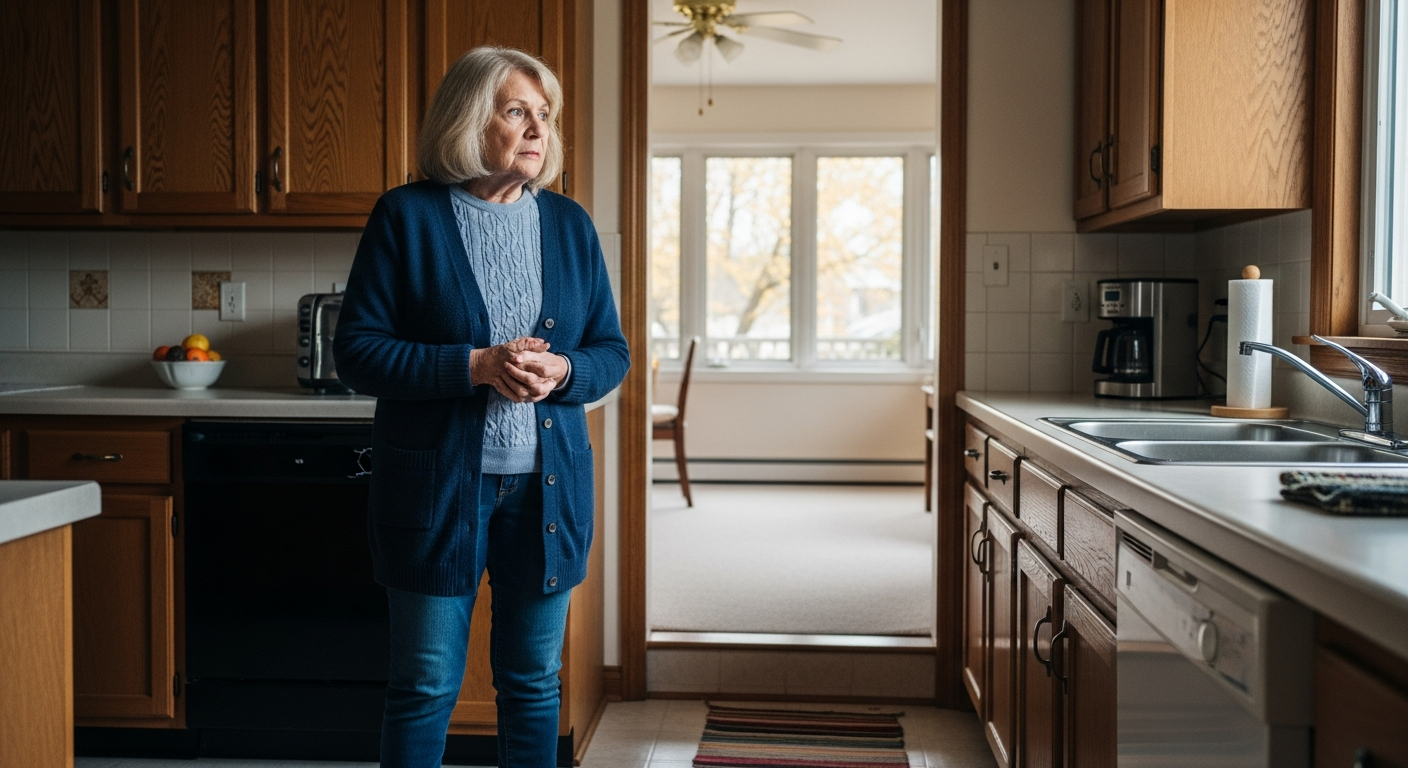
The Resistance Pattern: Why Aging Parents Refuse Modifications
This is remarkably common and rooted in psychology, not logic:
Core fears driving refusal:
- Identity loss: "Grab bars mean I'm old and weak; I'm not ready to accept that"
- Permanence: "If I install modifications, I'm admitting I'll never get better"
- Loss of control: "Modifying my home means admitting I need help; my autonomy disappears"
- Fear of others' judgment: "What if friends visit and see grab bars? They'll think I'm failing"
- Superstitious thinking: "If I prepare for decline, decline will happen faster"
The progression:
Your parent (age 78) is clearly declining:
- Moves slowly from room to room
- Grabs furniture for support
- Takes small, cautious steps
- Occasionally stumbles (nearly falls multiple times/week)
You suggest grab bars in the bathroom.
Response: "I don't need grab bars. I'm fine. Stop treating me like I'm sick. I've lived in this house 50 years without them; I don't need them now."
You suggest removing area rugs that are tripping hazards.
Response: "Those rugs are part of my home. I won't live in a sterile, boring house because you're worried I'll fall. I like my home the way it is."
You suggest moving bedroom to main floor (avoid stairs).
Response: "Absolutely not. That bedroom is my sanctuary. I'm not being pushed out of my own home because of a little arthritis."
Meanwhile, you watch real danger: stumbles, near-falls, death grip on railings, moving dangerously slowly. One fall could mean hip fracture, hospitalization, loss of independence, long-term care placement.
Your aging parent is trading dignity-through-denial for genuine risk of catastrophic injury.
According to Statistics Canada, falls are the leading cause of injury death among Canadians 65+. Among seniors with mobility decline who refuse modifications, fall-related hospitalization rates are 3-4x higher than those with modifications in place.
The Ethical and Legal Framework: Updating Over Resistance
Your Rights as Adult Child
You cannot legally force your aging parent into modifications they explicitly refuse. However, you can:
Option 1: Fund modifications anyway (discreetly)
- Install grab bars in bathroom (removable, non-permanent)
- Add handrails in hallways (removable, cosmetically subtle)
- Improve lighting (easy upgrade, less "obvious")
- Remove tripping hazards (rugs, electrical cords)
- Install motion-sensor lights (convenient, not a "modification")
Risk: Your parent might remove the modifications out of spite, reinstalling trip hazards and rejecting safety measures.
Option 2: Reframe modifications as "convenience" or "upgrades," not "aging modifications"
- "Better lighting = can read the newspaper better" (not "you're aging")
- "Handrails = hold while I carry groceries" (not "you need support")
- "New non-slip flooring = less maintenance, easier to clean" (not "you'll fall")
- "Bedroom main floor = convenient for guests, warmer" (not "you can't climb stairs")
Option 3: Legal capacity assessment + Power of Attorney
If your aging parent has cognitive decline alongside physical decline, you may pursue:
- Formal capacity assessment (physician evaluation of decision-making ability)
- Power of Attorney for property (you make home modification decisions)
- Guardianship (last resort; significant legal process)
This is complex and often damages family relationships. Use only when safety is critical and parent has clear cognitive impairment.
Option 4: Professional intervention
- Geriatrician or social worker visit (third-party professional suggests modifications)
- Your parent may accept recommendations from a professional more than family
- Frame it: "Your doctor wants you to see a home safety specialist"
When Does Refusal Become Unacceptable?
Consider intervention if:
- Your aging parent has fallen recently (near-miss or actual fall)
- Cognitive decline makes them unaware of danger
- They live alone with no supervision
- Injury would be catastrophic (hip fracture, head injury)
- Home safety presents imminent risk
Less critical: cosmetic preferences, lifestyle choices without immediate danger.
Reverse Mortgage for "Forced" Safety Modifications
Discretionary Modification Strategy
Instead of asking permission, fund modifications that are:
- Non-permanent (removable, can be undone)
- Framed as "upgrades" or "conveniences"
- Subtle visually (modern design, blend with home aesthetic)
- Genuinely useful even if parent denies aging need
Install via reverse mortgage funding:
| Modification | Framing | Cost | Removability |
|---|---|---|---|
| Grab bars in bathroom | Safety feature, modern upgrade | $300-$800 | Removable |
| Handrails in hallways | Convenient support while carrying items | $500-$1,500 | Removable |
| Improved lighting (LED) | Save electricity, brighter reading space | $1,000-$2,000 | Easy upgrade |
| Non-slip bathroom flooring | Updated tiles, easier maintenance | $2,000-$4,000 | Permanent, but framed as renovation |
| Main-floor bedroom setup | Guest room, convenient layout | $3,000-$8,000 | Permanent, but framed as flexibility |
| Walk-in shower (vs. tub) | Modern, luxurious, easier cleaning | $5,000-$10,000 | Permanent, but justified as upgrade |
| Stair lift | Convenience for moving furniture, protecting back | $3,000-$6,000 | Removable (can be uninstalled) |
Total "forced safety" renovation: $12,000-$30,000 (varies by scope)
Reverse Mortgage Allocation
Home value: $425,000 Age: 76 Borrowing capacity: $238,000
Borrow: $30,000-$40,000 for discretionary safety + convenience modifications
Allocation:
- Bathroom safety (grab bars, non-slip flooring, lighting): $4,000
- Hallway handrails and improved lighting: $3,000
- Stair lift (if stairs are obstacle): $5,000
- Main-floor bedroom setup (moving secondary bedroom items): $3,000
- Kitchen safety upgrades (improved lighting, non-slip flooring): $2,000
- Exterior safety (improved entryway lighting, ramp if needed): $3,000
- Buffer and unexpected needs: $5,000-$6,000
Total: $25,000-$27,000 (well within $30,000-$40,000 borrow)
Remaining RM capacity: $198,000-$208,000 (available for ongoing aging-in-place needs, care costs)
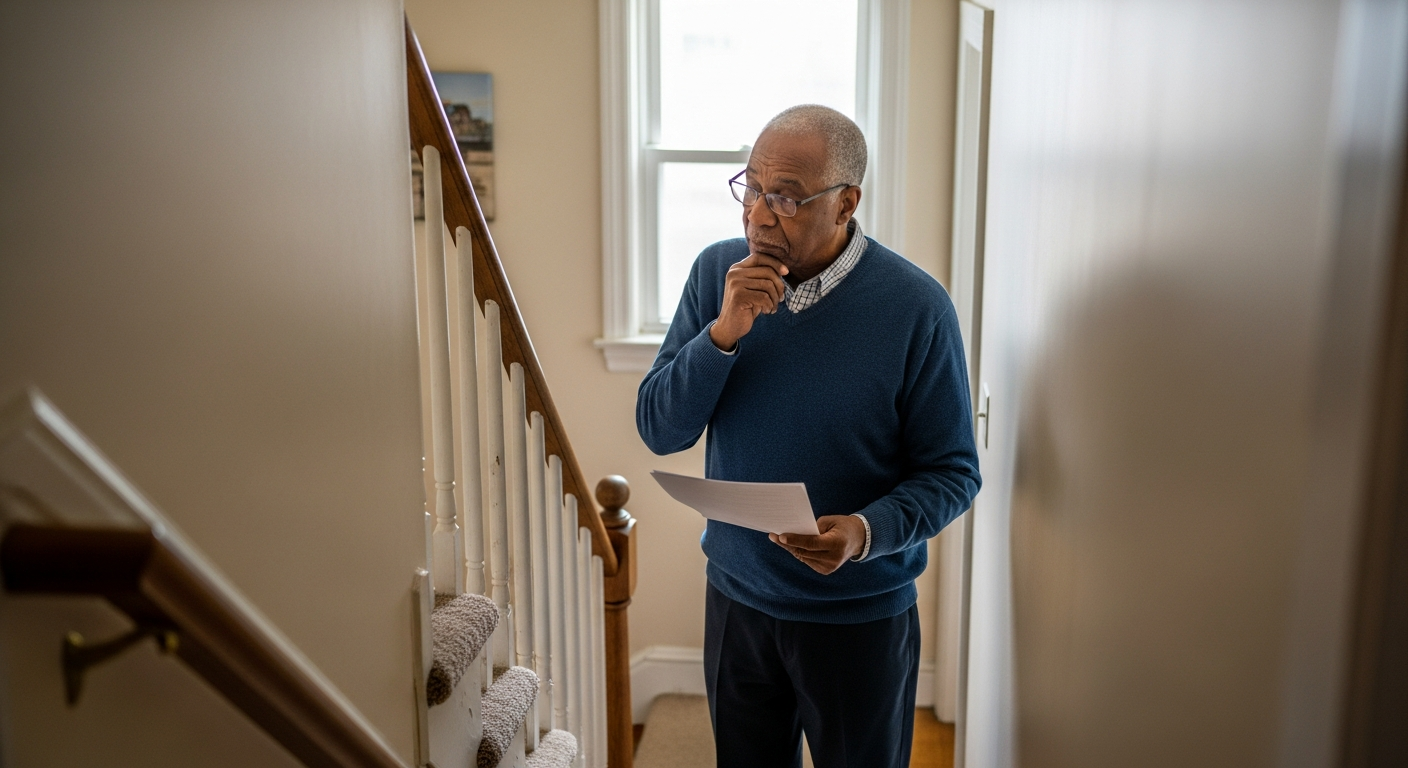
Implementation Strategy: Winning Without Arguing
Approach 1: Professional Recommendation
Get a third-party professional involved:
- Request home safety assessment from occupational therapist (OT)
- OT generates formal report: "Recommend grab bars, improved lighting, and handrails for fall prevention"
- Frame it: "Your OT thinks these changes would help; we're going to proceed"
- Your parent is less likely to fight a professional recommendation
Cost: $300-$500 for OT assessment (include in RM budget)
Approach 2: Gradual, Subtle Implementation
Don't announce modifications. Install them quietly:
- Week 1: Handrails appear in hallways (framed as "we renovated the hallway")
- Week 2: Grab bars in bathroom (framed as "updated fixtures")
- Week 3: Improved lighting installed (framed as "LED upgrade")
By the time your parent realizes what's happening, it's done and they're already using it beneficially.
Approach 3: Anchor to Positive Health Change
If your parent had a fall or near-miss: "You stumbled last week. We're making some changes to prevent that from happening again. Not because we think you're aging—because we had a scare."
This frames modifications as problem-solving response to specific incident, not blanket "you're old" messaging.
Approach 4: Leverage Caregiving Adult Child
If adult child is primary caregiver: Adult child can advocate: "Mom/Dad, I'm worried about you on the stairs with your balance issues. I need you to have grab bars so I don't worry about you when I'm not here."
Reframe as caregiver protection need, not parent limitation.
According to geriatric psychology research, aging parents accept modifications more readily when they feel agency in the decision (participating in design, choosing finishes, approving timeline) than when modifications feel imposed. Even "forced" modifications go better with token input from parent.
Handling Active Resistance or Removal
If Your Parent Removes Grab Bars or Refuses to Use Modifications
Don't engage in power struggle. Instead:
- Document usage: Note if parent uses handrails naturally (even if they won't admit it), grabs grab bars when needed
- Reframe as optional: "These are here if you want to use them; no pressure"
- Focus on one fall prevention: If parent won't use grab bars, emphasize improved lighting + non-slip flooring (less obviously "aging assistance")
- Accept partial compliance: If parent uses some modifications (lighting, handrails) but refuses others (grab bars), that's progress
Risk Acceptance Conversation
Sometimes you need to have honest discussion:
"I see you declining, and I'm scared you'll fall and break a hip. A fall would end your independence. These modifications reduce that risk. I can't force you to use them, but I need you to understand why I installed them and that I'll continue protecting you this way."
This is honest, respectful, and adult-to-adult.
Legal and Capacity Concerns
Signs Your Parent Might Lack Capacity to Refuse Modifications
- Doesn't remember recent falls or near-misses
- Refuses safety modifications but can't articulate reasoning
- Makes decisions inconsistent with their own values
- Extreme cognitive decline or dementia diagnosis
If you suspect capacity issues:
- Consult geriatrician for formal assessment
- Discuss with family (siblings, spouse)
- Consider Power of Attorney for property
- Involve elder law attorney
This is serious step; only proceed if truly concerned about safety and capacity.

Key Takeaways
- Aging denial is common, but potentially dangerous. Falls are leading cause of injury death in seniors 65+.
- You can fund protective modifications via reverse mortgage even if your aging parent refuses them outright.
- Frame modifications as "upgrades" or "conveniences," not "aging adjustments." Psychological framing matters.
- Professional (OT, physician) recommendations are more accepted than family suggestions.
- Subtly install modifications gradually rather than announcing a "safety overhaul."
- Accept partial compliance. If parent won't use grab bars but uses handrails, that's protective progress.
- Last resort: Capacity assessment and Power of Attorney only if safety is critical and parent lacks decision-making ability.
Frequently Asked Questions
Is it ethical to fund modifications against my aging parent's wishes?
Yes, if: (1) They're at demonstrable risk of serious injury; (2) You're not removing their autonomy (modifications are low-key, reversible where possible); (3) You're acting out of genuine care, not control. You can love someone and disagree about safety choices.
What if my parent gets angry when they discover modifications?
Expect it. Listen, don't defend. "I know you don't like this. I'm not trying to control you; I'm trying to keep you safe. I'd rather have you angry and living at home than injured in long-term care." Most aging parents accept modifications within weeks, even if they initially resist.
Can I legally modify a home I don't own if it's my aging parent's house?
No, without their consent or legal authority. Options: (1) Ask permission (frame as safety upgrade); (2) Pursue Power of Attorney; (3) Suggest reverse mortgage to your parent; (4) Compromise on less-permanent modifications (lighting, handrails, removable grab bars).
What if my aging parent's partner (spouse) is refusing modifications?
More complicated. If spouse doesn't agree with your parent, modifications may not happen without family discussion or potential conflict. If spouse supports modifications but parent refuses, spouse can advocate alongside you.
Should I tell my aging parent about the reverse mortgage before using it for modifications?
Ideally, yes. Transparency is better than surprise. However, if your parent will refuse the reverse mortgage outright, you might frame it as: "We're thinking about updating the home for modern standards; it might involve a reverse mortgage. What do you think about that?" Ease them into the concept.
Does FSRAO regulate reverse mortgages for home modifications against parent's wishes?
Yes, FSRAO regulates all Ontario reverse mortgages. However, lenders will require the homeowner (your aging parent, if they own the home) to agree to and sign the reverse mortgage. If your parent refuses, you cannot access reverse mortgage funds without their consent.
Safety and dignity can coexist, even when your aging parent disagrees.
Contact Rick Sekhon Reverse Mortgages to fund protective modifications for your aging parent's home.
Rates and terms subject to lender approval. This content is illustrative and does not constitute legal or medical advice.
Ready to Learn More?
Find out exactly how much you could unlock from your home — free and no obligation.
Related Articles
Reverse Mortgage for Preventive Accessibility: Aging Proactively Without Crisis
Install accessibility features BEFORE medical crisis forces urgent renovations. Learn how proactive home modifications funded by reverse mortgage reduce future care costs.
Read →Aging in Place with a Reverse Mortgage: Home Modification Guide
How Ontario seniors can fund aging-in-place home modifications with a reverse mortgage — costs, top modifications, grants, and a complete planning guide.
Read →Reverse Mortgage for Aging Parent's Philanthropic Legacy: Strategic Charitable Giving Before Death
Fund your aging parent's philanthropic goals with a reverse mortgage—strategic charitable giving, endowments, and legacy funding in Ontario.
Read →