
Reverse Mortgage for Preventive Accessibility: Aging Proactively Without Crisis
Install accessibility features BEFORE medical crisis forces urgent renovations. Learn how proactive home modifications funded by reverse mortgage reduce future care costs.
What if you funded bathroom grab bars, widened doorways, and installed a stair lift BEFORE a fall or stroke forced emergency renovations at triple cost? Most seniors wait until crisis strikes—a hip fracture, a TIA warning, or mobility decline—then scramble for urgent, expensive home modifications. A reverse mortgage enables proactive aging: plan and fund accessibility features while you're still healthy, avoiding emergency pressure and cost inflation.
This article is for educational purposes only and does not constitute financial advice.
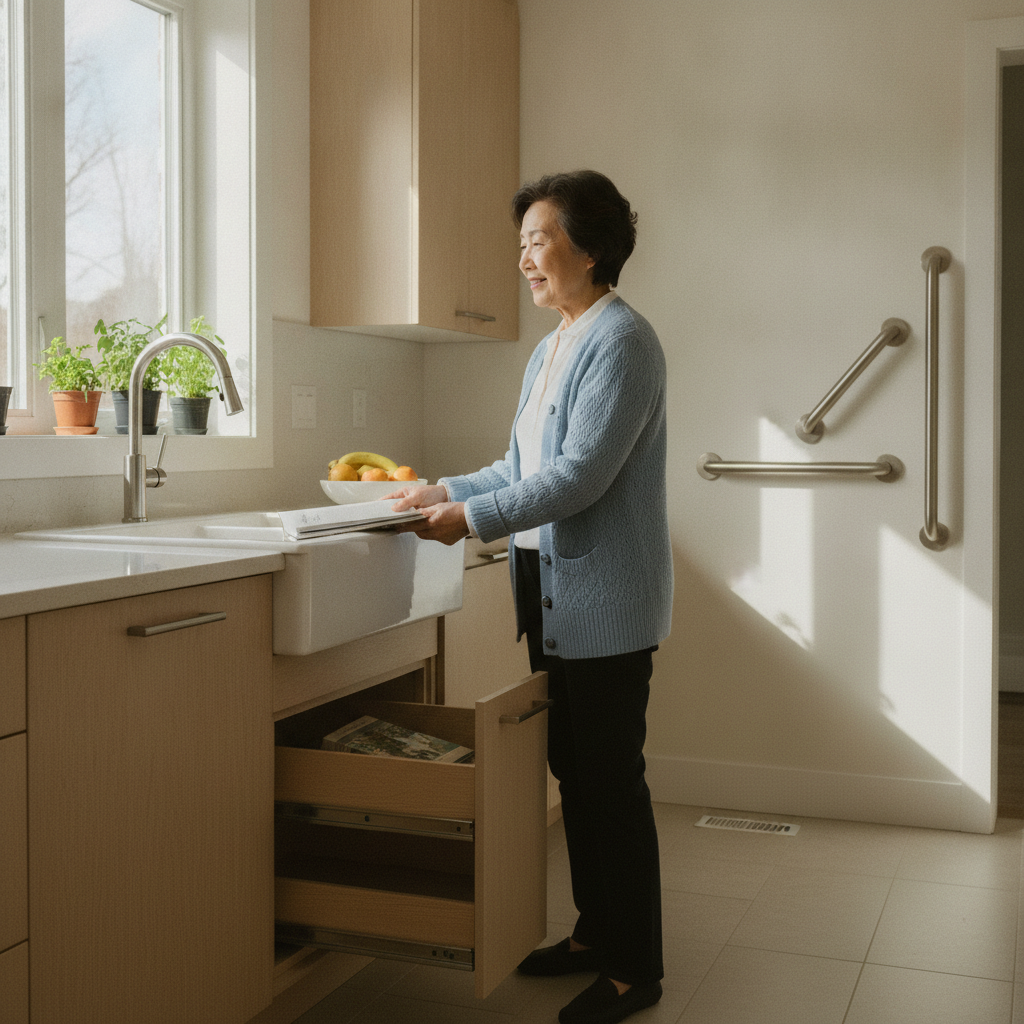
The Crisis-Driven Renovation Trap
Typical scenario:
Margaret, age 76, lives independently in her Toronto home. She's mobile, sharp, and active. She's been thinking about grab bars in the bathroom "someday."
Then: She slips on wet tile. Hip fracture. Surgery required. 3 months recovery. Doctor says: "You can't go home until your bathroom is safe."
Emergency renovation project:
- Grab bars: $800 (urgent install, premium labor)
- Shower seat and rails: $1,200
- Toilet raised seat and frame: $600
- Bathroom floor non-slip treatment: $1,500
- Kitchen modifications for walker: $2,000
- Stair lift quote: $3,500
Total urgent cost: $9,600 (normal cost for this work: $5,500-$6,500)
Why the markup?
- Emergency contractors charge 40-60% premium
- No time for competitive quotes
- Installer assumes patient is desperate
- Installation rushed; quality corners cut
Meanwhile, Margaret is in a rehabilitation facility, paying $300-$500/day out of pocket. Costs accumulate.
The Proactive Approach: Plan Before Crisis
Margaret's alternative timeline (reverse mortgage funding):
Age 73 (3 years earlier):
- Margaret gets modest reverse mortgage ($100,000 line of credit)
- Professional accessibility assessment: $1,500
- Identifies risks: bathroom slip hazard, stair safety, kitchen reach challenges
Age 74-75 (over 1-2 years):
- Year 1: Bathroom grab bars, non-slip flooring, shower seat ($3,200)
- Year 2: Stair lift installation (phased: can wait for sales/discounts) ($3,200)
- Year 3: Kitchen modifications, rolling shelving ($2,500)
Total proactive cost: ~$9,000 (spread over 3 years, negotiated pricing)
Age 76: Margaret slips in bathroom but has grab bars. Minor incident. No hospitalization. Continues living at home safely.
Outcomes comparison:
| Scenario | Total Cost | Health Outcome | Home Safety | Timeline |
|---|---|---|---|---|
| Crisis-driven | $9,600 + rehab costs | Hospital stay, recovery setback | Rushed installation, potentially unsafe | Urgent, emergency |
| Proactive (RM funded) | $9,000 + RM interest (~$6,300 over 10 yrs) | Incident prevented or minimized | Professional installation, certified | Planned, optimized |
Cost difference: Crisis driven is actually MORE expensive, plus you suffer a major health setback.
What Proactive Accessibility Looks Like
Phase 1: Professional Assessment (Age 70-75)
Hire a certified occupational therapist or accessibility consultant (~$1,000-$1,500):
- Evaluate your home for fall risks
- Assess current mobility limitations
- Identify future risks (stairs, bathroom, kitchen reach)
- Recommend specific modifications
- Provide cost estimates and installation timeline
- Identify government grants/subsidies you may qualify for
Phase 2: Tier the Modifications (By Priority)
| Tier | Priority | Cost | Timeline | Urgency |
|---|---|---|---|---|
| Tier 1 | High-fall-risk areas | $3,000-$5,000 | Year 1 | Install immediately |
| Tier 2 | Moderate-risk areas | $2,500-$4,000 | Year 2-3 | Plan for next 1-2 years |
| Tier 3 | Convenience/comfort | $1,500-$3,000 | Year 3+ | Optional, when budget allows |
Example breakdown:
Tier 1 (Bathroom - Highest Fall Risk):
- Grab bars (toilet, tub, walls): $600
- Non-slip flooring treatment: $800
- Raised toilet seat + frame: $400
- Shower chair: $300
- Subtotal: $2,100
Tier 2 (Stairs & Bedroom):
- Stair lift: $3,200-$5,000 (spread cost; some models rent)
- Bedroom grab bar for bed: $400
- Improved lighting: $600
- Subtotal: $4,200-$6,000
Tier 3 (Kitchen & General):
- Lowered shelving in kitchen: $800
- Lever-style door handles: $400
- Improved bathroom lighting: $500
- Smart home safety system: $800
- Subtotal: $2,500

Funding the Proactive Plan: Reverse Mortgage Strategy
Step 1: Get a Professional Assessment
Don't guess. Pay $1,000-$1,500 for a certified occupational therapist (OT) to evaluate your home.
According to CMHC (Canada Mortgage and Housing Corporation), homes with professional accessibility assessments cost 30-40% LESS to modify because the plan is optimized and avoids redundant or unnecessary work.
Step 2: Request Reverse Mortgage Line of Credit
Rather than a lump sum, request a line of credit from CHIP, HomeEquity Bank, Equitable Bank, Bloom Financial, or Home Trust:
- Draw as needed: Pull funds only when you're ready to do each modification
- Interest only on drawn amounts: If you have $50,000 available but draw $10,000 in Year 1, you only pay interest on that $10,000
- Flexibility: If plans change or you move, you haven't borrowed everything
Step 3: Execute the Plan Over Time
Example: Patricia, age 74, Ontario
- Home value: $500,000
- Reverse mortgage approved: $280,000 (56% at age 74)
- Requests: $60,000 line of credit (only need $8,000-$10,000/year proactively)
Year 1 (Age 74):
- Draw: $3,500 for OT assessment, bathroom grab bars, flooring
- Interest cost: ~$245 (7% on $3,500)
Year 2 (Age 75):
- Draw: $2,800 for stair lift down payment
- Interest cost: ~$392 (7% on year 1 + 2 balances)
Year 3 (Age 76):
- Draw: $2,200 for kitchen modifications
- Interest cost: ~$532
Total drawn over 3 years: $8,500 Total interest over 10 years: ~$5,950 Total cost: $14,450
Outcome: Patricia's home is fully accessible, professionally installed, phased over time. If she has a minor fall at age 76, her home is already prepared. She avoids emergency renovation costs and health setbacks.
Proving the Preventive Case: The Math
Scenario A: No proactive modifications, crisis at age 76
- Emergency bathroom reno: $9,600
- Hospital stay (3 days): $0 (covered by Ontario Health)
- Private rehab facility (6 weeks): $8,400 ($300/day)
- Lost productivity, family stress: Priceless
- Total direct cost: $18,000+
Scenario B: Proactive reverse mortgage modifications, minor incident at age 76
- Proactive modifications (cost): $8,500
- Interest cost (10 years): $5,950
- Hospital stay prevented (averted): $8,400 saved
- Total cost: $14,450 - $8,400 saved = $6,050 net
Net savings: $11,950 (and you maintain independence much longer)
Addressing Common Objections
"I'm too young to worry about accessibility. I'm not disabled."
Reality: Accessibility features aren't just for disabled people. They benefit everyone:
- Pregnancy (difficulty bending, balance changes)
- Temporary injuries (sprained ankle, surgery recovery)
- Aging parents visiting (your 85-year-old mother appreciates grab bars)
- Aging in place (the longer you stay independent, the more these features protect you)
"Won't installing grab bars make me feel old?"
Modern accessibility is stylish. Today's grab bars, ramps, and lifts are designer-integrated:
- Brushed nickel grab bars (elegant, not clinical)
- Stair lifts that look built-in
- Smart bathroom mirrors with lighting and heated elements
- These are investments in your home, not stigma
"I can't afford a reverse mortgage. Isn't it expensive?"
Cost of proactive accessibility is less than the cost of crisis repairs + health setbacks. Plus:
- You only pay interest on amounts drawn
- You maintain home ownership
- Home continues appreciating (tax-free in Canada)
- No monthly payments; costs come from estate when you pass
Key Takeaways
✓ Proactive accessibility funding SAVES money compared to emergency renovations (which cost 40-60% more due to urgency premiums).
✓ Professional OT assessment (~$1,500) identifies true risks and prevents unnecessary work (saves $3,000-$5,000 in wasted modifications).
✓ Phased modifications over 2-3 years reduce burden and allow you to test features before full commitment (e.g., try a stair lift rental before purchasing).
✓ Reverse mortgage line of credit is ideal—you draw only what you need, when you need it, paying interest only on drawn amounts.
✓ The real value is independence—staying safely in your home longer, avoiding health crises, and maintaining dignity.
Frequently Asked Questions
At what age should I do a proactive accessibility assessment?
Age 70-75 is ideal. You're still active and healthy, giving you 5-10 years to implement modifications. If you wait until 80+, health decline may accelerate and limit your options.
Can I claim these modifications as tax deductions?
Some may qualify for the Accessibility Expenses Tax Credit or Ontario Accessibility Tax Rebate. Consult your accountant. Generally, modifications are capital improvements (not deductible) but may increase home value.
Do accessibility modifications decrease my home's resale value?
No. Well-designed, professional accessibility features typically increase or maintain home value. They appeal to aging buyers and families with elderly relatives. Poorly done DIY work might detract, but professional installations add value.
Can I rent accessibility equipment instead of buying?
Yes. Stair lifts can be rented for $100-$200/month. This is useful if you're unsure about commitment. However, ownership is often cheaper long-term (payback in 3-4 years).
What if I move or need long-term care before using all the modifications?
You can take some (grab bars, toilet seats) with you. Permanent installations (stair lifts, non-slip flooring) remain with the home and add to its value. Your estate benefits.
Next Steps
Start your proactive accessibility plan today:
- Get a professional OT assessment (find certified assessor through Occupational Therapy Association of Ontario or your health unit)
- Rank modifications by tier (focus on high-risk areas first)
- Talk with Rick Sekhon Reverse Mortgages about a line-of-credit reverse mortgage to fund the plan over time
- Implement Tier 1 (highest risk) within 6 months
Ready to Learn More?
Find out exactly how much you could unlock from your home — free and no obligation.
Related Articles
Reverse Mortgage for Home Safety Assessment: Preventive Planning for Aging in Place
Fund professional home safety assessments with a reverse mortgage. Proactively identify aging-in-place needs before health crises force expensive emergency modifications.
Read →Fund Home Accessibility With a Reverse Mortgage
Use a reverse mortgage to fund wheelchair ramps, stairlifts, walk-in tubs, and accessible bathrooms. Costs, grants, tax credits, and a worked example for Ontario.
Read →Aging in Place with a Reverse Mortgage: Home Modification Guide
How Ontario seniors can fund aging-in-place home modifications with a reverse mortgage — costs, top modifications, grants, and a complete planning guide.
Read →