
Protecting Home Equity When Zoning Changes to Commercial: Development Risk Strategy
Plan for rezoning risk to your residential property. Reverse mortgage strategy when commercial development threatens home value and long-term aging in place.
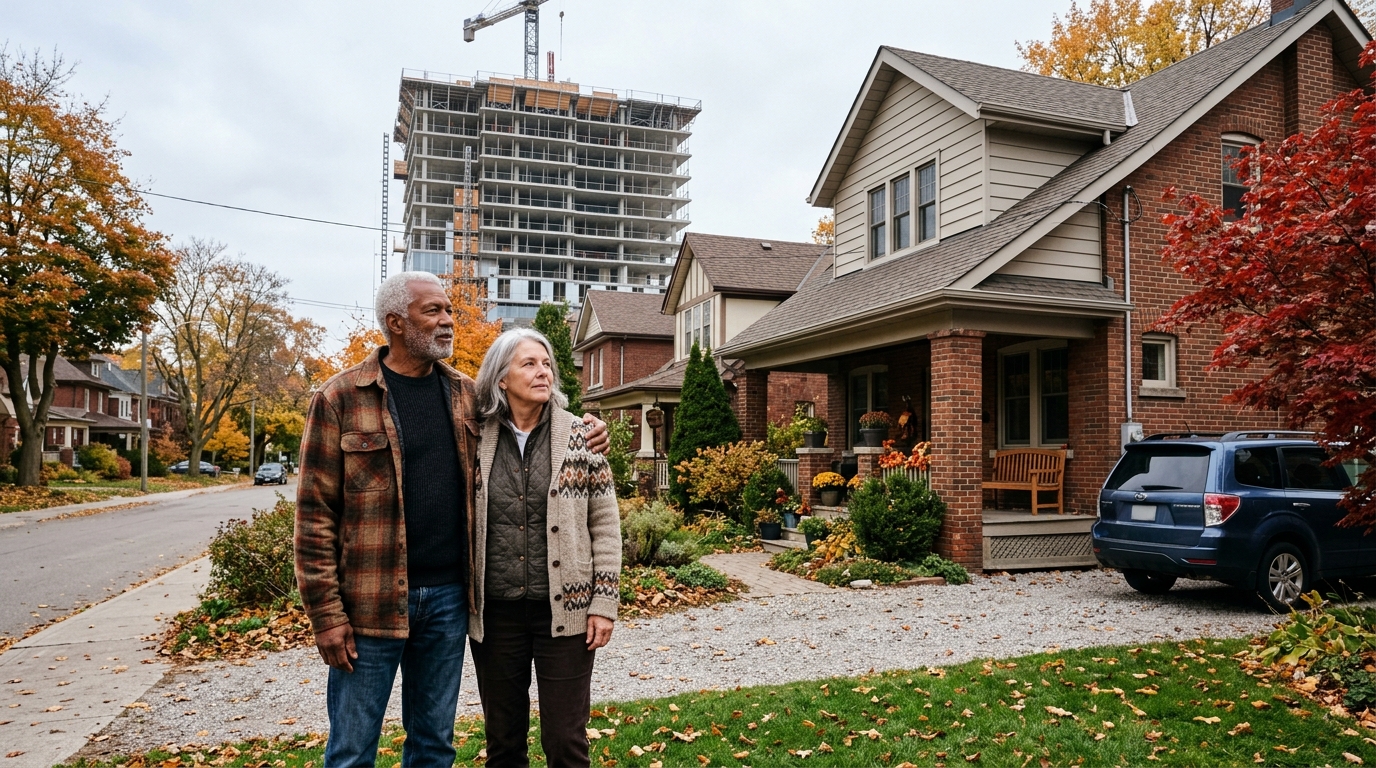
Your neighborhood is changing. The municipality just announced a zoning review that could convert your quiet residential area to mixed-use commercial development. Your home's value might spike short-term, but your quality of life—and long-term aging in place—could be destroyed by traffic, noise, and development. A reverse mortgage can help you protect your equity now, before uncertainty crashes your home value or forces an unwanted move.
The Hidden Threat: Rezoning Risk in Ontario Communities
Zoning changes happen faster than seniors expect. Municipal planning departments across Ontario are aggressively rezoning residential neighborhoods near transit, employment centers, or underutilized areas. The result:
- Your quiet home becomes surrounded by construction, then commercial/mixed-use density
- Noise, traffic, light pollution increase significantly
- Property values become volatile (spike initially, then adjust downward as residential appeal fades)
- Your ability to age in place deteriorates—noise affects sleep, foot traffic increases crime risk, community character vanishes
According to Statistics Canada, 23% of Ontario homeowners in 2026 report rezoning concerns affecting neighborhood desirability. Yet most don't take proactive action until it's too late.
How Rezoning Affects Home Value and Aging in Place
The value impact of rezoning is nuanced—and dangerous for seniors:
| Phase | What Happens | Home Value Impact | Your Risk |
|---|---|---|---|
| Proposal phase (Year 1) | Rezoning announced; debate begins | Uncertain; may spike short-term (speculation) | High uncertainty; hard to plan |
| Approval phase (Year 2-3) | Rezoning approved by council | Often peaks (developers excited); uncertainty lifts | Peak value window; best time to act |
| Development phase (Year 3-5) | Construction begins; buildings rise | Value stabilizes or declines as density impacts | Noise, disruption, quality of life crashes |
| Maturation (Year 5+) | Mixed-use neighborhood established | Values adjusted to new reality | Long-term decline relative to quiet areas |
For aging seniors, this is critical: You might have 5–10 years of "good" living in your current home. Once development intensifies, aging in place becomes uncomfortable. By then, your equity might be locked in a less-desirable property.
Reverse Mortgage Strategy: Capture Equity Before Rezoning Impact
A reverse mortgage allows you to capture your home's current value—before rezoning impacts residential desirability:
Example: Robert, 72, in a transitioning Toronto neighborhood
- Home value today: $650,000 (quiet, residential, aging-friendly)
- Rezoning to mixed-use announced; council will vote in 6 months
- Estimated long-term value: $580,000–$620,000 (after density/noise impact)
- Robert plans to age in place; wants to fund home modifications for accessibility
Robert's action plan:
-
Get reverse mortgage NOW (before rezoning uncertainty peaks)
- Qualify based on current home value: $650,000
- Available equity (40% LTV): $260,000
- Close in 5 weeks
-
Draw equity strategically:
- Fund aging-in-place modifications (bathroom access, kitchen renovation, safety systems)
- Build emergency reserve ($50,000) for healthcare/care costs
- Secure funds while home is valued as desirable residential property
-
Weather the rezoning transition:
- If home value drops to $620,000, Robert's reverse mortgage debt doesn't change—it's fixed at the time of closing
- His net equity stays protected
- If home remains at $650,000 or higher, Robert is ahead
Result: Robert has captured $260,000 in equity based on today's value, funded his aging-in-place needs, and protected himself against rezoning risk.
The Timing Window: Why Acting Early Matters
When rezoning is announced, the timing window for advantageous action is short:
| Timeline | What's Happening | Reverse Mortgage Advantage |
|---|---|---|
| Proposal announced (Month 0-3) | Uncertainty high; smart money acts | Best time to qualify & close; home value still solid |
| Rezoning approved (Month 4-12) | Speculation peaks; some values spike | Closing window; rate shopping intensifies; harder to close |
| Development begins (Month 12-24) | Reality sets in; value adjusts | Too late; equity already reduced |
If your municipality announces rezoning, act within the first 3–6 months. That's your window to access home equity at current valuation.
Assessing Rezoning Risk in Your Neighborhood
Ask yourself:
- Has your municipality announced a zoning review or master plan update? (Check municipal website or planning notices.)
- Is your neighborhood near transit, a major employer, or an employment zone? (High-priority rezoning candidates.)
- Are there vacant or underutilized properties nearby? (Development targets.)
- Have other neighborhoods nearby recently been rezoned? (Pattern suggests your area is next.)
- Do you value quietness and community stability? (Rezoning threatens both.)
If you answer YES to 3+ questions, rezoning risk is real.
Reverse Mortgage vs. Other Equity Options
| Option | Advantages | Disadvantages | Best For |
|---|---|---|---|
| Reverse mortgage | Locks in current valuation; no monthly payments; captures equity before uncertainty | Costs $1,700–$2,300; debt grows; less flexibility | Seniors wanting security & aging in place |
| Sell now | Avoids rezoning risk entirely; clear capital gain | Disrupts aging in place; transaction costs 5%; finding new home in volatile market is hard | Those willing to move |
| HELOC | Flexible; cheaper initially | Rates variable; lender might freeze access if value drops; monthly payments required | Those with strong income & low debt |
| Wait and see | No upfront cost; might benefit if values spike | Risk of being trapped in less-desirable property; value may drop; aging in place becomes uncomfortable | Optimists comfortable with uncertainty |
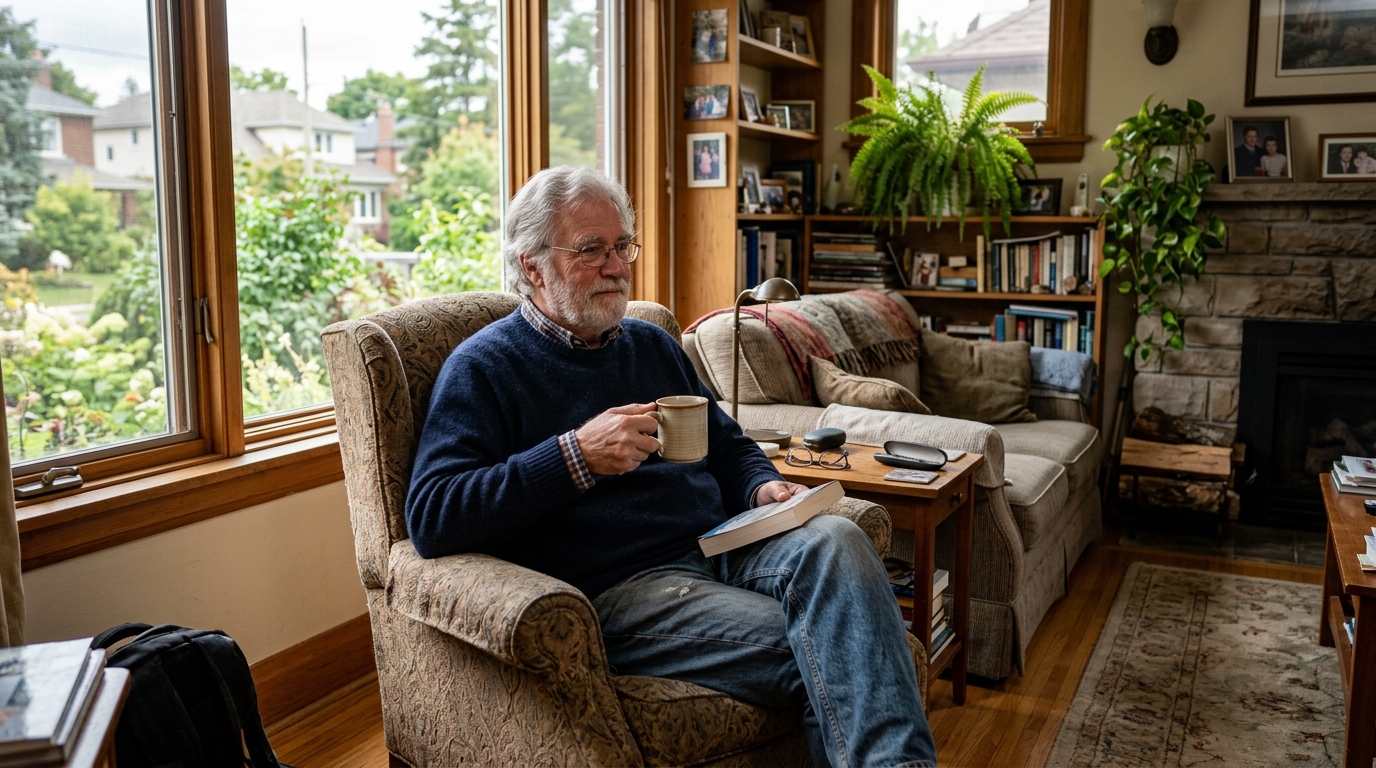
For most aging-in-place seniors, a reverse mortgage wins because it captures current value, requires no payments, and provides security regardless of rezoning outcome.
Case Study: Capturing Value Before the Boom-and-Bust Cycle
Margaret, 70, in East York (area marked for transit-oriented development):
- Home value: $520,000 (solid, quiet, 30 years of memories)
- Reverse mortgage available: $208,000
- Rezoning to mixed-use announced; will take 2–3 years to approve, then 3–5 years to develop
- Margaret wants to age in place; plans to stay 15+ years
Margaret's reverse mortgage decision:
- Applies now (before formal rezoning vote)
- Closes in 5 weeks with $1,800 in costs
- Draws $100,000 immediately
- $30,000 for bathroom renovations (accessibility)
- $20,000 for kitchen safety upgrades
- $50,000 as emergency medical/care reserve
- Keeps $108,000 in available credit line for future needs
Margaret's 5-year outcome:
- Home value after rezoning: $550,000 (higher than feared; some gentrification benefit)
- Reverse mortgage debt: $100,000 + 4 years interest (~$135,000)
- Net equity: $415,000 (still strong)
- She's safe, accessible, and aging in place as intended
- If rezoning had crashed her value to $480,000, she'd still have $345,000 in net equity—and wouldn't have tried to sell at a loss
Without reverse mortgage:
- Margaret watches home value fluctuate
- Uncertainty paralyzes her (move now? wait?)
- By the time rezoning clears and values stabilize, she's older, moves are harder
- If she stays, she's trapped in a less-desirable neighborhood while aging
Key Takeaways
- Rezoning risks affect 23% of Ontario homeowners; most don't act proactively
- A reverse mortgage locks in home value before rezoning impacts are clear
- The timing window for advantageous action is 3–6 months after rezoning announcement
- Reverse mortgage debt is fixed; if home value drops due to rezoning, your debt doesn't change
- Zero monthly payments allow you to age in place even as neighborhood character changes
- Captured equity can fund aging-in-place modifications that make your current home safer and more comfortable
Frequently Asked Questions
If I get a reverse mortgage based on today's value and the home value drops, am I underwater?
No. A reverse mortgage debt is fixed at the time of closing—it doesn't adjust if your home value changes. So if you borrow $200,000 and your home drops 10% in value, you still owe $200,000, but your home is now worth less. However, the "no negative equity guarantee" protects you: you'll never owe more than your home's value when the loan matures.
Can I lock in a reverse mortgage rate before rezoning is officially approved?
Yes. The reverse mortgage qualification is based on today's appraisal and terms. Rezoning uncertainty doesn't prevent qualification—it makes it more important to act. Pre-approval can happen while rezoning is still being debated.
What if rezoning actually increases my home value significantly?
Even better. Your reverse mortgage debt stays fixed; your home value appreciation is all yours. If your home appreciates 15% due to rezoning (from $520K to $598K), your reverse mortgage debt is still $100K, but your net equity improved $78K.
If my neighborhood is rezoned to commercial and noise becomes unbearable, can I use my reverse mortgage funds to move?
Yes. A reverse mortgage line of credit can fund relocation costs (moving, down payment on new home). However, you'd need equity in your current home to qualify for additional borrowing on a new property. Plan ahead.
Does a reverse mortgage lock me into aging in place even if rezoning makes it unlivable?
No. You always have the option to sell. Selling your home pays off the reverse mortgage debt (from proceeds) and you keep any remaining equity. The advantage of a reverse mortgage is that you captured current value—so even if you later decide to move, you have more equity cushion.
How do I find out if my neighborhood is at risk for rezoning?
Contact your municipal planning department or visit your city's website. Look for:
- Master plans or secondary plans under review
- Zoning studies
- Transit-oriented development proposals
- Vacant land or employment zone studies
- Recent zoning changes in adjacent neighborhoods
Your real estate agent can also assess rezoning risk based on municipal trends.
Is your neighborhood facing rezoning? A reverse mortgage lets you capture current home value before uncertainty impacts your equity. Act within the first 6 months of rezoning announcement for maximum advantage. Consult with a reverse mortgage specialist to explore your options.
Ready to Learn More?
Find out exactly how much you could unlock from your home — free and no obligation.
Related Articles
Building a Reverse Mortgage Safety Net Without Burdening Your Adult Children
Use a reverse mortgage proactively to create financial independence in retirement, ensuring your adult children never have to bail you out or provide care.
Read →Your Home Is Collateral for Your Adult Child's Business Debt: Exit Strategy
Protect your home when your adult child has pledged it as collateral for business debt. Reverse mortgage strategy for debt relief and asset protection.
Read →Reverse Mortgage to Hire a Professional Palliative Care Transition Coordinator
Before hospice, a care transition coordinator helps plan the shift from treatment to comfort care. A reverse mortgage funds this crucial professional guide.
Read →