
Reverse Mortgage When Aging Parent's Home Develops Subsurface Issues Like Sinkholes or Soil Failure
Underground hazards threaten home stability and property value. Reverse mortgage funds geological assessment, stabilization, and remediation for subsurface crisis.
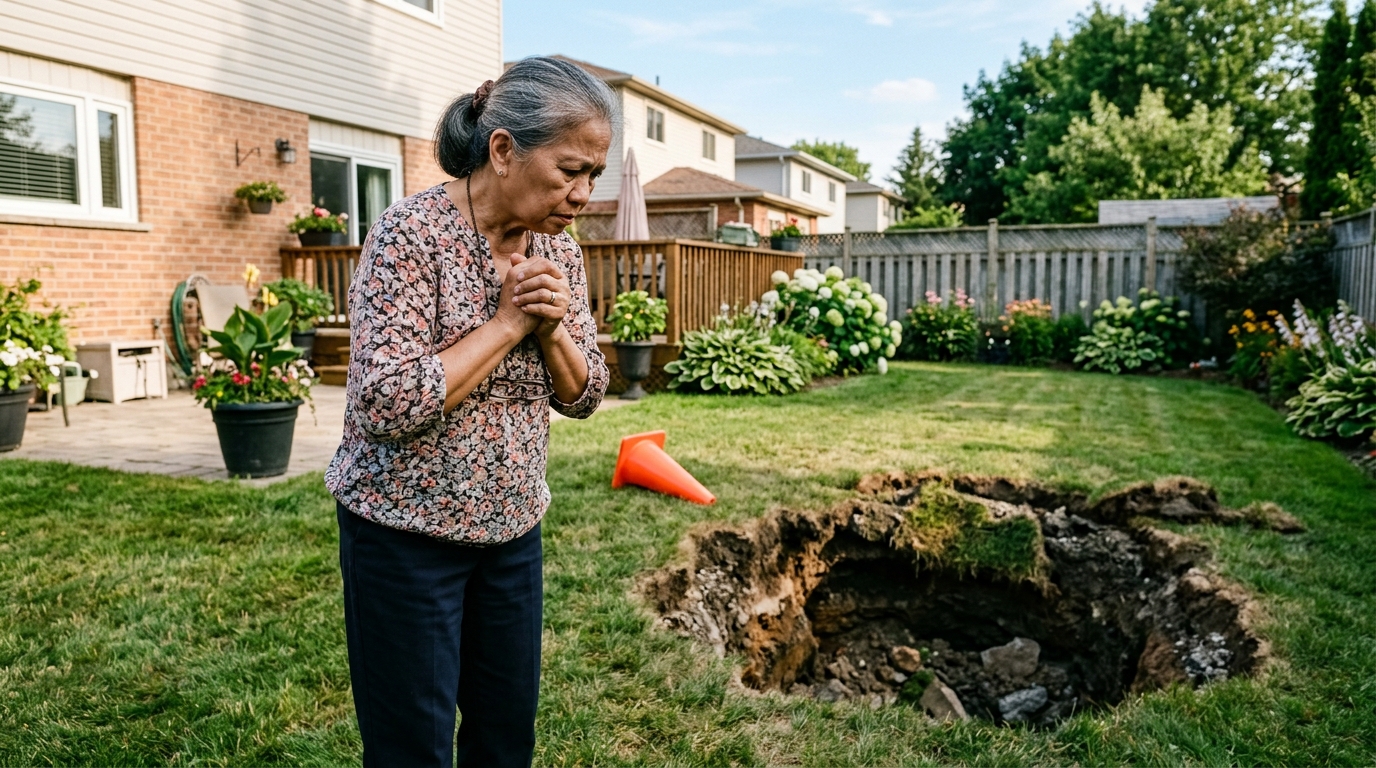
What if your aging parent's backyard suddenly develops a depression, or hairline cracks appear in the foundation—signs of subsurface collapse or soil failure below? Sinkholes, soil subsidence, and underground water erosion are expensive, dangerous, and hidden threats to Ontario home values. Reverse mortgage funds the urgent geological assessment and stabilization needed to protect your parent's largest asset.
The Hidden Threat: Subsurface Hazards in Ontario
Sinkholes and soil failures aren't just dramatic news stories; they're an growing risk in Ontario, particularly in:
- Areas with limestone/dolomite bedrock (prone to dissolution sinkholes)
- Regions with historical mining (abandoned mines collapse over decades)
- Areas with poor drainage (water erosion under structures)
- Older developments built on fill sites or unstable soil
Definition: A sinkhole occurs when the ground beneath a structure suddenly subsides or collapses due to underground void collapse, bedrock dissolution, or water erosion. Soil subsidence is gradual settling; sinkhole formation is catastrophic.
A single sinkhole repair costs $10,000–$100,000+ depending on severity. Property value loss (even after repair) averages 15–25%. Insurance often doesn't cover sinkhole damage (excluded as earth movement).
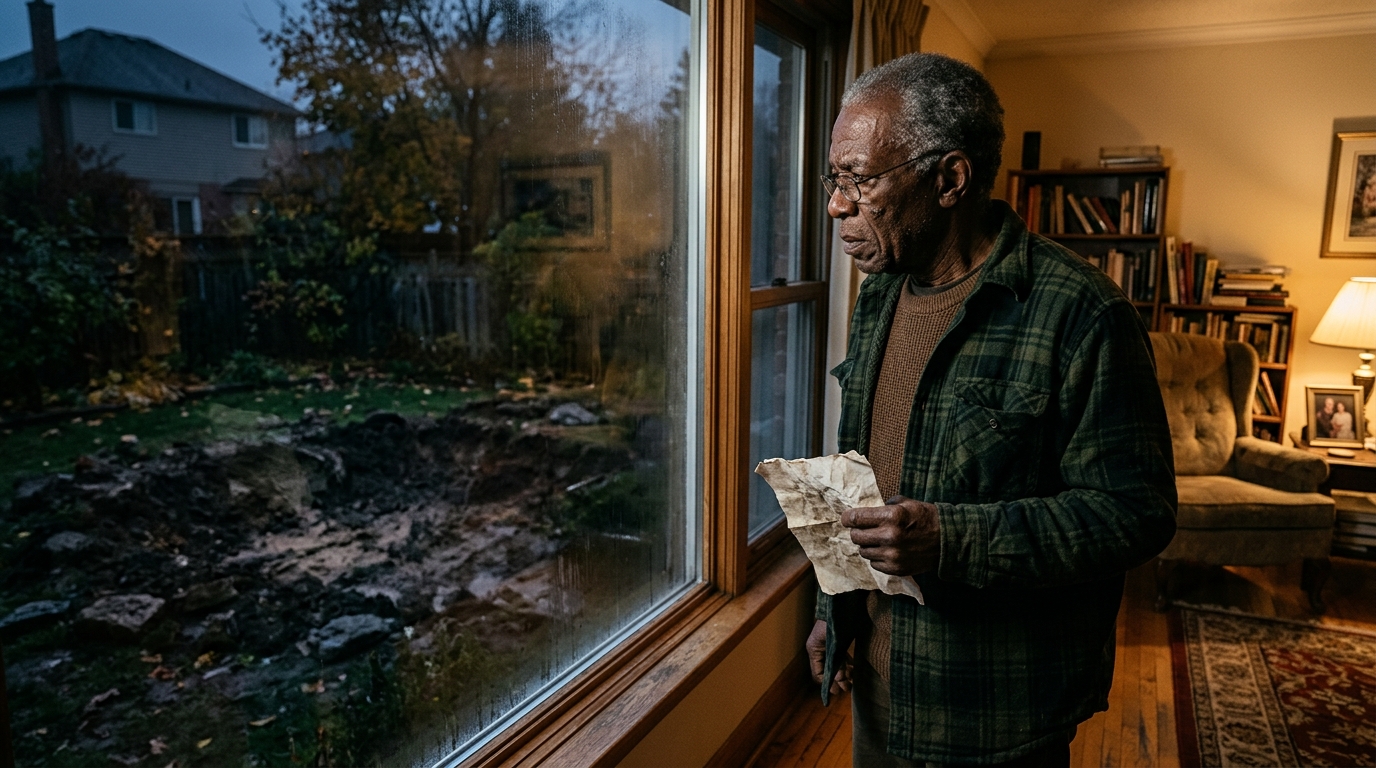
Real Scenario: The Backyard Sinkhole Crisis
Margaret, 72, has lived in her London, Ontario home for 40 years. Her backyard is valued at $600,000 total. One morning, she notices:
- A 3-foot diameter depression forming near the patio
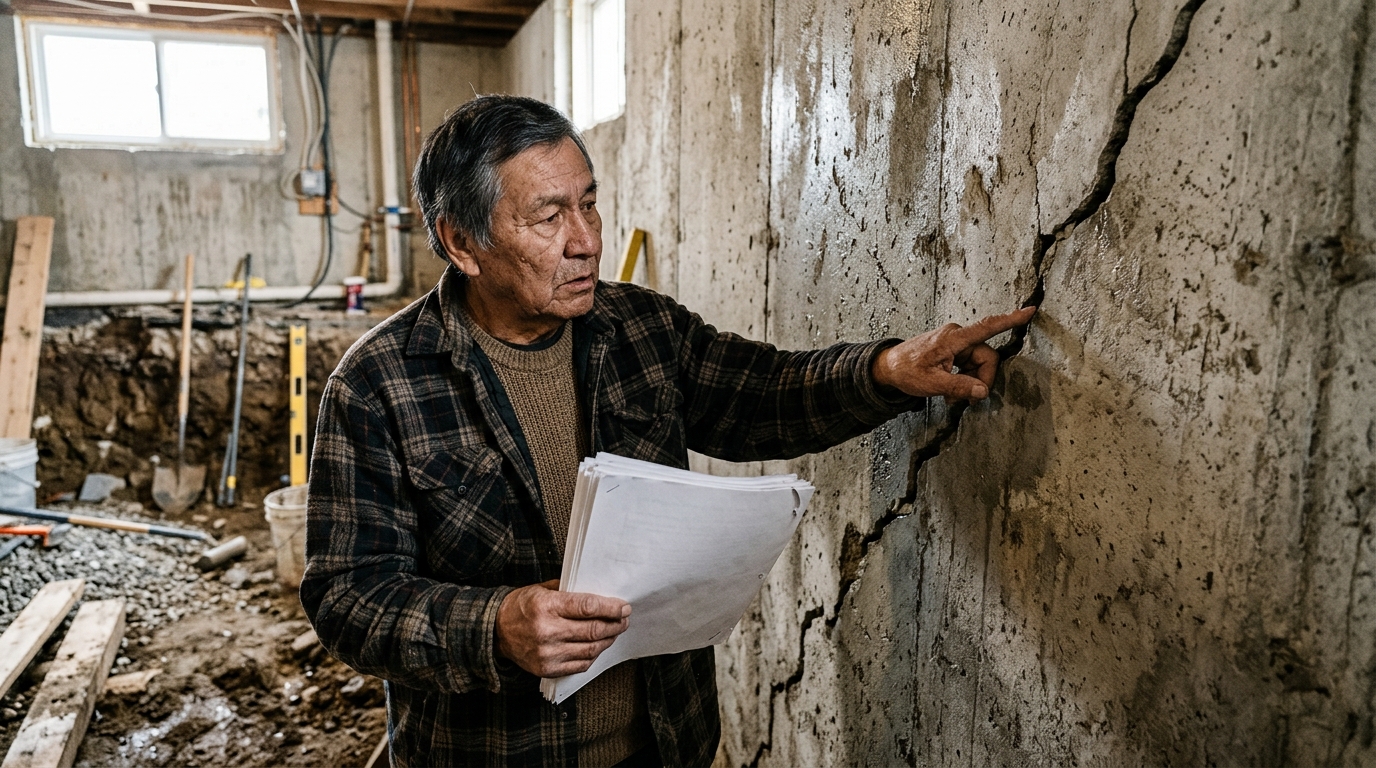
- Foundation cracks on the back wall (small, but growing)
- Concerns from her adult daughter about home stability
Immediate assessment: A local contractor estimates $8,000–$15,000 for a geological survey and stabilization proposal. Margaret's fixed CPP/OAS income doesn't accommodate this unexpected cost.
Without reverse mortgage: Margaret delays assessment. Over 6 months, the depression expands to 6 feet diameter. Patio collapses. Foundation damage worsens. Home insurance inspector declares structure at risk. Insurance is cancelled. Property value drops 20% ($120,000). Any sale becomes impossible without expensive remediation revealed in home inspection.
With reverse mortgage: Margaret accesses $50,000 at age 72 from her paid-off home. Uses $12,000 for:
- Geological survey and subsurface mapping ($4,000–$6,000)
- Ground stabilization or fill remediation ($6,000–$10,000)
- Foundation inspection and repairs ($2,000–$4,000)
Outcome: Issue is documented, stabilized, and controlled. Home value is preserved. Insurance remains valid. Margaret continues aging in place safely.
Subsurface Issues Severity and Costs
| Issue Type | Initial Signs | Severity | Assessment Cost | Remediation Cost | Property Value Impact |
|---|---|---|---|---|---|
| Soil subsidence (slow settling) | Uneven floors, drywall cracks, door jams | Low–Moderate | $2,000–$5,000 | $5,000–$20,000 | 5–10% |
| Sinkhole (small, non-growing) | Surface depression <3 feet; small cracks | Moderate | $3,000–$7,000 | $10,000–$30,000 | 10–15% |
| Sinkhole (large or growing) | Depression >3 feet; foundation damage | High | $5,000–$10,000 | $30,000–$75,000 | 20–30% |
| Underground water erosion | Wet basement, foundation seepage | Moderate–High | $2,000–$6,000 | $15,000–$50,000 | 10–20% |
| Historic mining voids | Reported location in mining area | Variable | $4,000–$10,000 | $20,000–$100,000+ | 15–40% |
Reverse Mortgage Strategy: Protecting Home Stability
Phase 1: Immediate Assessment
Before panic or expensive remediation, a professional geological assessment is essential:
- Geotechnical engineer consultation: $200–$400 initial consultation fee
- Subsurface mapping and drilling: $3,000–$8,000 (determines exact cause and scope)
- Structural engineer assessment: $1,000–$3,000 (evaluates building impact)
Total initial assessment: $4,200–$11,400
A reverse mortgage of $25,000–$40,000 covers assessment plus remediation options.
Phase 2: Remediation Options
Depending on assessment findings:
Injection grouting: Injects stabilizing material into subsurface voids. Cost: $5,000–$20,000 depending on area size.
Foundation underpinning: Strengthens foundation to bridge any subsurface settlement. Cost: $10,000–$30,000.
Sinkhole filling and compaction: Excavates depression, fills with engineered material, compacts. Cost: $10,000–$40,000.
French drain installation: Redirects water flow to prevent ongoing erosion. Cost: $3,000–$8,000.
Insurance and Property Value Implications
Critical: Most homeowner insurance policies exclude sinkhole damage as "earth movement." Before remediation:
- Notify insurance company immediately of any subsurface concerns
- Request written documentation of coverage/exclusions for sinkhole
- Document the issue with photos and professional assessment
- Consider sinkhole insurance rider (if available in Ontario; many insurers don't offer it)
Property value: A documented sinkhole (even after repair) reduces property value 15–25% permanently. Buyers see risk. However, documented repair (with engineer certification) recovers some value compared to hidden damage discovered at inspection.
Reverse Mortgage Calculation: Home Stability Investment
| Home Value | Recommended RM Advance (5%) | Assessment Budget | Remediation Reserve | Total Home Protection |
|---|---|---|---|---|
| $400,000 | $20,000 | $5,000–$8,000 | $12,000–$15,000 | $20,000 |
| $500,000 | $25,000 | $6,000–$10,000 | $15,000–$20,000 | $25,000 |
| $600,000 | $30,000 | $8,000–$12,000 | $18,000–$25,000 | $30,000 |
Working With Geotechnical Professionals
A certified geotechnical engineer can:
- Identify exact subsurface cause (sinkhole, subsidence, water erosion, etc.)
- Assess stability and risk to structure
- Recommend remediation option most cost-effective for your situation
- Oversee remediation work and certify stabilization
- Document repairs for insurance and property records
Cost is $2,000–$5,000 upfront but saves tens of thousands in unnecessary or incorrect remediation.
Key Takeaways
- Sinkholes and soil failures cost $10,000–$100,000+ to remediate and permanently reduce property value 15–30% even after repair
- Professional geological assessment ($4,000–$12,000) is essential before expensive remediation; prevents incorrect or unnecessary treatment
- Homeowner insurance typically excludes sinkhole damage, making home equity (reverse mortgage) the only viable funding source
- Early detection and stabilization limits property value loss and prevents catastrophic foundation damage
- Reverse mortgage advance of $25,000–$50,000 covers assessment plus remediation for most Ontario subsurface issues
- Documented repair with engineer certification partially recovers property value compared to hidden damage discovered at later home inspection
Frequently Asked Questions
How do I know if my aging parent's property has subsurface risk factors?
Check geology databases: Ontario Ministry of Natural Resources publishes sinkhole-prone areas; local geotechnical firms maintain maps of high-risk zones. If property is in limestone region (southwestern Ontario, areas near Niagara), historical mining zone, or area with drainage problems, risk is elevated. Professional assessment ($4,000–$8,000) is strongly recommended for properties in these zones, even without visible signs.
Can I use a reverse mortgage to fund preventive subsurface assessment even if no visible problems exist?
Yes. For aging parents whose property is in geologically high-risk areas, proactive assessment ($4,000–$8,000) provides peace of mind and early detection of developing issues. A reverse mortgage can fund assessment even without active problems, treating it as home maintenance and risk reduction. This is particularly wise if aging parent plans to stay in home 10+ more years.
If my aging parent's home has a sinkhole, should they disclose it when selling the home?
Yes, legally required. Ontario law requires disclosure of known material defects affecting property value. Undisclosed sinkhole can expose seller to legal liability and rescission. Disclosed sinkhole (with professional repair documentation) reduces value but allows honest sale. Reverse mortgage funds remediation to maximize sale value when the time comes.
Will repairing a sinkhole restore my aging parent's property value fully?
Partially. A professionally repaired sinkhole (documented by certified engineer) recovers 50–70% of lost property value. Example: $600,000 home with sinkhole drops to $450,000. Repair costing $30,000 might restore it to $500,000–$520,000 (partial recovery). Full value recovery is unlikely; permanent stigma remains. However, repair is essential to prevent total value loss.
Does homeowner insurance cover sinkhole formation if it's discovered after the reverse mortgage is taken?
Usually not. Most standard policies exclude earth movement/sinkhole damage. However, document sinkhole formation AFTER reverse mortgage closing; this prevents insurer from denying coverage based on pre-existing condition exclusion. Some specialized sinkhole insurance riders exist (rare in Ontario). Consult insurance agent before reverse mortgage closes to clarify coverage.
Can I include subsurface assessment and remediation costs in my reverse mortgage if they're not yet needed?
Yes. A reverse mortgage provides equity access for home maintenance and repairs. Proactive subsurface assessment is a legitimate maintenance expense. Request advance amount to cover both expected costs and contingency. Geotechnical engineers often discover conditions requiring additional remediation; 20–30% contingency buffer is wise.
Is your aging parent's property at risk from subsurface hazards like sinkholes or soil failure? Reverse mortgage funding ensures timely professional assessment and stabilization, protecting your family's largest asset from catastrophic damage and property value loss. Contact Rick Sekhon Reverse Mortgages to fund home foundation protection.
Ready to Learn More?
Find out exactly how much you could unlock from your home — free and no obligation.
Related Articles
Reverse Mortgage for DEI Consulting Practice: Launching Diversity, Equity, and Inclusion Consulting in Retirement
Start a diversity and inclusion consulting practice. Help corporations and nonprofits build equitable cultures; reverse mortgage funds training, business setup, and market entry.
Read →Reverse Mortgage for Archival and Digital Preservation Consulting: Preserving Institutional History and Heritage
Launch archival consulting practice preserving records for institutions. Help libraries, archives, nonprofits; reverse mortgage funds training, tools, and market entry.
Read →Reverse Mortgage for Aging Parent as Paid Research Subject Matter Expert: Knowledge Work in Retirement
Monetize expertise as aging parent becomes paid research SME for universities. Reverse mortgage bridges income while building knowledge-sharing business.
Read →