
Reverse Mortgage for Progressive Vision Loss: Designing Your Home for Low Vision Aging
Fund home modifications for progressive vision loss with a reverse mortgage. Create a fully accessible home as your eyesight changes in Ontario.
Are you experiencing progressive vision loss and worried about maintaining independence in your current home? A reverse mortgage can fund comprehensive accessibility modifications designed specifically for low vision aging, letting you stay safely in the home you love.
Progressive vision loss—whether from macular degeneration, glaucoma, diabetic retinopathy, or other conditions—requires systematic home modifications different from standard accessibility upgrades. These modifications focus on contrast, lighting, spatial organization, and specialized equipment rather than mobility aids. Aging in place with vision loss is absolutely achievable with proper preparation and funding.
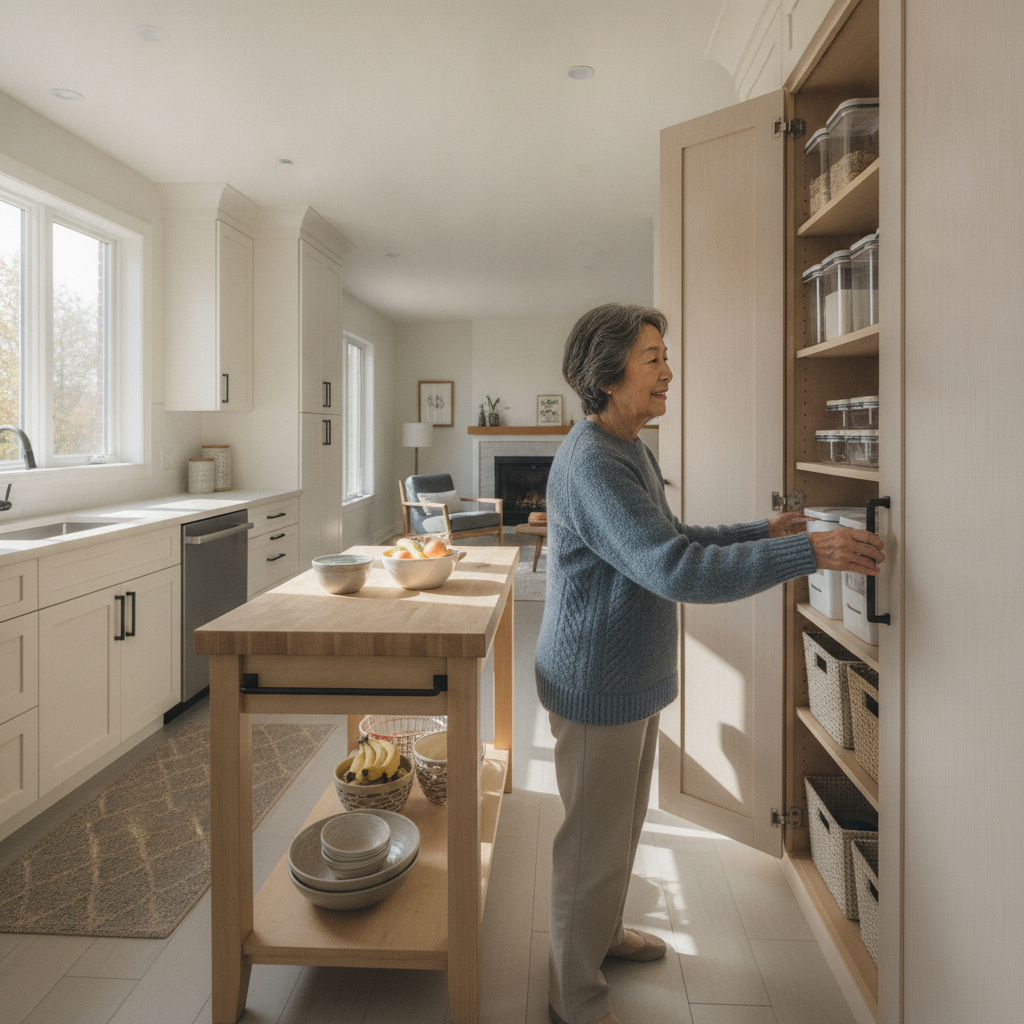
Understanding Home Modifications for Low Vision
Traditional accessibility focuses on mobility barriers (stairs, doorways, bathrooms). Low vision aging requires different modifications: high-contrast markings, strategic lighting, enhanced color differentiation, and organizational systems. The good news? These modifications are often more affordable than major renovations and dramatically improve quality of life.
According to the Canadian National Institute for the Blind (CNIB), approximately 2.7 million Canadians live with vision loss, and most develop it later in life. However, 90% of Canadians with vision loss can remain in their current homes with appropriate modifications.
Key Home Modifications for Progressive Vision Loss
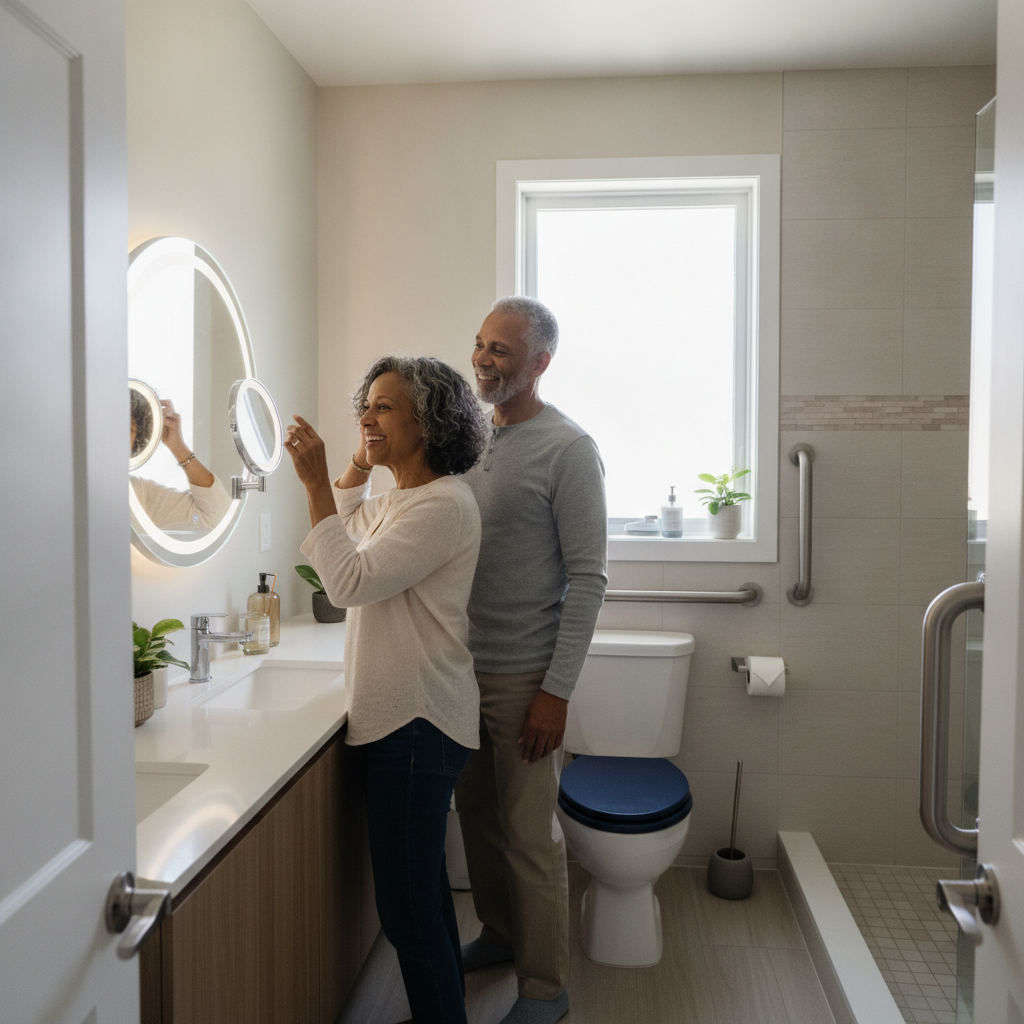
Lighting Systems and Contrast
The most impactful modification is strategic lighting. High-quality task lighting in work areas, contrast paint on stair edges and door frames, and dimmers for glare control prevent accidents and enhance navigation. Many Ontario seniors report that proper lighting alone restores significant independence.
Color Differentiation and Visual Navigation
Your home should have high contrast between walls and trim, dark door frames against light walls, and color-coded storage systems. These visual cues allow navigation without memorization, essential as vision diminishes.
Kitchen and Bathroom Safety
Large-print labeling, high-contrast cutting boards, touchable markers on stovetops, and accessible storage all support independence in essential rooms. Bathroom modifications include non-slip surfaces and grab bars positioned using contrasting paint.
Reverse Mortgage Funding for Vision Loss Modifications
| Modification Category | Examples | Typical Cost |
|---|---|---|
| Lighting upgrades | Task lighting, dimmers, LED systems, outdoor motion sensors | $2,000-$5,000 |
| Contrast and paint | High-contrast markings, door frame enhancement, stair edges | $1,500-$3,500 |
| Kitchen/bathroom accessibility | Custom storage, high-contrast fixtures, specialized equipment | $4,000-$8,000 |
| Spatial organization & storage | Custom shelving, labeled containers, accessible organization | $2,000-$4,000 |
| Professional assessment and consultation | Vision specialist design, occupational therapy evaluation | $1,500-$3,000 |
According to CNIB, the average cost to make a home fully accessible for someone with progressive vision loss ranges from $12,000-$25,000—well within reach of most reverse mortgages. The investment prevents institutional care, which costs $60,000-$100,000+ annually in Ontario.
Why Vision Loss Modifications Differ From Standard Accessibility
Standard home accessibility (ramps, grab bars, wider doorways) serves people with mobility challenges. Vision loss requires entirely different modifications focused on perception, orientation, and spatial understanding. A wheelchair ramp does nothing for someone with low vision; instead, they need high-contrast lighting and tactile markers.
Occupational therapists specializing in vision loss design homes around how your brain processes remaining vision. Some modifications cost little but require expert guidance—you need professional assessment to determine your specific needs.
Planning Your Vision Loss Home Modifications
✓ Get a professional vision loss assessment from an occupational therapist
✓ Prioritize modifications by frequency of use (kitchen first, then bedrooms)
✓ Start with lighting upgrades—highest impact, excellent ROI
✓ Use a reverse mortgage to fund comprehensive assessment and implementation
✓ Include CNIB or local vision services in planning process
✗ Don't assume standard accessibility (ramps, wide doorways) without vision loss assessment
✗ Don't skip professional consultation; DIY modifications often miss critical details
✗ Don't assume you'll adapt; proper modifications maintain independence far better
Quick Reference
| Aspect | Key Point |
|---|---|
| Primary funding need | Professional assessment ($1,500-$3,000) + implementation ($8,000-$15,000) |
| Typical total investment | $12,000-$25,000 for comprehensive low vision home design |
| Best timing | Early-stage vision loss, before accident risk becomes critical |
| Health outcome | Successful aging in place without institutional care |
| Persona fit | Aging in Place: maintaining independence with vision changes |
Frequently Asked Questions
Will my home modifications help if my vision loss progresses?
Professional vision loss home design anticipates progression. Your home is modified for your current vision level plus reasonable further decline. Occupational therapists build flexibility into design.
Are there government grants for vision loss home modifications?
Yes. Ontario and Canada offer grants through CNIB, provincial disability programs, and accessibility initiatives. A reverse mortgage can fund modifications not covered by grants—often the custom assessment and professional design work that makes the real difference.
How long does a comprehensive vision loss home modification take?
Typically 4-8 weeks from professional assessment through implementation. Simple modifications (lighting, paint, storage) can be completed in 2-3 weeks.
Can my adult child help me plan modifications if they're not vision professionals?
Absolutely. Adult children can coordinate contractors, manage budgets, and handle implementation. But insist on professional vision loss assessment from an occupational therapist or CNIB specialist for design guidance.
Ready to Maintain Independence With Vision Loss?
Progressive vision loss doesn't mean losing independence or moving from your home. With proper design and funding, you can age safely and comfortably in the place you know best. A reverse mortgage provides the financial foundation for professional assessment and comprehensive modifications that keep you independent.
Ready to Learn More?
Find out exactly how much you could unlock from your home — free and no obligation.
Related Articles
Reverse Mortgage for Hearing Aids and Vision Equipment: Sensory Health in Retirement
Learn how Ontario seniors can use reverse mortgages to fund hearing aids, vision devices, and sensory health equipment to maintain independence and quality of life.
Read →Aging in Place with a Reverse Mortgage: Home Modification Guide
How Ontario seniors can fund aging-in-place home modifications with a reverse mortgage — costs, top modifications, grants, and a complete planning guide.
Read →Reverse Mortgage for Aging in Place With Fibromyalgia: Home Modifications for Invisible Illness
Fund home modifications for aging with fibromyalgia. Reverse mortgage enables accessible design for pain management, energy conservation, and quality of life.
Read →