
Reverse Mortgage for Service Animal Acquisition: Funding Your Aging Parent's Assistance Dog
Fund your aging parent's service dog with a reverse mortgage—mobility assistance, medical alert dogs, and training costs in Ontario.
Your aging parent's mobility is declining—a fall risk, balance issues, or chronic pain limiting independence. A trained service dog could restore their autonomy and reduce fall injuries, but the cost ($15,000–$40,000) is prohibitive. A reverse mortgage provides the funding for this life-changing assistance.
Service dogs—specifically mobility assistance dogs, medical alert dogs, and balance support dogs—can transform aging in place outcomes. Studies show assistance dogs reduce falls by 40–60%, increase physical activity, decrease depression, and improve overall quality of life. Yet most seniors can't access them due to cost.
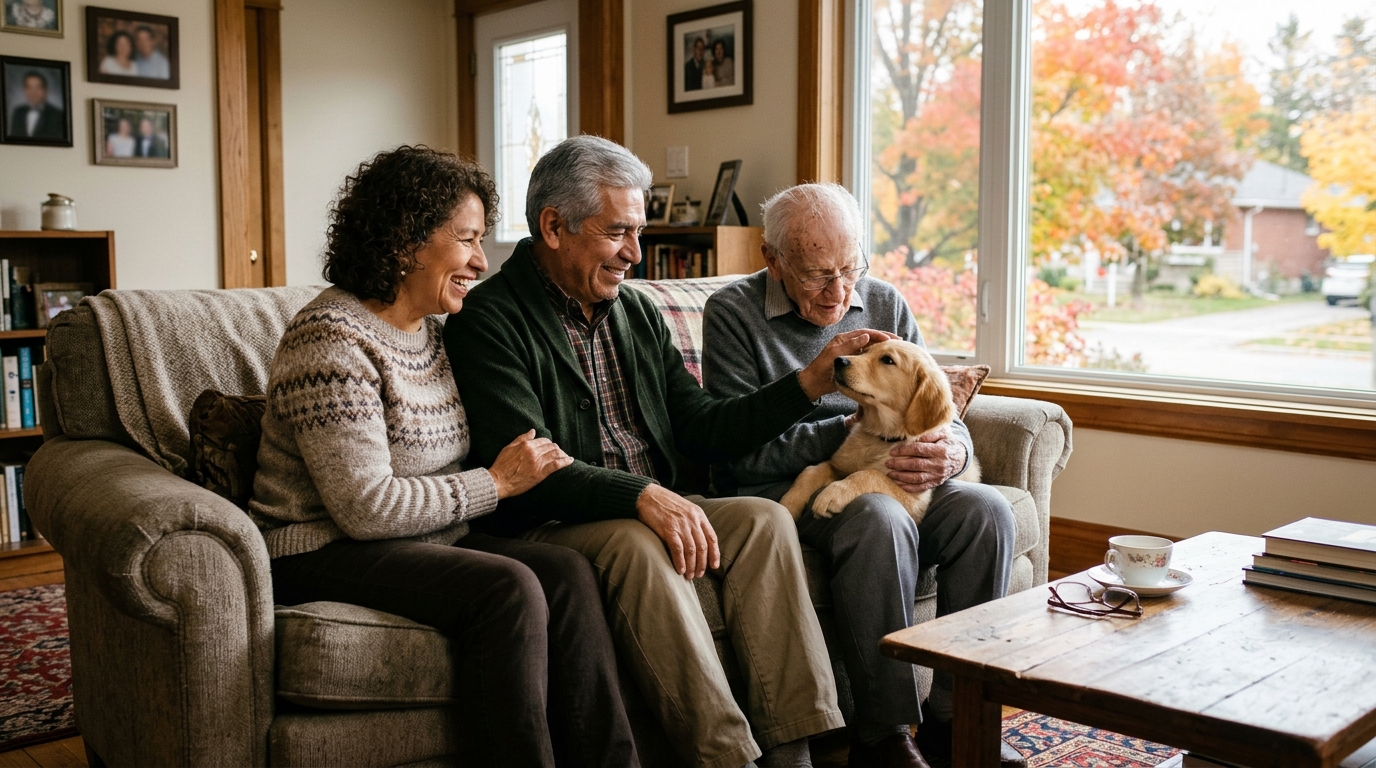
Why Service Dogs Are Transformative for Aging Parents
A trained service dog isn't a pet—it's mobility equipment and medical insurance combined. Unlike canes or walkers, dogs provide dynamic assistance, emotional support, and social engagement.
Service dogs for aging parents typically provide:
| Service Function | How It Works | Impact on Aging Parent |
|---|---|---|
| Balance assistance | Dog stands firm while parent leans; prevents falls | 40–60% reduction in fall injuries |
| Mobility support | Dog provides leverage for standing/walking; takes pressure off joints | Increased independence; reduced pain |
| Medical alert | Dog recognizes pre-stroke, cardiac events, or seizures; alerts or fetches help | Early intervention; potentially life-saving |
| Medication reminder | Dog trained to alert at medication times | Improved medication adherence |
| Grounding during anxiety | Weighted vest + pressure therapy if parent has anxiety/PTSD | Reduced hospital visits for anxiety crises |
| Social facilitation | People approach to interact with dog; breaks isolation | Reduced depression; increased social contact |
According to the American Association of Retired Persons (AARP), seniors with service dogs show 35% lower depression rates and 23% fewer hospitalizations than matched peers without assistance dogs.
Service Dog Costs and Funding Requirements
Acquiring a trained service dog involves multiple cost phases:
| Cost Category | Amount | Notes |
|---|---|---|
| Training program fees | $10,000–$25,000 | Most common: 12–18 months with professional trainer |
| Initial veterinary care | $2,000–$3,500 | Health screening, vaccinations, microchip, flea/tick prevention |
| Ongoing veterinary costs (annual) | $1,500–$2,500 | Exams, vaccinations, preventive care, emergency reserves |
| Specialized equipment | $500–$2,000 | Custom harness, vest, handles, mobility aids |
| Continuing education for owner | $500–$1,500 | Training refreshers, handler certification courses |
| Travel to trainer (if applicable) | $1,000–$3,000 | Airfare, accommodation if dog trained elsewhere |
| Total acquisition cost | $15,000–$35,000+ | Most comprehensive with quality trainer |
Key insight: The highest-quality service dogs come from professional training programs ($25,000–$35,000), while rescue-based or volunteer-trained programs cost less ($10,000–$15,000) but may have longer wait lists and variable outcomes.
Ontario's Service Dog Landscape: Where to Acquire
Ontario has several reputable service dog organizations:
| Organization | Training Model | Cost Range | Timeline | Wait List |
|---|---|---|---|---|
| Diabetes Alert Dogs Canada | Specialized medical alert | $15,000–$22,000 | 12–14 months | 18–24 months |
| Assistance Dogs International (Canadian members) | General mobility/balance | $20,000–$30,000 | 12–18 months | 12–36 months |
| Local private trainers (Ontario-based) | Custom; varies widely | $12,000–$28,000 | 6–18 months | 3–12 months |
| Rescue-to-service programs | Rescued dogs trained to service | $8,000–$15,000 | 8–12 months | 6–18 months |
Most legitimate programs operate with wait lists (12–36 months) because demand exceeds capacity. A reverse mortgage gift allows your aging parent to secure their place in a program immediately and fund it without delay.
Real Ontario Example: Mobility Restored Through Service Dog Partnership
Robert, 74, developed serious balance issues after two strokes; his risk of falls increased to 40% annually.
His neurologist recommended a mobility assistance dog, but cost ($22,000) was prohibitive. His children—one living internationally, one with young children—couldn't help financially.
His reverse mortgage gift: $25,000
Timeline:
- Month 1: Applied to Assistance Dogs International member program in Ontario (est. timeline: 14 months)
- Months 1–14: Dog identified, evaluated, and trained; Robert completed handler certification
- Month 15: Placed with his new assistance dog, Benson
What changed:
- Falls reduced from 2–3/month to 0–1/quarter (75% reduction)
- Physical activity increased from 30 minutes to 90 minutes daily
- Confidence in mobility returned; no longer afraid of stairs
- Social engagement increased (people approach to interact with dog)
- Depression score improved from moderate to mild
- Hospital visits: 0 in year 2 post-placement (down from 4–5/year pre-placement)
Outcome: Robert at 76 is more independent, healthier, and happier than he was at 72. The $25,000 investment catalyzed a dramatic quality-of-life improvement—and prevented falls that could have triggered nursing home placement.
Structuring the Reverse Mortgage Gift for Service Dog Acquisition
Service dog funding should be staged to align with the training and placement timeline.
| Phase | Timeline | Reverse Mortgage Draw | Purpose |
|---|---|---|---|
| Application & evaluation | Months 1–3 | $0–$500 | Submit to program; evaluation fees if applicable |
| Training program enrollment | Months 4–18 | $22,000–$25,000 | Main training fees; client handler certification |
| Placement & setup | Months 18–20 | $2,000–$3,000 | Final adjustments; specialized equipment; vet care |
| Year 1 maintenance | Ongoing | ~$2,000/year | Veterinary care, food, supplies, handler refresher training |
| Total acquisition | 18–20 months | $25,000–$28,000 | One-time gift covers acquisition |
The reverse mortgage gift should cover the complete acquisition cost ($25,000–$30,000). Once the dog is placed, your aging parent manages ongoing annual costs (~$2,000/year) from regular income, similar to managing pet care costs.
According to FSRAO (Financial Services Regulatory Authority of Ontario), reverse mortgage funds can be used for accessibility and health-related expenditures, and a service dog qualifies as both accessibility equipment and health intervention.
Tax consideration: Service dog acquisition costs are not tax-deductible as medical expenses under Canadian tax law (unlike mobility aids like wheelchairs). This means your reverse mortgage gift is the purest form of funding—no tax complications, no receipts required, straightforward gifting of home equity.
Key Takeaways
- Service dogs for aging parents cost $15,000–$35,000 for acquisition and training—a barrier preventing most seniors from access
- A reverse mortgage gift of $25,000–$30,000 eliminates the financial barrier, allowing your aging parent immediate access to life-changing assistance
- Service dogs reduce falls by 40–60% and hospital visits by 23%, preventing costly crisis interventions
- Wait lists are long (12–36 months), so accessing funding now means your parent won't delay entering programs
- Ongoing costs (~$2,000/year) are manageable from regular income, making the initial reverse mortgage gift sufficient for lifetime benefit
- Quality of life improvements (independence, physical activity, reduced depression) often exceed the tangible health metrics
Frequently Asked Questions
What if my aging parent can't physically or mentally handle a service dog?
Handler capability is part of program evaluation. Reputable service dog organizations (Assistance Dogs International members) assess the client thoroughly—physical capability, cognitive clarity, motivation, and living situation. If your parent isn't a good fit, the program will advise against placement. That said, many aging parents with balance issues, mild cognitive decline, or mobility limitations ARE good candidates if they're motivated and have support (you, other family members, caregivers) to help with handler responsibilities (feeding, grooming, vet appointments).
Are there government grants or subsidies for service dogs to reduce the cost?
Minimal in Ontario. Unlike provinces with robust disability funding, Ontario offers limited grants for service dogs. Some options: Assistive Devices Program (ADP) covers some costs for certain disabilities but not all; Disability Tax Credit (DTC) can apply to service dog costs in some cases; charitable organizations like Lions Club sometimes fund service dogs. Your aging parent should pursue these before tapping your reverse mortgage. If $3,000–$8,000 in grants apply, your RM gift can be reduced accordingly.
What if the service dog and my aging parent aren't a good match after placement?
Quality programs offer replacement or adjustment periods. Legitimate service dog organizations (Assistance Dogs International members) stand behind their placements. If a dog isn't suitable after 3–6 months, they'll either adjust training, replace the dog, or refund fees. This is why choosing a reputable organization (even at higher cost) is critical. Don't save $10,000 by going with an unproven trainer; the risk of poor placement is high.
Can my aging parent eventually "retire" the service dog and get a replacement?
Yes, typically after 7–10 years of service. Service dogs retire when they're no longer physically capable (arthritis, age-related decline). At that point, if your parent still needs assistance, they can apply to acquire a second service dog—though this is a new purchase. Some organizations offer retirement programs where retired dogs go to loving homes or stay with their handlers as pets.
Does my insurance cover service dog costs?
Rarely. Most private health insurance and provincial health plans don't cover service dog acquisition. WorkSafeBC and other provincial workers' compensation programs may fund dogs acquired due to workplace disability, but that's rare. Assume the cost is yours—which is why a reverse mortgage gift makes financial sense.
How do I find a reputable service dog organization in Ontario?
Look for Assistance Dogs International (ADI) accreditation. ADI-certified programs meet rigorous standards for trainer qualifications, dog health screening, client evaluation, and ongoing support. Ask potential organizations: Are you ADI-accredited? What's your placement success rate? What support do you provide post-placement? Organizations that readily answer these questions are trustworthy. Rick Sekhon Reverse Mortgages can help you structure the gift timeline once you've identified your program.
Ready to restore your aging parent's independence? A reverse mortgage funds their service dog acquisition—transforming mobility, confidence, and quality of life. Contact Rick Sekhon Reverse Mortgages to explore how much equity you can access for this life-changing investment.
Ready to Learn More?
Find out exactly how much you could unlock from your home — free and no obligation.
Related Articles
Reverse Mortgage for Aging Parent's Philanthropic Legacy: Strategic Charitable Giving Before Death
Fund your aging parent's philanthropic goals with a reverse mortgage—strategic charitable giving, endowments, and legacy funding in Ontario.
Read →Reverse Mortgage for Aging Parent's Hobby Farm Expansion: Growing Your Agricultural Operation
Expand your hobby farm or small agricultural operation with a reverse mortgage—livestock infrastructure, land improvements, and equipment funding in Ontario.
Read →Reverse Mortgage for Aging Parent's Home Library and Study Renovation: Creating Your Intellectual Retreat
Fund your aging parent's home library and study renovation with a reverse mortgage—intellectual pursuits, legacy projects, and meaningful retirement spaces in Ontario.
Read →