
Reverse Mortgage for Aging Parent Post-Divorce Financial Rebuilding
Late-life divorce left you financially compromised in retirement. Reverse mortgage rebuilds your stability without working longer or downsizing immediately.
The divorce happened at 62. Your spouse received 50% of retirement savings; you received the house. Now you're 67, retired or semi-retired, and the house is your only asset. Spousal support ended; CPP is modest. A reverse mortgage converts your home equity into retirement stability, replacing the retirement savings you lost in the divorce settlement.
Late-Life Divorce: The Financial Shock
Yes, aging parents getting divorced at 55–70 is increasingly common. Statistics Canada reports a 50% increase in divorces among Canadians 50+, with causes ranging from infidelity to irreconcilable life goals post-retirement.
The financial impact is severe:
| Pre-Divorce | Post-Divorce |
|---|---|
| Joint RRSP/investments: $500,000 | Your RRSP: $250,000 |
| House: $600,000 (paid off) | House: $600,000 (now solely yours) |
| CPP combined: $2,400/month | CPP individual: $1,500/month |
| Spousal support: TBD | No spousal support (support ended) |
| Total liquid assets | Down 50% |
The house becomes your primary asset. A reverse mortgage converts home equity into living income, replacing lost retirement savings.
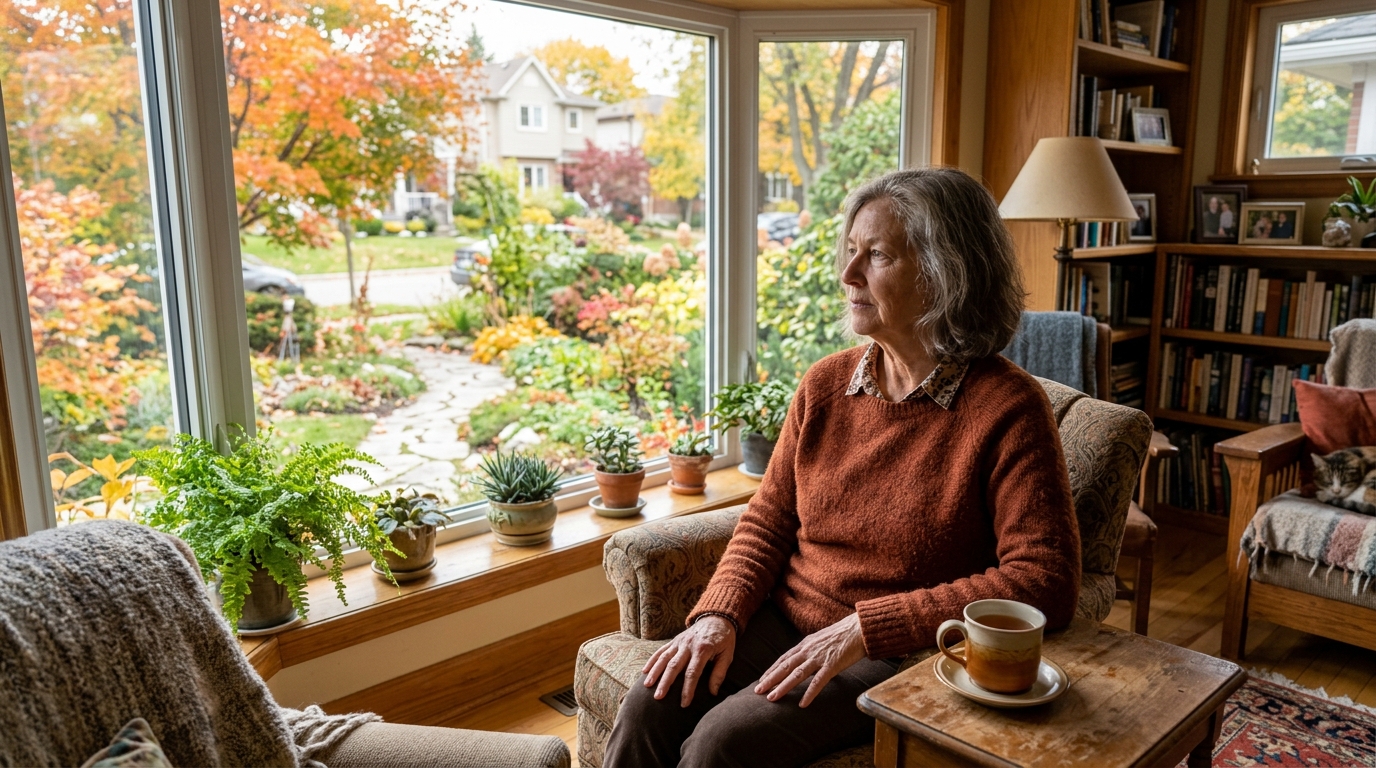
The Divorce Settlement + Reverse Mortgage Reality
If you received the house in your divorce settlement, you have options:
| Option | Pros | Cons |
|---|---|---|
| Sell house + downsize | Unlock $300,000–$500,000 equity; restart fresh | Emotional loss; moving costs; market timing risk |
| Keep house + HELOC | Stay in familiar home; access equity | HELOC requires income qualification; may not qualify |
| Reverse mortgage | Access equity without income qualification; stay in home; no monthly payments required | Higher interest rate; ongoing obligation; reduces inheritance |
For aging homeowners post-divorce without strong employment income, a reverse mortgage is often the only viable option because HELOCs require proof of ongoing income.
Financial Gap Analysis: Divorce Impact on Retirement
Let's model a typical 67-year-old Ontario woman, 2 years post-divorce:
Pre-Divorce Income (Age 65)
| Source | Annual |
|---|---|
| CPP (yours) | $14,400 |
| OAS (yours) | $7,200 |
| Spousal support | $18,000 |
| Investment income (from RRSP, TFSA, non-reg) | $20,000 |
| Total | $59,600 |
Post-Divorce Income (Age 67)
| Source | Annual |
|---|---|
| CPP | $14,400 |
| OAS | $7,200 |
| Spousal support | $0 (ended) |
| Investment income (RRSP cut in half) | $10,000 |
| Total | $31,600 |
| Annual shortfall | -$28,000 |
You've lost $28,000/year in retirement income. Your expenses ($40,000–$50,000/year) now exceed your income. A reverse mortgage bridges this gap.
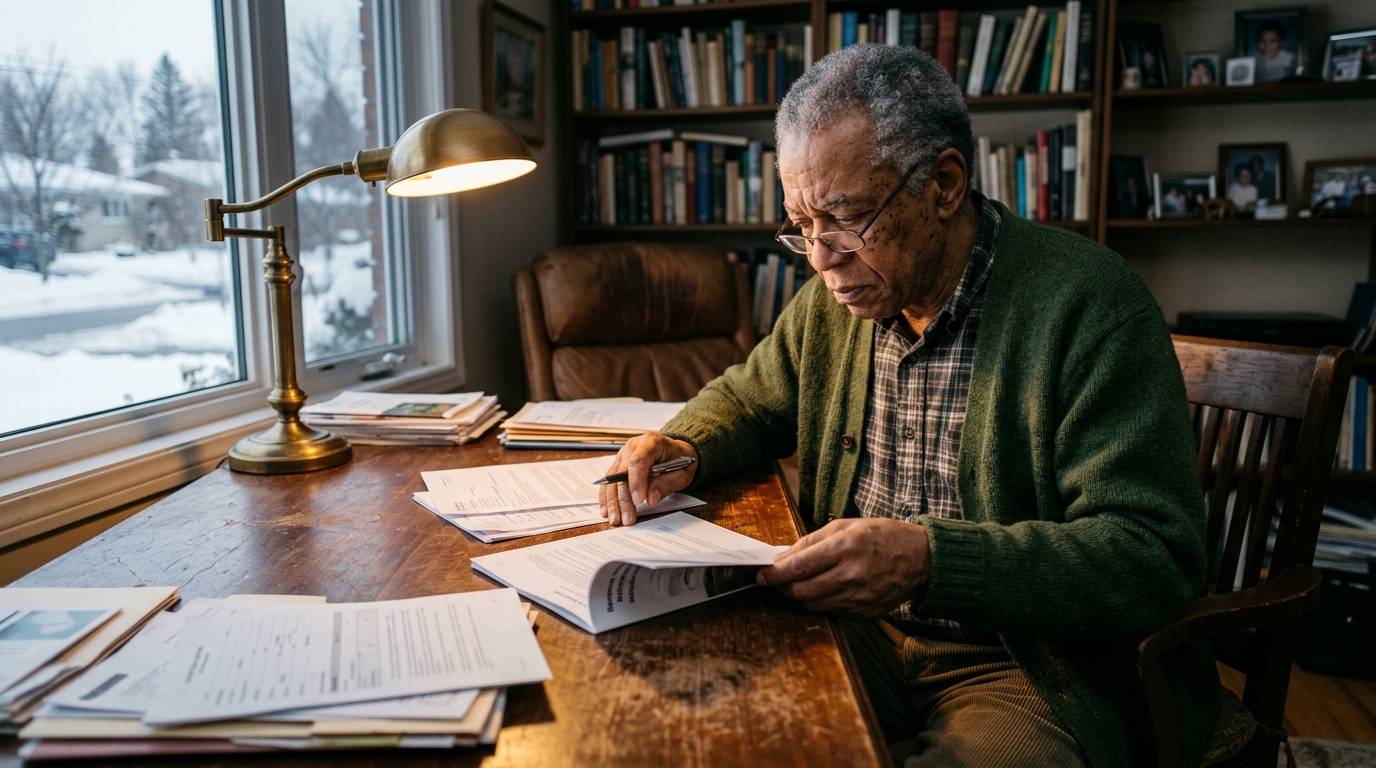
Reverse Mortgage as a Bridge to Stability
Here's how a reverse mortgage works in post-divorce recovery:
Year 1–3 (Ages 67–70): Bridge Phase
- Reverse mortgage LOC: $150,000 available
- Monthly draw: $2,000 (covers income shortfall)
- Total annual draw: $24,000
- Reverse mortgage cost: 6.8% interest = $1,632/year
- Your income + RM draw: $31,600 + $24,000 = $55,600 (covers expenses)
Year 4–5 (Ages 70–72): Stabilization Phase
- OAS increases 36% (8% per year × 5 years = ~40% by age 70)
- CPP increases modestly (COLA adjustments)
- Investment income may increase (modest portfolio growth)
- Reverse mortgage draw reduces to $500–$1,000/month
- Your income + modest RM draw: $40,000 + $6,000 = $46,000 (near-sufficient)
Year 6+ (Age 72+): Self-Sustaining Phase
- OAS + CPP now cover basic expenses
- Reverse mortgage draw decreases to $0 (living within pension/benefits)
- Reverse mortgage LOC remains available for emergencies (medical, home repair)
- Total borrowed: ~$120,000 over 5 years
- Reverse mortgage balance: manageable; can be paid down from any future assets or inheritance
This staged approach lets you recover emotionally from divorce while rebuilding financial stability.
Protecting Your Home Equity in Divorce Proceedings
Important: If you're currently in divorce proceedings, understand home equity implications:
In Ontario, family law typically treats matrimonial homes as jointly owned (50/50 split), regardless of who's on the title. If you're divorcing, consult a family lawyer BEFORE getting a reverse mortgage—you want to understand home equity division first.
Once divorced and home is solely yours, a reverse mortgage is straightforward.
Should You Sell and Downsize?
Selling the house post-divorce is tempting because it unlocks liquid capital. But consider:
Selling scenario:
- Sell house: $600,000
- Sell costs (realtor, legal, land transfer tax): -$45,000
- Net proceeds: $555,000
- Downsize to condo/apartment: $350,000
- Leftover capital: $205,000
- Advantages: liquidity, lower maintenance, fresh start
- Disadvantages: emotional loss; moving costs; condo fees rising; less space for family gatherings
Reverse mortgage scenario:
- Keep house: $600,000
- Reverse mortgage LOC: $150,000
- Emotional gain: stay in familiar home
- Maintenance burden: yours to manage
- Advantages: preserve family home; maintain independence; lower ongoing costs
- Disadvantages: ongoing maintenance; reverse mortgage obligation; reduced inheritance
The choice depends on your emotional attachment and energy level. Both are valid.
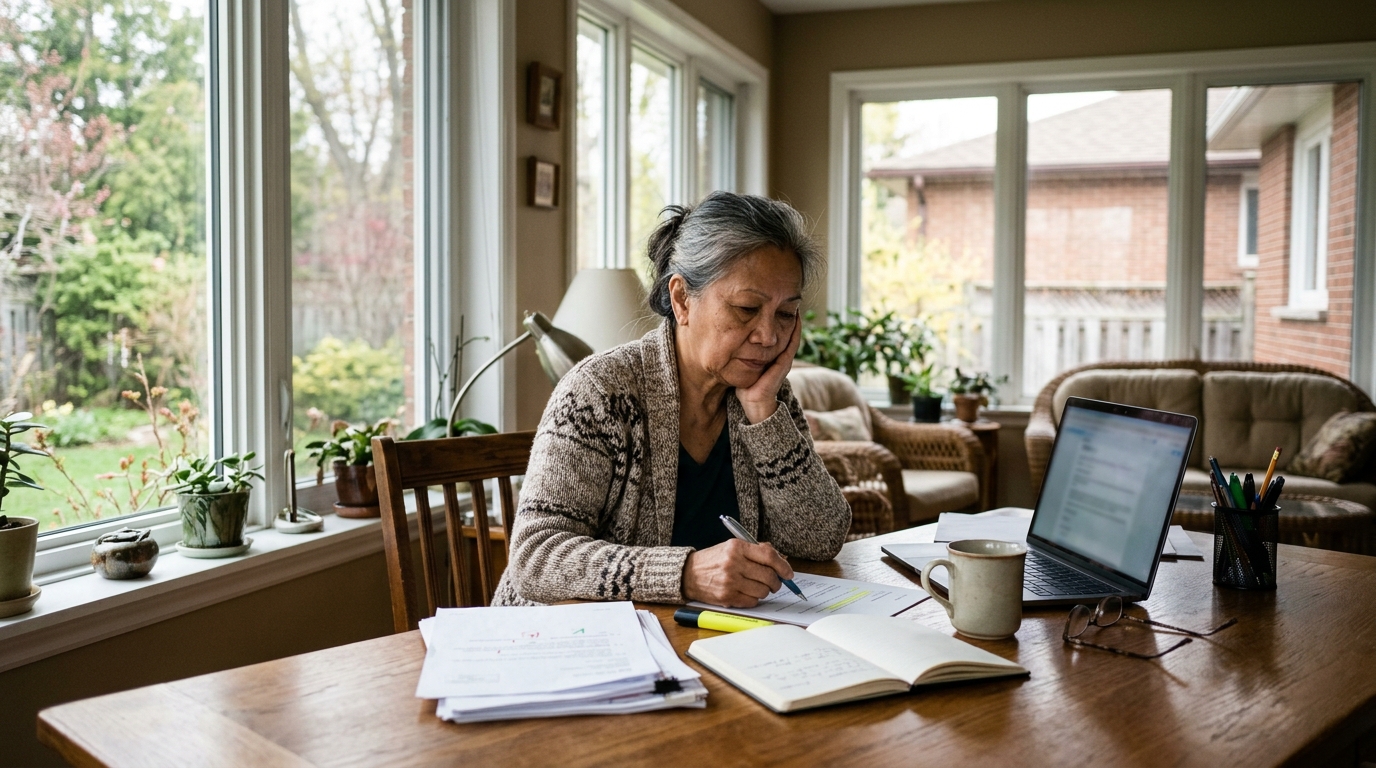
Protecting Adult Children's Inheritance
A concern post-divorce: "Will a reverse mortgage eliminate my adult children's inheritance?"
Not necessarily. Here's the math:
- House value: $600,000
- Reverse mortgage borrowed: $120,000 (over 5 years)
- Interest accrued: $40,000–$50,000
- Total reverse mortgage debt: $160,000–$170,000
- Home equity remaining: $430,000–$440,000
- Inheritance to adult children: Still significant
However, your adult children might worry about reduced inheritance. Be transparent: "I'm using a reverse mortgage to recover from divorce and rebuild my retirement. This preserves the home and keeps me independent. When I pass, the remaining home equity will be yours."
Managing Emotional Recovery + Financial Stress
Post-divorce aging is emotionally taxing. A reverse mortgage removes financial stress, freeing energy for emotional healing:
- No need to work longer (reverse mortgage covers the gap)
- No pressure to sell your home (keep it while you decide)
- No need to move in with adult children (remain independent)
- Clear financial stability (reverse mortgage provides predictable income)
Many aging divorcees report that financial stability enables emotional recovery. The two go hand-in-hand.
Government Benefits: Spousal Support Clawback Risk
Important: If you're receiving spousal support, be aware that receiving a reverse mortgage doesn't affect spousal support payments—support is based on either party's income, not assets.
However, if spousal support ends (as it typically does when the supported spouse reaches 65–70), you lose that income. This is exactly when a reverse mortgage becomes essential.
According to the Family Law Act (Ontario), spousal support typically terminates when the receiving spouse reaches retirement age (65–70) or when the paying spouse retires. Plan your reverse mortgage timeline around the end of spousal support.
Key Takeaways
- Late-life divorce creates severe income loss: Average post-divorce income drops 40–50%; reverse mortgage bridges the gap without forcing work extension or downsizing.
- Reverse mortgage is often the only option: HELOCs require income qualification; reverse mortgages don't, making them ideal for retirees post-divorce.
- Phased recovery approach works: Use reverse mortgage LOC for 5–7 years; reduce draws as OAS increases and recovery stabilizes.
- Home preservation matters emotionally: Staying in the family home post-divorce accelerates emotional healing and maintains independence.
- Inheritance remains meaningful: Even with reverse mortgage, adult children inherit $300,000–$500,000+ in home equity.
- Transparency with family prevents conflict: Communicate reverse mortgage decision to adult children upfront; prevents shock after you pass.
Frequently Asked Questions
Will a reverse mortgage affect my ability to receive spousal support or alimony?
No. Support payments are based on income (CPP, employment, investments), not home equity. A reverse mortgage is a loan against your home, not income, so it doesn't affect spousal support calculation or clawback.
Can my ex-spouse claim against the house if I get a reverse mortgage?
Not typically, once divorce is finalized and home is solely yours. However, if you still owe support and your ex has a judgment against you, they could theoretically file a lien. Consult a family lawyer to verify your post-divorce status is clean.
What if I want to eventually sell the house and pay off the reverse mortgage?
You can. If you eventually sell (at 75+, or decide to move), you use sale proceeds to pay off the reverse mortgage balance and receive the remaining equity. There's no penalty for early repayment on most reverse mortgages.
Should I tell my adult children about the reverse mortgage before or after I get it?
Ideally before. Adult children may have emotional reactions to your financial recovery strategy. If you explain clearly—"I'm using equity to stay in the home, remain independent, and preserve most of the inheritance"—most adult children support the decision.
What if my health declines and I need to move to long-term care?
If you eventually move to long-term care or assisted living, the reverse mortgage becomes due (typically the home is sold, proceeds pay off the reverse mortgage, and remaining equity goes to your estate). Plan ahead: discuss long-term care strategy with adult children.
Can I use the reverse mortgage to help adult children (like gifting post-divorce)?
Yes. Some aging parents use reverse mortgage funds to gift to adult children who supported them post-divorce. However, be cautious: gifting post-divorce can complicate custody, support, and family dynamics. Consider therapy/mediation before major financial gifts.
Your home is your stability. A reverse mortgage preserves it while rebuilding your retirement after divorce. Speak with Rick Sekhon Reverse Mortgages about bridging your post-divorce income gap.
Ready to Learn More?
Find out exactly how much you could unlock from your home — free and no obligation.
Related Articles
Reverse Mortgage for Transitioning Into Volunteer Board Leadership in Retirement
Stepping into nonprofit board leadership or volunteer coordinator role in retirement? Reverse mortgage funds the training, technology, and travel to lead effectively.
Read →Reverse Mortgage for Aging Parent as Professional Witness or Litigation Support
You're being asked to serve as an expert witness in pending litigation—paid work during retirement. Bridge income gaps while you wait for legal case resolution.
Read →Reverse Mortgage for Multigenerational Home With Conflicting Accessibility Needs
Living with aging parent plus adult child with disability? Their accessibility needs conflict. Reverse mortgage funds creative home design solving multiple disabilities.
Read →