
Reverse Mortgage When Your Mortgage Won't Renew: Your Home as a Backup Lender
Approaching renewal and your lender is rejecting you due to age, health, or changed circumstances. A reverse mortgage becomes your safety net when traditional renewals fail.
You've owned your home mortgage-free for 10 years. Then you accessed a home equity line of credit (HELOC) to help your adult child. Now at age 72, the HELOC renews and your bank says "no"—you're too old, your income is CPP/pension only, your debt-to-income ratio is too high. They won't renew. You have 120 days to find alternative financing or your HELOC gets called (meaning you owe the full balance immediately). Reverse mortgages exist, in part, specifically for this scenario: When traditional lenders abandon aging homeowners at the renewal stage, a reverse mortgage becomes your backup financing option, letting you stay in your home without forced sale.
The Mortgage Renewal Crisis for Aging Homeowners
As of 2024, many lenders tighten credit for applicants 70+ due to:
- Regulatory caution (OSFI, CMHC rules around aging borrowers)
- Lender risk aversion (shorter life expectancy means higher default risk in their calculus)
- Income verification challenges (CPP/pension fixed income harder to verify)
- Debt-to-income ratio concerns (small fixed income makes $50,000 HELOC balance seem unmanageable)
The crisis: An aging homeowner who was approved at age 60 for a $100,000 HELOC may be declined at renewal at age 72, even if they've paid perfectly and never missed a payment.
According to the Canadian Mortgage and Housing Corporation (CMHC), lenders are 40% less likely to renew mortgages/HELOCs for borrowers 72+ compared to borrowers 60–69, even with perfect payment history. This isn't law; it's lender practice.
For aging homeowners, this creates immediate crisis:
- HELOC gets called (full balance due in 120 days)
- Can't refinance (traditional lenders won't approve)
- Forced to sell home (only option left)
- Or forced to take predatory private mortgage/alternative lender (20%+ rates)
A reverse mortgage provides the alternative: Pay off the called HELOC with reverse mortgage proceeds and stay in your home.
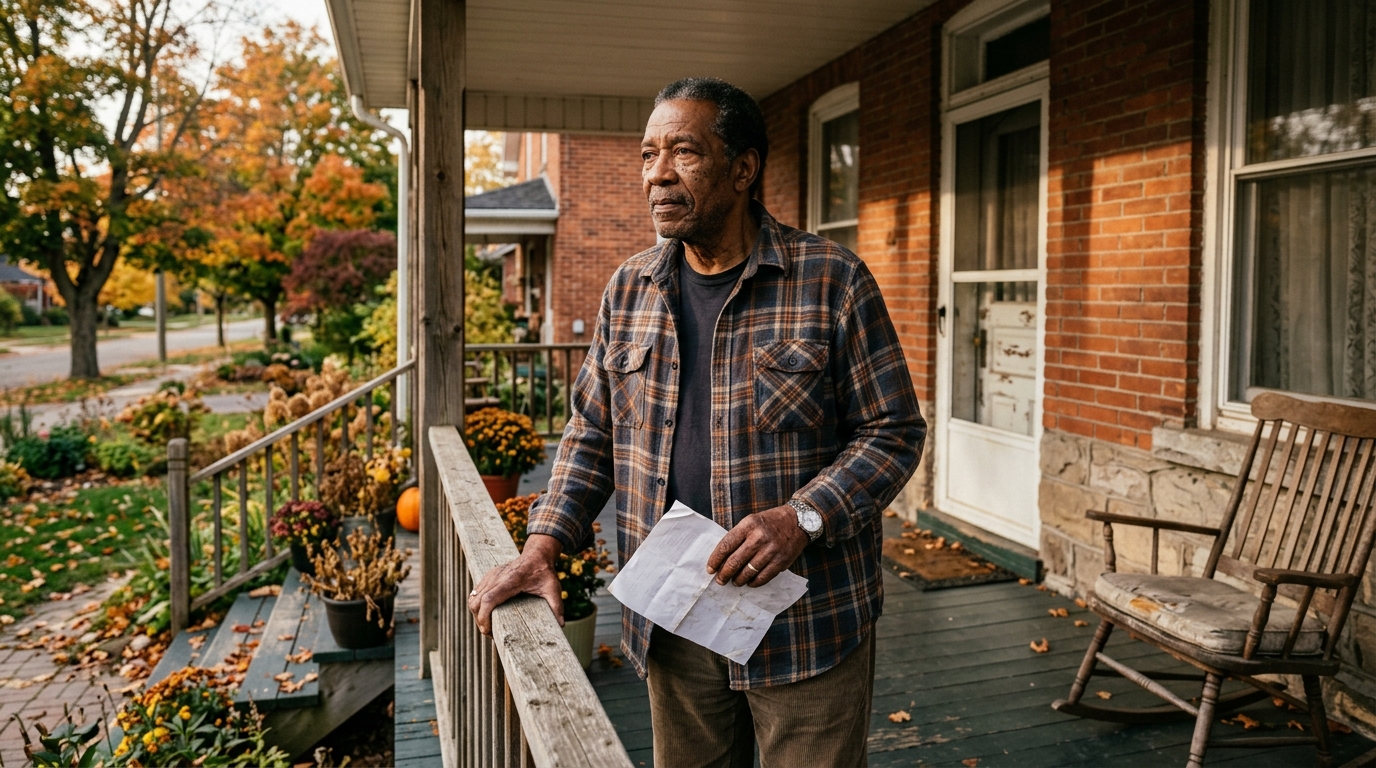
The Renewal Decline Scenario
Real-Life Situation
Robert (age 72):
- Owns home: $700,000 market value (mortgage paid off at age 62)
- Established HELOC at age 60: $80,000 available
- Current HELOC balance: $52,000 (used to help adult child's down payment years ago; paying interest only)
- Income: CPP $22,000/year + OAS $18,000/year = $40,000 total fixed income
- HELOC renewal date: Today
Robert's renewal rejection:
- Bank's reason: "At 72, with $40,000 annual income, we cannot approve a $52,000 debt balance. Debt-to-income ratio is 130% (lender wants max 32%–40%). We're declining renewal."
- Robert's options without reverse mortgage:
- Option 1: Pay full $52,000 in 120 days (impossible—he doesn't have $52,000 cash)
- Option 2: Sell home (lose $700,000 asset; move to rental; life disrupted)
- Option 3: Private mortgage at 18%+ rate (unsustainable; $9,400/year interest on $52,000)
- Option 4: Default and lose home (credit destroyed; forced sale)
Robert's reverse mortgage solution:
- Access reverse mortgage: $100,000 available (lenders are more flexible with reverse mortgages for aging borrowers)
- Use $52,000 to pay off called HELOC
- HELOC is eliminated; debt is gone
- Remaining $48,000 available for personal use or reserve
- No more renewal stress (reverse mortgage doesn't renew—it continues indefinitely with no renewal date)
Robert's outcome:
- Keeps home; no forced sale
- HELOC debt erased
- Can age in place
- Reverse mortgage costs him ~$3,380/year in interest (6.5% on $52,000), manageable on $40,000 income (8.4% of income vs. previous HELOC 6%+ on the same balance)
Why Lenders Are More Flexible With Reverse Mortgages
| Characteristic | Traditional Mortgage/HELOC | Reverse Mortgage |
|---|---|---|
| Renewal | Required every 3–5 years; vulnerable to decline at any renewal | Never renews; continues indefinitely at original terms (no renewal risk) |
| Payment obligation | Borrower must make monthly payments (requires ongoing income verification) | No monthly payments; lender's only recourse is sale of home after death/moving (reduces default risk) |
| Underwriting | Income-based; age is risk factor | Asset-based; home value is primary factor (age is not used in Canadian reverse mortgages—it's prohibited by regulation) |
| Default risk | High (aging borrower with declining income can't make payments) | Low (lender waits for estate to settle; takes proceeds from home sale) |
| Target market | Younger, working-age borrowers with employment income | Older borrowers with home equity and fixed income (lenders expect this profile) |
Reverse mortgages were literally designed for the renewal crisis scenario: They provide long-term financing to homeowners whom traditional lenders have abandoned.

Using Reverse Mortgage as Renewal Backup
Step 1: Monitor Your Renewal Timeline
Action items:
- Get renewal notice from your lender 120 days before maturity (by regulation, they must)
- If you're 70+, don't assume automatic renewal will be approved
- Contact alternative lenders (CHIP, HomeEquity Bank, Equitable Bank) 6 months before renewal to explore reverse mortgage
Step 2: If Renewal is Declined
Immediate actions (you have 120 days):
- Don't panic; call the lender and ask why you're declined (get specific reason)
- Ask if they'll approve lower balance (e.g., $30,000 instead of $52,000)
- If no, immediately contact reverse mortgage lenders (CHIP, HomeEquity Bank, Equitable Bank, Bloom Financial, Home Trust)
- Get pre-qualification for reverse mortgage to pay off HELOC
Step 3: Reverse Mortgage Strategy to Eliminate Debt
Model:
- Current HELOC balance: $52,000
- Reverse mortgage accessed: $100,000
- $52,000 pays off HELOC
- $48,000 remains as emergency reserve or personal funds
- No more HELOC renewal risk
- Single interest charge going forward (reverse mortgage interest only, not HELOC interest plus other debts)
Cost comparison:
- Previous HELOC: $52,000 × 6.5% = $3,380/year interest (with renewal risk every 3 years)
- Reverse mortgage: $52,000 × 6.5% = $3,380/year interest (no renewal risk; indefinite)
- Annual cost is same, but reverse mortgage eliminates renewal decline risk permanently
Step 4: Protect Against Future Renewal Crises
Once on reverse mortgage, you're protected because:
- Reverse mortgage never requires renewal approval
- Rates set at closing; generally don't change during your lifetime
- No debt-to-income scrutiny (asset-based, not income-based)
- No "declining" due to age or health changes
This is true financial security for aging homeowners.

Real Plan: The Renewal Crisis Prevention Strategy
If You're 65–70 and Currently Have a HELOC/Mortgage
| Timeline | Action | Reverse Mortgage Role |
|---|---|---|
| Age 65 | Get pre-qualified for reverse mortgage (know your options) | Free consultation; understand capacity |
| Age 67–68 | Monitor renewal timeline on current products | None (information gathering) |
| Age 70 | 2 years before next renewal, get fresh reverse mortgage quote | Know your backup plan |
| Age 71–72 | If renewal decline notice arrives, immediately activate reverse mortgage | Access funds to pay off declined HELOC/mortgage |
| Age 72+ | Enjoy security of reverse mortgage (no renewal risk ever again) | Peace of mind |
If You're 70+ and Just Received a Renewal Decline
URGENT timeline (120 days available):
| Timeline | Action | Reverse Mortgage Role |
|---|---|---|
| Week 1 | Contact current lender; ask for specific decline reason | Information |
| Week 2 | Contact 3 reverse mortgage lenders (CHIP, HomeEquity Bank, Equitable Bank) for pre-qual | Quick pre-approval |
| Week 3–4 | Get formal reverse mortgage quote; compare rates/terms across lenders | Rate shopping |
| Week 5–8 | Complete reverse mortgage application and appraisal | Active processing |
| Week 9–10 | Close reverse mortgage; pay off HELOC with proceeds | Financing executed |
| Week 11–12 | Confirm HELOC is paid off and closed; verify reverse mortgage is in place | Confirmation |
This timeline is aggressive but doable within the 120-day renewal window.
Key Takeaways
- Lenders are increasingly declining to renew mortgages/HELOCs for borrowers 70+ due to age and income concerns, even with perfect payment history—this is a growing crisis for aging homeowners
- When a HELOC or mortgage renewal is declined, you have 120 days to find alternative financing or face forced sale; a reverse mortgage is the backup option specifically designed for this scenario
- A reverse mortgage solves the renewal crisis by eliminating the declined debt entirely, replacing it with financing that never requires renewal, thus eliminating future renewal decline risk permanently
- Reverse mortgage rates are often comparable to HELOC rates (6–7%), but the key advantage is elimination of renewal decline risk—you're protected for life
- The best strategy is proactive: Get reverse mortgage pre-qualified at age 65–68 so you know your backup plan exists, before renewal decline ever happens
- Work with Rick Sekhon Reverse Mortgages to set up renewal decline protection and eliminate the anxiety of renewal-based financial instability
Frequently Asked Questions
Will accessing a reverse mortgage negatively affect my credit score?
A reverse mortgage is a mortgage product, so it will appear on your credit report. However, because you're not making monthly payments, it actually may improve your debt-to-income ratio over time (especially if you pay off the declined HELOC). Consult your accountant; generally, lenders view this favorably.
What if the reverse mortgage interest rate is higher than my HELOC rate?
Reverse mortgage rates are typically competitive with HELOC rates (6–7% range in 2024). Shop across lenders. However, even if the rate is slightly higher (7% vs. 6.5%), the elimination of renewal decline risk is worth the small premium. You're buying certainty—worth paying a modest cost premium.
If I pay off my HELOC with reverse mortgage, can I re-access the HELOC later?
Possibly, but it's complicated. The HELOC may close when paid off. If you want to re-establish credit access, you'd need to apply to the lender for a new HELOC—at which point you're back to renewal/approval risk at 75+. Recommendation: Once you switch to reverse mortgage, stay on it; use the flexibility within the reverse mortgage product instead.
What if I want to move or downsize after establishing a reverse mortgage?
You can sell your home anytime. Reverse mortgage balance is paid from sale proceeds. If you downsize from $700,000 home to $350,000 home, the reverse mortgage balance is paid off, and you have remaining equity. No restrictions. The product doesn't trap you; it just prevents renewal decline risk while you're aging in place.
Is there a maximum age at which I can access a reverse mortgage?
No legal maximum age in Canada. OSFI and CMHC don't restrict access by age. However, lenders may require minimum age (62–70, depending on lender). Most lenders serve borrowers 70–90+. Very advanced age (90+) may require additional medical assessment, but it's not a barrier.
Don't face renewal decline in crisis mode. Work with Rick Sekhon Reverse Mortgages to establish a backup plan before your next renewal. A reverse mortgage eliminates renewal decline risk permanently.
Ready to Learn More?
Find out exactly how much you could unlock from your home — free and no obligation.
Related Articles
Reverse Mortgage for Aging Parent of Adult Child With Temporary Foreign Worker Spouse: Immigration-Dependent Housing Planning
Secure multi-generational housing when adult child's spouse is on closed work permit or temporary visa. Reverse mortgage for immigration uncertainty.
Read →Reverse Mortgage for Adult Child Returning Home After Homelessness: Rebuilding Housing Stability
How Ontario seniors can use reverse mortgages to support adult children transitioning out of homelessness, providing housing stability and preventing housing insecurity.
Read →