
Reverse Mortgage for Home Rehabilitation Equipment: Recovery After Injury or Illness
Fund specialized rehabilitation equipment for recovery at home after injury or illness. Use a reverse mortgage for physical therapy tools and recovery setup.
Are you recovering from a stroke, hip replacement, or serious injury at home, but rehabilitation equipment is expensive and insurance won't cover it? Specialized recovery equipment—therapy pools, elliptical machines, standing frames, balance bars, and monitoring devices—costs $2,000–$15,000, often paid out-of-pocket. A reverse mortgage can fund this equipment, accelerating your recovery and independence.
This article is for educational purposes only and does not constitute financial advice.
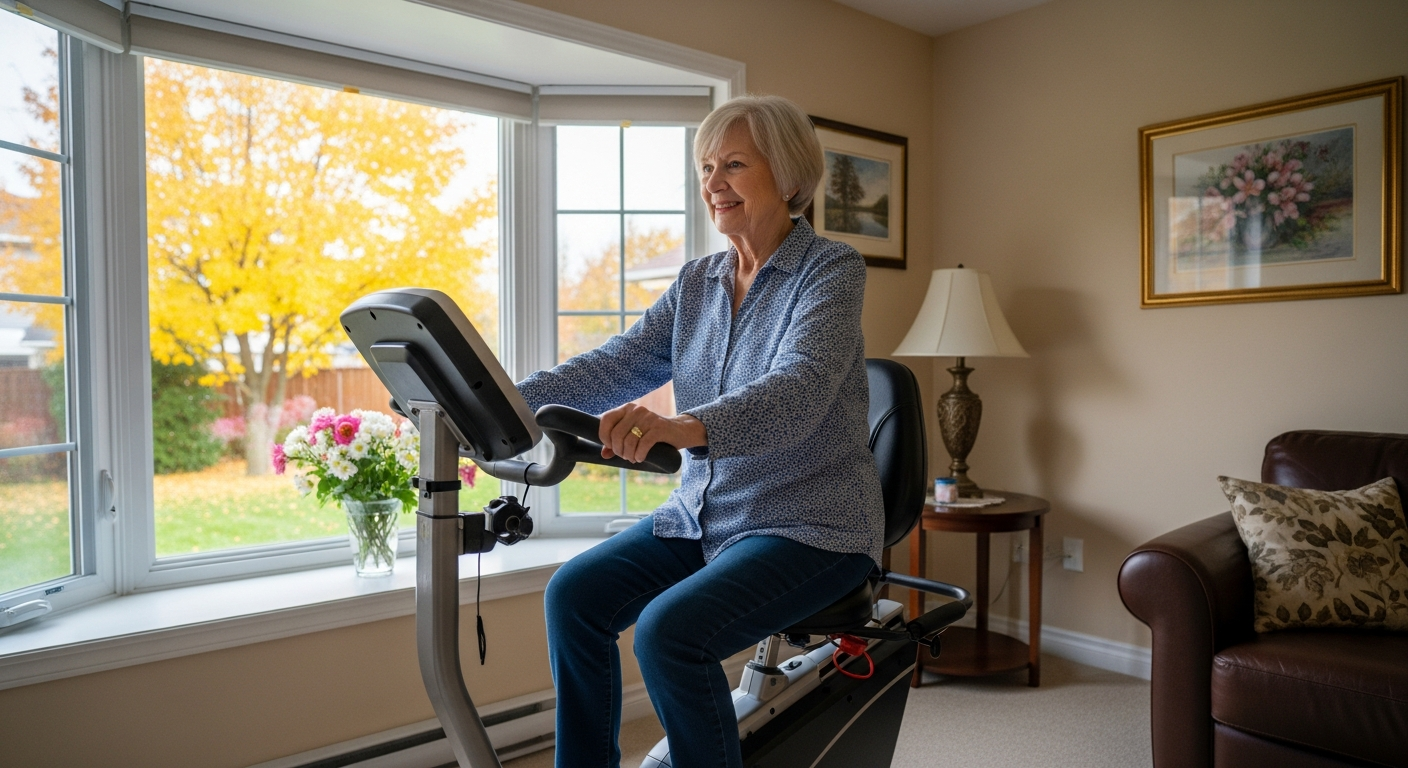
Recovery at home is often faster and more comfortable than institutional settings, but only if the physical environment supports healing. A reverse mortgage removes the cost barrier that prevents many people from investing in the equipment that makes recovery effective.
The Hidden Costs of Home Rehabilitation
Medical insurance covers many rehabilitation services—physical therapy sessions, occupational therapy, and nursing care. However, equipment used in rehabilitation at home is often not covered or is covered only partially.
Common Rehabilitation Equipment Costs (Not Covered by Insurance)
| Equipment | Typical Cost | Recovery Scenario |
|---|---|---|
| Aquatic therapy treadmill | $3,000–$8,000 | Post-stroke gait training; joint replacement recovery |
| Therapy pool (residential) | $5,000–$15,000+ | Full-body rehabilitation; arthritis and fibromyalgia |
| Standing frame/parallel bars | $800–$2,500 | Regaining balance and strength after stroke or fall |
| Treadmill (medical-grade) | $2,000–$5,000 | Cardiovascular recovery; walking training |
| Stationary therapy bike | $1,500–$3,500 | Lower-body strength recovery |
| Resistance training equipment | $2,000–$5,000 | Full-body functional recovery |
| Balance training system (interactive) | $3,000–$7,000 | Fall prevention; proprioception recovery |
| Lifting and transfer equipment | $1,000–$3,000 | Safe transfers for elderly or disabled users |
| Monitoring devices (heart rate, blood oxygen, movement) | $500–$2,000 | Safety during independent home exercise |
Total typical home rehabilitation setup: $5,000–$25,000 depending on injury type and recovery complexity.
For someone on a fixed income in early recovery, this is prohibitive. Many people delay recovery equipment purchases until they can "save up"—which often means slower rehabilitation and prolonged disability.
Why Home Rehabilitation Equipment Matters
Recovery outcomes improve significantly when rehabilitation equipment is available for daily use at home. Physical therapists recommend 45–60 minutes of daily practice outside formal therapy sessions. Without equipment at home, recovery plateaus.
According to Statistics Canada, people who complete home-based rehabilitation with proper equipment recover functional independence 20–30% faster than those who delay equipment purchases. For someone hoping to return to work, drive independently, or care for themselves, this matters.
Reverse Mortgage for Recovery Equipment: A Strategic Investment
How It Works
- You're admitted to hospital with a significant injury (stroke, hip replacement, spinal cord injury) or illness requiring extended rehabilitation
- Medical professionals recommend specific equipment for your recovery at home
- Insurance covers some equipment but not all; the gap is $5,000–$15,000
- You obtain a reverse mortgage (at 55+) to fund the equipment
- You set up your home for optimal recovery
- You make faster progress toward independence
- When you eventually sell the home or pass away, the reverse mortgage is repaid from proceeds
Cost Example: Post-Stroke Recovery
Margaret (age 68) suffered a stroke and is being discharged after 3 weeks of hospital rehabilitation. Her therapy team recommends:
| Equipment | Insurance Coverage | Patient Cost | Alternative |
|---|---|---|---|
| Aquatic therapy system | 50% ($2,000 of $4,000) | $2,000 | None—critical for her recovery |
| Standing frame | 0% | $1,500 | Use furniture (unsafe, limits progress) |
| Treadmill | 0% | $3,000 | Walk on flat surface only (less safe) |
| Monitoring devices | 0% | $1,200 | None (safety risk during solo practice) |
| Professional setup + installation | 0% | $1,500 | DIY (ineffective setup; wasted money) |
| Total out-of-pocket | $9,200 |
Margaret's savings are depleted from hospital copays and lost income. A reverse mortgage for $10,000 funds her equipment and professional setup—investment that directly enables her recovery.
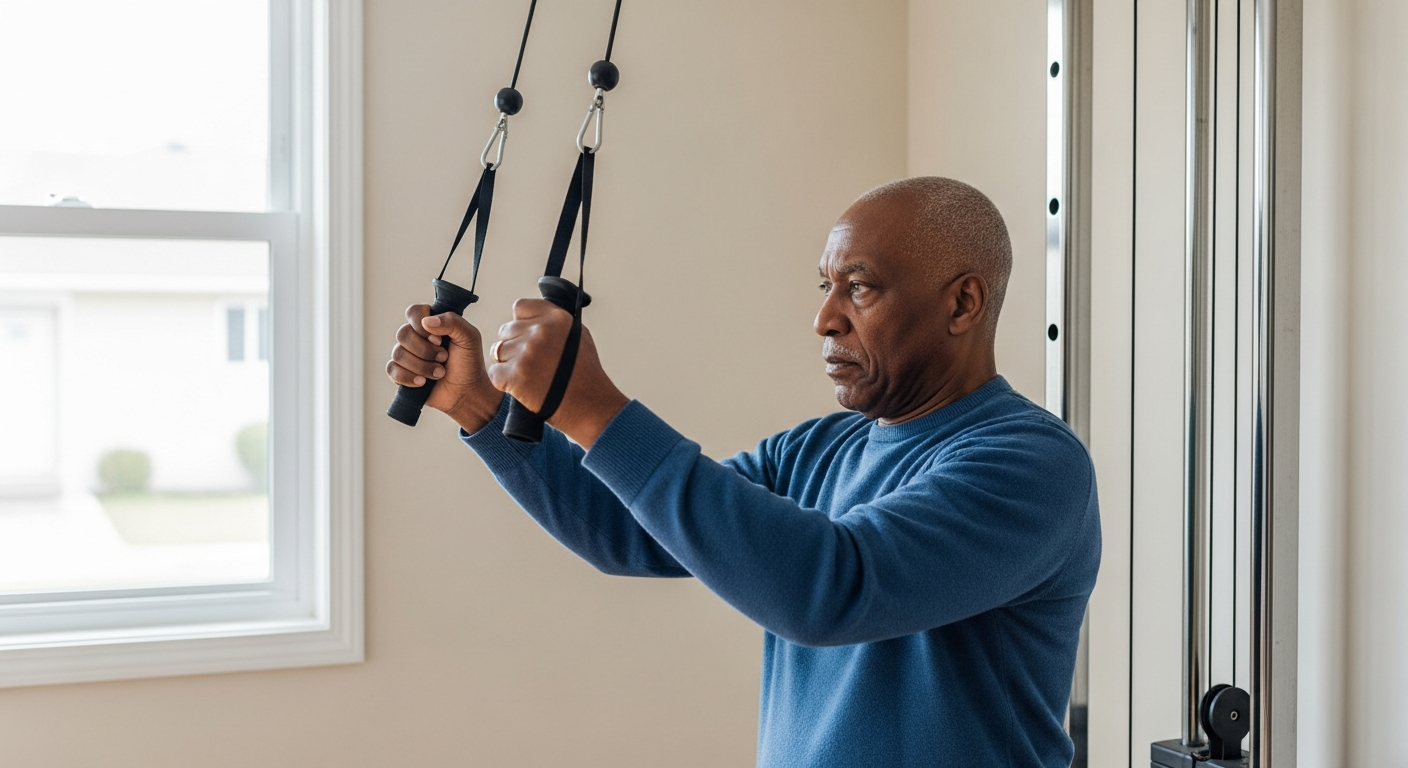
Types of Recovery Equipment and When They're Used
Cardiovascular Recovery (Post-heart attack, post-stroke)
- Treadmill or stationary bike ($2,000–$5,000)
- Heart rate monitors and connected devices ($500–$1,500)
- Purpose: Rebuild cardio capacity safely; monitor vital signs
- Duration: 6–12 months post-event
Neurological Recovery (Stroke, Parkinson's, TBI)
- Balance training systems ($3,000–$7,000)
- Gait training equipment ($1,500–$3,500)
- Aquatic therapy systems ($4,000–$10,000)
- Purpose: Retrain balance, walking, coordination
- Duration: 12–24 months (long recovery timeline)
Orthopedic Recovery (Hip/knee replacement, fracture)
- Standing frames and parallel bars ($800–$2,500)
- Therapy bike ($1,500–$3,500)
- Resistance training equipment ($2,000–$5,000)
- Purpose: Rebuild strength; regain range of motion
- Duration: 3–6 months typically
Multi-System Recovery (Spinal cord injury, major trauma)
- Lifting and transfer equipment ($2,000–$5,000)
- Specialty beds and positioning aids ($1,500–$4,000)
- Advanced monitoring systems ($1,000–$3,000)
- Purpose: Enable safe, independent movement
- Duration: Ongoing for life
Insurance vs. Out-of-Pocket: What's Actually Covered
Typically Covered by Insurance
- Physical and occupational therapy sessions (copay applies)
- Some assistive devices (walkers, canes, basic shower aids)
- Nursing care for medical management
- Medications and medical supplies directly related to injury
Usually NOT Covered
- Fitness or general rehabilitation equipment (treadmill, bike, pool)
- High-end monitoring devices or smart exercise systems
- Installation and setup labor
- Equipment exceeding basic safety thresholds
- Duplicate equipment for different locations in the home
Insurance companies view recovery equipment as "fitness," not "medical care"—a distinction that leaves many people funding recovery equipment personally.
Comparing Funding Options
| Funding Method | Cost | Monthly Payment | Access Timeline | Impact on Retirement |
|---|---|---|---|---|
| Reverse mortgage (on your home) | 6–8% interest | None | 4–6 weeks | Reduces home equity; interest accrues |
| Home equity loan | 6–8% interest | ~$200–$400/month | 1–2 weeks | Ongoing debt payments reduce cash flow |
| Personal loan | 8–12% interest | ~$300–$500/month | 1–2 weeks | High-interest debt; more expensive long-term |
| Payment plan with supplier | 0% (if available) | Depends on plan | Immediate | No cost but ties budget temporarily |
| Medical line of credit | 7–10% interest | Interest-only initially | 2–3 weeks | Adds debt during vulnerable time |
| Delay purchase + save | 0% interest | None | 6–12 months | Slower recovery; extended disability |
For retirees on fixed income, a reverse mortgage with no monthly payment is often the most affordable option despite the interest cost.
Frequently Asked Questions
If I buy rehabilitation equipment with a reverse mortgage and then don't fully recover, is the money wasted?
Equipment is not wasted even if recovery is partial. Used equipment can be:
- Donated to hospital or therapy clinics (tax deduction)
- Sold privately or through online markets
- Used by others in your home who need mobility or fitness support
- Adapted for different recovery phases
Many people use recovery equipment for ongoing health maintenance, even if they don't achieve complete pre-injury function.
Will my insurance refuse treatment if I purchase equipment privately?
No. Using private equipment doesn't void insurance. In fact, therapists often prefer to work with clients who have access to home equipment because it enhances overall recovery outcomes.
Can I get a reverse mortgage specifically for rehabilitation equipment, or do I need to borrow more?
Most reverse mortgages have a minimum borrow amount ($20,000–$50,000 depending on lender and home value). If you need $8,000 for equipment, you'll likely borrow $25,000–$50,000. Use the excess for other legitimate expenses (home modifications, medical bills, or preserve it as a line of credit for future needs).
What if I recover fully and no longer need the equipment—can I repay just the equipment portion of the reverse mortgage?
You can repay any amount at any time without penalty. However, the reverse mortgage balance remains outstanding on your home until fully repaid. If you repay $5,000 of a $50,000 reverse mortgage, the balance is $45,000 with ongoing interest accrual.
Does hospital discharge planning help identify what equipment I actually need?
Yes. Hospital discharge planners and physical therapists can recommend specific equipment based on your injury and prognosis. Get these recommendations in writing before planning your home setup. This ensures you're investing in equipment that professionals recommend, not guessing.
Taking Action: Next Steps
- Get medical recommendations in writing. Before pursuing funding, have your therapist list specific equipment for your recovery.
- Get quotes from equipment suppliers. Price the recommended equipment from multiple vendors.
- Check with insurance for partial coverage. Some items may be partially covered; confirm before purchasing.
- Assess your home equity. Determine if you have enough equity for a reverse mortgage.
- Consult a licensed mortgage professional. Contact Rick Sekhon Reverse Mortgages to discuss timing and loan amount.
- Plan professional setup. Budget for professional installation and training on equipment use—crucial for safe, effective recovery.
- Discuss with family. Include your caregivers in planning; their input on equipment needs is valuable.
Key Takeaways
| Point | Details |
|---|---|
| Recovery equipment costs | $5,000–$25,000 depending on injury type and recovery scope. |
| Insurance coverage gap | Most insurance covers therapy visits but not home equipment; gap is patient's responsibility. |
| Faster recovery | Home-based rehabilitation with proper equipment accelerates recovery by 20–30% vs. delayed equipment. |
| Reverse mortgage advantage | No monthly payments; funds available quickly (4–6 weeks); repaid from home sale or estate. |
| Interest cost | 6–8% annual interest; a $15,000 loan costs ~$900/year. Acceptable if equipment enables faster independence. |
| Minimum borrow | Most lenders require minimum $20,000–$50,000; if you need less, excess can be held as line of credit. |
| Tax treatment | Reverse mortgage proceeds are tax-free; medical equipment purchased may be tax-deductible (consult accountant). |
The Bottom Line
Recovery equipment is not a luxury—it's the infrastructure that enables independence and faster healing. When insurance doesn't cover it and personal savings are depleted by medical costs, a reverse mortgage bridges the gap. For people committed to recovering functional independence, this investment in equipment often pays dividends far exceeding the cost.
The key is planning the equipment needs carefully with medical professionals, sourcing quality equipment, and viewing the reverse mortgage as an investment in your recovery and independence—not simply as debt.
Speak to a licensed mortgage professional. Independent legal advice is required before closing a reverse mortgage in Ontario.
Get your free Ontario Reverse Mortgage Guide →
This content is for illustrative purposes only. Rates may vary. Call Rick Sekhon for the best rates and more information.
Ready to Learn More?
Find out exactly how much you could unlock from your home — free and no obligation.
Related Articles
Reverse Mortgage for In-Home Physical Therapy Equipment: Recovering from Stroke, Injury, or Joint Surgery
Fund specialized PT equipment at home with a reverse mortgage—avoid long waits for physiotherapy and accelerate recovery after stroke, injury, or surgery in Ontario.
Read →Reverse Mortgage for Accessible Bedroom Design: Sleep and Comfort in Aging
How Ontario seniors can use a reverse mortgage to redesign bedrooms for accessibility, comfort, and quality sleep that supports health and independence in aging.
Read →Reverse Mortgage for Home Gym and Fitness Equipment: Stay Active in Retirement
Fund a home gym with a reverse mortgage to stay active and healthy in retirement. Exercise at home safely without monthly payments.
Read →