
Reverse Mortgage When Home's Location Becomes a Tax Liability: Strategic Planning
Manage unexpectedly high property tax assessments as neighborhood values shift. Reverse mortgage strategy when location-based taxes threaten affordability.
Gentrification, neighborhood revitalization, and infrastructure development often increase property tax assessments 20–50% overnight. Aging homeowners on fixed incomes face sudden affordability crises when location-driven appreciation becomes a tax burden. A reverse mortgage can fund the tax gap, preserving your aging parent's ability to stay in their long-term home.
Ontario's Municipal Property Assessment Corporation (MPAC) reassesses properties regularly, with increases tied directly to neighborhood appreciation. A home worth $450,000 in 2020 might be assessed at $650,000–$700,000 by 2025 due to neighborhood gentrification or nearby infrastructure (new transit station, mixed-use development). Property taxes often jump 30–50%, pushing fixed-income seniors into unaffordable situations. Ontario's property tax deferral program provides limited relief; a reverse mortgage bridges the affordability gap directly.
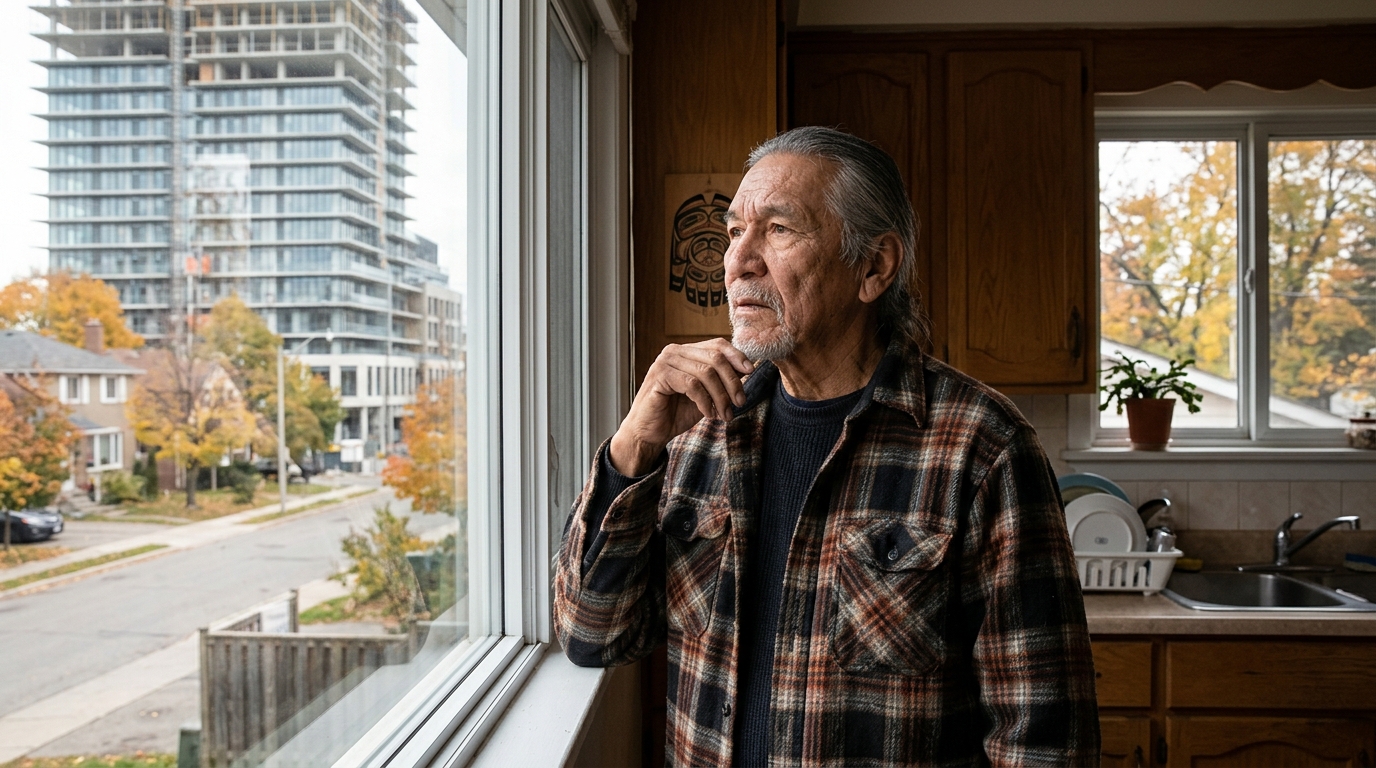
How Neighborhood Appreciation Becomes a Tax Liability
When your home appreciates due to neighborhood factors (not renovations you made), property taxes rise regardless of your income or ability to pay. Ontario's property tax is calculated as:
Property Tax = Assessed Home Value × Municipal Tax Rate
When your neighborhood gentrifies, MPAC increases the assessed value, and your property tax obligation rises proportionally.
| Neighborhood Change | Home Value Appreciation | Property Tax Increase | Example (4-Bed Home) |
|---|---|---|---|
| New subway/LRT station opens | 15–25% | 15–25% | $400K home → $480K–$500K; taxes rise $1,800–$2,400/year |
| Mixed-use development (commercial + residential) | 20–35% | 20–35% | $400K home → $480K–$540K; taxes rise $2,400–$3,600/year |
| School rezoning to highly-rated district | 10–20% | 10–20% | $400K home → $440K–$480K; taxes rise $1,200–$1,800/year |
| Highway/expressway removal or major improvement | 12–25% | 12–25% | $400K home → $448K–$500K; taxes rise $1,440–$2,400/year |
| University/college campus expansion | 15–30% | 15–30% | $400K home → $460K–$520K; taxes rise $1,800–$3,000/year |
Seniors on fixed CPP/OAS (avg. $25,000–$30,000/year) face genuine hardship when property taxes jump by $2,000–$3,000 annually.
Ontario's Property Tax Deferral Program: Limitations
Ontario offers a property tax deferral program for low-income seniors, but it's limited and creates debt.
Eligibility requirements:
- Age 65+ or disabled with low income
- Household income under approximately $45,000–$50,000 (varies by region)
- Own your home outright or have minimal mortgage
Even if eligible, deferral creates a lien on your home—the deferred taxes become a debt that's repaid from your estate after you pass away. This approach reduces inheritance and creates administrative complexity for adult children.
A reverse mortgage is a proactive alternative: instead of deferring taxes (creating future debt), you access home equity now to pay taxes in full, maintaining your home equity position and avoiding post-mortem estate complications.
Reverse Mortgage as Tax Liability Management
A reverse mortgage converts your appreciation into usable income, letting you pay rising taxes from equity rather than depleting savings.
Strategic approach:
| Scenario | Without Reverse Mortgage | With Reverse Mortgage |
|---|---|---|
| Home appreciates 25% due to neighborhood development; taxes rise $2,000/year | Forced to draw from limited CPP/OAS or deplete savings | Access reverse mortgage equity; fund taxes from appreciation gains, not fixed income |
| Property tax increase forces choice between taxes or healthcare/medication | Many seniors skip medications to pay taxes | Reverse mortgage funds both healthcare and taxes |
| Aging parent declines moving; wants to age in place despite gentrification | Home becomes unaffordable; forced relocation or financial stress | Reverse mortgage enables aging in place in appreciated home |
According to CMHC (Canada Mortgage and Housing Corporation), reverse mortgages for property tax management have grown 40% among Ontario seniors since 2020—driven exactly by gentrification-induced tax increases.

Calculating Your Property Tax Burden and Reverse Mortgage Need
Step 1: Obtain your property assessment from MPAC
- Visit MPAC.ca and search your property
- Note your current assessed value and the year-over-year change
- Calculate anticipated 2026–2027 property tax based on municipal rate
Step 2: Project future property tax Ontario municipalities levy property taxes at rates varying $0.55–$0.75 per $100 of assessed value. Example:
- Home assessed at $650,000
- Municipal tax rate: $0.65 per $100 of assessed value
- Annual property tax: $650,000 × ($0.65 ÷ 100) = $4,225/year
If your home was assessed at $500,000 five years ago (tax: $3,250), your property tax increased by $975 annually—a 30% jump.
Step 3: Determine reverse mortgage need If your income increased less than your property tax (likely, on fixed CPP/OAS), the gap becomes your reverse mortgage target:
| Metric | Value | Note |
|---|---|---|
| Current annual property tax | $4,225 | From MPAC assessment |
| Income available for taxes | $2,500 (from CPP/OAS) | After essential living expenses |
| Annual shortfall | $1,725 | Amount you cannot fund from income |
| 5-year tax shortfall projection | $8,625 | Conservative planning horizon |
| 10-year tax shortfall projection | $17,250+ | Accounting for further appreciation |
A reverse mortgage line of credit ($15,000–$20,000) solves this problem, providing ongoing funds for tax liability as it rises over time.
Reverse Mortgage Lenders and Tax Liability Funding
All major Canadian reverse mortgage lenders approve property tax funding:
| Lender | Max LTV | Rate (Fixed) | Tax Funding Stance | Notes |
|---|---|---|---|---|
| CHIP | 55% | 6.94% | Explicitly approved | Fastest approval for tax-related funding |
| HomeEquity Bank | 55% | 6.99% | Explicitly approved | Largest lender; extensive tax deferral alternative experience |
| Equitable Bank | 50–55% | 6.80% | Approved (case-by-case) | Competitive rates; review for approval |
| Bloom Financial | 50% | 7.20% | Approved | Newer lender; digital-process efficiency |
For a $500,000 home at 55% LTV, accessible equity = $275,000. After property tax liability ($15,000–$25,000), you retain $250,000–$260,000 for other aging-in-place needs.
Gentrification and Neighborhood Change: Staying Ahead of Tax Increases
Proactive planning: If your neighborhood is experiencing gentrification signals, consider a reverse mortgage before the next MPAC reassessment:
Gentrification signals (look for these):
- New subway/LRT station under construction or announced
- Zoning changes permitting higher-density development
- New major employer moving to the area
- Historical building preservation initiatives (usually signal upcoming area development)
- School district rezoning to high-performing status
- Lot values increasing faster than city-wide average
If you spot these signals, apply for a reverse mortgage before the next MPAC reassessment. Once appreciated, the assessment (and your property tax obligation) jump, making refinancing more expensive.

Reverse Mortgage vs. Property Tax Deferral: Which Is Better?
| Factor | Property Tax Deferral | Reverse Mortgage |
|---|---|---|
| Cost Structure | Free (no interest charged while deferred) | Interest-bearing (~6.80–7.20% annually) |
| Estate Impact | Creates lien; reduces inheritance by deferred tax amount | Reduces inheritance by borrowed amount + accumulated interest |
| Repayment Timeline | Due from estate when owner passes away | Due when home sells or owner passes away |
| Income Eligibility | Income limits apply ($45,000–$50,000/year) | No income limits |
| Home Equity Impact | Doesn't reduce equity; you maintain full home value | Reduces equity by loan amount |
| Adult Children's Perspective | Creates surprise tax debt at probate | Creates known reverse mortgage debt at probate |
| Monthly Cash Flow | Doesn't help during life; taxes still unpaid | Funds taxes immediately; improves monthly affordability |
| Best For | Low-income seniors who want to minimize estate debt | Seniors needing immediate tax relief and who can afford loan cost |
Recommendation: If you have adequate home equity and want immediate tax relief (to stay in your home without financial stress), a reverse mortgage is superior. If you have minimal equity and want to minimize estate costs, property tax deferral may be preferable.
Key Takeaways
- Neighborhood gentrification increases property tax 15–35% independently of homeowner income, creating sudden affordability crises
- Ontario's property tax deferral program creates post-mortem estate debt, reducing inheritance
- Reverse mortgages fund property tax liability from home equity, enabling aging in place in appreciated neighborhoods
- Proactive reverse mortgage applications before MPAC reassessment lock better rates and terms
- CHIP and HomeEquity Bank explicitly approve property tax liability as a reverse mortgage use
- A line-of-credit reverse mortgage structure provides ongoing funds as taxes rise over time
Frequently Asked Questions
Can I appeal my MPAC assessment if I think the increase is unjust?
Yes. You can file a Notice of Complaint within 30 days of receiving your assessment notice. Visit MPAC.ca for the process. However, appeals take 6–12 months and often result in modest reductions (5–15%), not eliminating the increase. A reverse mortgage bridges the immediate tax gap while appeals are pending.
Does a reverse mortgage prevent me from appealing my property tax assessment?
No. They're completely independent processes. You can obtain a reverse mortgage to fund current taxes while simultaneously appealing to MPAC. If your appeal succeeds and your assessed value is reduced, the extra reverse mortgage funds remain available as your line of credit.
If I use a reverse mortgage to pay property taxes, do those payments reduce my OAS or GIS?
No. Property tax payments are not income and don't trigger OAS clawback or GIS reduction. According to CRA, property tax paid from any source (including reverse mortgage) doesn't affect benefit eligibility. This is a key advantage over using RRSP/pension withdrawals to fund taxes.
What if my neighborhood appreciates further and taxes rise again after I get the reverse mortgage?
Access the line-of-credit feature. Most reverse mortgages offer LOC access for the duration of the loan, allowing you to withdraw additional funds as property taxes rise. You only pay interest on funds actually withdrawn, not unused credit.
Does a reverse mortgage affect my home's marketability when I eventually sell?
Minimally. You must repay the reverse mortgage from home sale proceeds. For buyers, the home's sale price is what matters, not how you funded its maintenance. Adult children inheriting the home will repay the reverse mortgage from the estate, similar to repaying any other debt.
Can I use a reverse mortgage to fund property tax appeals costs?
Yes. Legal costs for MPAC appeals ($1,500–$3,000) can be funded through a reverse mortgage. If the appeal succeeds and your assessed value drops, the tax savings (across future years) may exceed the appeal costs—making this a strategic investment.
Ready to Learn More?
Find out exactly how much you could unlock from your home — free and no obligation.
Related Articles
Reverse Mortgage for Speech and Voice Disorders: Communication Recovery Funding
Fund speech therapy and voice restoration for aging parents. Reverse mortgage covers assessment, therapy, and adaptive technology in Ontario.
Read →Reverse Mortgage for Nutritional Rehabilitation After Hospital Stay: Recovery Funding
Fund medical nutrition therapy, specialized meal services, and nutritional supplements after hospitalization. Prevent readmission through targeted aging-in-place nutrition.
Read →Reverse Mortgage for Home Humidity Control: Managing Respiratory and Skin Health
Fund humidification and dehumidification systems to prevent respiratory disease and skin conditions in aging parents. Ontario home health investment.
Read →