
Reverse Mortgage for Home-Based Family Legacy Photography and Videography Business
Start a retirement income business documenting family stories, aging parent legacies, and creating heirloom video histories using a reverse mortgage.
What if your home became the studio for preserving family legacies? Many retirees with photography or videography skills discover a meaningful—and profitable—second act: creating professional family legacy documentaries. A reverse mortgage can fund your equipment, software, and marketing, turning your expertise into sustainable retirement income while building a powerful legacy business.
This article is for educational purposes only and does not constitute financial advice.
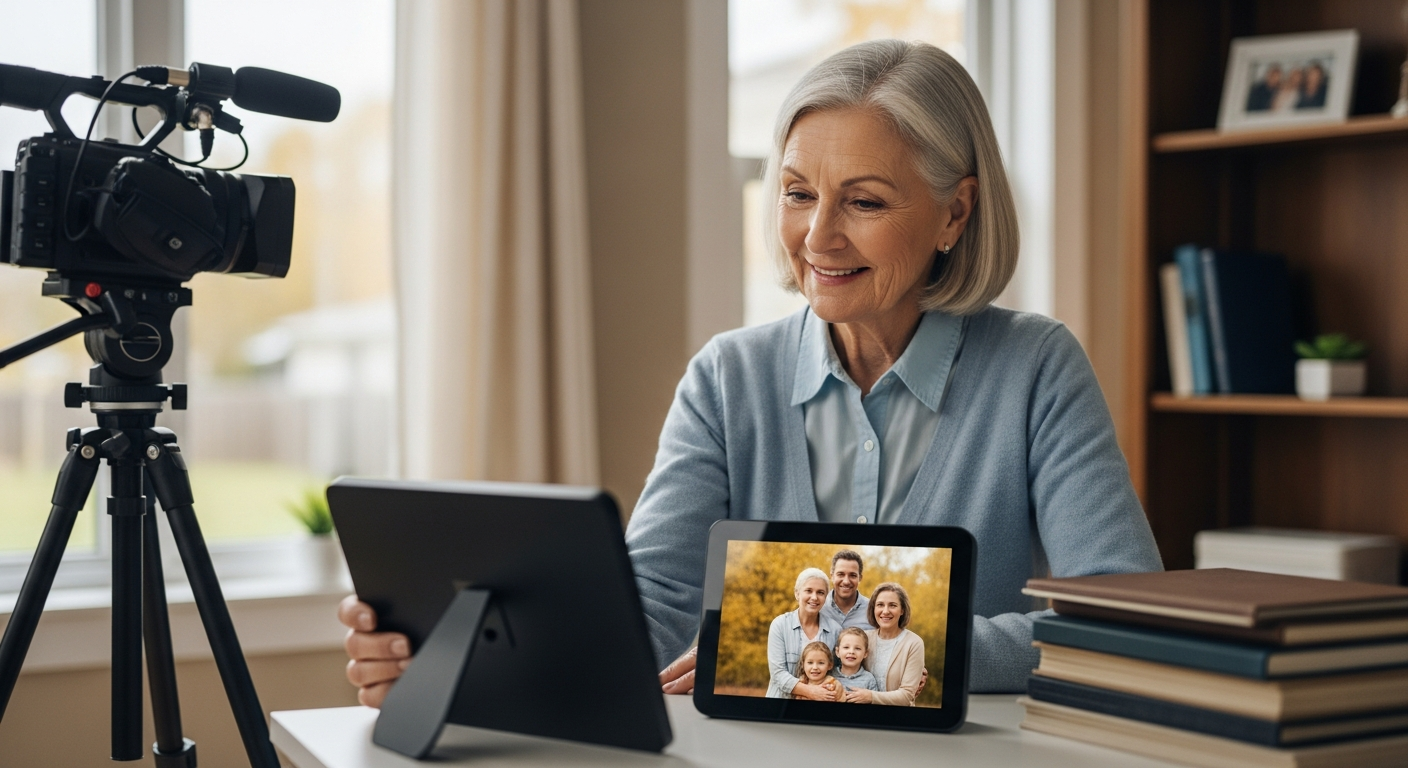
The Growing Market for Family Legacy Documentation
The family legacy documentation industry is booming. Aging families recognize the irreplaceable value of:
- Professional video interviews capturing parents' life stories
- Digitized family photo archives with curated histories
- Heirloom-quality video documentaries for multi-generational viewing
- Oral history projects preserving immigrant family narratives
- Legacy photo books with professional design and storytelling
Market demand is strong: Adult children increasingly commission legacy projects as aging parents reach 75+. They're willing to pay $2,500-$15,000+ for professional-quality legacy video documentaries.
Why Retirees Excel at This Business
Retirees bring unique advantages:
Credibility:
- Decades of life experience; understand generational stories
- Natural rapport with aging parents (your peers)
- Patient, unhurried interviewing style
- Genuine interest in preserving history (not just transactional)
Flexibility:
- Control your own schedule
- Work from home; minimal overhead
- Choose projects that interest you
- Build slowly while enjoying retirement
Skills:
- Years of photography/video experience
- Editing skills; technical proficiency
- Storytelling ability
- Artistic vision for meaningful documentation
Setting Up Your Home-Based Legacy Studio
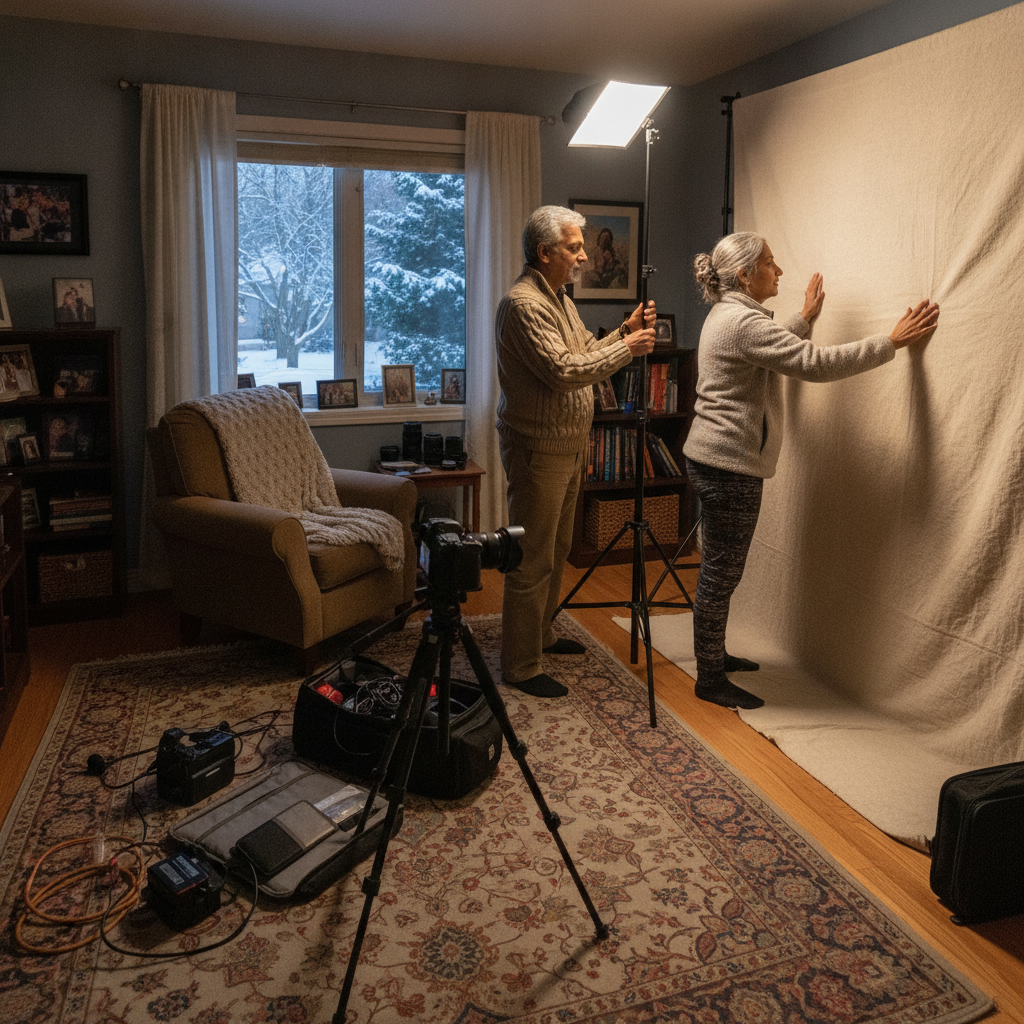
Equipment investment:
- Professional camera: $1,500-$4,000
- Microphone and audio equipment: $500-$1,500
- Lighting kit: $300-$800
- Editing software (Adobe, DaVinci Resolve): $20-$55/month
- Backdrop and staging materials: $300-$1,000
- Total startup: $3,000-$8,000
Space requirements:
- Quiet interview space (bedroom, study, living room corner)
- Proper lighting and sound control
- Comfortable seating for extended interviews
- Professional backdrop or home setting
- Reliable internet for client file sharing
Software and workflow:
- Video editing: Adobe Premiere Pro, Final Cut Pro, or DaVinci Resolve
- Photo organization: Lightroom, Capture One
- Client management: Acuity Scheduling, Asana
- File delivery: Frame.io, Dropbox, WeTransfer
A reverse mortgage can fund all these setup costs upfront, allowing you to launch professionally without depleting retirement savings.
| Equipment Item | Typical Cost |
|---|---|
| Professional camera | $1,500-$4,000 |
| Microphone and audio equipment | $500-$1,500 |
| Lighting kit | $300-$800 |
| Editing software subscription | $20-$55/month |
| Backdrop and staging materials | $300-$1,000 |
| Service Package | Description | Typical Price |
|---|---|---|
| Life Story Video | 4-6 hours of interviews, 45-min final edit | $4,500 |
| Legacy Documentary | Extended interviews plus family archive integration | $8,500 |
| Photo Archive Digitization & Legacy Book | Digitized archive with curated storytelling | $3,500 |
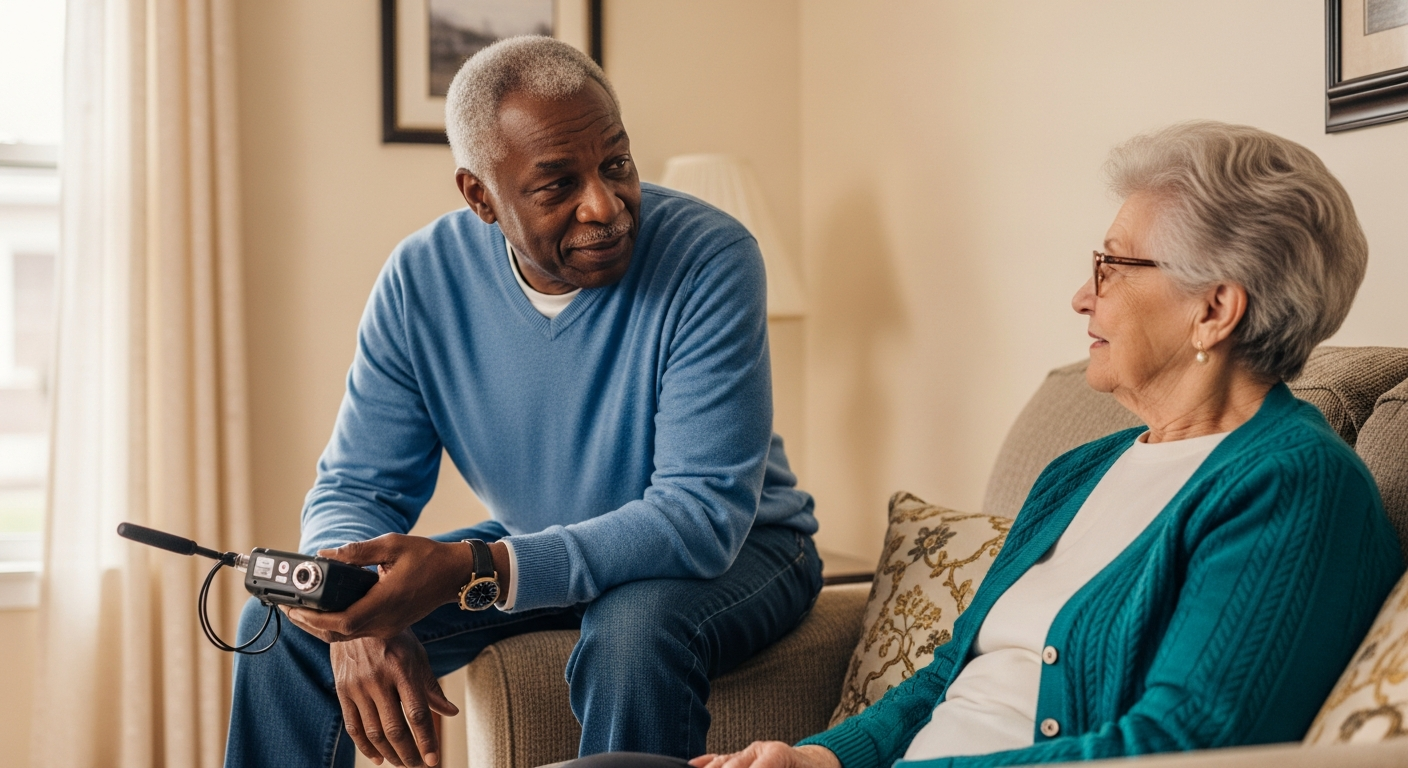
Real-World Scenario: Susan's Legacy Video Studio
Susan, age 68, Toronto:
- 40 years of photography experience
- Recently retired from corporate marketing
- Home value: $650,000
- Reverse mortgage capacity: ~$364,000 (56% at age 68)
- Desired amount: $15,000 for studio setup
Startup breakdown:
- Professional video camera: $3,500
- Lighting and audio: $2,000
- Editing software (1-year subscription): $2,000
- Website and branding: $2,000
- Marketing and launch: $2,000
- Contingency: $3,500
- Total: $15,000
Revenue model:
- Package 1: "Life Story Video" (4-6 hours interviews, 45-min final edit): $4,500
- Package 2: "Legacy Documentary" (extended interviews, family archive integration): $8,500
- Package 3: "Photo Archive Digitization & Legacy Book": $3,500
- Target: 6-8 projects annually = $35,000-$50,000/year
Business growth (Year 1-3):
- Year 1: 4 projects, $18,000 revenue (startup year)
- Year 2: 7 projects, $38,000 revenue
- Year 3: 10 projects, $50,000 revenue (referrals building)
Reverse mortgage coverage:
- Cost: $15,000 borrowed at ~7% interest
- Monthly cost: ~$87/month in interest (starting)
- Covered by Year 1 revenue: ✓ (fully paid back)
Building Your Legacy Documentation Business
Phase 1: Launch (Months 1-3)
- Set up studio space
- Invest in equipment and software
- Create professional website with portfolio
- Develop service packages and pricing
- Network with estate planners, family therapists, funeral homes
Phase 2: Market Entry (Months 3-6)
- Offer 2-3 pilot projects at discounted rates (build portfolio)
- Gather testimonials and case studies
- Launch email marketing
- Create content marketing (blog, YouTube tutorials on legacy documentation)
- Attend networking events with adult children, caregivers
Phase 3: Scale (Months 6-12)
- Refine service packages based on early feedback
- Build referral partnerships
- Increase pricing as demand grows
- Develop specialty services (immigrant family narratives, cultural heritage)
Phase 4: Optimization (Year 2+)
- Systematize workflow; reduce time per project
- Train virtual assistant for admin tasks
- Expand to adjacent services (digital photo organization, memorial websites)
- Build passive income (online courses, templates, licensing footage)
Tax and Business Structure Considerations
Sole proprietor vs. small business:
- Most legacy videographers operate as sole proprietors
- Report business income on personal tax return (Schedule 8)
- Claim home office deduction (~10-15% of home expenses)
- Deductible expenses: equipment, software, marketing, vehicle mileage, insurance
Income and reverse mortgage:
- Reverse mortgage proceeds are NOT taxable income
- Business income IS taxable (must report annually)
- Keep meticulous records; separable business expenses from personal
- Consider quarterly estimated tax payments
Liability and insurance:
- General liability insurance: $500-$1,500/year
- Protect against claims during filming or file loss
- Consider professional indemnity if offering consulting
Consult an accountant about structuring your specific situation.
Key Takeaways
- A home-based legacy photography and videography studio typically requires $3,000-$8,000 in startup equipment, including camera, audio, lighting, and editing software.
- Legacy documentary packages commonly range from $3,500 for photo archive digitization to $8,500 for a full legacy documentary.
- A realistic first-year target is 4-6 projects generating $15,000-$30,000, often doubling by year two or three as referrals build.
- A reverse mortgage lets Ontario homeowners 55+ access tax-free funds with no monthly payments to cover equipment and marketing costs upfront.
- Business income from a legacy documentation practice must be reported to the CRA, while reverse mortgage proceeds themselves are not taxable.
- General liability insurance for this type of business typically costs $500-$1,500 per year.
Frequently Asked Questions
Do I need professional camera equipment to start, or can I use my smartphone?
Smartphones produce excellent video today, and many clients appreciate the intimate feel. However, professional equipment (better microphone, stabilization, lighting) produces noticeably higher quality for heirloom-grade documentaries. Many retirees start with smartphone/simple setup and upgrade as demand grows. A reverse mortgage allows you to invest in quality equipment upfront, positioning yourself as premium rather than budget-friendly.
How much can I realistically earn in the first year?
Most practitioners report 4-6 projects in Year 1 (building reputation), generating $15,000-$30,000. Year 2-3 typically doubles as referrals compound. This is supplemental income, not replacement income for most. Set realistic expectations: it's a meaningful side business that funds itself quickly.
What if I'm not technically skilled at video editing?
Many successful practitioners outsource editing. You can film/interview (your strength) and hire an editor for post-production ($1,500-$3,000 per project). This increases costs but allows you to focus on client relationships. Alternatively, invest in learning editing (YouTube, online courses) during your startup phase.
How do I find clients?
- Referrals from estate planners, funeral homes, family therapists
- Direct outreach to adult children (LinkedIn, Facebook ads)
- Local networking: retirement communities, cultural organizations
- Website SEO targeting "family legacy video" and "life story documentary"
- Word-of-mouth (satisfied families refer friends)
What if clients want to change direction or are unhappy with the final product?
Build revision clauses into your contracts: "2 rounds of revisions included; additional revisions $X per hour." Set clear expectations upfront about creative vision, timeline, and deliverables. Most legacy clients are collaborative and grateful; conflicts are rare.
Can I run this business if I move to long-term care or assisted living?
Possibly, if capacity allows. You could pivot to remote/minimal-travel work (editing, consultation, online courses). However, if your business relies on in-home studio and in-person filming, mobility loss would affect operations. Consider this when planning scaling.
Speak to a licensed mortgage professional. Independent legal advice is required before closing a reverse mortgage in Ontario.
Get your free Ontario Reverse Mortgage Guide →
This content is for illustrative purposes only. Rates and business income projections may vary. Consult with a business advisor about your specific situation.
Ready to Learn More?
Find out exactly how much you could unlock from your home — free and no obligation.
Related Articles
Fund Your Passion Project: Using a Reverse Mortgage for Creative Retirement Goals
Retirement isn't just about financial stability—it's about purpose. A reverse mortgage can fund the creative projects, hobbies, and pursuits you've deferred for 40 years.
Read →Reverse Mortgage for Personal Memoir and Life Story Documentation
Fund memoir writing, family history, and legacy documentation with a reverse mortgage. Preserve your life story for your family in Ontario.
Read →Reverse Mortgage for DEI Consulting Practice: Launching Diversity, Equity, and Inclusion Consulting in Retirement
Start a diversity and inclusion consulting practice. Help corporations and nonprofits build equitable cultures; reverse mortgage funds training, business setup, and market entry.
Read →