
Reverse Mortgage for Home Art Gallery or Creative Studio: Income From Artistic Rental Space
Convert your home into an art gallery or creative studio and generate rental income using reverse mortgage funding. Renovation and business setup in Ontario.
Could your home become a cultural asset generating income while supporting local artists? A reverse mortgage can fund converting residential spaces into art galleries, creative studios, or performance venues—generating rental income while creating community cultural infrastructure that doubles as a Living Legacy gift to artistic communities.
Ontario's artist economy is thriving, with over 180,000 artists seeking affordable studio space. Yet most commercial gallery/studio rental costs $1,500–$3,500 monthly—prohibitive for emerging creators. Converting your home into artist rental space creates immediate income, supports creative communities, and generates 4–8% annual returns on your reverse mortgage investment. For Ontario homeowners with underutilized space, this model transforms housing equity into cultural infrastructure and retirement income.
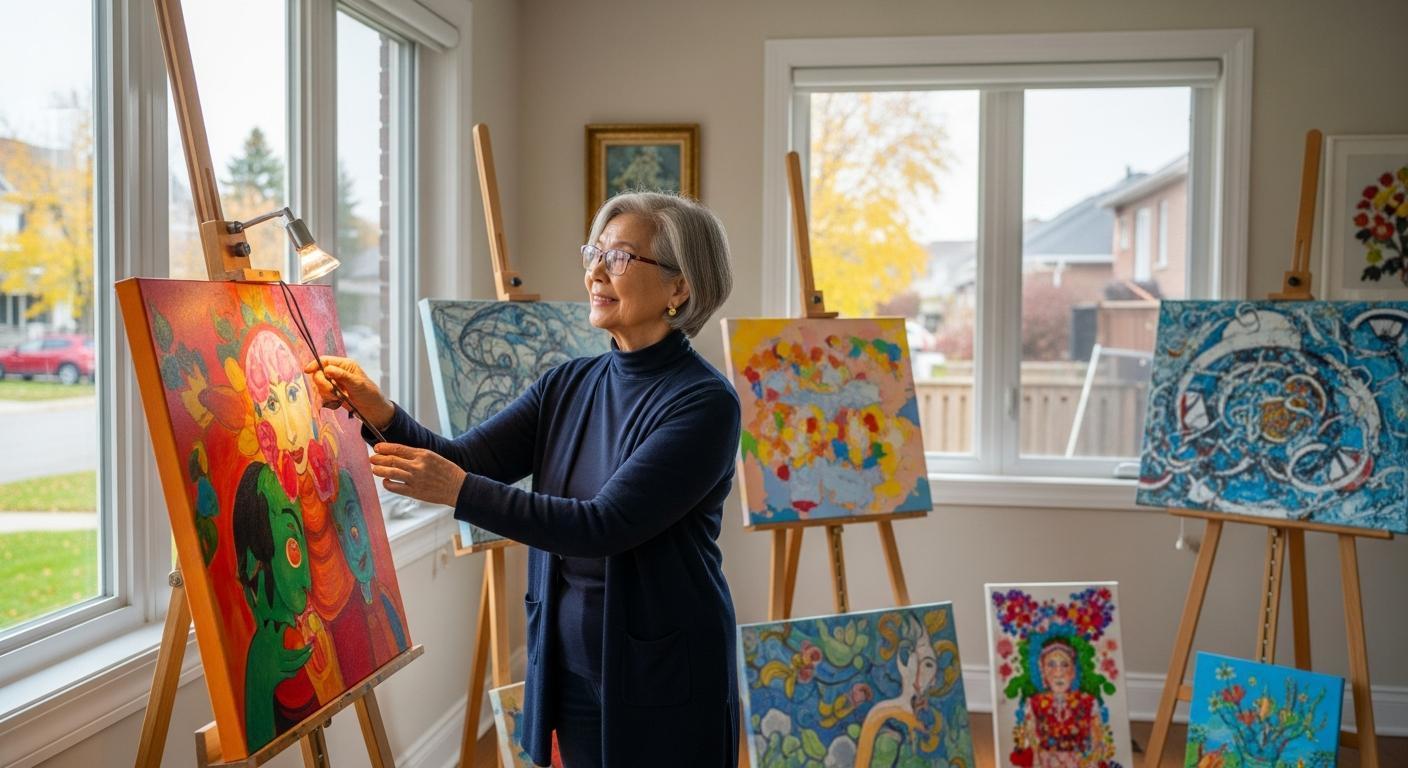
Artist Studio & Gallery Rental Economics in Ontario
Converting residential space into creative studios is increasingly viable in Ontario's thriving artist economy. Understanding rental demand and operational costs clarifies whether this reverse mortgage investment fits your home and retirement goals.
Common home conversion models:
- Artist studio rental ($800–$2,000/month, 150–300 sq ft dedicated space)
- Art gallery pop-up space ($500–$1,500/month, exhibition scheduling)
- Performance/music rehearsal studio ($1,200–$2,500/month, soundproofing required)
- Pottery/sculpture studio with kiln access ($1,500–$3,000/month, utility-intensive)
- Photography studio rental ($1,000–$2,500/month, lighting infrastructure)
- Multi-artist collective space ($3,000–$8,000/month, 4–6 artists sharing)
According to Artist in Canada, emerging visual artists spend 30–40% of income on studio rental, often forcing artistic productivity sacrifices. Artist collectives sharing space through shared-income models reduce individual costs by 50% while creating community.
Reverse Mortgage Investment in Home Art Infrastructure
Using a reverse mortgage to convert your home into artist rental space is a Living Legacy investment with income generation. The proceeds fund renovations enabling rental use; ongoing rental income covers reverse mortgage interest costs and generates additional retirement cash flow.

Home Art Rental Funding & Income Model
| Investment Category | Typical Cost | Annual Rental Income Potential | ROI Timeline |
|---|---|---|---|
| Studio space conversion (one 200 sq ft studio) | $8,000–$20,000 | $9,600–$24,000 (800–2,000/mo) | 5–10 years |
| Gallery/exhibition space finishing | $5,000–$15,000 | $6,000–$18,000 (500–1,500/mo) | 7–12 years |
| Performance studio + soundproofing | $15,000–$40,000 | $14,400–$30,000 (1,200–2,500/mo) | 8–12 years |
| Multi-artist collective space (4–6 studios) | $30,000–$60,000 | $36,000–$96,000 (3,000–8,000/mo) | 4–8 years |
| Infrastructure (utilities, insurance, maintenance) | $2,000–$5,000/year | Built into rental rates | Ongoing |
| Liability insurance (enhanced coverage) | $1,200–$2,500/year | Built into rental rates | Ongoing |
According to Artscape, Toronto's non-profit arts incubator, homeowners who convert residential space into artist studios recoup reverse mortgage investment costs within 5–8 years, with ongoing income extending retirement security by 10–15+ years.
Setting Up Studio Rental Operations
Successfully converting home space into artist rentals requires:
✓ Zoning verification — confirm bylaws permit studio/gallery use (often requires variance)
✓ Insurance adjustment — notify your insurer; commercial liability coverage increases $50–$100/month
✓ Tenancy agreements — formalize rental terms, security deposits, studio-use responsibilities
✓ Income documentation — track rental income for tax purposes (business income)
✓ Utility separation — if feasible, separate studio utilities for billing clarity
✓ Safety & accessibility — ensure studio space meets fire codes, ADA accessibility standards
✓ Community management — screen tenants, manage shared facilities, handle conflicts
Many Ontario homeowners partner with artist collectives (like Artscape or Workman Arts) who handle tenant recruitment, vetting, and management in exchange for 15–20% of rental revenue.
Ontario Artist Community & Market Demand
| Artist Type | Monthly Studio Need | Typical Rental Capacity | Income Generation |
|---|---|---|---|
| Visual artists (painters, sculptors) | 200–300 sq ft | Single studio | $800–$1,500/month |
| Photographers | 150–250 sq ft | Single studio + storage | $1,000–$2,000/month |
| Musicians/producers | 200–400 sq ft | Single soundproofed studio | $1,200–$2,500/month |
| Collective model (4–6 artists) | 50–100 sq ft/person | Shared gallery/studio | $3,000–$8,000/month |
| Performance/rehearsal space | 400–600 sq ft | Multi-use venue | $1,500–$3,000/month |
According to the Canadian Performing Arts Federation, demand for affordable artist studio space in Toronto and Ontario exceeds supply by 40%—making residential conversion highly viable with minimal vacancy risk.
Real-World Scenario: Home Gallery Generating $18,000 Annually
Marion, 67, Ontario: Marion had a 1,200 sq ft basement and 400 sq ft of second-floor guest space. She accessed a reverse mortgage for $50,000, using $25,000 to renovate the basement into two 200 sq ft artist studios with separate entrances and utilities.
She rented the studios at $1,200/month each ($24,000 annually), with operating costs (utilities, insurance, maintenance) totaling $6,000. Net annual income: $18,000. The reverse mortgage interest cost her approximately $1,800 annually, leaving $16,200 in net additional retirement income.
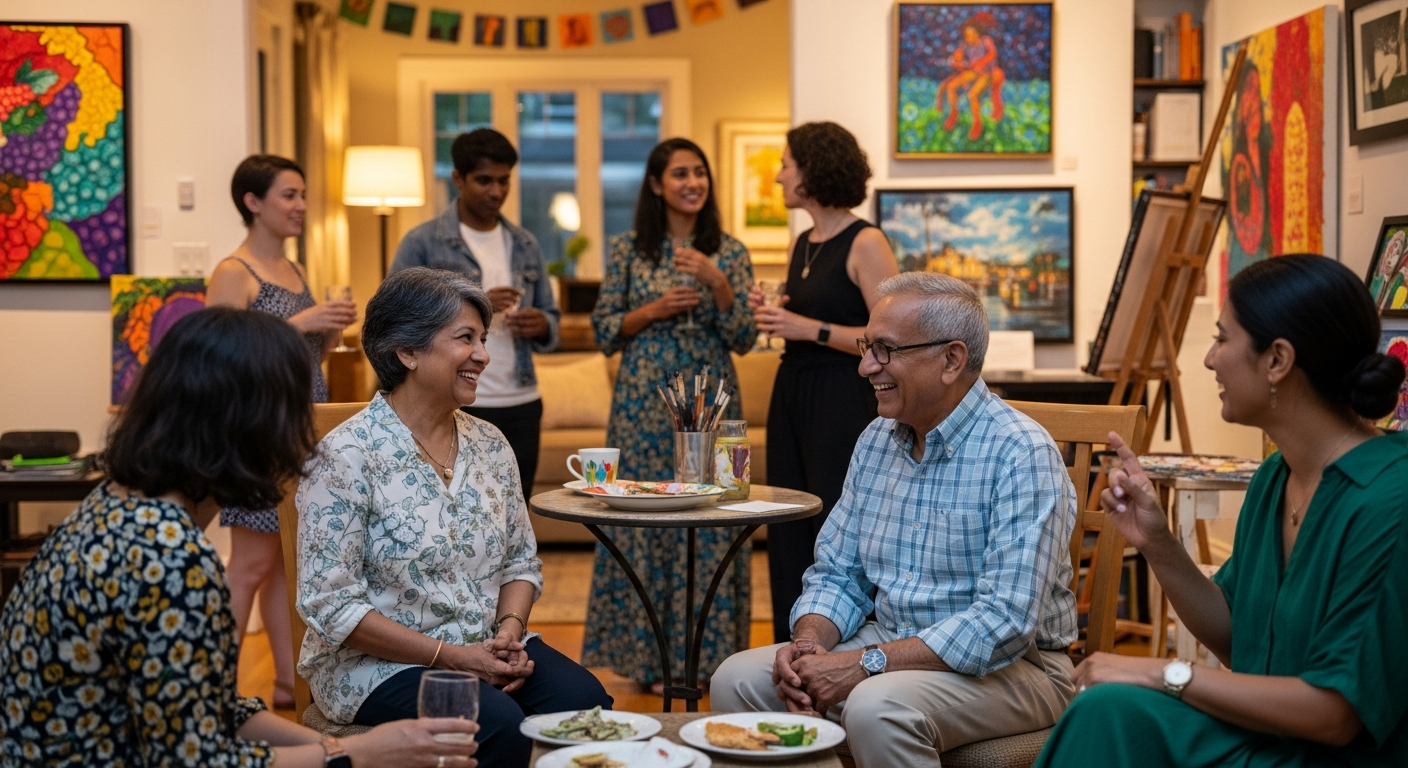
Within 5 years, she'd effectively paid off the reverse mortgage investment through studio rental net income. More importantly, her home became an active cultural space supporting three local artists, while generating retirement income that extended her independent living years by 15+.
Tax & Income Implications
Rental income from artist studio use is considered business income and must be reported on your tax return. However, you can deduct:
- Utilities allocated to studio space
- Insurance premium increases
- Maintenance and repair costs
- Depreciation on renovations (consult an accountant for schedules)
- Property tax portion allocated to rental space
Important: According to the Canada Revenue Agency (CRA), home-based rental income may trigger capital gains considerations if your property was considered principal residence. Consult a tax accountant before establishing studio rentals to optimize your structure and avoid unexpected tax implications.
Government Benefits Impact
Reverse mortgage proceeds don't affect OAS, GIS, or ODSP since they're loan advances. However, rental business income (once generated) is counted as earned income for benefit-calculation purposes—potentially affecting OAS clawback thresholds. Plan accordingly with a tax professional.
Key Takeaways
✓ Ontario artists spend 30–40% of income on studio rental; demand for affordable space exceeds supply by 40% — home conversion creates immediate tenant demand with minimal vacancy risk.
✓ Single-studio conversion ($8,000–$20,000 investment) generates $800–$2,000/month income — reverse mortgage investment recoups within 5–10 years, then generates pure retirement income.
✓ Multi-artist collective models (4–6 studios, $30,000–$60,000 investment) generate $3,000–$8,000/month — higher returns but require more management infrastructure.
✓ Rental income is taxable business income — consult a tax accountant to optimize deductions and capital gains treatment before launching studio operations.
✓ Partnership with non-profit arts organizations (Artscape, Workman Arts) can handle tenant vetting and management — reducing landlord burden while supporting community cultural infrastructure.
Frequently Asked Questions
Will converting my home to studio space affect its resale value?
Strategic conversions with separate entrances and reversible renovations often enhance value by 5–10% compared to homes without rental income generation. However, if renovations are poorly executed or the space is difficult to return to residential use, value may decrease. Work with a real estate professional experienced in artist spaces before committing to renovation.
What if tenants damage studio space or don't pay rent?
Require security deposits ($500–$2,000) and formalize tenancy agreements specifying damage responsibility and remediation. Join artist organizations like Artscape that vet tenants and handle disputes—trading 15–20% of income for professional management reduces landlord risk significantly. Insurance coverage for rental operations protects against catastrophic damage.
Do I need zoning permits to convert residential space to studio rental?
Most Ontario municipalities require zoning variance or conditional use permits for home-based business rental. Contact your municipal planning department early—many communities actively encourage artist studio conversion in residential areas, making permits straightforward. Budget 2–6 months for approval timeline.
Can I rent studio space to family members or close friends?
Yes, but formalize it with written tenancy agreements regardless of relationship. Family rentals can trigger CRA scrutiny if income/expense documentation appears inconsistent—treating it professionally with formal agreements protects both parties and ensures tax compliance.
What if my home equity isn't sufficient for studio conversion?
Start small—convert one 150–200 sq ft space first ($8,000–$15,000 investment). Generate rental income for 12–24 months, then revisit reverse mortgage expansion for additional studio space. Phased conversion reduces initial investment while building operational expertise.
How do I handle insurance if artists are using my home as workspace?
Notify your homeowner's insurer immediately—they'll require liability coverage additions ($50–$100/month typically) and may require safety modifications. Some insurers have "home business" riders; others require commercial general liability. Get quotes from multiple insurers before converting space, as insurance costs are a critical ROI factor.
Turn Your Home Into a Cultural Asset
Your underutilized residential space can generate retirement income while supporting Ontario's thriving artist community. Ready to explore home conversion possibilities? Get your free Ontario Reverse Mortgage Guide →
Ready to Learn More?
Find out exactly how much you could unlock from your home — free and no obligation.
Related Articles
Reverse Mortgage for Home-Based Consulting Practice: Supporting Your Adult Child's Independent Launch
Fund your adult child's transition to independent consulting. Reverse mortgage covers startup costs, home office setup, and income bridge during business launch.
Read →Using Reverse Mortgage to Help Adult Child Pursue Graduate Creative Arts Education: MFA Programs
Support your adult child's graduate creative arts degree with a reverse mortgage. Fund MFA, conservatory training, or advanced arts education in Ontario.
Read →Basement ADU Conversion: Using Reverse Mortgage to Create Secondary Income
Fund a basement apartment or ADU with a reverse mortgage to generate monthly rental income in retirement. Learn costs, zoning, and income potential in Ontario.
Read →