
Reverse Mortgage for Home Conversion to Intergenerational Community Hub in Ontario
Transform aging parent's home into thriving intergenerational community hub. Reverse mortgage funds renovations, programming, and operational support for neighborhood gathering space.
Has your aging parent always dreamed of opening their home as a community gathering space where intergenerational connections flourish? Converting a home into an intergenerational community hub—serving multigenerational residents, community programming, and neighborhood bonding—requires strategic renovations and operational funding. A reverse mortgage can finance this profound legacy project, transforming your parent's home into a vital neighborhood asset while keeping them actively engaged and socially connected.
An intergenerational community hub is a residential space designed to serve multiple generations: aging adults, young professionals, families with children, and teens. These hubs host shared meals, skill-sharing, caregiving co-ops, artisan workshops, and mentorship programs. They combat loneliness, build community resilience, and create economic opportunity. Your aging parent's home could become such a place—funded entirely through a reverse mortgage.
The Intergenerational Community Hub Movement in Ontario
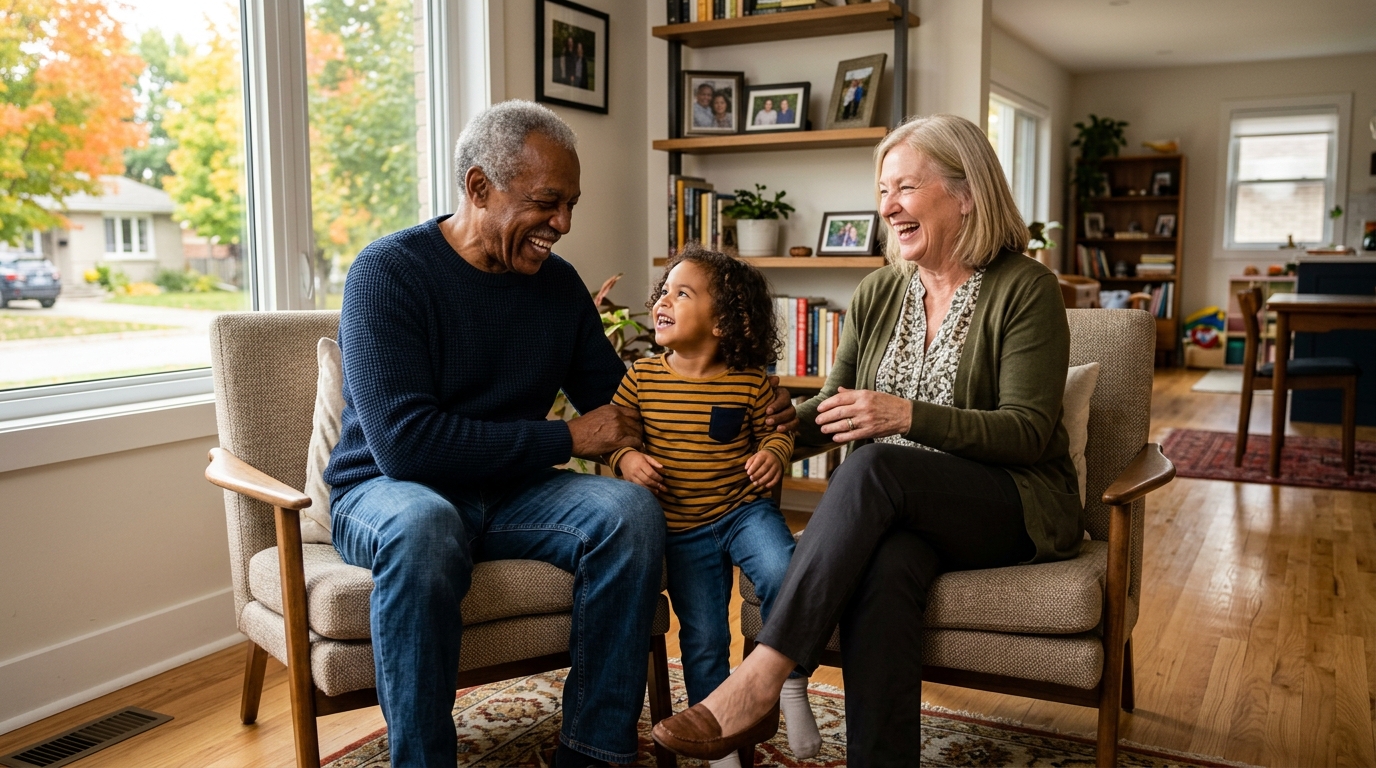
An intergenerational community hub is a residential property operated as a multigenerational co-living and community space. Members share kitchen facilities, common areas, and programming while maintaining private living quarters. Unlike traditional care facilities, hubs emphasize peer relationships, shared decision-making, and community benefit over profit extraction.
Examples in Ontario:
- Cohousing communities (30–40 private units + shared kitchen, workshops, childcare spaces)
- Intentional communities (5–15 households sharing meals and governance)
- Skills-sharing hubs (aging craftspeople mentoring young makers in shared studio)
- Intergenerational care cooperatives (elders + young families sharing childcare, eldercare responsibilities)
According to the Cohousing Association of Canada, Ontario has 20+ established cohousing communities and 40+ in development. Demand far exceeds supply—many people express desire to live in community-centered environments but lack affordable options. Your aging parent's home conversion could fill this gap.
Benefits to your aging parent:
- Social connection (combats isolated aging)
- Shared expenses (mortgage, utilities, maintenance distributed)
- Built-in support system (neighbors help with care as aging progresses)
- Purpose and legacy (home becomes community asset)
- Potential rental income (members contribute to operational costs)
Home Conversion Costs for Intergenerational Community Hubs
Converting a residential home into community hub requires significant renovations and operational setup:
| Renovation Category | Purpose | Typical Cost |
|---|---|---|
| Kitchen expansion/upgrade | Accommodate 8–15 people cooking together | $8,000–$18,000 |
| Common area creation | Dining, gathering, programming space | $10,000–$25,000 |
| Accessibility modifications | Aging-friendly design (ramps, widened doors, bars) | $5,000–$15,000 |
| Private unit conversions | Basement, upper floor into rentable living space | $15,000–$35,000 per unit |
| Bathroom upgrades | Multiple clean, accessible bathrooms for shared use | $8,000–$20,000 |
| Storage & laundry | Shared facilities for 8–12 residents | $4,000–$8,000 |
| Workspace/studio | Shared workshop, artisan space, childcare area | $8,000–$20,000 |
| Internet/technology infrastructure | High-speed shared connectivity for co-residents | $2,000–$5,000 |
| Safety & accessibility audit | Professional evaluation ensuring universal design | $1,500–$3,000 |
| Legal/governance setup | Incorporation, bylaws, member agreements | $3,000–$8,000 |
| Insurance & bonding | Liability coverage for shared-use residential | $2,000–$4,000/year |
| Initial operating reserve | 6 months of utilities, maintenance, staffing | $5,000–$15,000 |
| **TOTAL conversion + first-year operations | — | $71,500–$176,000 |
A reverse mortgage can cover this entire conversion, positioning your aging parent's home as a sustainable community hub.
Financial Models: Reverse Mortgage + Resident Contributions
The hub doesn't need to be charity. Resident members contribute to operating costs through:
- Monthly rent ($400–$800/member, lower than market due to shared expenses)
- Shared meal contributions ($100–$200/month)
- Utility cost-sharing (distributed across residents)
- Volunteer labor (maintenance, cooking, programming)
This creates a sustainable financial model:
| Funding Source | Year 1 Revenue | Year 2–5 Revenue | Purpose |
|---|---|---|---|
| Reverse mortgage draw | $75,000 (one-time capital) | $0 | Renovations, initial setup |
| Member housing rent | $4,800–$9,600 (6 residents × 12 months) | $9,600–$19,200 (8–10 residents) | Utilities, maintenance, insurance |
| Meal contributions | $7,200–$14,400 (6–8 members) | $14,400–$24,000 (10–12 members) | Shared kitchen operations |
| Program income (workshops, events) | $2,000–$5,000 | $5,000–$12,000 | Community programming |
| Grants (municipal/provincial) | $3,000–$8,000 | $3,000–$8,000 | Sustainability funding |
| Total Year-1 operating revenue | $17,000–$36,800 | $32,000–$63,200 | — |
By Year 3, most hubs achieve operational sustainability where member contributions cover all costs except mortgage (which is community's equity stake in the property).
How Reverse Mortgage Funds Home Conversion Phases
Phase 1: Planning & Design (Months 1–3)
Reverse mortgage draw: $4,000–$8,000
- Architect/designer consultation ($2,000–$4,000): Conceptual design for multi-unit residential conversion
- Building code assessment ($1,000–$2,000): Verification that hub plans meet Ontario Building Code
- Governance consultant ($1,000–$2,000): Establishment of co-op or co-housing governance structure
Phase 2: Permitting & Legal Setup (Months 2–4)
Reverse mortgage draw: $3,000–$8,000
- Building permits and applications ($1,500–$3,000): Municipal approval for residential conversion
- Lawyer (real estate + corporate) ($2,000–$4,000): Incorporation of co-operative or creation of member agreements
- Zoning variance (if needed) ($1,500–$2,500): Some municipalities require variance for co-housing use
Phase 3: Major Renovations (Months 4–10)
Reverse mortgage draw: $35,000–$75,000 (largest phase)
- Kitchen expansion/upgrade ($8,000–$18,000)
- Common area creation ($10,000–$25,000)
- Private unit conversions ($12,000–$30,000)
- Accessibility modifications ($5,000–$15,000)
- Bathroom/plumbing upgrades ($8,000–$15,000)
Phase 4: Soft Systems & Operations (Months 8–12)
Reverse mortgage draw: $10,000–$20,000
- Furnishings, kitchen equipment ($4,000–$8,000)
- Member recruitment & onboarding ($2,000–$4,000)
- Governance training & orientation ($1,500–$3,000)
- Insurance & bonding ($2,000–$4,000)
- Initial operating reserve ($3,000–$6,000)
Phase 5: Ongoing Support (Year 2+)
Ongoing support: $2,000–$5,000/year from operational revenue
- Maintenance & repairs ($1,000–$2,000/year)
- Insurance, property tax (covered by member contributions + your aging parent's homeowner responsibility)
- Community programming ($1,000–$3,000/year from member donations or grant funding)
Governance Models for Intergenerational Community Hubs
Your aging parent's hub can be structured as:
Model 1: Co-Operative Housing
Members collectively own shares in co-operative corporation. Each member has:
- Voting rights (one member, one vote)
- Housing security (lifetime lease-to-own option)
- Profit-sharing (any surplus returns to co-operative)
Reverse mortgage funds initial co-operative capitalization and conversion. Members then contribute equity share purchases and monthly dues.
Model 2: Intentional Community
Members commit to shared values (sustainability, intergenerational support, economic cooperation) and occupy units under lease. Aging parent retains property ownership; members are long-term tenants with governance voice.
Reverse mortgage funds renovations; member rents cover operations. Clean legal structure—many Ontario intentional communities use this model.
Model 3: Skill-Sharing Mentorship Hub
Aging parent (craftsperson, artist, healer) remains active community leader, mentoring younger members in exchange for shared housing and caregiving support as aging progresses.
Example: Ceramicist aging parent converts home to ceramics studio + shared living. Young potters live on-site, contribute to household operations, learn from aging parent's expertise.
Model 4: Multigenerational Family Compound
Multiple related adults (aging parents, adult children, grandchildren) collectively occupy and manage the property. Reverse mortgage funds expansion to accommodate full family while maintaining aging parent's independence.
Less formal governance but strong family bonds. Growing option as multi-generational families seek co-housing.
Community Hubs in Ontario: Regulatory Context
Ontario zoning law generally allows residential co-housing conversions, though specific requirements vary by municipality:
- Toronto: Zoning bylaw permits residential co-sharing if occupants are "one household" (broadly interpreted)
- Durham, York regions: Friendlier to co-housing; multiple cohousing communities established
- Rural Ontario: Generally permissive; fewer restrictions on residential use variations
Before reverse mortgage funding, consult municipality zoning officer to verify:
- Your aging parent's property can legally operate as co-housing/hub
- Whether variance or special permission needed
- Occupancy restrictions (some municipalities limit "unrelated persons" per unit)
This $1,000–$2,000 zoning consultation is worthwhile before committing to conversion.
Government Support for Community Hubs
Several Ontario and federal programs support intergenerational housing:
| Program | Funding | Applicability |
|---|---|---|
| Ontario Community Housing Fund | Grants up to $500,000 | Non-profit co-op housing projects |
| Cohousing Association of Canada grants | $5,000–$20,000 | Cohousing-specific development projects |
| Ontario Seniors' Care Capital Program | $3,000–$15,000 | Community seniors' facilities (competitive) |
| Federal Co-op Housing Development Program | Various | Provincial allocation for co-housing |
| Municipality grants (varies by city) | $5,000–$50,000 | Community-benefit projects in some jurisdictions |
Your aging parent should pursue grants while using reverse mortgage as foundational capital source.
Protecting Your Aging Parent's Security Within Community Hub Model
Critical question: What happens to your aging parent as they age further within the hub?
A well-designed community hub includes built-in support mechanisms:
-
Co-resident caregiving agreements: Members commit to providing support (meals, transportation, social connection) as aging parent's needs change, distributed across multiple residents.
-
Formalized care coordination: If aging parent requires paid home care eventually, hub structure accommodates professional caregivers. Shared costs make professional care affordable.
-
Decision-making authority retained: Aging parent maintains decision-making power about personal care. Hub members support but don't control.
-
Exit strategy documented: If aging parent must eventually move to long-term care, what happens to hub? Property transfers to co-operative or designated heirs. Clarity prevents future conflict.
-
Financial sustainability: Hub must remain economically viable so aging parent isn't burden-shifted to members. Diversified funding (member rents, grants, program income) ensures stability.
Real Estate & Tax Implications
Important clarification: Your aging parent retains property ownership. Reverse mortgage is a loan against home, not a transfer of title.
If hub is structured as co-operative or intentional community:
- Principal residence exemption may still apply (depending on income-generating activities)
- Potential landlord responsibilities (property management, tenant relations)
- Tax implications vary based on income generated from member rent
Consult accountant and lawyer to model your specific structure. However, most community hubs operated by aging parents as non-profit endeavors (member contributions just cover expenses) have minimal tax complications.
Building a Meaningful Legacy
The deepest value of community hub conversion is legacy:
Your aging parent's home becomes a living monument to intergenerational connection, community building, and economic cooperation. Rather than a house passed to heirs (who may sell), the property becomes a perpetual community asset. Descendants can take pride knowing grandmother's home has housed and supported 100+ people over decades.
Many aging parents cite this as their greatest satisfaction: seeing their home become a gathering place, watching intergenerational friendships flourish, knowing their legacy is vibrant human connection—not accumulated stuff.
Key Takeaways
- Home conversion to intergenerational community hub costs $71,500–$176,000 including renovation, setup, and first-year operations
- Reverse mortgage line of credit funds conversion stages flexibly as renovation progresses and member recruitment solidifies
- Member contributions (rent, shared meals) create sustainable operating model within 2–3 years of launch
- Co-operative or intentional community legal structures provide governance frameworks that protect aging parent's interests
- Ontario municipalities increasingly support co-housing through zoning tolerance and grant programs
- Community hub model provides profound aging-in-place benefits: social connection, built-in support system, sense of purpose, and lasting legacy
Frequently Asked Questions
Can my aging parent still live privately within the community hub, or must they share?
Yes—most hubs include private units for aging parents/core founders. Your aging parent retains a private bedroom/bathroom/living space while sharing kitchen, dining, common areas with other residents. This balance of privacy + community is key to hub success.
What if the community hub fails or members leave?
Reverse mortgage debt remains on home regardless of hub success. Mitigate risk by:
- Starting with 4–6 committed founding members (not strangers)
- Clear member agreements and governance
- Diversified funding (member rents + grants + program income, not just member contributions)
- Requiring 90-day notice for member departure so time to recruit replacements
If hub dissolves, property remains your aging parent's residential home. Hub conversion involves renovation (permanent) but not a fundamental change to property ownership.
Do members need to be unrelated, or can family be involved?
Both models work. Some hubs include family members (adult children, grandchildren) alongside unrelated co-residents. Mixed models often work best—family provides stability; unrelated members bring diversity and fresh perspectives.
What if neighbors object to community hub use?
Zoning compliance prevents most neighbor objections. A properly zoned residential property operating as co-housing is legal use. However, community hub etiquette matters:
- Noise management (shared meals times, quiet hours)
- Parking (don't overflow into street; plan member parking)
- Events (neighborhood notice for workshops, celebrations)
- Maintenance (keep property attractive, not stereotypical "commune" image)
Good-neighbor practices prevent conflicts.
Can my aging parent continue receiving OAS/GIS if they operate a community hub?
Yes. Operating a non-profit community hub (where member contributions merely cover costs, not profit extraction) doesn't generate taxable income. OAS/GIS eligibility unaffected. However, if hub is income-generating (profit extracted for aging parent), income would be reported and could trigger OAS clawback. Structure as non-profit to protect government benefits.
What insurance does a community hub need?
Standard homeowner's insurance must be upgraded to:
- Liability coverage ($2M+ to protect against resident injury claims)
- Property coverage (for shared renovations and common areas)
- Optional bonding (protects against member misconduct, theft)
Total annual insurance: $2,000–$4,000 (higher than standard home due to occupancy risk). Member contributions cover this cost.
Ready to Learn More?
Find out exactly how much you could unlock from your home — free and no obligation.
Related Articles
Reverse Mortgage for Publishing Your Aging Parent's Memoir Professionally: Preserving Life Stories
Fund professional memoir publishing for aging parents. Reverse mortgage covers editing, design, printing, and distribution to preserve family legacy.
Read →Reverse Mortgage for Home Hardening Against Extreme Weather: Ontario's Climate Resilience Investment Strategy
Protect aging parent's home from extreme weather and climate risks. Reverse mortgage funds flood protection, storm hardening, heat resilience, and climate adaptation infrastructure.
Read →Reverse Mortgage for Professional Clinical Supervision: Supporting Adult Child's Therapy Career Development
Fund adult child's ongoing professional supervision and continuing education. Reverse mortgage covers clinical oversight, credentials, and practice development for therapists.
Read →