
Reverse Mortgage for End-of-Life Financial Planning: Funding Palliative Care at Home
When diagnosis changes to palliative care, financial planning becomes urgent. Use a reverse mortgage to fund comfort-focused care at home during final months.
Your parent's diagnosis has shifted to palliative care, and you're facing $5,000–$8,000 monthly costs for comfort-focused care at home during their final months. This is when financial planning becomes urgent. A reverse mortgage provides immediate funds for professional palliative nursing, pain management, family respite, and end-of-life dignity—without forcing a crisis sale of the family home.
Palliative care at home is expensive but profoundly meaningful: professional nursing, pain management specialists, family leave support, and dignity in familiar surroundings. Many families choose palliative care but struggle to afford it. A reverse mortgage accessed quickly—sometimes in 3–4 weeks in urgent circumstances—bridges this final chapter financially, allowing your parent to die at home surrounded by family.
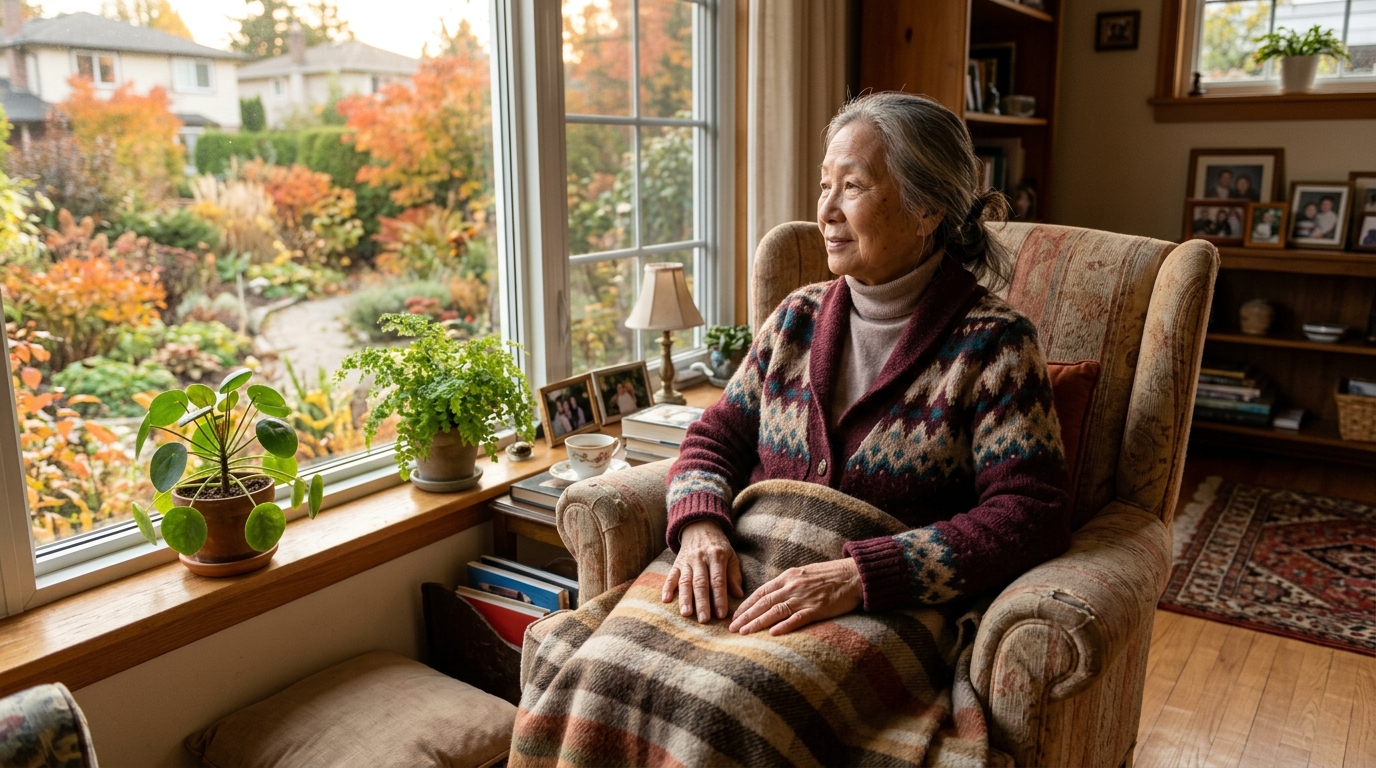
The palliative care affordability crisis
Palliative care in Ontario is vastly underfunded. Provincial healthcare covers:
- Doctor visits and basic nursing through home care
- Medications (some; special pain medications may require private funding)
Provincial healthcare does NOT cover:
- Around-the-clock private nursing ($5,000–$8,000/month)
- Specialized pain management specialists
- Family counseling and grief support
- Respite care to give family breaks
- Comfort care equipment (specialized mattresses, chairs)
The gap creates a painful choice: underfunded care at home, move to hospital or hospice, or financially devastate the family. A reverse mortgage eliminates this false choice.
Palliative care cost breakdown (Ontario, 2026)
| Service | Provider | Cost | Duration |
|---|---|---|---|
| Professional nursing | Registered nurse, 24-hour on-call | $5,000–$7,000/month | Until death |
| Specialist pain management | Palliative care physician | $500–$1,500/visit | 4–8 visits |
| Counseling & grief support | Social worker, chaplain, therapist | $200–$400/session | Weekly (8–12 sessions) |
| Respite care | Professional caregiver relief | $25–$35/hour | 20–40 hours |
| Comfort equipment | Specialized mattress, chair, equipment | $2,000–$5,000 | One-time |
| Medications & supplies | Uninsured pain meds, palliative supplies | $1,000–$3,000 | Until death |
| Family support services | Meal delivery, cleaning, laundry | $500–$1,000 | Until death |
| TOTAL (3-month palliative period) | Combined services | $18,000–$45,000 | 3 months |
For a family with limited liquid assets, this is catastrophic. A reverse mortgage provides these funds immediately, preserving home and family stability during grief.
According to FCAC (Financial Consumer Agency of Canada), families facing palliative care costs often sell homes prematurely, deplete retirement savings, or sacrifice other family needs. Reverse mortgages accessed during this period provide dignified financial support without forced asset liquidation.
How reverse mortgage accelerates palliative care planning
Normal reverse mortgage timeline: 5–6 weeks. Urgent palliative care timeline: 3–4 weeks possible with lender cooperation and priority processing.
Expedited process (when end-of-life is imminent):
| Step | Normal Timeline | Urgent Timeline | Action |
|---|---|---|---|
| Initial contact | Day 1 | Day 1 | Call specialist immediately |
| Pre-qualification | Day 2–3 | Day 1–2 | Verbal confirmation of eligibility |
| Appraisal | Day 5–10 | Day 3–5 | Expedited scheduling |
| Legal review | Day 15–20 | Day 10–14 | Lawyer prioritizes |
| Closing | Day 35–42 | Day 21–28 | Accelerated closing |
| Funding | Day 40–45 | Day 25–30 | Funds within 24 hours of closing |
Critical step: Contact Rick Sekhon Reverse Mortgages immediately upon palliative care diagnosis. Explain the timeline. Many lenders prioritize genuine end-of-life situations.
Real-world scenario: Preserving dignity and family home
Margaret's story (composite example):
Margaret (age 79) received a diagnosis of advanced pancreatic cancer in June 2026. Palliative care was recommended—comfort-focused, home-based.
Family situation:
- Margaret lived in her Toronto home (valued $420,000)
- Modest CPP/OAS income ($22,000/year)
- Two adult children; one taking medical leave to provide care
- Life expectancy: 3–6 months
Care plan costs:
- Private RN nursing (24-hour on-call): $6,000/month
- Pain management specialist: $2,000 total
- Family respite care: $2,000/month
- Medications & supplies: $1,500/month
- Counseling & support: $1,500 total
- Total 5-month plan: $50,500
Challenge: Margaret had no liquid savings. Options were:
- Sell home (unacceptable—family wanted her to die at home)
- Limit care (unacceptable—Margaret wanted dignity and professional care)
- Reverse mortgage (viable—fast, preserves home)
Solution: Called Rick Sekhon Reverse Mortgages in late June. Explained palliative care timeline urgently. Lender prioritized:
- Appraisal completed (expedited): July 2
- Legal review completed: July 10
- Closing: July 18
- Funds available: July 20
Timeline: 20 days from initial contact to funding.
Reverse mortgage: $80,000 at 5.2% interest
- Immediate use: $50,500 (palliative care costs)
- Buffer: $29,500 (for extended care, family expenses)
Outcome: Margaret received comprehensive palliative care at home. Both children were present during her final weeks. Care was dignified, professional, family-centered. The home was preserved for the children's inheritance.
Reverse mortgage impact: At death, balance was approximately $82,000. Home was appraised at $420,000 at time of death. Estate net: ~$338,000 (after mortgage repayment). Children inherited substantial equity AND their mother died with dignity at home.
Palliative care planning checklist
Week 1: Immediate actions
✓ Discuss palliative care goals with your parent and family
✓ Contact Rick Sekhon Reverse Mortgages immediately; explain urgency
✓ Gather home value estimate (Zillow, local realtor)
✓ Obtain diagnosis letter from physician (for lender)
✓ Begin conversations with adult children about financial plan
Week 2–3: Reverse mortgage process
✓ Lender conducts pre-qualification
✓ Home appraisal scheduled (expedited)
✓ Lawyer engagement for independent legal advice
✓ Begin researching palliative care providers (private nursing, specialists)
✓ Confirm care plan costs with providers
Week 4: Closing and funding
✓ Closing documents reviewed and signed
✓ Funds arrive (typically within 24 hours)
✓ Care providers engaged immediately
✓ Professional palliative care team in place
Ongoing
✓ Manage care coordination
✓ Track expenses
✓ Communicate with adult children about financial status
✓ Update will/estate plan if necessary
✓ Plan funeral/end-of-life arrangements

Comparing end-of-life care funding options
| Approach | Time to Funds | Cost to Family | Impact on Home | Estate Impact |
|---|---|---|---|---|
| Home care only (provincial) | Immediate (free) | Underfunded; limited care | No impact | No debt |
| Adult child leaves job to provide care | Immediate (free) | $40,000–$80,000 lost income | No impact | Emotional/career cost |
| Family loan from other relatives | 1–2 weeks | Dependent on relationship | No impact | Family debt/stress |
| Home sale forced during terminal illness | 2–4 months | Urgent, low sale price likely | Loss of home | Maximum family stress |
| Reverse mortgage (expedited) | 3–4 weeks | Interest cost only | Preserved; loan repaid from estate | Professional care dignity |
A reverse mortgage is optimal because funds arrive quickly (3–4 weeks), the home is preserved, professional care is comprehensive, and the loan is repaid from the estate (not from living family's pocket).
Communicating with adult children about reverse mortgage
Palliative care planning requires family communication. Here's how to frame a reverse mortgage to adult children:
Conversation starter:
"Your parent is choosing palliative care at home. This is the right choice medically and emotionally. It's also expensive ($5,000–$8,000 monthly). Rather than sell the home or burden you children with costs, we're considering a reverse mortgage. This is borrowed against the home's value, repaid from the estate after your parent passes. This preserves the home, provides professional care, and doesn't burden you. Let's discuss together."
Key points to cover:
- Palliative care costs are real and substantial
- Reverse mortgage is borrowed against the home (aging parent's asset)
- No monthly payments required
- Loan is repaid from estate after death
- Children inherit remaining equity
- This preserves family home and allows professional, dignified care
- Alternative: forced home sale, underfunded care, or adult children leaving jobs
According to CMHC, adult children who understand their parent's reverse mortgage for palliative care report higher satisfaction with the care quality and less family conflict compared to families that avoid discussing finances during terminal illness.
Key Takeaways
- Palliative care at home costs $18,000–$45,000 for a 3–6 month period, creating financial crisis for families without liquid assets
- Reverse mortgage provides immediate funds (3–4 weeks in urgent situations) for professional nursing, pain management, and dignified home-based end-of-life care
- Expedited reverse mortgage processing is available for genuine palliative care situations — contact lender immediately explaining urgency
- Home is preserved for inheritance while professional care allows dignity and family presence during final months
- Financial transparency with adult children prevents family conflict and supports shared decision-making
- Rick Sekhon Reverse Mortgages prioritizes urgent palliative care cases — call immediately upon diagnosis if considering this option
Frequently Asked Questions
Can we get a reverse mortgage if my parent has a terminal diagnosis?
Yes. There is no health requirement for reverse mortgages. Terminal diagnosis does not disqualify. In fact, lender may prioritize the application because of urgency. Be transparent about timeline.
Will palliative care costs deplete the entire estate?
It depends. Palliative care for 3–6 months typically costs $18,000–$45,000. Compared to a typical Ontario estate ($350,000–$600,000), this is 5–15% of assets. Substantial inheritance remains for adult children.
What if my parent passes before the reverse mortgage is fully funded?
Contact the lender immediately. Most lenders allow withdrawal of funds after death for funeral and final care costs. The timeline doesn't need to be met perfectly—flexibility is expected.
Can the reverse mortgage interfere with hospice care?
No. A reverse mortgage is a financial tool. It doesn't affect medical care decisions, hospice placement, or end-of-life planning. If your parent changes their mind about home-based care and chooses hospice, the reverse mortgage can be maintained or repaid.
Will my parent's government benefits (CPP, OAS) be affected by a reverse mortgage?
No. Reverse mortgage proceeds are not income. CPP and OAS are unaffected. Your parent can continue receiving benefits throughout palliative care.
Should I tell my parent about the reverse mortgage if they're very ill?
This depends on your parent's wishes and cognitive state. If your parent wants to be involved in decisions, discuss it. If your parent has designated a power of attorney, discuss it with that person. If your parent is not capable of understanding, decision-making shifts to power of attorney or surrogate decision-maker.
Plan for dignity and family presence
Your parent's final months deserve dignity, professional care, and family presence. A reverse mortgage makes this possible—financially, emotionally, and practically. Don't let financial barriers prevent palliative care at home.
Contact Rick Sekhon Reverse Mortgages immediately upon palliative care diagnosis. Explain the situation and timeline. Fast-track processing is available for genuine end-of-life care situations.
Ready to Learn More?
Find out exactly how much you could unlock from your home — free and no obligation.
Related Articles
Reverse Mortgage for Palliative Care and End-of-Life Planning
How a reverse mortgage can fund in-home palliative care, hospice services, and end-of-life planning for Ontario seniors.
Read →Reverse Mortgage and Estate Planning: What Your Executor Must Know
Guide for executors and heirs: understand how reverse mortgages are handled in probate, what the no-negative-equity guarantee means, and how to manage repayment of the loan.
Read →Reverse Mortgage for Aging in Place With Fibromyalgia: Home Modifications for Invisible Illness
Fund home modifications for aging with fibromyalgia. Reverse mortgage enables accessible design for pain management, energy conservation, and quality of life.
Read →