
Reverse Mortgage to Document Your Family's Oral History: Preserving Voices and Legacy Stories
How to use a reverse mortgage to fund family oral history documentation, preserving stories, memories, and cultural heritage for future generations.
Your life contains stories that deserve preservation. Decades of experiences, family history, cultural heritage, and hard-won wisdom are at risk of disappearing when your generation passes. Family oral history documentation—recording and preserving these stories professionally—transforms fleeting memories into lasting legacy. A reverse mortgage can fund this meaningful project, ensuring your voice and your family's heritage endure for generations.
Why Family Oral History Matters
Oral history captures what written records cannot:
Personal perspective: Your lived experience of historical events, family relationships, and cultural practices Emotional truth: The feelings, values, and wisdom that shaped your decisions and character Cultural heritage: Traditions, recipes, language, and customs of your family's ethnic or cultural background Practical wisdom: Lessons learned from challenges, relationships, and life experience Connection across generations: Stories that help grandchildren understand who they are and where they come from
When these stories remain untold, future generations lose connection to their roots and inherit only fragmented family lore.
Types of Oral History Projects
Audio interview series ($3,000-$10,000):
- Professional recording of interviews about your life, experiences, and family
- 10-20 hours of recorded content
- Transcribed and indexed for searchability
- Digital archive stored securely
Video documentary ($5,000-$25,000):
- Professional videography capturing your stories with visual context
- Home tours, family photo discussions, or heritage site visits
- Multiple family members interviewed
- Professional editing and presentation
- DVD copies for all adult children
Family history book ($2,000-$8,000):
- Professional writer interviews you and compiles a narrative family history
- Includes photos, timelines, and documented heritage
- Printed copies for all family members
- Digital archive for future generations
Multimedia heritage project ($10,000-$30,000):
- Combines audio, video, written, and photo documentation
- Interactive digital archive accessible to all family members
- Cultural artifacts photographed and documented
- Professional archival storage
Cultural preservation ($5,000-$20,000):
- Language documentation (if you speak heritage languages)
- Cultural practice documentation (cooking, crafts, traditions)
- Religious or spiritual practice recording
- Community or professional achievement documentation
Oral History Project Types at a Glance
| Project Type | Typical Cost | Format | Best For |
|---|---|---|---|
| Audio interview series | $3,000–$10,000 | 10–20 hours recorded, transcribed | Preserving spoken memories and family lore |
| Video documentary | $5,000–$25,000 | Filmed interviews, edited feature | Capturing visual storytelling with multiple family members |
| Family history book | $2,000–$8,000 | Written narrative with photos and timelines | Families wanting a printed, shareable keepsake |
| Multimedia heritage project | $10,000–$30,000 | Combined audio, video, written, photo archive | Comprehensive, interactive family archives |
| Cultural preservation project | $5,000–$20,000 | Language, craft, or tradition documentation | Preserving heritage languages and cultural practices |
The Ontario Landscape
Ontario has resources supporting oral history:
Professional oral historians and videographers: Toronto, Ottawa, and major cities have professionals specializing in family documentation
Digital archiving services: Services like Ancestry.com, FamilySearch, and local historical societies archive stories
University programs: Some Ontario universities offer oral history classes and consultation
Libraries: Local libraries often support community oral history projects
Grants and funding: Some cultural organizations provide partial funding for heritage documentation
A reverse mortgage can fund this work fully, avoiding piecing together external grants that may not cover your full vision.
Margaret's Documentary Budget Breakdown
| Item | Cost |
|---|---|
| Professional videographer (20 hours filming) | $8,000 |
| Professional editing and DVD production | $4,000 |
| Heritage museum donation of documents/photos | $3,000 |
| Total reverse mortgage funds accessed | $15,000 |
Real-World Legacy: Margaret's Story
Margaret, 78, lived through the 1960s civil rights movement as an African Canadian. Her adult children and grandchildren knew her only as their grandmother—not as the activist, educator, and community leader she'd been. Her grandchildren were losing connection to this heritage.
Margaret accessed $15,000 via reverse mortgage to fund a professional documentary:
- $8,000 for professional videographer (20 hours of filming)
- $4,000 for professional editing and DVD production
- $3,000 for a heritage museum donation of original documents and photos
The resulting documentary is shown at family gatherings, in school presentations, and at the local library. Margaret's grandchildren now understand their heritage and their grandmother's significance. When Margaret passed five years later, the documentary became her lasting legacy—far more powerful than any written memoir could be.
Planning Your Oral History Project
Assess your priorities:
- What stories matter most? (Family history, cultural heritage, professional achievements, personal wisdom)
- Who should participate? (Just you, or spouse/adult children?)
- What format appeals to you? (Audio, video, written, multimedia)
- What's your timeline? (Complete within 1-2 years, or ongoing project)
Research professionals:
- Interview oral historians or videographers about their approach
- Ask for references and sample work
- Discuss your vision and ensure alignment
- Get quotes for different scope levels
Plan accessibility:
- How will family members access the final product?
- Digital sharing, physical DVDs, library donations?
- Who maintains the archive long-term?
- How do you ensure future preservation?
Consider privacy:
- What stories are for broad family sharing vs. intimate only?
- How do you handle sensitive family issues?
- What's appropriate for public sharing vs. family-only?
Complementing Other Legacy Projects
An oral history project works alongside other legacy planning:
Estate planning: Wills and trusts distribute assets; oral history preserves who you were
Photo digitization: Your stories give context to family photos
Heritage documentation: Recording recipes, crafts, or cultural practices alongside your personal stories
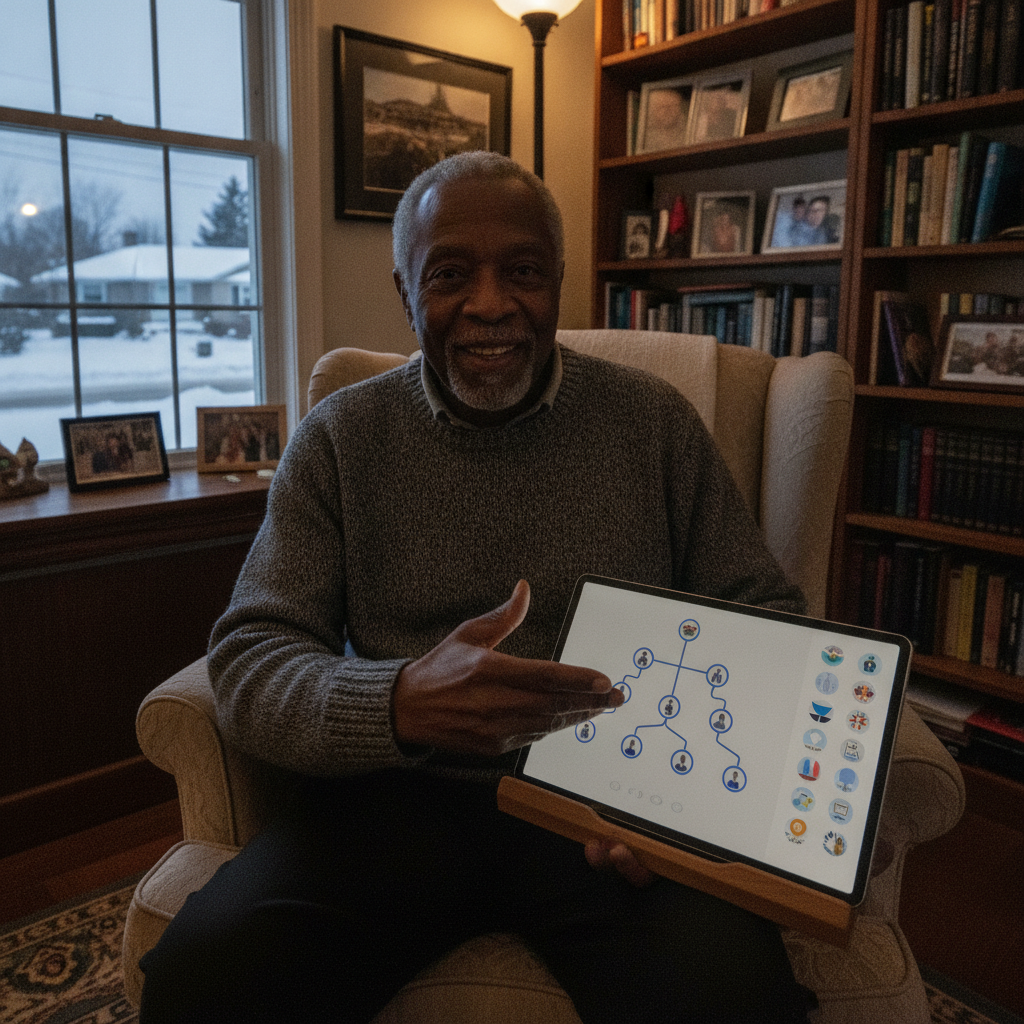
Genealogy research: Your stories provide context for family trees and ancestry
Charitable giving: Documenting your values and charitable interests explains your legacy
These projects together create comprehensive intergenerational knowledge transmission.
Practical Considerations
Professional quality matters: While DIY recording is possible, professional equipment, interviewing skills, and editing create superior results that will endure and be valued long-term.
Time investment: Even with professionals handling technical work, you'll spend 20-40 hours in interviews and review.
Emotional processing: Telling your life story can be emotionally complex. Some people find this deeply meaningful; others find it challenging. Be prepared.
Family reactions: Some adult children deeply value oral history; others are less interested. Their participation is optional, but their engagement enhances the project.
Storage and preservation: Digital files require long-term backup strategy. Consider cloud storage, external drives, and library/historical society donations.
Making the Decision
Fund an oral history project when:
- You're 55+ with substantial home equity
- You have meaningful stories worth preserving
- You want to strengthen intergenerational connection
- You're able to invest 20-40 hours in interviews
- You see lasting value in this legacy
- Your health is stable enough for the project timeline
This investment in legacy is as important as financial inheritance, often more so.
Key Takeaways
- Family oral history projects typically cost $2,000–$30,000 depending on format, from a simple family history book to a full multimedia heritage archive.
- Canadian reverse mortgages are available to homeowners aged 55 and older, letting you access 15–59% of your home's value without selling or moving.
- Reverse mortgage proceeds are tax-free and can be used for any purpose, including legacy projects like professional videography or oral history documentation.
- No monthly payments are required; the loan is repaid only when you sell your home, move out permanently, or pass away.
- Margaret funded a full documentary and archival donation with just $15,000 in reverse mortgage funds, illustrating how even modest amounts can create a lasting legacy.
- Combining oral history with other legacy planning (estate documents, photo digitization, genealogy research) creates a more complete record for future generations.
Frequently Asked Questions
Can I really use a reverse mortgage to pay for something like an oral history project?
Yes. Reverse mortgage funds can be used for any purpose you choose, including legacy and family heritage projects such as professional interviews, documentaries, or family history books. There are no restrictions on how the money is spent.
How much of my home equity can I access for a project like this?
Canadian reverse mortgage lenders typically allow homeowners aged 55 and older to borrow between 15% and 59% of their home's appraised value, depending on age, location, and property type. Many oral history projects cost well under this range, making them accessible even with a modest draw.
Will I owe monthly payments if I use reverse mortgage funds for a legacy project?
No. Reverse mortgages don't require monthly payments. Interest accrues on the amount borrowed, and the full balance is only repaid when you sell your home, move out permanently, or pass away.
Is the money I receive from a reverse mortgage taxable?
No. Reverse mortgage proceeds are considered a loan, not income, so they are received tax-free and do not affect income-tested benefits like Old Age Security (OAS) or the Guaranteed Income Supplement (GIS).
What if I only need a small amount, like $10,000-$15,000, for a documentation project?
Reverse mortgages can be structured as a lump sum or a line of credit, so you can access only what you need. A smaller draw, like Margaret's $15,000 documentary project, still avoids monthly payments and preserves the rest of your home equity for future needs.
Does taking a reverse mortgage for this purpose reduce what I can leave my family?
It can reduce the equity remaining in your home over time, since interest accrues on the balance. However, many families find that a well-documented oral history is a form of legacy in itself, and negative-equity protection ensures your estate will never owe more than the home's fair market value at time of sale.
Next Steps
- Reflect on your stories and what matters most to preserve
- Research professionals in your area (oral historians, videographers, writers)
- Get multiple quotes and discuss your vision thoroughly
- Explore archival options (library partnerships, digital platforms, family distribution)
- Consult reverse mortgage lender about accessing funds for this project
- Involve adult children in planning (they may want to participate in interviews)
- Set realistic timeline (typically 6-12 months for quality work)
Your stories matter. They contain wisdom, courage, love, and resilience that deserve preservation. A reverse mortgage makes possible what might otherwise remain untold—transforming your life experience into enduring family legacy.
Ready to Learn More?
Find out exactly how much you could unlock from your home — free and no obligation.
Related Articles
Reverse Mortgage for DEI Consulting Practice: Launching Diversity, Equity, and Inclusion Consulting in Retirement
Start a diversity and inclusion consulting practice. Help corporations and nonprofits build equitable cultures; reverse mortgage funds training, business setup, and market entry.
Read →Reverse Mortgage for Residential Sustainability Auditing Practice: Certifying Aging in Place
Launch a professional home energy and sustainability auditing business. Help Ontario homeowners certify efficiency; reverse mortgage funds training, tools, and market entry.
Read →Reverse Mortgage for Archival and Digital Preservation Consulting: Preserving Institutional History and Heritage
Launch archival consulting practice preserving records for institutions. Help libraries, archives, nonprofits; reverse mortgage funds training, tools, and market entry.
Read →