
Reverse Mortgage for Managing Chronic Lyme Disease: Home Accessibility for Tick-Borne Illness
How to use a reverse mortgage to fund home modifications and accessibility upgrades when managing chronic Lyme disease in Ontario, supporting mobility and pain management needs.
Chronic Lyme disease creates unpredictable symptoms that make aging in place challenging. Joint pain, neurological symptoms, and mobility limitations require home modifications that traditional financing may not support. A reverse mortgage can help you adapt your living space to manage Lyme disease's effects while maintaining independence and quality of life.
The Hidden Impact of Chronic Lyme Disease
Many Ontario residents contract Lyme disease from tick bites in forests and brush. While some recover fully with antibiotics, others experience post-treatment Lyme disease syndrome (PTLDS) with symptoms lasting years or decades: joint and muscle pain, neurological issues, cognitive difficulties, and chronic fatigue.
Unlike clearly progressive diseases, Lyme disease symptoms fluctuate. You might have good months and severely limited months. This unpredictability makes planning home modifications difficult—you can't predict whether symptoms will remain stable or worsen.
Common home accessibility challenges include:
- Chronic joint pain: Difficulty climbing stairs, bending, reaching, or standing for extended periods
- Neurological symptoms: Balance problems, numbness, cognitive fog affecting judgment around safety
- Fatigue: Limited energy for climbing stairs or walking long hallways
- Sensory sensitivities: Heightened pain reactions to certain movements or positions
- Medication side effects: Weakness, dizziness, or reduced coordination
These symptoms demand environmental adaptation beyond typical aging-in-place modifications.
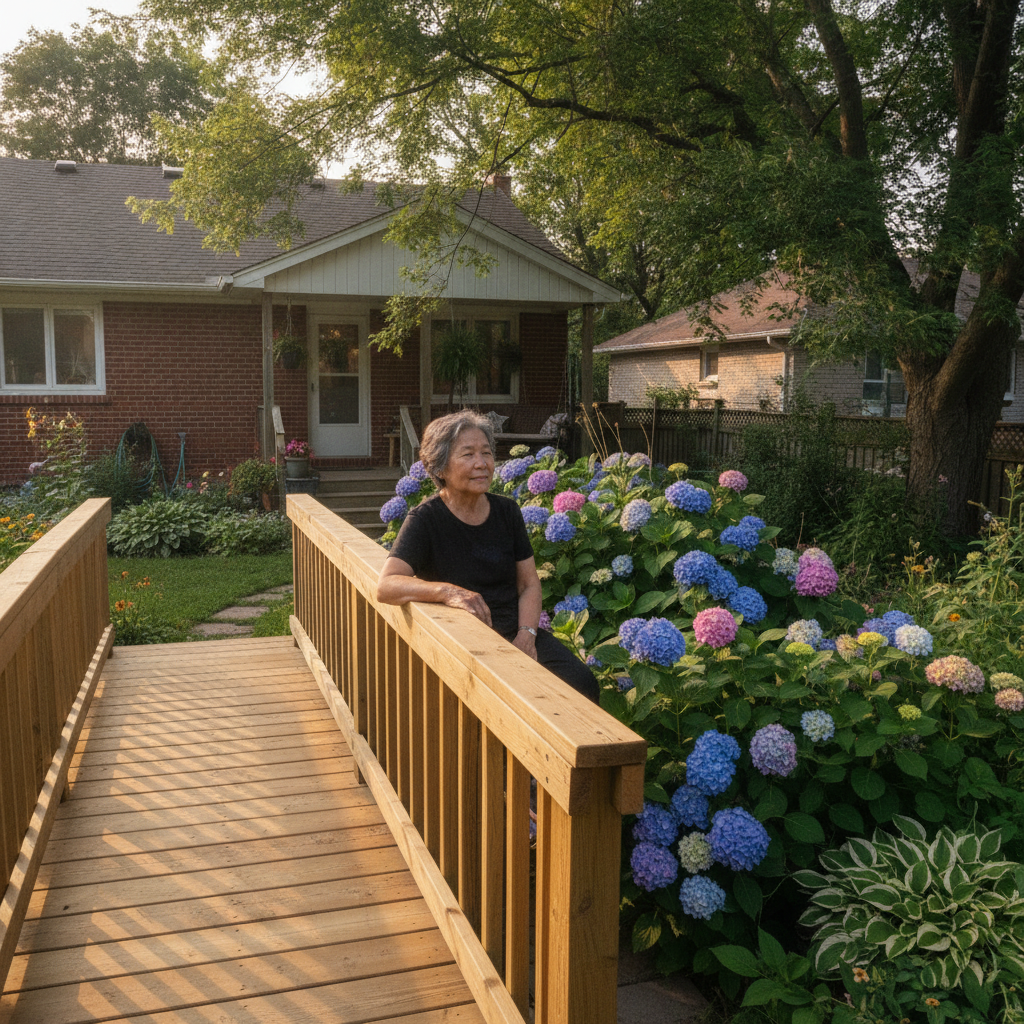
Financing Home Modifications for Chronic Illness
Many Ontario seniors with Lyme disease hesitate to invest in modifications because:
- They're unsure if symptoms will stabilize or worsen
- Modification costs ($20,000-$60,000+) strain retirement budgets
- Banks see chronic Lyme disease as risky, making loans difficult
- Home equity lines of credit demand monthly payments
- They want to avoid burdening adult children with loans
A reverse mortgage provides security: you access your home's equity without monthly payments, whether you use all available funds immediately or draw gradually as needs emerge.
Financing Options Compared
| Option | Monthly Payment Required | Typical Rate | Approval Based On |
|---|---|---|---|
| Reverse mortgage | No | ~6.5%-8.5% | Home equity, age 55+ |
| Home equity line of credit (HELOC) | Yes | Variable, often lower initially | Income and credit |
| Personal/renovation loan | Yes | 7%-12% | Income and credit |
| Cash from savings | N/A | N/A | Available liquid assets |
Using a Reverse Mortgage for Lyme-Specific Modifications
Immediate modifications ($10,000-$25,000):
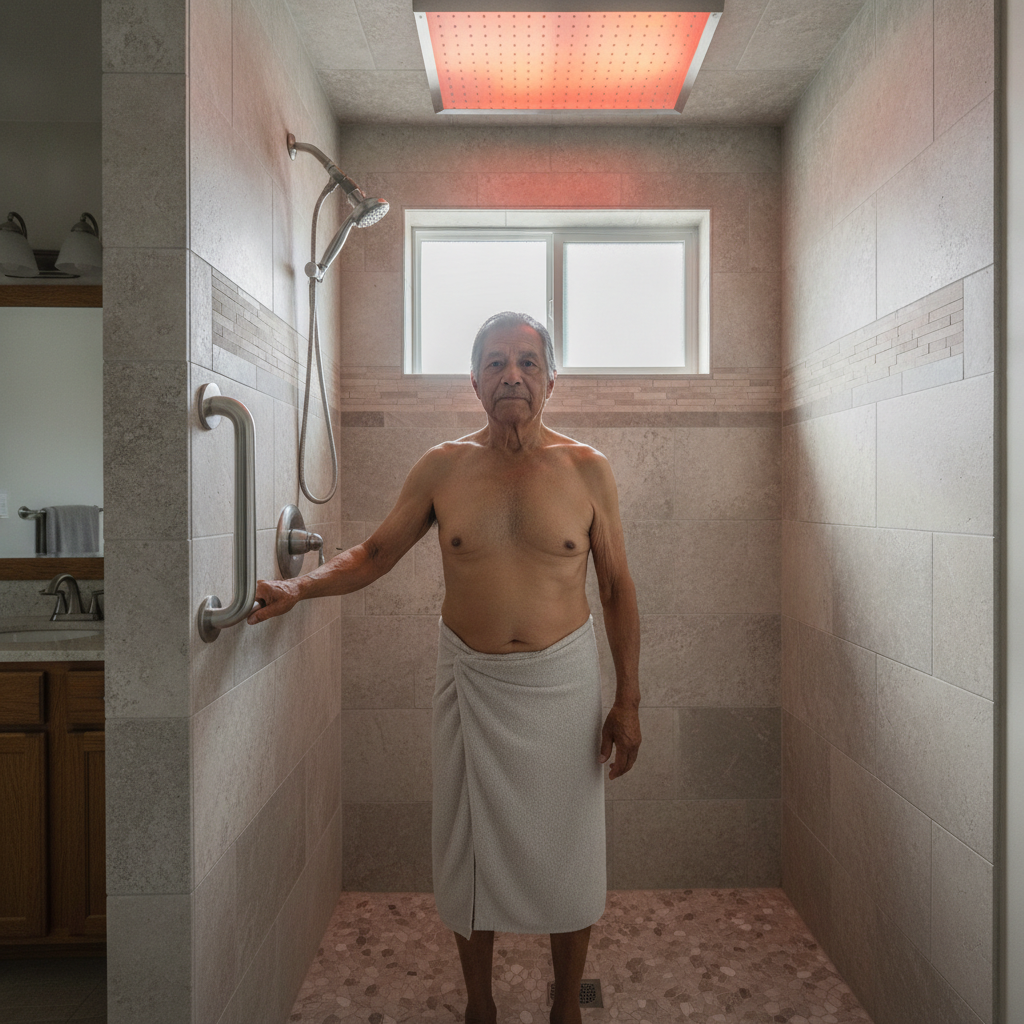
- Walk-in shower with grab bars and bench seating
- Bathroom renovations for limited bending and reaching
- Non-slip flooring throughout main living areas
- Stair lift or ramp system
- Lever-style door hardware (avoiding grip-intensive knobs)
- Strategic railings in hallways and bedrooms
Pain-management modifications ($5,000-$15,000):
- Heat therapy infrastructure (heated floors, infrared systems)
- Accessible bedroom redesign with minimal steps
- Smart home controls to reduce repetitive movements
- Hydrotherapy pool or hot tub access (if budget allows)
- Recessed lighting to reduce standing time at switches
Neurological support ($3,000-$10,000):
- Improved home lighting (balance and cognitive support)
- Safety railings in high-risk areas
- Emergency alert systems for balance-related falls
- Reduced clutter and clear pathways
Real-World Planning: Patricia's Story
Patricia, 63, contracted Lyme disease after a hiking trip near Algonquin Park. Three years of treatment provided partial improvement; she manages joint pain and occasional cognitive symptoms. Her two-story home became increasingly difficult to navigate.
She accessed $70,000 via reverse mortgage:
- $25,000 for main-floor bedroom/bathroom setup (avoiding stairs)
- $20,000 for stair lift and upper-floor modifications (for good days)
- $10,000 for accessibility features (grab bars, railings, non-slip flooring)
- $15,000 reserved for future modifications if symptoms change
This flexibility meant Patricia could age at home without betting her financial future on unpredictable symptom progression. Her adult daughter appreciated that her mother wasn't taking out traditional loans that required monthly payments.
Patricia's $70,000 Allocation
| Modification Category | Amount | Purpose |
|---|---|---|
| Main-floor bedroom/bathroom | $25,000 | Avoid stairs entirely on difficult days |
| Stair lift and upper-floor updates | $20,000 | Maintain access to full home on good days |
| Grab bars, railings, non-slip flooring | $10,000 | Fall prevention and balance support |
| Reserved for future needs | $15,000 | Flexibility as symptoms evolve |

Working with Your Healthcare Team
Before investing in modifications, collaborate with:
- Infectious disease specialists: They understand your Lyme disease trajectory and likely long-term function
- Occupational therapists: They assess specific functional limitations and recommend targeted modifications
- Pain management specialists: They advise on physical environment factors affecting pain levels
- Your primary care doctor: They can confirm you're stable enough to invest in aging-in-place modifications
Getting professional input ensures modifications actually address your real needs, avoiding expensive changes that don't help.
Typical Modification Costs by Category
| Category | Cost Range | Example Items |
|---|---|---|
| Immediate mobility modifications | $10,000-$25,000 | Walk-in shower, stair lift, ramps |
| Pain-management modifications | $5,000-$15,000 | Heated floors, smart home controls |
| Neurological support features | $3,000-$10,000 | Improved lighting, emergency alert systems |
| Total typical project | $20,000-$60,000+ | Combination of the above |
Ontario-Specific Considerations
Lyme disease recognition: Ontario Health and Canada's public health system are increasingly recognizing chronic Lyme disease, though coverage remains limited. Some services still aren't covered, requiring private payment.
Accessibility tax credits: Ontario's Accessibility for Ontarians with Disabilities (AoO) tax credit may apply if your modifications qualify, offsetting some costs.
Climate considerations: Ontario winters can exacerbate Lyme disease symptoms (cold increases joint pain for many patients). Home modifications should include heating systems and climate control improvements.
Rural property challenges: If you live in Lyme-endemic areas (rural Ontario), you may have accumulated tick exposure. Rural homes often have greater modification costs due to larger spaces and older infrastructure.
Making Modifications Sustainable
Design your modifications to work long-term:
- Choose quality: Use durable materials and professional installation. Redoing modifications repeatedly is expensive.
- Plan for mobility changes: If you currently use a cane, design for potential future wheelchair use.
- Include universal design: Build features that work for visitors and family members, not just your specific symptoms.
- Invest in smart home technology: Voice controls, automated lighting, and remote systems reduce pain-triggering movements.
- Ensure adequate lighting: Good lighting supports both balance (neurological symptoms) and mood (chronic illness depression).
Important Considerations
Symptom unpredictability: Your Lyme disease might stabilize for years, then worsen with stress or additional illness. A reverse mortgage's flexibility accommodates this uncertainty.
Family communication: Discuss your reverse mortgage decision with adult children. Some worry that modifications signal decline; others appreciate the proactive planning.
Insurance costs: Home modifications and smart home systems shouldn't change your home insurance significantly, but confirm with your provider.
Inheritance planning: Your home's equity funds both your aging in place AND your children's eventual inheritance. Discuss this trade-off openly.
Moving Forward
A reverse mortgage makes sense for Lyme disease management when:
- You're 55+ with substantial home equity
- Your Lyme disease symptoms require ongoing management
- You want to age in place rather than transition to care facilities
- You need flexibility in accessing funds as symptoms evolve
- You want to avoid monthly payment obligations that strain fixed income
This approach supports your health, independence, and quality of life without forcing major life transitions.
Key Takeaways
- Home modifications for chronic Lyme disease typically range from $20,000-$60,000+, and a reverse mortgage can fund this without adding a monthly payment to a fixed retirement income.
- Ontario homeowners 55+ can typically borrow 15-59% of their appraised home value through a reverse mortgage, drawn as a lump sum or gradually as symptoms and needs change.
- Rates on reverse mortgages generally run in the 6.5%-8.5% range, and interest accrues only on the amount actually drawn.
- Reverse mortgage proceeds are tax-free loan advances, so funding modifications does not create a tax bill or affect OAS or GIS eligibility calculations.
- The loan is only repaid when the home is sold, the last borrower passes away, or the home is permanently vacated, which suits the unpredictable, fluctuating nature of PTLDS symptoms.
- Ontario's Accessibility for Ontarians with Disabilities tax credit may offset some modification costs, complementing reverse mortgage funds rather than replacing them.
Frequently Asked Questions
Can I qualify for a reverse mortgage if I have a chronic illness like Lyme disease?
Yes. Reverse mortgage eligibility in Canada is based on your age (55+ for all title holders) and your home's equity, not your health status or income. A chronic illness diagnosis does not affect approval, unlike some traditional loans where lenders may view it as a risk factor.
How much can I borrow for home modifications with a reverse mortgage?
Most Ontario homeowners can access roughly 15-59% of their appraised home value, with the exact percentage increasing with age. Many seniors draw funds gradually rather than all at once, which is well suited to modification projects that unfold in phases as symptoms change.
Will a reverse mortgage affect my OAS, GIS, or other government benefits?
No. Reverse mortgage proceeds are tax-free loan advances, not income, so they do not count against income-tested benefits like Old Age Security or the Guaranteed Income Supplement.
Do I have to modify my whole home at once?
No. Many homeowners draw reverse mortgage funds in stages, funding immediate priorities like a main-floor bathroom first, then adding features like stair lifts or smart home controls as needs become clearer over time.
What happens to the reverse mortgage if my symptoms improve and I no longer need all the modifications?
The reverse mortgage balance and repayment terms don't change based on symptom improvement. You keep any unused funds or simply don't draw them, and the loan is repaid as usual when the home is eventually sold or the estate is settled.
Are reverse mortgage funds enough to cover Lyme-related renovations alongside other retirement costs?
For most homeowners with meaningful equity, yes. Because there are no monthly payments, reverse mortgage funds can be dedicated entirely to modification costs without competing with day-to-day retirement income needs.
Next Steps
- Consult your infectious disease doctor about your long-term prognosis and modification recommendations
- Work with an occupational therapist specializing in chronic illness to assess your specific needs
- Get a reverse mortgage assessment to understand your borrowing capacity
- Research Ontario accessibility grants and tax credits to complement your reverse mortgage funds
- Plan modifications in phases based on priority and current symptom severity
Living well with chronic Lyme disease doesn't mean accepting limitations. With the right home modifications funded by a reverse mortgage, you can maintain independence, manage symptoms effectively, and remain in the home you love.
Ready to Learn More?
Find out exactly how much you could unlock from your home — free and no obligation.
Related Articles
Reverse Mortgage for Aging in Place With Fibromyalgia: Home Modifications for Invisible Illness
Fund home modifications for aging with fibromyalgia. Reverse mortgage enables accessible design for pain management, energy conservation, and quality of life.
Read →Reverse Mortgage for Accessible Community Kitchen: Culinary Training and Aging in Place
Convert your home kitchen into an accessible commercial culinary training space. Reverse mortgage funds renovation while creating community impact.
Read →Reverse Mortgage to Launch Home-Based Tax Prep and Retirement Planning Business
Fund your home-based tax and retirement planning practice with a reverse mortgage. Serve aging Canadians while accessing home equity in Ontario.
Read →