
Reverse Mortgage to Document and Preserve Your Family's Cultural Legacy
Your family's stories, language, crafts, and traditions are disappearing. A reverse mortgage funds professional documentation that preserves your cultural legacy for generations.
Your grandchildren are growing up in a world far removed from your cultural roots. Language is shifting. Traditions are fading. The recipes, stories, and skills that define your family are passing with each generation. A reverse mortgage can fund professional documentation—videography, oral history, cookbook production—that captures your family's cultural legacy while you're still here to share it.
The Silent Crisis: Cultural Loss in Immigrant and Diaspora Families
Over 40% of Ontario residents were born outside Canada. Many families—Italian, Chinese, Portuguese, South Asian, Indigenous, and dozens of others—face a common challenge: the next generation is growing up without fluent connection to the heritage language, traditions, and stories.
This isn't a failure—it's the natural dynamic of immigration and assimilation. But it creates loss:
- Language loss: Children who speak English natively but understand (not speak) Mandarin, Italian, or Gujarati
- Story loss: Family history known only in the minds of aging grandparents
- Skill loss: Traditional cooking, crafts, music, or agricultural practices that won't be passed on
- Identity confusion: Grandchildren who want to connect to heritage but lack the tools
Professional legacy documentation bridges this gap. By investing in capturing your family's cultural assets now, you create permanent resources your grandchildren—and their children—can access later.
What Cultural Legacy Documentation Includes
A comprehensive cultural legacy project typically includes:
1. Oral History Interviews ($3,000–$8,000)
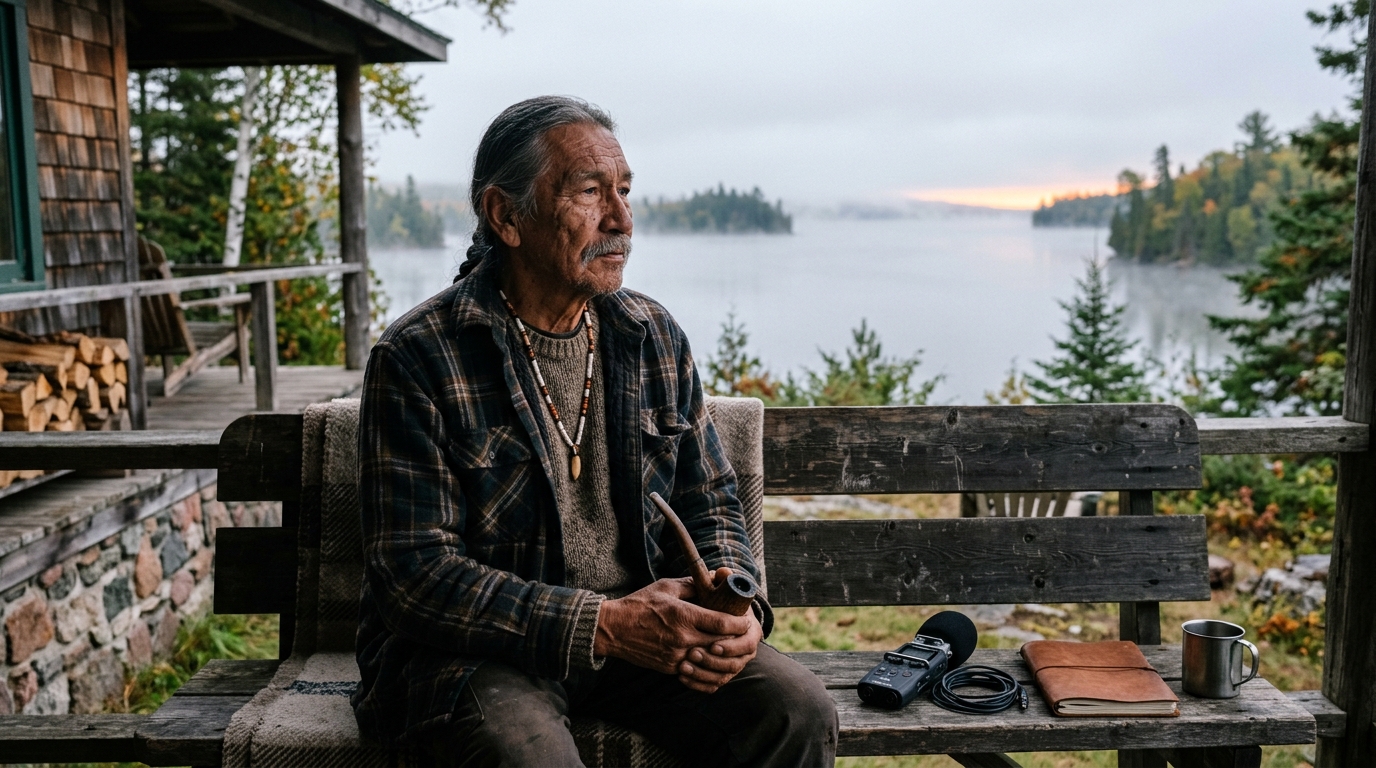
Professional videographer and editor conduct 2–4 hour interviews capturing:
- Personal immigration story
- Family origins and ancestry
- Key relationships and family structure
- Cultural values and traditions
- Recipes and food practices
- Life lessons and wisdom
Produced as: DVD-quality video, transcripts, family memory book
2. Language & Storytelling Documentation ($2,000–$5,000)
- Record grandmother telling stories in native language with English subtitles
- Capture traditional songs, prayers, or poetry
- Create basic language learning materials for grandchildren
- Develop family phrases and blessings in original language
Produced as: Video series, audio files, written translations
3. Food & Recipe Legacy ($1,500–$3,500)
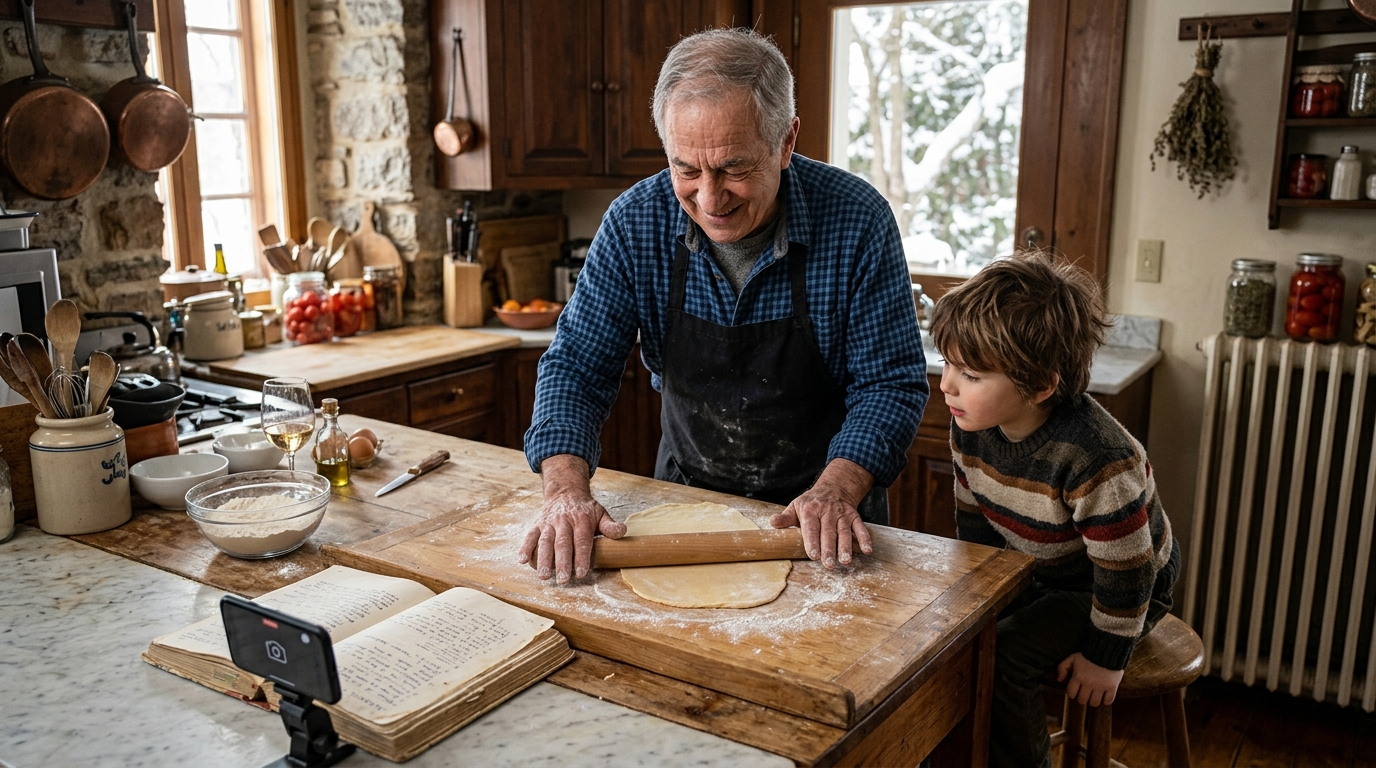
- Professional videographer documents mother/grandmother making 3–5 signature dishes
- Captures techniques, ingredients, and cultural context
- Includes written recipes with cultural history
- Produces cookbook or video series
Produced as: Recipe video series, printed cookbook, digital archive
4. Craft & Skill Documentation ($2,500–$6,000)
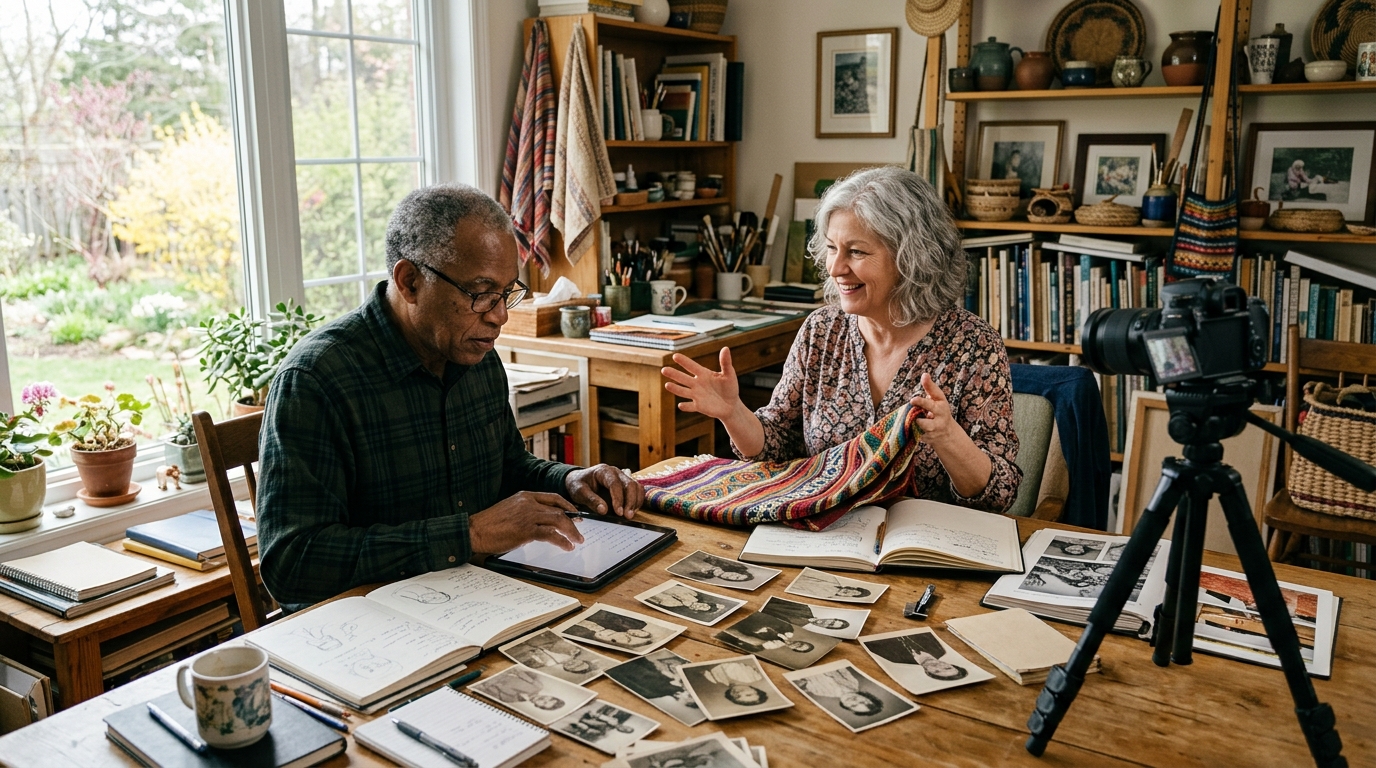
- Videographer records family member practicing traditional craft (weaving, embroidery, woodworking, etc.)
- Captures tools, techniques, and historical context
- Documents step-by-step process for learning
- Interviews about craft's meaning and cultural significance
Produced as: Video tutorial series, written instruction manual, photo documentation
5. Photo Archiving & Digitization ($1,000–$3,000)
- Professional scan and digitize decades of family photographs
- Organize by era and family branch
- Create searchable digital archive
- Produce printed coffee-table book
6. Family Tree & Genealogy Documentation ($1,500–$4,000)
- Professional genealogist researches family origins
- Creates multi-generational family tree with photos
- Produces written family history document
- Organizes genealogical records for children to access
Total Comprehensive Legacy Project: $12,000–$30,000
Most families choose 2–3 elements rather than everything: perhaps oral history + food legacy + photo archiving.
Ontario Case Study: The Italian Cooking & Language Legacy
Carla, 78, is a second-generation Italian-Canadian. Her mother immigrated from Naples in 1952. Carla grew up cooking alongside her mother, speaking Italian at home, and absorbing family traditions.
Carla's three adult children speak English natively. Her seven grandchildren speak only English. Two great-grandchildren are on the way.
Carla's concern: "My mother's cooking will die with me. My grandchildren don't speak Italian. The stories about our family's survival, our community in Naples, our traditions—they'll be lost when I'm gone."
At age 76, Carla obtained a reverse mortgage for $45,000. She allocated $22,000 for a cultural legacy project:
- Oral history interviews ($5,500): Three 2-hour video interviews capturing her personal story, immigration narrative, and family values
- Food legacy documentation ($8,000): Professional videographer documented Carla making 8 signature family dishes (pasta, bread, sauces, desserts). Included technique, ingredient sourcing, and cultural meaning
- Language archiving ($4,500): Carla recorded herself speaking Italian, telling family stories in Italian with English subtitles, and teaching basic Italian phrases and prayers for grandchildren
- Photo archiving & cookbook ($4,000): Family photos digitized and organized; recipes printed in a 50-page family cookbook with family history and cultural context
Result: Carla's grandchildren and great-grandchildren now have:
- Videos of Nonna teaching them to cook her pasta, make her bread
- Recorded Italian language and stories they can access anytime
- Written recipes with cultural history
- Oral family history available whenever they want to learn
Carla spent $22,000 (plus reverse mortgage costs) but created permanent resources her descendants will access for generations.
Reverse Mortgage as the Funding Mechanism
Why a reverse mortgage for cultural legacy documentation? Because:
- The timeline is urgent: Your knowledge, language fluency, and skills are most vivid now
- Professional services cost more than you might expect: Quality videography, editing, and archiving aren't cheap
- Monthly income won't stretch: A $500–$800/month discretionary budget can't fund a $20,000 project
- Home equity is ideal collateral: You own your home; reverse mortgage taps that equity without monthly burden
- Interest cost is manageable: Spread over 15+ years (typical remaining life), the interest becomes negligible
A reverse mortgage let's you say "yes" to this legacy project without sacrifice.
Finding Quality Legacy Documentation Services in Ontario
Professional cultural legacy videographers, genealogists, and archivists are available through:
- StoryCorps Ontario: Not-for-profit oral history program; sliding-scale fees
- Local heritage organizations: South Asian Heritage Month, Italian Heritage organizations, etc. often coordinate videographers
- University-based programs: Ryerson, University of Toronto sometimes offer student videographer services (cheaper; lower production quality)
- Professional genealogists: Ontario Genealogical Society maintains member list; certified genealogists charge $40–$75/hour
- Videographers specializing in legacy work: Search "legacy videography Toronto" or "oral history videographer Ontario"
Budget: $3,000–$8,000 for a quality professional project (vs. $500–$1,500 for DIY with a local videographer)
When to Start: The Timing Window
The best time to document cultural legacy:
- Between ages 70–80: You're healthy enough to participate in interviews, have sufficient clarity and memory, and still have time to refine the project based on feedback
- Before cognitive decline: Interviews are more vivid and detailed when memory is sharp
- While skills are active: Recording someone actively cooking, practicing craft, or speaking language is much more powerful than describing it retrospectively
- While you have energy: 2–4 hour videography sessions require stamina
Many cultural legacy specialists recommend starting the project by age 75. If you're 80+, the project is still valuable, but shorter interviews and more structured format work better.
Key Takeaways
- Cultural legacy is disappearing in immigrant and diaspora families as languages shift and traditions fade.
- Professional documentation (video, audio, written) captures family stories, language, food traditions, and skills permanently.
- Comprehensive projects cost $12,000–$30,000, exceeding most retirees' discretionary budget.
- A reverse mortgage funds the full project without monthly payment burden.
- Services include: oral history videography, language documentation, food legacy, craft recording, photo archiving, genealogy research.
- The timing window is narrow: Ages 70–80 provide optimal health, clarity, and engagement for quality documentation.
- Grandchildren access recorded legacy whenever they want to learn language, cook family recipes, or connect to heritage.
Frequently Asked Questions
What if my family doesn't care about cultural heritage documentation? Should I still do it?
You might be surprised. Many families dismiss heritage interest until later, when circumstances (college papers on family history, identity exploration, children's questions) trigger curiosity. A documented legacy becomes a resource available when interest emerges, rather than lost knowledge.
Can I create DIY documentation with my smartphone or video camera?
Absolutely. Quality doesn't require professional equipment. Many families create beautiful oral history videos themselves. Professional videography adds polish, editing, and archival-quality output, but DIY projects are often deeply meaningful. A reverse mortgage could fund professional editing/archiving of your DIY videos ($1,000–$3,000) rather than full professional production ($10,000+).
What if my family members are scattered across Canada or internationally? Can they participate?
Yes. Modern oral history uses video calls (Zoom, FaceTime) for interviews, making geography irrelevant. You could coordinate interviews with distant relatives, giving them the opportunity to contribute their perspectives on family stories. The reverse mortgage funds the videographer/editor who stitches it together.
Will documentation in my native language limit who can access it?
Not with subtitles. Professional videography includes English subtitles on recorded native-language content, making it accessible to all family members. Transcripts are also available in both languages.
Is there a tax deduction for spending a reverse mortgage on cultural legacy documentation?
No. Cultural legacy spending is personal/lifestyle, not tax-deductible. However, if you donate the documentation to a cultural institution or archive, there may be donation tax implications—consult a tax advisor.
What happens to the documentation after I pass? Is it stored somewhere safe?
Yes. Professional legacy projects produce:
- DVD copies for each family member
- Digital files stored in cloud archive (Google Drive, Dropbox, etc.)
- Sometimes, copies archived with cultural institutions
- Physical photo books and written materials
Discuss storage and access with the videographer/archivist before starting. Make sure family knows where to find everything.
Ready to Learn More?
Find out exactly how much you could unlock from your home — free and no obligation.
Related Articles
Reverse Mortgage to Hire a Professional Palliative Care Transition Coordinator
Before hospice, a care transition coordinator helps plan the shift from treatment to comfort care. A reverse mortgage funds this crucial professional guide.
Read →Reverse Mortgage for Funding Multiple Grandchildren's RESP Gaps
When RESP grants max out but multiple grandchildren still need post-secondary funding, a reverse mortgage bridges the education gap for your whole legacy.
Read →Reverse Mortgage to Fund Family Mediation When Siblings Disagree on Parent Care
When siblings fundamentally disagree on aging parent's living situation and care approach, professional mediation prevents family fracture. A reverse mortgage funds neutral expertise.
Read →