
When Everything Happens at Once: Reverse Mortgage for Managing Concurrent Family Crises
When adult children face job loss, aging parents need care, and your spouse has health challenges simultaneously, a reverse mortgage can be your financial stabilizer. Learn how to manage multiple family emergencies without depleting savings.
Life rarely follows a neat timeline. For Ontario seniors managing complex family dynamics, the worst-case scenario isn't just one crisis—it's three happening simultaneously.
Your 57-year-old daughter loses her job in a corporate downsizing. Your 82-year-old mother's arthritis makes independent living impossible, and she's moving in. Your spouse receives a diagnosis that will require months of specialized care.
In moments like these, many seniors face an impossible choice: raid retirement savings, delay their own healthcare, or watch their children and parents struggle alone.
A reverse mortgage can be the financial tool that lets you help everyone without sacrificing your retirement.
Understanding the "Crisis Cluster" Scenario
Multiple family emergencies rarely happen in isolation. Financial advisors call this the "cascade effect"—one crisis triggers another.
When your adult child loses employment, they may:
- Move back home (housing + food + utilities costs)
- Delay job hunting while retraining in a new field
- Face childcare gaps while interviewing
- Need emergency debt coverage (car repairs, insurance lapses)
Meanwhile, your aging parent's needs accelerate:
- Home modifications for mobility (bathroom grab bars, stair lifts, accessibility ramps)
- In-home care coordination (groceries, appointments, medication management)
- Ongoing medication costs
- Potential temporary care (if their recovery from injury extends)
And if your spouse faces health challenges:
- Copays for specialists and treatments
- Home care support while you manage elder care
- Lost income if they reduce work hours
Traditional finances don't handle these overlaps well. A retirement account withdrawal triggers taxes. A HELOC requires credit qualification. Government benefits have restrictions on liquid assets.
A reverse mortgage provides immediate, tax-free access to home equity without the disqualification penalties of other options.
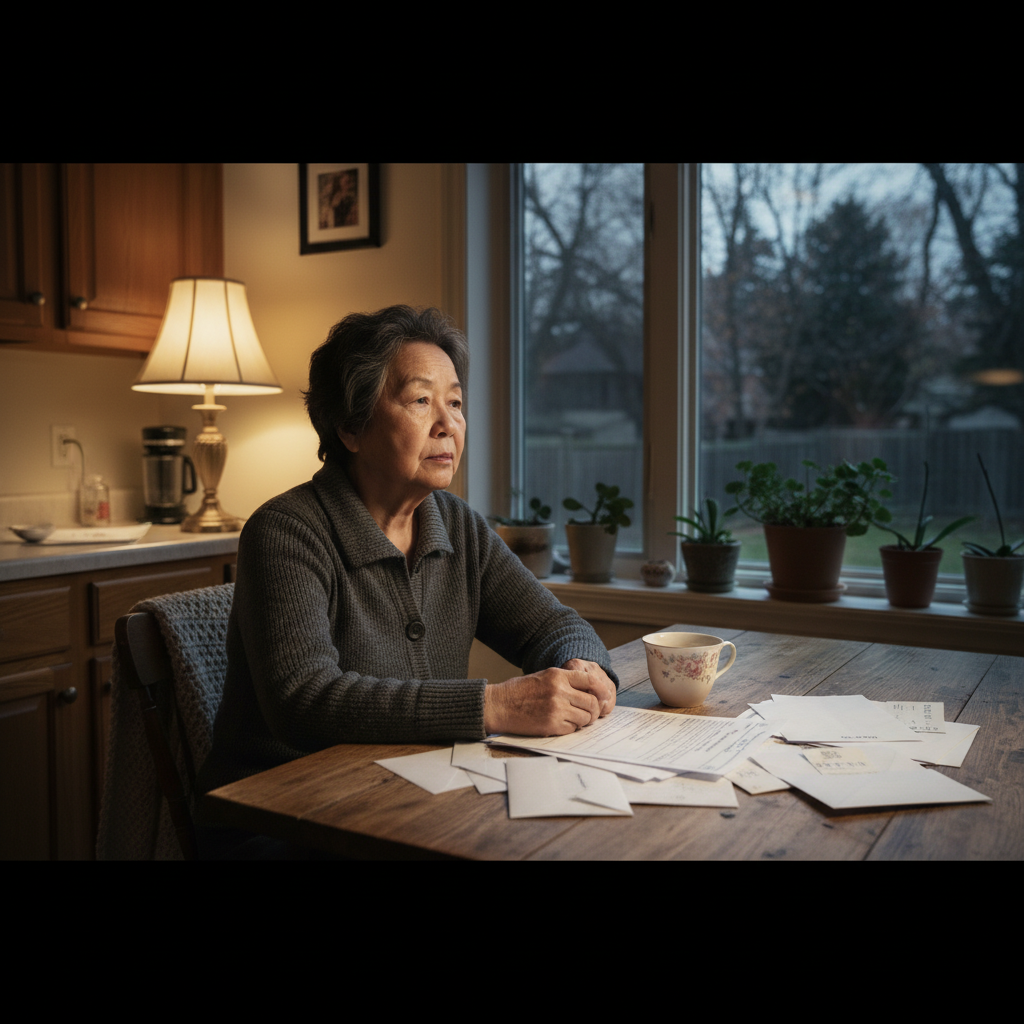
Mapping Your Crisis Budget: What Each Family Member Needs
Before accessing a reverse mortgage, quantify the real cost of supporting three family members simultaneously.
Adult Child Crisis Budget (Job Loss + Retraining)
- Temporary housing: $1,000–$2,000/month (if they return home, at least food/utilities increase)
- Retraining costs: $3,000–$8,000 for a certificate or bootcamp
- Childcare gaps during job search: $1,500–$3,000/month
- Emergency debt: $2,000–$5,000 (credit cards, missed payments)
- Typical duration: 4–8 months
Aging Parent Care Budget
- Home modifications: $5,000–$15,000 (one-time)
- In-home care coordinator: $500–$1,200/month
- Medication and copays: $300–$600/month
- Temporary care aide (during recovery): $2,000–$4,000/month
- Typical duration: ongoing (6+ months minimum)
Spouse Health Crisis Budget
- Copays and deductibles: $1,000–$5,000
- Home care support: $500–$1,500/month
- Lost household income: $1,000–$3,000/month
- Typical duration: 3–12 months (acute), ongoing (chronic)
Total potential cost: $15,000–$40,000 over 6–12 months
Many Ontario seniors find that a modest reverse mortgage draw—$25,000 to $40,000—covers all three crises without touching retirement savings or triggering tax consequences.
| Crisis Type | Typical Cost Range | Typical Duration |
|---|---|---|
| Adult child job loss + retraining | $7,500–$18,000 | 4–8 months |
| Aging parent care | $7,800–$20,600 | 6+ months (ongoing) |
| Spouse health crisis | $4,500–$13,500 | 3–12 months |
| Combined total | $15,000–$40,000 | 6–12 months |
How a Reverse Mortgage Protects Your Retirement During Crisis
1. Liquidity Without Forced Withdrawals
A traditional mortgage requires monthly payments. A HELOC has interest costs and qualification hurdles. A reverse mortgage provides access to your equity without triggering:
- RRSP withdrawal taxes (50% tax hit on $20,000 = $10,000 lost)
- OAS clawback (if you're on benefits)
- Disability tax credit disqualification
The funds are tax-free, so a $30,000 draw costs you $30,000 in home equity, not $45,000 after taxes.
2. No Monthly Payments While Crises Unfold
Your daughter is job-searching. Your mother's recovery is slow. Your spouse may not return to full income immediately.
A reverse mortgage lets you pause supporting your recovery until crises resolve. You only pay back when conditions stabilize—typically when your daughter finds new work, your mother's care needs plateau, and your spouse's health improves.
3. Flexible Access Protects Other Savings
Instead of liquidating a $100,000 TFSA or locking in RRSP withdrawal penalties, access your reverse mortgage line of credit as needed:
- Draw $5,000 this month for your mother's ramp installation
- Draw $3,000 next month for your daughter's course fees
- Draw $2,000 in month 6 for your spouse's copay surge
- Stop drawing when crises ease
This flexibility prevents over-borrowing and keeps other savings intact for genuine long-term retirement needs.

Real Ontario Scenario: The "Sandwich Generation" Perfect Storm
Maria, 62, from Toronto, faced this exact situation in 2024:
- Her 35-year-old son lost his tech job during a layoff. He has two young children and limited savings.
- Her 84-year-old mother suffered a fall requiring 8 weeks of in-home care before moving to assisted living.
- Her husband was diagnosed with early-stage cancer requiring monthly specialist visits and eventual radiation therapy.
Maria's situation was dire:
- Her home was worth $800,000 with a $200,000 mortgage remaining
- She had $150,000 in retirement savings (RRSP + TFSA combined)
- She was still working, but her income was $65,000/year—not enough to cover all three crises
What she needed:
- Son: $4,000/month for 6 months (temporary housing assistance while retraining) = $24,000
- Mother: $3,000 for emergency care coordination + $12,000 for assisted living deposit = $15,000
- Husband: $2,000/month for 6 months (treatment copays, home support) = $12,000
- Total: $51,000
If Maria had withdrawn from her RRSP:
- $51,000 withdrawal = ~$25,500 in taxes
- Lost retirement savings permanently
- Reduced her portfolio growth for the next 15 years
Instead, Maria obtained a reverse mortgage for $50,000:
- No monthly payment obligation while supporting her family
- Tax-free access (not counted as income for OAS or tax purposes)
- Interest-only costs (~$4,000/year at 5% rate)
- When her son found new work, her mother settled into assisted living, and her husband's acute care phase ended, the reverse mortgage stabilized
| Funding Option | Amount Needed | Cost/Impact |
|---|---|---|
| RRSP withdrawal | $51,000 | ~$25,500 in taxes; permanent loss of retirement savings |
| HELOC | $51,000 | Requires credit qualification; monthly payments due immediately |
| Reverse mortgage | $50,000 | ~$4,000/year interest-only; tax-free; no monthly payments |
Maria's reverse mortgage costs her approximately $4,000/year in interest while her son rebuilds, her mother's care is managed, and her husband's health stabilizes. After 3–4 years, when her income increased and family crises eased, she could begin repaying without the permanent damage of an RRSP withdrawal.
Protecting Yourself: Boundaries and Accountability
Not every family member should benefit equally from your reverse mortgage. Multi-crisis support requires boundaries.
Establish Clear Expectations
- Time limits: "I'll support your job search for 6 months, then you need to work part-time while continuing to look."
- Contribution levels: "I'll help with your course fees, but you cover your own housing."
- Sunset dates: "Mom's in-home care is temporary while we arrange assisted living, not permanent."
Monitor the Drain
Track reverse mortgage spending by category:
- Adult child support: $X
- Parent care: $Y
- Spouse health: $Z
When one category is complete (daughter finds work, mother moves to facility, spouse recovers), stop drawing in that category. Prevent the reverse mortgage from becoming a permanent funding source for ongoing family subsidies.
Professional Support
Consider hiring a family financial mediator ($150–$300/session) to discuss expectations with family members. It costs less than permanent reverse mortgage interest and prevents resentment.

When a Reverse Mortgage Is the Right Tool
A reverse mortgage for multi-crisis support makes sense if:
✓ You have significant home equity ($300,000+)
✓ You're 55+ and eligible for reverse mortgage qualification
✓ Your crises are temporary (not permanent financial obligations)
✓ You have a plan to stabilize after 12–24 months
✓ You want to preserve other retirement savings
✓ Family members have exit plans (job search, care transition, health recovery)
It's not the right tool if:
✗ You're using it to permanently subsidize an adult child's lifestyle
✗ Your family members show no effort to resolve their own crises
✗ You have no plan to stop accessing the reverse mortgage
✗ Your home equity is already stretched thin
✗ You're in denial about the severity or longevity of the crises
Next Steps: Planning for Crisis Support
- Quantify each crisis's real cost — Create a 12-month budget for each family member.
- Define a "stabilization point" — When do you expect each crisis to resolve?
- Get a reverse mortgage quote — Understand how much you can access and at what cost.
- Set boundaries with family — Communicate expectations and time limits clearly.
- Create a repayment plan — When crises ease, how will you pay back what you borrowed?
When multiple family emergencies collide, a reverse mortgage can be the difference between watching your children and parents struggle alone and being able to genuinely help without sacrificing your retirement.
The key is treating it as crisis management, not a permanent solution.
Key Takeaways
- Combined support for three simultaneous family crises typically costs $15,000–$40,000 over 6–12 months.
- A reverse mortgage provides tax-free access to home equity, so a $30,000 draw costs $30,000 in equity—not the $45,000+ an RRSP withdrawal could cost after taxes.
- No monthly payments are required, letting you support family through job loss, elder care, or a health crisis without straining cash flow.
- Ontario homeowners generally need at least $300,000 in home equity and to be 55 or older (all title holders) to qualify.
- Setting time limits and category-by-category tracking helps ensure a reverse mortgage funds temporary crisis support, not permanent family subsidies.
- Interest on a reverse mortgage accrues over time (e.g., roughly $4,000/year on a $50,000 draw at a 5–8% rate), so it works best as a bridge, not a long-term funding source.
Frequently Asked Questions
Can I use a reverse mortgage to help more than one family member at the same time?
Yes. A reverse mortgage line of credit lets you draw funds as needed across multiple situations—for example, supporting an adult child's job search while also covering an aging parent's care costs. Because there are no monthly payment requirements, you can allocate funds to whichever crisis is most urgent without needing separate loans for each.
Will using a reverse mortgage for family crises affect my OAS or GIS?
No. Reverse mortgage proceeds are considered a loan advance, not income, so they are not counted for OAS clawback or GIS eligibility purposes. This differs from an RRSP withdrawal, which is taxable income and can reduce government benefits.
How much of my home equity can I access for a family emergency?
Ontario reverse mortgages typically allow homeowners to borrow between 15% and 59% of their home's appraised value, depending on age and property type. Older borrowers with more equity generally qualify for a higher percentage.
What happens if I don't pay back the reverse mortgage right away?
You are not required to make any payments while you live in your home. The loan, plus accrued interest, becomes due when you sell the home, move out permanently, or pass away. Interest continues to accrue on the outstanding balance in the meantime.
Is it risky to use home equity for a temporary family crisis instead of savings?
It depends on your overall financial picture, but for many seniors it's less risky than depleting retirement savings. A reverse mortgage avoids RRSP withdrawal taxes and preserves your TFSA and pension income for long-term needs, while negative-equity protection ensures you'll never owe more than your home's fair market value at the time of sale.
Should I set boundaries with family members before drawing on a reverse mortgage?
Yes. Financial advisors recommend establishing clear time limits, contribution levels, and sunset dates before extending support, so the reverse mortgage funds crisis management rather than becoming an open-ended source of family financial support.
About This Article: This guide is based on common scenarios Ontario seniors face. Always consult with a financial advisor and lawyer before making reverse mortgage decisions. Eligibility and terms vary by lender.
Ready to Learn More?
Find out exactly how much you could unlock from your home — free and no obligation.
Related Articles
Reverse Mortgage for Aging Parent Gifting Home Equity to Adult Child's Student Debt
Gift your home equity to pay off your adult child's student loans. Free them from debt while you're alive with a reverse mortgage in Ontario.
Read →Reverse Mortgage When Adult Child Faces Workplace Harassment: Funding Career Change and Recovery
Support your adult child leaving a hostile workplace with a reverse mortgage. Fund career transition, healing, and financial stability after workplace harassment recovery in Ontario.
Read →Reverse Mortgage for Adaptive Sports, Equipment, and Rehabilitation Programs
Fund adaptive sports training, equipment, and rehabilitation for adult child with disability. Enable active participation and independence with a reverse mortgage in Ontario.
Read →