
Reverse Mortgage for Fall Prevention and Home Safety When Aging Parent Has Balance Disorders
Falls are the leading cause of injury-related death in seniors. Specialized home modifications for balance disorders prevent catastrophic injuries and hospitalizations.
What if your aging parent's balance disorder makes every step a potential catastrophe—and their home isn't equipped to prevent it? Falls kill more seniors in Ontario than motor vehicle accidents, and a single fall can end independent living forever. Specialized fall-prevention modifications funded by a reverse mortgage can save your parent's life.
The Fall Prevention Crisis in Ontario
One in four Canadian seniors (65+) experiences a fall annually, and falls are the leading cause of both injury-related deaths and hospitalizations for seniors. In Ontario alone, seniors experience over 600,000 falls per year, costing the healthcare system more than $2 billion in direct treatment costs.
Definition: A balance disorder is a condition affecting the vestibular system (inner ear), proprioception (spatial awareness), or muscular control, causing dizziness, vertigo, or instability when walking. Common causes include Parkinson's disease, BPPV, diabetic neuropathy, medication side effects, and age-related vestibular decline.
The cruel irony: most fall-related injuries could be prevented with targeted home modifications costing $10,000–$25,000—far less than a single hospitalization.
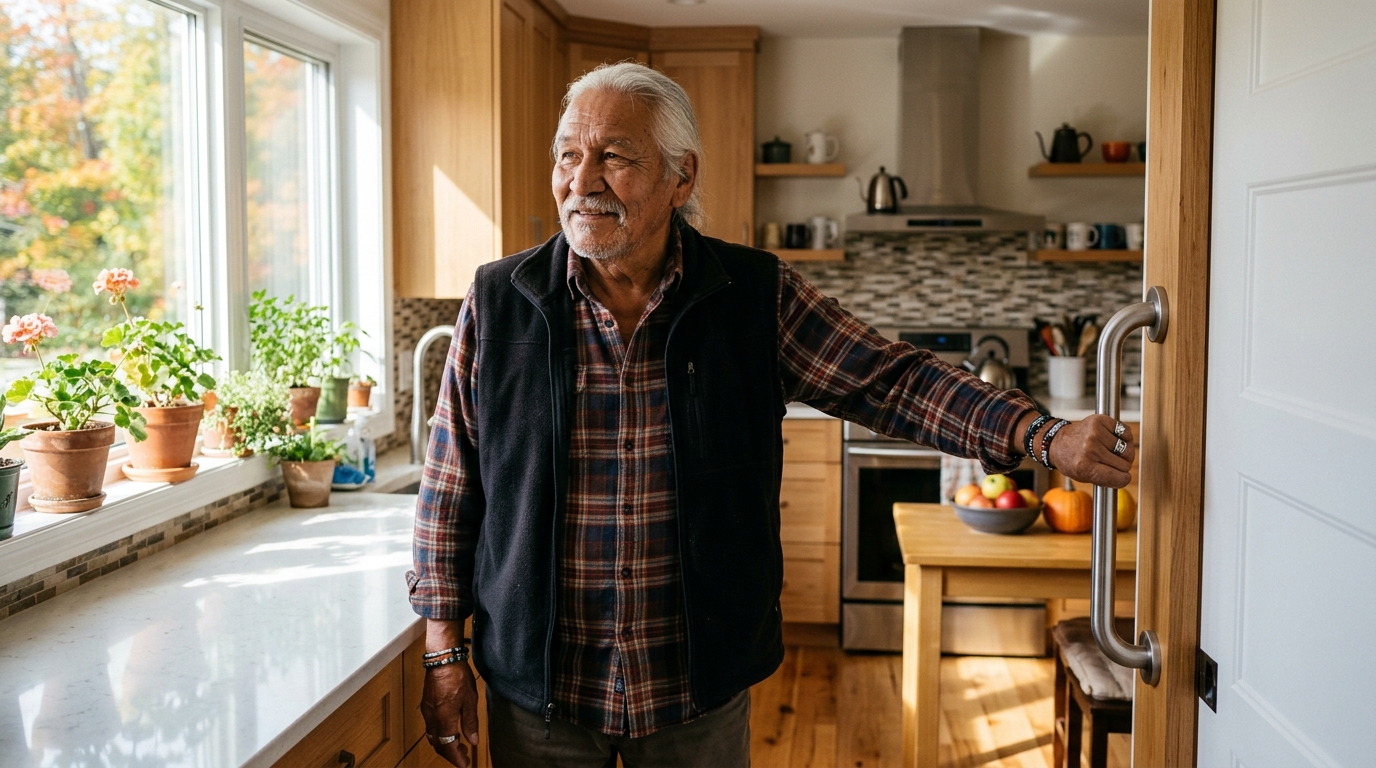
Why Standard Home Safety Isn't Enough for Balance Disorders
Grab bars and non-slip flooring help, but aging parents with documented balance disorders need specialized modifications:
| Modification Type | Standard Cost | Specialized Fall-Prevention Cost | Difference | Benefit for Balance Disorders |
|---|---|---|---|---|
| Bathroom grab bars | $400–$800 | $1,200–$2,000 | +$400–$1,200 | Strategic placement for standing recovery, multiple grips |
| Stairway railings | $1,500–$2,500 | $3,500–$5,500 | +$2,000–$3,000 | Continuous, angled rails; landing platforms at mid-stair |
| Flooring | $2,000–$4,000 | $4,000–$8,000 | +$2,000–$4,000 | Anti-slip throughout; contrast edge detection; leveled transitions |
| Lighting | $800–$1,500 | $2,500–$4,000 | +$1,700–$2,500 | Motion-activated pathways; consistent brightness; glare reduction |
| Furniture repositioning & removal | $500–$1,200 | $1,500–$3,000 | +$1,000–$1,800 | Clear walking zones; stability stations; fall risk assessment |
| Total Comprehensive Upgrade | $5,200–$10,000 | $12,700–$22,500 | +$7,500–$12,500 | Integrated system for balance disorders |
According to CMHC research, aging-in-place modifications for seniors with balance disorders cost 2–2.5x more than standard accessibility upgrades because they require integrated design addressing multiple fall risk factors simultaneously.
Real Scenario: How Balance Disorder Falls Happen
Patricia, 79, has Parkinson's disease affecting her balance and gait. She lives alone in her 1970s bungalow in London, Ontario. The home has:
- Standard bathroom with no grab bars
- Narrow hallways with throw rugs
- Steep basement stairs she no longer uses
- Single overhead light in the kitchen (no task lighting)
- Heavy furniture she must push to maintain balance
The fall: Patricia reaches for a coffee cup, loses balance on the throw rug, and falls against the kitchen counter. Hip fracture. Surgery required. Three-week hospitalization. Rehabilitation center for 8 weeks. Permanent loss of independence. Cost: $45,000 in direct medical care; permanent dependence on family.
With a reverse mortgage-funded fall-prevention system: Patricia's home receives specialized modifications:
- Continuous bathroom grab bars with angled grips ($1,800)
- Remove throw rugs; install anti-slip flooring with edge contrast ($6,500)
- Add handrails in hallways; reposition furniture ($2,200)
- Install motion-activated lighting throughout ($3,200)
- Professional balance assessment and environmental design consultation ($1,500)
- Annual home safety audits ($300–$500/year)
Total: $15,000 over 10 years. Patricia maintains independence, avoids hospitalization, and remains in her home.
Comprehensive Fall-Prevention Modification Checklist
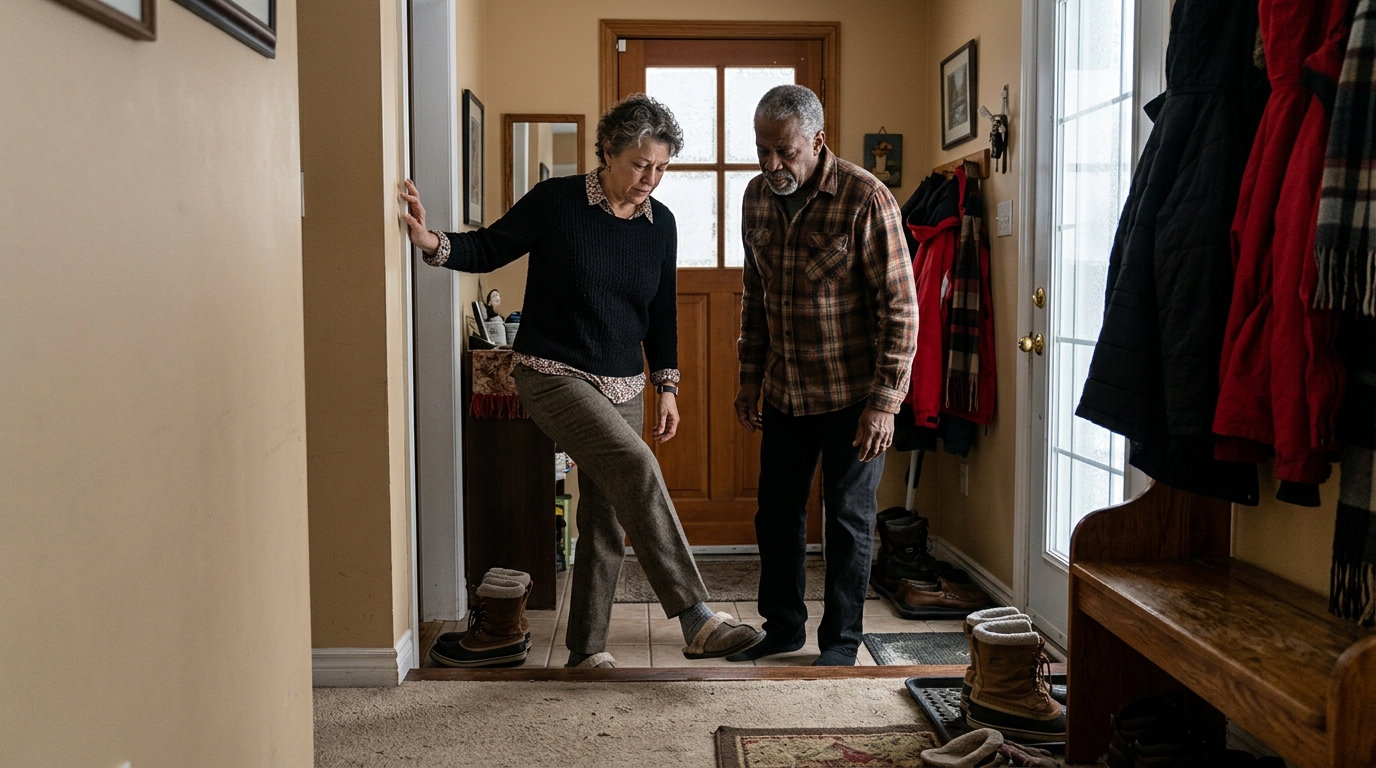
Entry & Exit Safety
- Ramp installation: 1:12 slope (1 inch rise per 12 inches horizontal); handrails on both sides; non-slip surface; edge safety borders
- Threshold modification: Eliminate or bevel to <0.25 inches
- Porch/step railings: Extend beyond top and bottom of stairs by 12 inches; 1.25–1.5 inch diameter grip
- Door hardware: Lever handles (easier than doorknobs for arthritic hands)
Bathroom Safety (Highest Fall Risk Zone)
- Grab bars: Minimum 3–4 bars; 1.25–1.5 inch diameter; 1.5 inches from wall; anchor to studs for 250+ lb weight rating
- Toilet seat height: Raised seat (17–19 inches) with armrests for standing assist
- Shower/tub modifications: Walk-in tub or curbless shower; anti-slip flooring; fold-down seat; handheld showerhead
- Mirror/lighting: Full-length mirror at seated level; task lighting at vanity; night light pathway to toilet
Flooring & Transitions
- Remove throw rugs and area rugs (leading cause of falls)
- Install continuous flooring: Eliminate transitions between rooms; if unavoidable, bevel edges or use transition strips
- Anti-slip flooring: Textured surfaces in bathrooms, kitchens, and hallways
- Color contrast: Use contrasting colors at stair edges, step downs, and furniture placement
Stairway Safety
- Install continuous handrails: Both sides if width >36 inches; extend 12 inches beyond top and bottom
- Stair treads: Anti-slip surface; consistent 10–11 inch depth; clearly marked edges with contrasting paint or tape
- Lighting: Every step lit; switch at top and bottom
- Consider stair lift: If balance disorder worsens, lift installation now ($3,000–$8,000) prevents future need for relocation
Lighting Design for Balance Disorders
Balance disorders often worsen with poor lighting or contrast confusion. Specialized lighting includes:
- Motion-activated pathways: Hallways to bathroom, bedroom to kitchen (prevents searching for light switches)
- Consistent brightness: Avoid sudden transitions from bright to dim areas
- Task lighting: Kitchen counter, bedside, reading areas (reduces reaching and instability)
- Glare reduction: Matte finishes; avoid reflective surfaces that confuse spatial perception
Reverse Mortgage Calculation: Fall-Prevention Investment
| Home Value | Recommended RM Advance (15%) | Fall-Prevention Budget | Annual Cost | 10-Year Coverage |
|---|---|---|---|---|
| $400,000 | $60,000 | $12,000–$18,000 | $1,200–$1,800 | Full + emergency |
| $500,000 | $75,000 | $15,000–$22,500 | $1,500–$2,250 | Full + annual audit |
| $600,000 | $90,000 | $18,000–$27,000 | $1,800–$2,700 | Full + therapy/devices |
| $750,000 | $112,500 | $22,500–$33,750 | $2,250–$3,375 | Full + caregiver support |
Coordinating With Healthcare Providers
Occupational Therapy Assessment: Many provincial health plans (OHIP) cover an occupational therapy home assessment if recommended by a physician. This assessment identifies specific fall risks and prioritizes modifications. Cost: $0 if OHIP-covered; $300–$600 if private.
Geriatric Care Manager Coordination: A geriatric care manager ($100–$200/hour) can oversee the modification project, ensure contractor quality, and validate that all changes address specific balance disorder risks.
Vestibular Rehabilitation Therapist: Specialized therapists design home environments to support vestibular recovery exercises. Virtual consultations: $150–$250; home assessment: $300–$600.
Key Takeaways
- Falls kill more Ontario seniors annually than motor vehicle accidents, costing the healthcare system $2 billion+ in direct treatment costs
- Balance disorder-specific home modifications cost $12,700–$22,500 but prevent falls costing $15,000–$45,000 per hospitalization
- A single reverse mortgage advance of $50,000–$100,000 covers comprehensive fall-prevention modifications plus 10+ years of maintenance and professional monitoring
- Motion-activated lighting, anti-slip flooring, and angled grab bars integrated into home design provide protection standard accessibility upgrades cannot offer
- OHIP-covered occupational therapy assessments identify specific fall risks; reverse mortgage funds implement recommendations
- Fall-prevention modifications are tax-deductible under medical expense credits if recommended by healthcare provider
Frequently Asked Questions
Will fall-prevention modifications reduce my aging parent's home value?
Not significantly, and often they increase value. Accessibility features (grab bars, ramps, accessible bathrooms) appeal to aging buyers. Most modifications are structural improvements that add value. Marketing to the 55+ demographic (fastest-growing homebuyer segment) often highlights accessibility as a premium feature. Consult a real estate agent familiar with senior housing markets before worrying about resale impact.
Can I modify my aging parent's rental home with a reverse mortgage if they don't own it?
No. Reverse mortgages require home ownership. If your aging parent rents, explore: (1) requesting modifications in writing from landlord (many are legally required to provide accessible housing); (2) installing temporary modifications (removable grab bars, portable ramps); (3) discussing purchase assistance with adult children or reverse mortgage for home purchase. Contact Rick Sekhon Reverse Mortgages for homeownership solutions for renters.
How do I know if my aging parent's balance disorder justifies specialized (expensive) modifications vs. standard safety upgrades?
A licensed occupational therapist or geriatric care manager can assess this. Medical diagnosis of balance disorder (Parkinson's, BPPV, neuropathy, etc.) combined with documented fall history strongly justifies specialized modifications. Insurance may cover assessment costs if recommended by physician. Bring documentation to consultation with a reverse mortgage specialist who can allocate budget accordingly.
Can I fund fall-prevention modifications AND other aging-in-place needs (mobility equipment, medical devices) from a single reverse mortgage?
Yes. Reverse mortgage advances can fund multiple priorities. Typical budgeting for comprehensive aging-in-place: 50% modifications + renovations, 30% medical equipment/devices, 20% emergency reserve. Work with Rick Sekhon Reverse Mortgages to prioritize your aging parent's top 3–5 needs and allocate advance strategically.
What if my aging parent refuses home modifications, saying they're "unnecessary" or "make the house look old"?
This is a critical conversation. Frame modifications as lifestyle enhancements, not disability markers. Emphasize that today's accessibility design is modern and attractive. Show examples of contemporary grab bar finishes and lighting design. If resistance continues, consult a geriatric care manager or therapist who can discuss fall fears and resistance. Sometimes small first steps (motion-activated lighting, one accessible bathroom) build acceptance for larger projects.
Are fall-prevention modifications covered by provincial health plans or disability supports?
Partially. OHIP covers occupational therapy assessment if physician-referred. Accessibility for Ontarians With Disabilities (Accessibility tax credit) may offset costs. CPP-D beneficiaries and ODSP recipients may have special supports. Explore all funding before using reverse mortgage as sole source. Rick Sekhon Reverse Mortgages can help coordinate multiple funding streams to minimize reverse mortgage draw.
Is your aging parent's balance disorder making their home a hazard? Specialized fall-prevention modifications funded by reverse mortgage can eliminate catastrophic injury risk and ensure decades of independent living at home. Contact Rick Sekhon Reverse Mortgages for a comprehensive fall-prevention funding plan tailored to your parent's specific balance disorder.
Ready to Learn More?
Find out exactly how much you could unlock from your home — free and no obligation.
Related Articles
Reverse Mortgage for DEI Consulting Practice: Launching Diversity, Equity, and Inclusion Consulting in Retirement
Start a diversity and inclusion consulting practice. Help corporations and nonprofits build equitable cultures; reverse mortgage funds training, business setup, and market entry.
Read →Reverse Mortgage for Archival and Digital Preservation Consulting: Preserving Institutional History and Heritage
Launch archival consulting practice preserving records for institutions. Help libraries, archives, nonprofits; reverse mortgage funds training, tools, and market entry.
Read →Reverse Mortgage for Aging Parent as Paid Research Subject Matter Expert: Knowledge Work in Retirement
Monetize expertise as aging parent becomes paid research SME for universities. Reverse mortgage bridges income while building knowledge-sharing business.
Read →