
Reverse Mortgage for Health Insurance When Adult Child Becomes Full-Time Caregiver
Adult children who leave jobs to provide aging parent care lose health benefits. Use reverse mortgages to fund standalone health insurance.
What happens to health insurance when your adult child quits their job to become your full-time caregiver? Thousands of Canadian adult children make this choice, moving home to provide care as parents age. But job loss means loss of employer health benefits—dental, prescription drugs, vision care, mental health services—creating a care gap exactly when caregiver stress makes health support most critical. A reverse mortgage can fund standalone health insurance that protects both you and your caregiving adult child.
The Health Insurance Crisis When Adult Children Become Caregivers
When your adult child leaves employment to provide care, they lose:
- Dental coverage (often 50–80% of costs; without it, costs are out-of-pocket)
- Prescription drug coverage (chronic conditions become expensive fast)
- Vision care and glasses (every few years, $300–$500 out-of-pocket)
- Mental health counseling (often 50–80% covered by group plans; completely out-of-pocket privately)
- Paramedical coverage (massage therapy, physiotherapy, chiropractic)
- Life and disability insurance (group coverage ends; individual policies are much more expensive)
The caregiver's health needs intensify exactly when coverage disappears. Caregiver stress increases mental health issues, back/neck pain from caregiving tasks, sleep disruption, and burnout. Losing coverage means avoiding care due to cost—skipping dental work, rationing prescriptions, avoiding therapy when stress is highest.
Cost of Standalone vs. Employer Health Coverage
| Insurance Type | Monthly Cost | Dental | Prescriptions | Vision | Mental Health |
|---|---|---|---|---|---|
| Employer group plan (typical) | $200–$350 total (employer usually covers 60–80%) | 50% coverage | 50–80% coverage | 100% basic exam | 50% coverage, $2,000/year |
| Individual/family standalone plan | $150–$250/month (SELF-PAID) | 20–30% coverage | 20–30% coverage | 100% exam only | Not usually included |
| Supplemental health plan (standalone) | $80–$150/month | 40–50% coverage | 40–50% coverage | 50% coverage | 50% coverage, $1,000/year |
| No coverage | $0/month | 100% out-of-pocket | 100% out-of-pocket | 100% out-of-pocket | 100% out-of-pocket |
An adult child who was paying $50–$100/month through employer deductions now faces $150–$250/month for standalone coverage—or $0/month if they skip coverage and pay full costs for each dental visit ($800–$2,000), prescription medication ($50–$300/month for chronic conditions), or therapy ($150–$200/hour).
Reverse Mortgage Strategy: Funding Caregiver Health Insurance
Instead of forcing your adult child to skip health maintenance or drain savings, a reverse mortgage can fund standalone health insurance that protects both of you:
- Reduces caregiver burnout by ensuring mental health support is accessible
- Prevents caregiver health crises (untreated dental infection, medication gaps, vision problems affecting safety)
- Maintains caregiver employment prospects (dental health, mental stability, physical wellness matter for future job applications)
- Protects your care quality (healthier caregiver = better caregiving capacity)
Reverse Mortgage as Caregiver Health Insurance Funding:
| Scenario | Without RM | With Reverse Mortgage |
|---|---|---|
| Adult child loses employer health insurance | $0 funding available | RM covers $1,800–$3,000/year insurance + care costs |
| Caregiver skips dental work due to cost | Untreated dental issues; later expensive emergency care | Regular preventive care; better oral health |
| Caregiver stress increases; needs mental health support | Can't afford therapy; stress worsens; risk of burnout | Has insurance coverage; can access counseling |
| Caregiver injury (back injury from caregiving) | Can't afford physiotherapy; prolonged recovery | Insurance covers portion; faster recovery |
| Annual medication costs for caregiver's condition | 100% out-of-pocket ($1,200–$2,400/year) | Insurance covers 40–50%; reduced out-of-pocket |
Real Example: How Reverse Mortgage Protected Caregiver and Care Quality
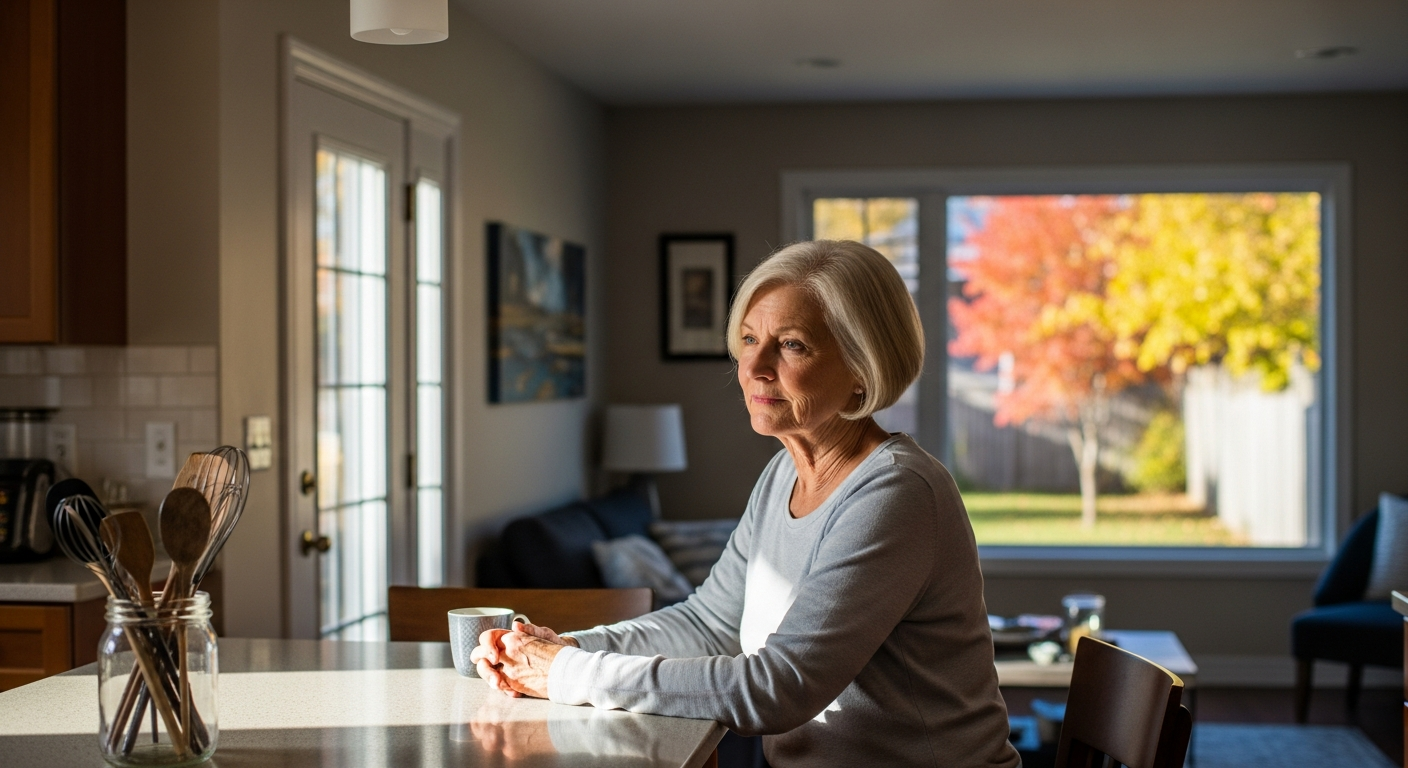
Meet Jennifer, 71, and her adult son Marcus, 38, who moved in three years ago when Jennifer needed full-time support after hip surgery and subsequent arthritis diagnosis. Marcus had stable employment with comprehensive health benefits until he realized his mom needed him full-time. He quit his job to provide care.
Within 6 months of job loss:
- Marcus skipped his annual dental checkup (saving $200 copay, but cavity went undetected)
- Marcus rationed his antidepressant medication (anxiety disorder; cutting doses to reduce prescription costs from $120 to $80/month)
- Jennifer's care suffered subtly: Marcus's mood was erratic; his energy for caregiving fluctuated
- A preventive dental issue became emergency root canal ($1,500) requiring time off caregiving
- Jennifer was stressed about Marcus's wellbeing; her own health anxiety increased
After Jennifer's reverse mortgage funded caregiver health insurance:
- Jennifer borrowed $25,000 from reverse mortgage, using $1,500/year for Marcus's health insurance
- Marcus got standalone plan covering 50% dental, 50% prescriptions, mental health support
- Marcus resumed full antidepressant dose; mood stabilized
- Marcus could afford regular dental care; the cavity was caught early and treated routinely
- Marcus accessed therapy to process the transition to caregiving role
- Jennifer's care quality improved; she was less stressed about Marcus's health
Reverse mortgage cost: $25,000 borrowed; will cost approximately $25,000–$32,000 to repay (depending on interest rates and time) Outcome: 7–10 years of sustained, quality caregiving from a healthy, stable son Inherited equity: Jennifer's home worth $580,000 with ~$25,000–$32,000 RM debt = ~$548,000–$555,000 net equity for heirs
The reverse mortgage funded caregiver health insurance that improved both quality of care AND caregiver wellbeing.
Finding Standalone Health Insurance as an Adult Child Caregiver
When employer benefits end, options include:
| Option | Cost | Coverage Quality | Time to Activate |
|---|---|---|---|
| Individual health insurance through private insurer | $150–$250/month | Fair—basic coverage; limits on dental/prescriptions | 1–2 weeks |
| Spousal/family plan (if caregiver is married) | $200–$350/month | Good—often includes partner's costs | 1–2 weeks |
| Professional association plans (if applicable) | $100–$200/month | Good—often better rates than individual | Variable |
| Part-time employment (keep some benefits while caregiving) | Varies | Good—partial employer coverage | Immediate if hired |
| No insurance | $0/month | None—100% out-of-pocket | N/A |
Reverse mortgage funds allow caregiver to access comprehensive coverage without requiring part-time work, which might compromise caregiving quality.
Key Takeaways
- Adult children who leave jobs to provide caregiving lose health insurance, threatening both their health and care quality
- Standalone health insurance costs $150–$250/month when employer benefits end
- Reverse mortgages can fund $1,800–$3,000/year for comprehensive caregiver health coverage
- Caregiver health support prevents burnout and improves aging parent care
- CHIP, HomeEquity Bank, and Equitable Bank all explicitly support caregiver healthcare funding
- According to FCAC and caregiver research, health insurance gaps for adult child caregivers are a leading cause of caregiver burnout and care quality decline
Frequently Asked Questions
Can I make my adult child a dependent on my health insurance instead of buying them their own policy?
Sometimes. Many insurers allow adult children under age 25–30 to stay on parent plans, and some cover adult children attending school. If your adult child is living with you and dependent on your income, you may be able to add them to your policy (if you still have employer coverage). Check with your health plan administrator. If you're retired without employer coverage, your own individual policy may not extend to adult dependents.
What if my adult child's health condition makes individual health insurance expensive or unavailable?
Some conditions (mental illness, substance abuse history, significant health issues) can increase insurance premiums or create coverage gaps. If your child has a chronic condition limiting insurability, explore:
- Spousal/family coverage (if they're married)
- Professional association plans (often more lenient underwriting)
- Work-sharing arrangements where child maintains part-time employment for benefits
- Public mental health services (covered by government; often available despite insurance limitations)
Rick Sekhon can help structure reverse mortgage funding for whatever coverage is actually accessible.
Should I make the health insurance premium a formal family agreement with my adult child, or just pay it from my reverse mortgage?
Approach varies by family. Some families formalize it ("I'm funding your insurance as part of caregiving support"). Others simply pay it as part of household expenses. No legal requirement either way. If there's family complexity or multiple siblings, clarifying that this is caregiving support (not a gift that affects inheritance fairness) can help. Rick Sekhon can discuss family documentation as part of broader estate planning.
What if my adult child's health insurance is subsidized by their spouse's employer? Does that change the reverse mortgage plan?
Yes, it simplifies it. If your adult child is married and their spouse has employer benefits covering them both, the health insurance gap might not exist. However, if the spouse's job becomes unstable or they divorce, that coverage disappears. Some families use reverse mortgage funds to establish an "insurance fund" as backup—funding the insurance only when the caregiver is between jobs or spousal coverage lapses.
Can I fund mental health support separately if health insurance doesn't cover it well?
Absolutely. Many health insurance plans limit mental health coverage ($1,000–$2,000/year). Reverse mortgage funds can supplement:
- Therapy not covered by insurance (specialized ADHD coaching, trauma therapy, couples counseling)
- Meditation apps, stress management programs
- Caregiver support groups and retreats
- Professional burnout prevention services
Many reverse mortgage lenders classify this as "caregiver wellness support" rather than just health insurance.
What if my adult child returns to work someday and regains employer health insurance? Should I reduce the reverse mortgage draw?
Your choice. If your child's employment becomes stable and they regain benefits, you could:
- Stop funding their standalone insurance (save RM funds for other priorities)
- Keep funding it as backup (redundant but provides security)
- Redirect funds to other caregiving costs or your own healthcare needs
Reverse mortgage line of credit options allow this flexibility—you draw what you need when you need it.
Is your adult child's caregiving threatened by loss of health insurance? Contact Rick Sekhon Reverse Mortgages. We'll help fund comprehensive health coverage that keeps your caregiver healthy, reduces burnout, and protects the quality of care you receive. Free consultation—call today.
Ready to Learn More?
Find out exactly how much you could unlock from your home — free and no obligation.
Related Articles
Reverse Mortgage for Sandwich Caregiving: Supporting Both Aging Parent AND Aging Sibling Financially
Reverse mortgage strategy for mid-life adults supporting aging parent AND aging sibling. Multi-relative caregiving costs and planning.
Read →Reverse Mortgage to Fund Your Own Mental Health After Caregiving Crisis
Caregiver burnout and trauma are real. A reverse mortgage funds the therapy, respite time, and recovery you need to heal after years of caregiving.
Read →Reverse Mortgage When Longtime Live-In Caregiver Retires or Becomes Ill: Care Restructuring
Emergency financial strategy when aging parent's live-in caregiver must leave. Reverse mortgage for sudden care system overhaul in Ontario.
Read →