
Reverse Mortgage for Starting a Writing or Publishing Business in Retirement
Pursue your lifelong writing dream in retirement with a reverse mortgage. Fund self-publishing, memoir projects, and writing business startup costs for Ontario seniors 55+.
You've always wanted to write. Now that you're retired, why not finally do it — and maybe even publish? A reverse mortgage transforms your home equity into capital for a writing business that could generate income, build legacy, and fund family experiences.
The Untapped Market for Older Writers
The publishing industry is experiencing a boom in authors over 55. According to AARP, 1 in 5 aspiring writers in North America is now over 55, and they're publishing more than ever — memoirs, family histories, craft guides, even novels. Your story has market value, and your home has equity that can unlock it.
Self-publishing is the business model: instead of pursuing traditional publishers (who often take 18+ months and offer low royalties), you fund your own publication, retain control, and keep 65–70% of revenue. A memoir or heritage cookbook can generate $5,000–$50,000 in lifetime sales — modest, but meaningful.
Real Scenarios Where a Reverse Mortgage Launched Writing Careers
Scenario 1: Dorothy's Family History Project Dorothy, 67, has spent 40 years collecting family stories, old photographs, and recipes from her extended Ukrainian family. She wants to publish a 300-page illustrated memoir. A reverse mortgage provided $8,000 for professional editing, design, ISBN registration, and printing 500 copies. Five years later, she's sold 400 copies at $30 each ($12,000 in revenue) and gifted the remaining 100 to relatives, creating a lasting legacy. Her 12 grandchildren have physical copies of their family story.
Scenario 2: Robert's Woodworking Guide Robert spent 35 years as a master carpenter. In retirement, he wanted to document techniques he'd developed. A reverse mortgage funded $6,000 for photography, layout design, and digital publishing (Amazon KDP). His "Advanced Joinery Techniques" guide now sells steadily (averaging 50 copies/month at $25). He's earned $18,000 and created a passive income stream.
Reverse Mortgage Startup Costs for Writing Business
| Cost Item | Self-Publishing Route | Traditional Route | Your RM Covers |
|---|---|---|---|
| Professional editing | $1,500–$3,000 | Publisher covers | Yes |
| Cover design & layout | $800–$2,000 | Publisher covers | Yes |
| ISBN & registration | $150–$300 | Publisher covers | Yes |
| Printing (500 copies) | $2,000–$4,000 | Publisher covers | Yes |
| Digital publishing setup | $100–$300 | Usually free | Yes |
| Marketing/website | $500–$2,000 | Limited | Partially |
| Total | $5,050–$11,600 | 18–24 months wait | Yes |
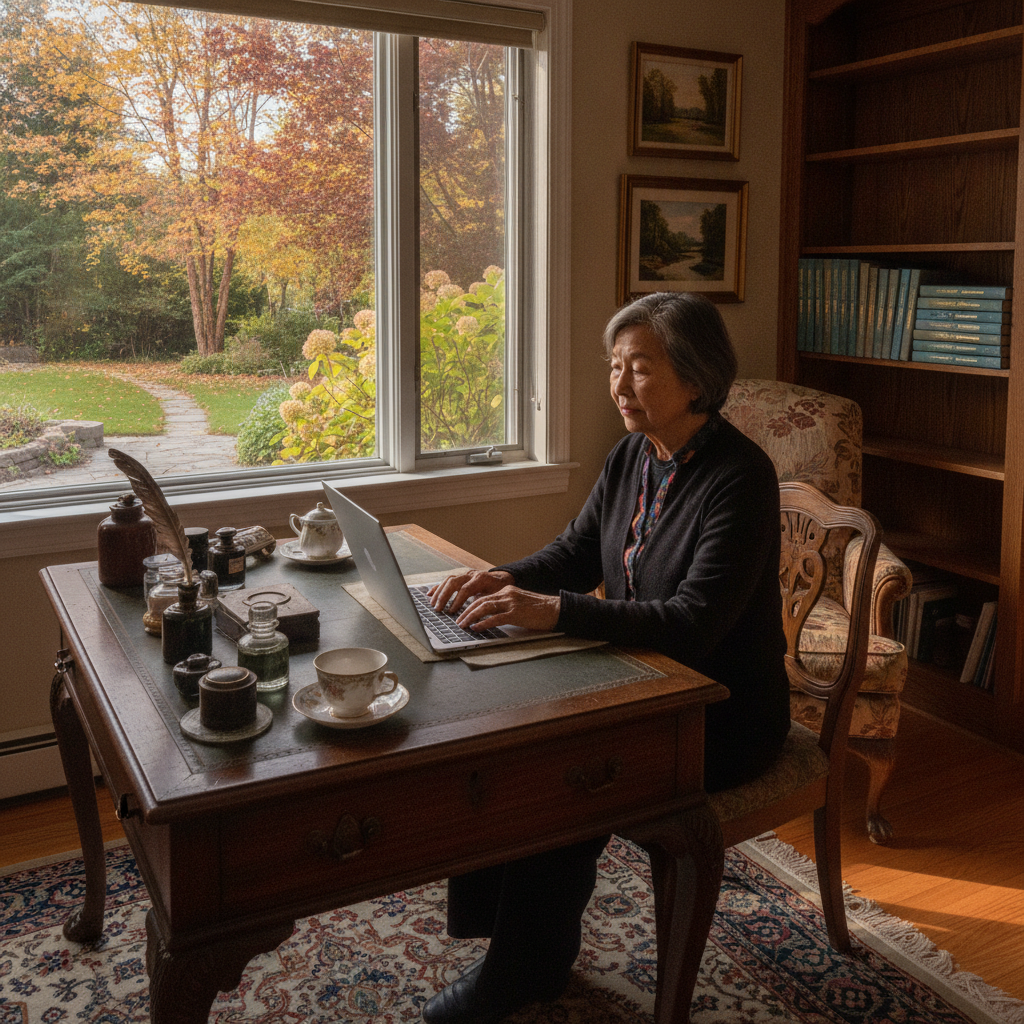
A reverse mortgage typically covers $5,000–$15,000 in startup costs, turning your lifelong writing dream into a funded reality.
Why Aging Writers Succeed More Than Younger Ones
You have three competitive advantages:
-
Credibility and experience: Publishers and readers trust voices with 40+ years of depth. Your story isn't a fantasy — it's earned authority.
-
Niche audiences: Memoir readers, industry professionals, family history enthusiasts are willing to pay $20–$40 for a well-told story from someone with real expertise.
-
Time and focus: You're not juggling full-time work and kids. You can spend 6–12 months perfecting your manuscript, which directly impacts sales.
According to Statistics Canada, self-published authors over 65 now represent 18% of the indie publishing market, up from 4% in 2015.
Business Models Beyond Simple Publishing
A reverse mortgage funds multiple income-generating writing paths:
1. Memoir + Family History Gifting
Write and print a family memoir (200–300 pages). Print 100–300 copies, gift to family, sell 50–100 copies online. Revenue: $1,500–$5,000. Legacy impact: Priceless. Grandchildren and great-grandchildren have your voice, stories, and values documented.
2. Specialty Non-Fiction (How-To, Memoir Genre)
Cooks, gardeners, craftspeople, retired professionals: write deep-expertise guides. Self-publishing platforms (Amazon KDP, IngramSpark) allow print-on-demand (print only when ordered, no upfront printing cost). Revenue: $200–$2,000/month at scale.
3. Heritage/Cultural Documentation
Write family recipes with stories, genealogy research compilations, or cultural traditions guides. These resonate powerfully with diaspora communities willing to pay premium prices ($30–$50/copy).
4. Anthology Editing
Curate and edit a collection of short stories, poems, or essays from family or community members. Low upfront cost, high legacy value.
Funding the Full Writing Business
Writing Retreat and Workspace
Some older writers invest in a dedicated retreat space:
- Home office renovation ($2,000–$5,000): Dedicated writing space with natural light, comfortable furniture, technology setup
- Writing retreat retreat ($1,000–$3,000): 1–2 weeks at a writing retreat center to launch your manuscript
- Writing coach or mentorship ($500–$2,000): Professional feedback on early chapters
A $15,000 reverse mortgage draw covers all of this.
Technology and Digital Publishing
| Tool | Annual Cost | Purpose |
|---|---|---|
| Microsoft Word / Google Docs | Free–$70 | Manuscript writing |
| Grammarly Premium | $144/year | Copy editing assistance |
| Canva Pro | $180/year | Cover design templates |
| Amazon KDP | Free | Digital publishing platform |
| IngramSpark | Free | Print-on-demand setup |
| Website (Squarespace) | $168/year | Author website |
| Email newsletter (Substack) | Free–$12/month | Reader engagement |
Total annual tech cost: $500–$1,500. A single $5,000 reverse mortgage draw funds 3–5 years of all technology needs.
Revenue Potential and Long-Term Return
Realistic income expectations (not "get rich quick," but genuine passive income):
Conservative scenario (memoir, local audience):
- Print 200 copies locally
- Sell 75 copies at $25 each = $1,875
- Give away 50 to family
- Total investment: $4,000
- Net loss: $2,125, but legacy: Priceless
Realistic scenario (specialty non-fiction, online sales):
- Write 60,000-word guide in your expertise area
- Publish on Amazon KDP, IngramSpark, Draft2Digital
- Target niche audience (carpenters, gardeners, genealogy enthusiasts)
- Sell 30–50 copies/month at $20–$30 over 5 years
- 5-year revenue: $36,000–$90,000 gross
- Less production costs ($6,000):
- Net return: $30,000–$84,000

A $10,000 reverse mortgage investment could fund a writing project that generates $20,000–$50,000 over a decade.
Estate and Legacy Dimensions
The Gift That Keeps Giving
Your published book becomes a permanent asset for your heirs. It:
- Generates ongoing royalties (if it continues to sell, your estate inherits this income stream)
- Preserves your voice and values for grandchildren not yet born
- Teaches entrepreneurship by example — you took a dream, funded it with smart leverage, and made it real
- Creates a family heirloom that rivals anything monetary
Copyright and Inheritance Planning
When you die:
- Your book is an asset — it has copyrights, potential royalties, and can be inherited
- Your heirs control reprints and distribution — they can update, re-edit, or keep it exactly as you left it
- Royalty income is estate income — it's distributed per your will
This is why your writing project isn't frivolous; it's a legacy asset that outperforms many financial investments.
Tax and Financial Considerations
Self-Employment Income from Writing
If your book generates income ($1,000+/year), you're technically self-employed. You'll need to:
- Report all royalty income on your tax return (CCRA requires this)
- Deduct legitimate business expenses (editing, design, marketing, website) — this reduces taxable income
- Potentially register for HST/GST if income exceeds $30,000/year (unlikely for most memoir writers, but possible for popular how-to guides)
According to CRA, royalty income and business income from self-publishing are fully taxable, but you can deduct all legitimate business expenses, reducing your net tax liability.
Impact on Government Benefits
Good news: Royalty income from a book published after you start receiving OAS or GIS can affect your benefits, but:
- If income is low ($5,000–$15,000/year), the impact on OAS clawback is modest ($500–$2,000/year reduction in benefits)
- GIS is more sensitive, but many older writers stay below GIS clawback thresholds
- Working with an accountant to time book launches and manage income strategically can minimize benefit impacts
Choosing the Self-Publishing Path
Platform Comparison
| Platform | Best For | Cost | Royalty |
|---|---|---|---|
| Amazon KDP | Digital + print-on-demand | Free | 35–70% |
| IngramSpark | Premium print quality | $50 setup | 45–60% |
| Draft2Digital | Multiple format distribution | Free | 40–50% |
| Smashwords | Indie distribution | Free | 50–60% |
Most authors use multiple platforms simultaneously — Amazon for reach, IngramSpark for quality hardcovers, Draft2Digital for other retailers.

Frequently Asked Questions
Is self-publishing less legitimate than traditional publishing?
No. Self-publishing now represents 25% of all book sales in North America. Readers care about quality and relevance, not the publisher's name. A well-edited, professionally designed self-published memoir outsells many traditionally published books.
How long does it take to publish?
Self-publishing takes 3–6 months (writing, editing, design, setup). Traditional publishing takes 18–24 months and you don't control the timeline. If you're 65+, speed matters.
Will my book actually sell?
Most books sell modestly — 100–500 copies over 5 years. But if your niche is strong (family history, specific craft expertise, cultural recipes), you could sell 1,000–5,000 copies. The goal isn't to become a bestseller; it's to create a lasting legacy while funding it smartly.
Can I get professional help with editing?
Absolutely. Developmental editors ($1,500–$3,000 for full book) or copy editors ($800–$1,500) are worth it. They improve quality dramatically, increasing sales and reviews. A reverse mortgage easily covers this.
What if I finish the book and it doesn't sell well?
You've still created a lasting legacy that your family treasures. Sales are a bonus. Most memoir writers consider a published book a success if 100+ family members and friends have copies, not based on revenue alone.
How do I handle the emotional vulnerability of putting my story out there?
Many older writers struggle with this. Remember: you control who reads it. You can publish privately for family, publicly on Amazon for your niche audience, or a mix. There's no obligation to market aggressively if you're uncomfortable.
Key Takeaways
-
Self-publishing is now mainstream, with 1 in 5 aspiring writers over 55. Your voice and expertise have market value.
-
Startup costs ($5,000–$15,000) are completely fundable with a reverse mortgage, making this an accessible dream rather than a luxury.
-
Realistic revenue potential ($20,000–$50,000 over 10 years) can offset the cost of the reverse mortgage, especially for specialty non-fiction and niche memoirs.
-
Your published book becomes a permanent legacy asset inherited by your children and grandchildren — a gift that preserves your voice and values.
-
Self-publishing platforms (Amazon KDP, IngramSpark) are free to free, removing traditional gatekeepers and putting you in control of your story.
-
Tax planning with a CPA can minimize impacts on OAS/GIS, especially if writing income stays modest ($5,000–$15,000/year).
Moving Forward
You've earned the right to tell your story. For decades, you've been busy — working, raising family, building your life. Now you have time, wisdom, and experience. A reverse mortgage removes the financial barrier to publishing.
Work with Rick Sekhon to structure a reverse mortgage that funds your writing startup, then spend the next 2–3 years bringing your manuscript to life. In a decade, your book will be generating modest income, your family will have your legacy preserved, and you'll wonder why you didn't do this sooner.
Your story matters. Let's fund it.
Ready to Learn More?
Find out exactly how much you could unlock from your home — free and no obligation.
Related Articles
Reverse Mortgage for Aging Parent's Advance Directive Updates: Navigating Medical Innovation and End-of-Life Choices
Fund legal consultation for updating advance directives and power of attorney as medical innovation creates new end-of-life treatment options for Ontario seniors.
Read →Reverse Mortgage to Fund Adult Child's Strategic Pivot After Startup Acquisition: Launching the Next Venture
Use a reverse mortgage to fund your adult child's post-acquisition pivot, supporting their next startup after equity proceeds are deployed.
Read →Reverse Mortgage for Accessible Community Kitchen: Culinary Training and Aging in Place
Convert your home kitchen into an accessible commercial culinary training space. Reverse mortgage funds renovation while creating community impact.
Read →