
Reverse Mortgage for Aging Parent Working as Paid Caregiver in Retirement
Aging parents returning to work as paid home care workers in retirement? Reverse mortgage bridges income gaps for part-time caregiver employment.
What if your retirement plan actually involves going back to work—but this time, on your own terms, helping other aging adults? Many Ontario seniors are discovering that becoming a paid caregiver in their late 60s and 70s offers both purpose and income. But the transition period from fixed-income retirement to self-directed caregiver work creates a cash-flow gap. A reverse mortgage can bridge that gap while you build your caregiving income.
The Growing Trend of Aging Caregivers
Yes, aging parents can legally work as paid caregivers after retirement. In fact, Ontario is facing a critical shortage of personal support workers (PSWs) and home care aides—and many seniors want to fill that need.
According to CMHC research, over 65,000 seniors in Ontario already work part-time in healthcare roles. The income from part-time caregiving (typically $18–$28/hour, or $36,000–$58,000 annually for part-time work) is unpredictable in the first 6–12 months while you build your client roster.
The Income Transition Challenge
When you transition from CPP/OAS to caregiving employment, your income structure changes dramatically:
| Income Source | Monthly Amount (Average) | Timing | Certainty |
|---|---|---|---|
| CPP (at 65) | $1,200–$1,400 | Immediate | Guaranteed |
| OAS (at 65) | $600–$700 | Immediate | Guaranteed |
| Part-Time PSW Work (Month 1–6) | $1,500–$2,000 | Irregular | Variable |
| Part-Time PSW Work (Month 7–12) | $2,500–$3,500 | Established | Reliable |
This 6–12 month ramp-up period is where a reverse mortgage provides critical stability.
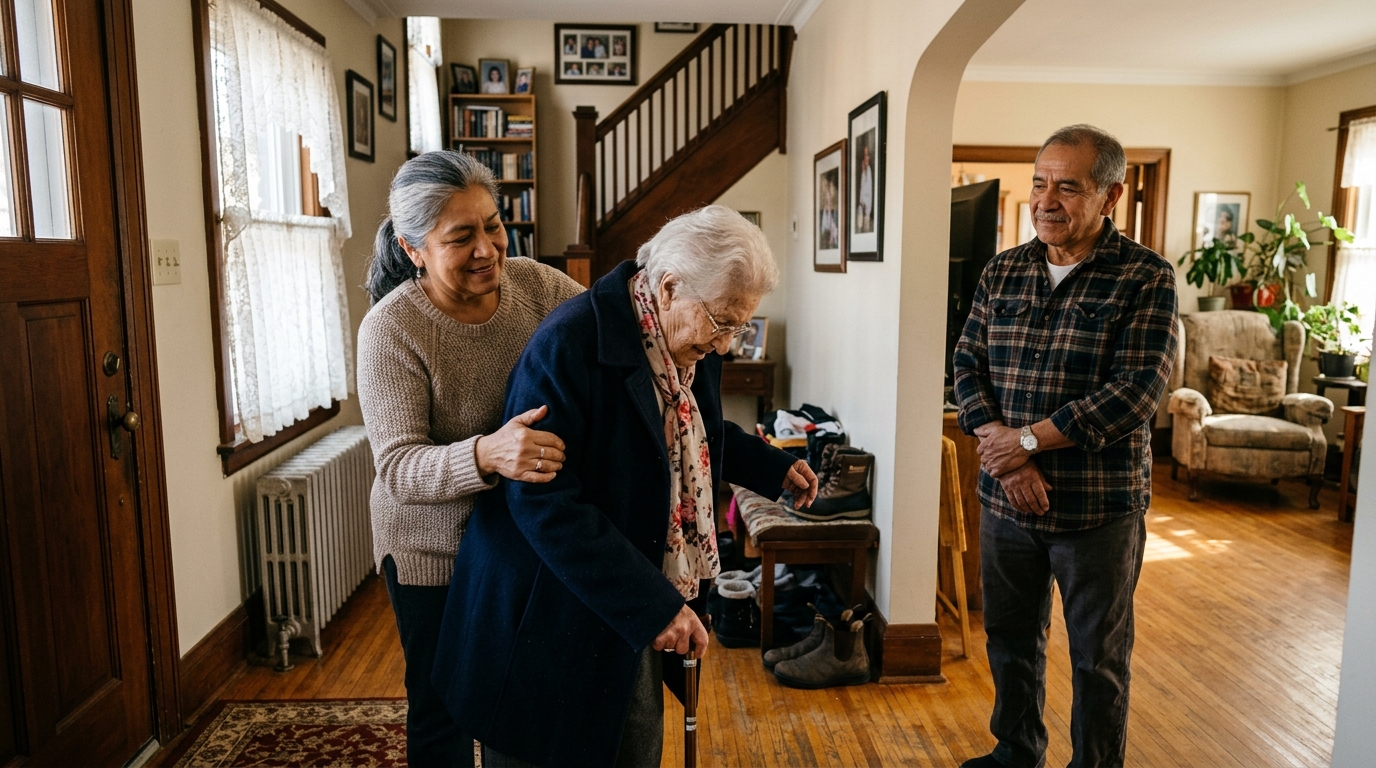
How a Reverse Mortgage Bridges the Caregiver Employment Gap
A reverse mortgage line of credit (LOC) is ideal for this scenario—you access funds only as needed during your income ramp-up phase. You're not forced to take a lump sum you don't immediately need.
Here's the typical timeline:
Month 1–3: You're licensed, credentialed, but clients are few. Your CPP/OAS covers basics, but caregiving income is sporadic. Reverse mortgage LOC covers the difference: groceries, utilities, medications.
Month 4–8: You've built 3–4 regular clients at 15–20 hours/week. Caregiving income grows to $2,000–$2,500/month. You're using the reverse mortgage less frequently—only for unexpected expenses.
Month 9–12: You have 5–6 established clients and a waiting list. Caregiving income is $3,000+/month. You're no longer touching the reverse mortgage and might even consider paying it down from caregiving earnings.
Reverse Mortgage Lenders and PSW Employment
Lenders like CHIP, Equitable Bank, and Bloom Financial now recognize caregiving work as legitimate post-retirement employment. The key is documenting your:
- PSW certification or home care aide credentials
- Client roster and contracts
- Projected income from care agencies or direct clients
Rick Sekhon Reverse Mortgages can help structure the application to show caregiving income potential, even if you're only 3 months into your caregiving career.
The Numbers: Cost Benefit Analysis
Let's model a typical scenario for a 68-year-old Ontario homeowner:
| Item | Cost/Benefit |
|---|---|
| Home value | $450,000 |
| Reverse mortgage available | $150,000 (1/3 of home value, typical) |
| Monthly LOC draw during ramp-up | $1,500 |
| Months of caregiver ramp-up | 6–8 |
| Total amount borrowed | $9,000–$12,000 |
| Interest rate (current) | 6.8% |
| Monthly interest cost on $12,000 | $68 |
| Caregiving income (month 6) | $2,500 |
| Net cash flow (caregiving income - interest) | $2,432 |
By month 6, your caregiving income completely covers the reverse mortgage interest and generates positive cash flow.

Government Benefits Impact: Will CPP/OAS Be Clawed Back?
No, caregiving employment income will not trigger CPP clawback. CPP is yours once you claim it, regardless of earned income. However, OAS has an annual income threshold ($90,997 in 2026) where excess earnings are clawed back at 15 cents per dollar over the limit.
If you earn $40,000/year from caregiving plus receive $8,400/year in OAS, you're under the threshold—no clawback. But if your caregiving income reaches $50,000+ annually, OAS clawback becomes a concern. A tax accountant can model the exact impact for your situation.
According to the CRA, seniors working part-time as caregivers who earn under $100,000 annually typically avoid OAS clawback entirely, maintaining full pension eligibility while building caregiving income.
Credential Investment: Funding Your PSW Training
Before you become a paid caregiver, you likely need credentials. A reverse mortgage can fund:
- PSW certification programs ($2,000–$4,000)
- First aid/CPR recertification ($300–$500)
- Elder care-specific training ($1,000–$2,000)
- Home care agency registration/insurance ($500–$1,500)
Total credential investment: $4,000–$8,500
Many Ontario community colleges offer evening/weekend PSW programs designed for working retirees. A reverse mortgage eliminates the need to raid your RRSP or TFSA for training costs.
Key Takeaways
- Caregiving income ramps slowly: Expect 6–12 months to build a reliable client roster; a reverse mortgage LOC bridges this gap without forcing you to live below your means.
- Reverse mortgage LOC is ideal: Draw only what you need during the income transition, paying interest only on borrowed funds.
- CPP/OAS protection: Caregiving employment won't trigger CPP clawback; monitor OAS thresholds if earning $50,000+.
- Credential funding: Use reverse mortgage to invest in PSW training and certifications—your earning potential will pay it back within 12–18 months.
- Lenders recognize caregiving work: CHIP, Equitable Bank, and Bloom Financial now accept caregiving contracts as proof of post-retirement income.
- Emotional benefit matters: Transitioning to caregiving work isn't just about income—it's purpose-driven retirement that many seniors find deeply fulfilling.
Frequently Asked Questions
How long until my caregiving income exceeds my reverse mortgage payments?
Most aging caregivers report that by month 8–10, their caregiving income covers all living expenses plus reverse mortgage interest. By month 12, they're generating positive cash flow and can begin paying down the reverse mortgage principal if desired.
Will being self-employed as a caregiver affect my mortgage approval?
Reverse mortgage lenders like Equitable Bank and Bloom Financial increasingly accept caregiving contracts and client letters as proof of income for self-employed caregivers. Provide 2–3 months of client contracts or care agency letters showing your rate and anticipated hours.
Can I use a reverse mortgage to buy caregiving equipment?
Yes. Reverse mortgages can fund home-based caregiving equipment (patient lift, specialized chair, medical monitoring devices) that increases your value as a private caregiver. This is a legitimate business investment that improves your earning potential.
What if I only want to work part-time as a caregiver for 5 years?
A reverse mortgage line of credit works perfectly for this scenario. You access funds during the ramp-up phase (6–12 months), then let the line sit unused while caregiving income covers expenses and begins repaying principal. You're not locked into a specific repayment timeline.
Will caregiving income affect my GIS or other needs-based benefits?
Yes. GIS (Guaranteed Income Supplement) has strict income limits. Earning $20,000+/year from caregiving work may reduce or eliminate GIS. Consult a benefits advisor before transitioning to caregiving employment if you're currently receiving GIS.
Can I hire other aging caregivers under my care agency business?
Yes, and many do. Once you've established 5+ clients, you might subcontract other retired caregivers to handle overflow. A reverse mortgage can fund payroll and scheduling systems to formalize your operation. This is a legitimate business expansion.
Your retirement is evolving. Your home equity can fund that evolution. Speak with Rick Sekhon Reverse Mortgages about structuring a reverse mortgage LOC specifically for caregiving employment income gaps.
Ready to Learn More?
Find out exactly how much you could unlock from your home — free and no obligation.
Related Articles
Reverse Mortgage for Transitioning Into Volunteer Board Leadership in Retirement
Stepping into nonprofit board leadership or volunteer coordinator role in retirement? Reverse mortgage funds the training, technology, and travel to lead effectively.
Read →Reverse Mortgage for Aging Parent as Professional Witness or Litigation Support
You're being asked to serve as an expert witness in pending litigation—paid work during retirement. Bridge income gaps while you wait for legal case resolution.
Read →Reverse Mortgage for Aging Parent Post-Divorce Financial Rebuilding
Late-life divorce left you financially compromised in retirement. Reverse mortgage rebuilds your stability without working longer or downsizing immediately.
Read →