
Reverse Mortgage for Adult Child's Sports Coaching or Training Business Startup
How to use a reverse mortgage to fund your adult child's sports coaching, personal training, or athletic business venture.
Your adult child has athletic expertise and dreams of building a coaching, personal training, or sports instruction business. But launching a sports business requires capital: equipment, facility rental, certifications, insurance, and marketing. These startup costs create a barrier that separates passionate athletes from successful entrepreneurs. A reverse mortgage can fund this business launch, transforming your child's expertise into sustainable income and independence.
The Economics of Sports Business Startups
Sports businesses require significant upfront investment before revenue generation:
Business registration and insurance ($2,000-$5,000):
- Business licensing and registration
- Professional liability insurance
- Health and safety certifications
- Accounting and bookkeeping setup
Facility and space ($5,000-$30,000):
- Studio or gym space rental deposits and deposits
- Equipment for the space (mats, weights, racks, mirrors)
- Renovations or setup
- Utilities and utilities deposits
Equipment and supplies ($5,000-$20,000):
- Sport-specific equipment (weights, training equipment, protective gear)
- Assessment tools and measurement devices
- Technology (stopwatches, apps, video analysis software)
- Supplies and consumables
Certifications and education ($3,000-$10,000):
- Personal training certification (NASM, ACE, ISSN)
- Sport-specific coaching certifications
- Nutrition or wellness credentials
- CPR, First Aid, and medical training
Marketing and business development ($3,000-$10,000):
- Website and online presence
- Social media marketing
- Local business networking and partnerships
- Initial advertising and promotion
Working capital for first 6-12 months ($5,000-$20,000):
- Living expenses while building client base
- Payroll for any staff
- Ongoing marketing and client acquisition
- Administrative and operational expenses
Many talented coaches never launch because accessing $30,000-$70,000 startup capital through traditional means is impossible for young adults with limited employment history.
| Startup Cost Category | Typical Range |
|---|---|
| Business registration and insurance | $2,000-$5,000 |
| Facility and space | $5,000-$30,000 |
| Equipment and supplies | $5,000-$20,000 |
| Certifications and education | $3,000-$10,000 |
| Marketing and business development | $3,000-$10,000 |
| Working capital (6-12 months) | $5,000-$20,000 |
Types of Sports Businesses Your Reverse Mortgage Can Fund
Personal training business ($20,000-$50,000):
- Studio or gym rental setup
- Training equipment and weights
- Certifications and continuing education
- Client acquisition and marketing
- Technology (fitness tracking apps, payment processing)
Sports coaching ($15,000-$40,000):
- Team or individual coaching setup
- Sport-specific equipment
- Facility rental or field access fees
- Coaching certifications and education
- Marketing to youth, schools, or adult athletes
Athletic training and rehabilitation ($25,000-$60,000):
- Professional space setup
- Equipment for assessment and training
- Certifications and advanced education
- Insurance and licensing
- Marketing to athletes and sports teams
Nutrition and sports science coaching ($15,000-$40,000):
- Office or consultation space
- Certifications and advanced education
- Technology for nutrition tracking and analysis
- Marketing and client acquisition
Youth sports academy or camp ($30,000-$100,000):
- Facility or field rental/purchase
- Coaching staff and payroll
- Equipment and insurance
- Marketing and recruitment
- Operational infrastructure
| Business Type | Typical Startup Cost | Key Cost Drivers |
|---|---|---|
| Personal training | $20,000-$50,000 | Studio rental, equipment, certifications |
| Sports coaching | $15,000-$40,000 | Facility/field fees, coaching certifications |
| Athletic training and rehab | $25,000-$60,000 | Professional space, assessment equipment, licensing |
| Nutrition/sports science coaching | $15,000-$40,000 | Certifications, technology, consultation space |
| Youth sports academy or camp | $30,000-$100,000 | Facility rental/purchase, staff payroll |
Real-World Launch: Alex's Personal Training Business
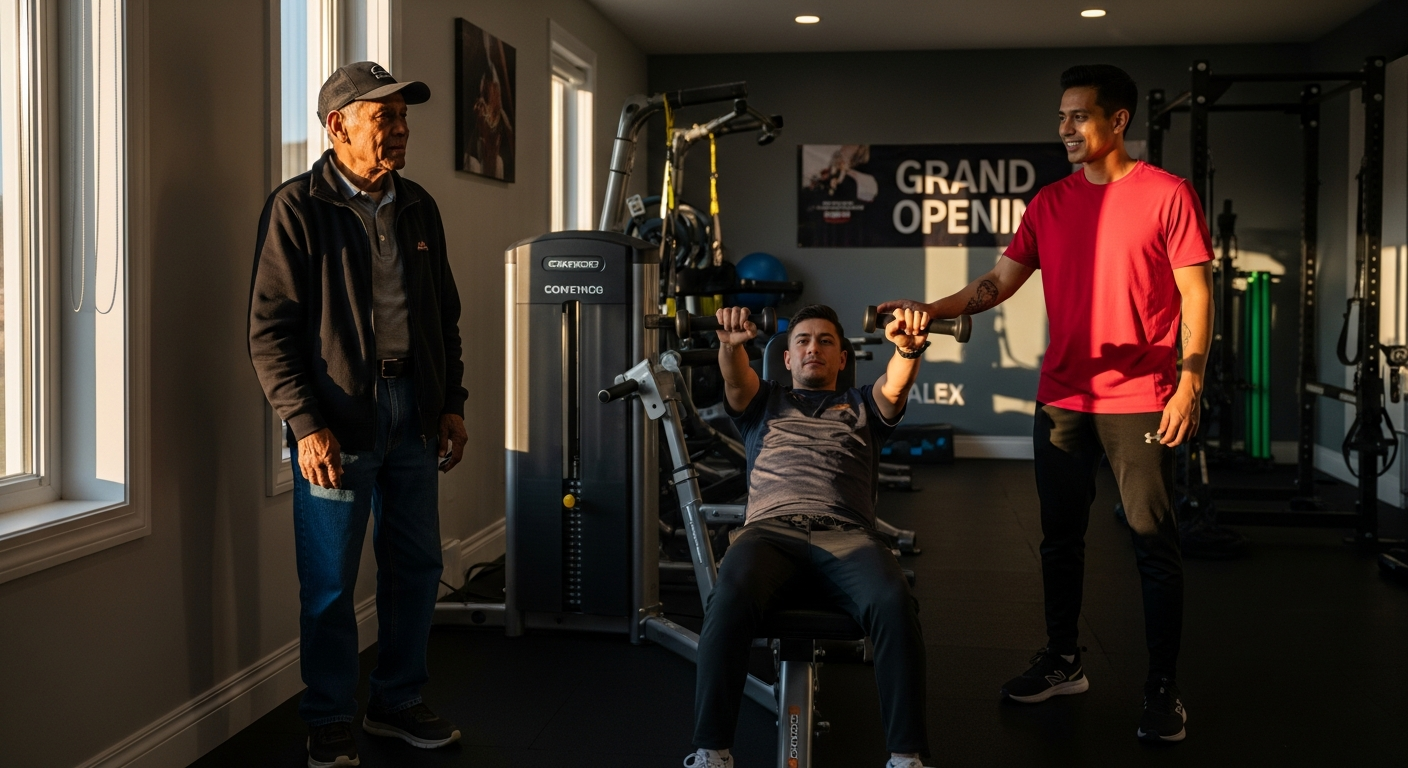
Alex, 28, had a degree in kinesiology and years of personal training experience, but was stuck as an employee without capital to start his own business. His parents, in their early 70s, had substantial home equity.
They accessed $45,000 via reverse mortgage to launch Alex's business:
- $12,000 for studio space (rental, deposit, setup)
- $8,000 for equipment (weights, training tools, technology)
- $10,000 for personal training certification upgrade and advanced education
- $8,000 for marketing website and initial client acquisition
- $7,000 for insurance, licensing, and business setup
Three years later, Alex had built a thriving personal training business with a waitlist of clients and gross annual revenue of $120,000. He was financially independent and able to contribute financially to family needs. His parents' investment in his business became one of their best financial decisions—better return than many stock market investments and the satisfaction of enabling their son's independence and success.
Structuring Family Business Support
Before providing reverse mortgage funds, establish clarity:
Investment vs. loan: Is this a gift, a loan your child will repay, or shared equity in the business?
Expectations and timeline: What outcomes matter? Financial return, independence by a certain date, specific revenue targets?
Role boundaries: Will you have any ownership or decision-making role, or is this purely funding support?
Professionalism: Even with family, treat this as a real business. Written agreements prevent misunderstandings.
Financial tracking: Ensure your child maintains proper accounting and financial records for both the business and any repayment obligations.
Insurance: Make sure the business has appropriate insurance (liability, workers' comp if needed).
Ontario's Sports Business Ecosystem
Ontario offers resources supporting sports entrepreneurship:
Government grants and programs:
- Some municipalities offer small business grants
- Ontario Sports Sector Development initiatives
- Sports-specific incubator programs
Professional associations:
- Provincial coaching associations
- Trainer and personal training organizations
- Youth sports development networks
Mentorship and support:
- Sports business mentors and advisors
- Business incubators in major cities
- Small business centers offering free consulting
Your reverse mortgage funds what grants don't cover—typically the majority of startup capital.

Key Success Factors
Before funding, ensure your child has:
Genuine passion for the sport or training discipline: Business success requires sustained effort and genuine love of the work
Real market demand: Is there actually a market for their specific services? Market research matters.
Relevant education and certification: Appropriate credentials build credibility and client trust
Business management ability: Technical skill (coaching) doesn't guarantee business management skill; ensure your child can run a business
Personal financial discipline: If your child struggles with personal finances, business finances will be worse
Professional network: Existing connections with athletes, schools, or potential clients accelerates launch
These factors don't guarantee success, but their absence predicts failure.
Important Considerations
Business failure risk: Not all businesses succeed despite excellent funding and support. Discuss realistic expectations.
Personal liability: If your child is sued, assets could be at risk. Ensure proper insurance and liability protection.
Time investment: Business launches require enormous time investment, often taking 2-3 years to profitability.
Competitive landscape: Many sports coaching businesses exist. Your child must differentiate meaningfully.
Inheritance implications: Business funding reduces your estate. Adult siblings should understand the inheritance advancement.
Ongoing support: Some parents provide additional support (marketing help, operational advice, financial backup). Clarify your role.
Making the Decision
Fund your adult child's sports business when:
- You're 55+ with substantial home equity
- Your adult child has demonstrated commitment and capability
- Real market opportunity exists for their specific services
- They have proper certifications and professional credentials
- You can afford this investment without compromising retirement
- You've discussed family implications with other adult children
- You're prepared for the possibility of business failure
This legacy—enabling your child's entrepreneurial dreams—often becomes as valuable as financial inheritance.
Key Takeaways
- Sports business startups typically require $30,000-$70,000 in capital, spanning registration, facility, equipment, certifications, marketing, and working capital.
- Personal training and sports coaching businesses generally launch on $15,000-$50,000, while a youth sports academy or camp can require $30,000-$100,000.
- A reverse mortgage is available to homeowners 55 and older and lets you borrow roughly 15-59% of your appraised home value, with no monthly payments required.
- In Alex's case, a $45,000 reverse mortgage advance funded studio space, equipment, certifications, marketing, and insurance, leading to $120,000 in annual gross revenue within three years.
- Reverse mortgage proceeds are tax-free loan advances, and the loan isn't due until the home is sold, the owner passes away, or permanently moves out.
- Funding a child's business reduces your estate, so it's worth discussing the inheritance advancement with other adult children and, if needed, an estate planning attorney.
Frequently Asked Questions
How much can I borrow through a reverse mortgage to fund my child's sports business?
Most Canadian reverse mortgage programs let homeowners 55 and older borrow between 15% and 59% of their home's appraised value, depending on age, location, and property type. Many sports businesses launch successfully on $30,000-$70,000, which is well within reach for homeowners with substantial equity. A lender can confirm your specific eligible amount based on an appraisal.
Do I have to make monthly payments on the funds I use for my child's business?
No. Reverse mortgages do not require monthly mortgage payments. The loan, plus accumulated interest, becomes due only when the home is sold, the last borrower passes away, or the home is no longer the borrower's primary residence. This makes it easier for retirees to fund a business launch without straining monthly cash flow.
Should the money go to my child as a gift, a loan, or an investment in the business?
That depends on your family's goals and financial situation. Some parents treat the funds as a gift, others as a loan to be repaid, and others take a small equity stake in the business. Whatever you choose, put it in writing so expectations around repayment, ownership, and timelines are clear to everyone, including other adult children.
Is money from a reverse mortgage considered taxable income?
No. Reverse mortgage proceeds are loan advances, not income, so they are not taxed and do not affect Old Age Security (OAS), Guaranteed Income Supplement (GIS), or CPP benefits. This makes a reverse mortgage a tax-efficient way to provide startup capital compared to withdrawing from a taxable investment account.
What happens if my child's sports business doesn't succeed?
Business failure is a real risk even with strong funding and preparation, since most new businesses take two to three years to reach profitability. Because a reverse mortgage is secured against your home rather than tied to the business's performance, a failed venture does not create a repayment obligation on its own—but it does mean the equity used cannot be recovered from the business. Discuss realistic expectations and worst-case scenarios with your child before committing funds.
Will using my home equity this way protect me if my home's value drops later?
Yes. Canadian reverse mortgages include negative equity protection, meaning you (or your estate) will never owe more than the fair market value of your home at the time it is sold, provided the terms of the mortgage were met. This protection applies regardless of how the funds were used, including business funding for an adult child.
Next Steps
- Discuss your child's specific business plan and realistic financial projections
- Conduct market research together—is genuine demand for their services?
- Research business certifications and requirements for the specific sport or training discipline
- Develop a detailed business plan with revenue projections and break-even analysis
- Establish family financial agreements about loan, investment, or gift structure
- Consult a reverse mortgage lender about accessing funds for business startup
- Review with estate planning attorney about inheritance implications
- Connect your child with mentors in the coaching or training industry
Your home equity represents decades of financial discipline and home ownership. Investing it in your adult child's sports business launch supports their independence, success, and professional dreams—a legacy that extends far beyond financial inheritance.
Ready to Learn More?
Find out exactly how much you could unlock from your home — free and no obligation.
Related Articles
Reverse Mortgage for DEI Consulting Practice: Launching Diversity, Equity, and Inclusion Consulting in Retirement
Start a diversity and inclusion consulting practice. Help corporations and nonprofits build equitable cultures; reverse mortgage funds training, business setup, and market entry.
Read →Reverse Mortgage for Residential Sustainability Auditing Practice: Certifying Aging in Place
Launch a professional home energy and sustainability auditing business. Help Ontario homeowners certify efficiency; reverse mortgage funds training, tools, and market entry.
Read →Reverse Mortgage for Archival and Digital Preservation Consulting: Preserving Institutional History and Heritage
Launch archival consulting practice preserving records for institutions. Help libraries, archives, nonprofits; reverse mortgage funds training, tools, and market entry.
Read →