
Reverse Mortgage for Adult Child's Pet Care Business Startup: Funding Dog Walking and Pet Services
Funding your adult child's pet care business startup with a reverse mortgage—dog walking, grooming, and boarding services in Ontario.
Your adult child wants to start a pet care business—but doesn't have the capital for startup costs like insurance, equipment, vehicles, and initial marketing. A reverse mortgage can provide the funding they need to launch their entrepreneurial dream while you stay in your home.
The pet care industry in Ontario is growing rapidly, with demand for dog walking, pet sitting, grooming, and boarding services outpacing supply in many neighborhoods. But starting a legitimate pet care business requires upfront investment that many young entrepreneurs struggle to secure.
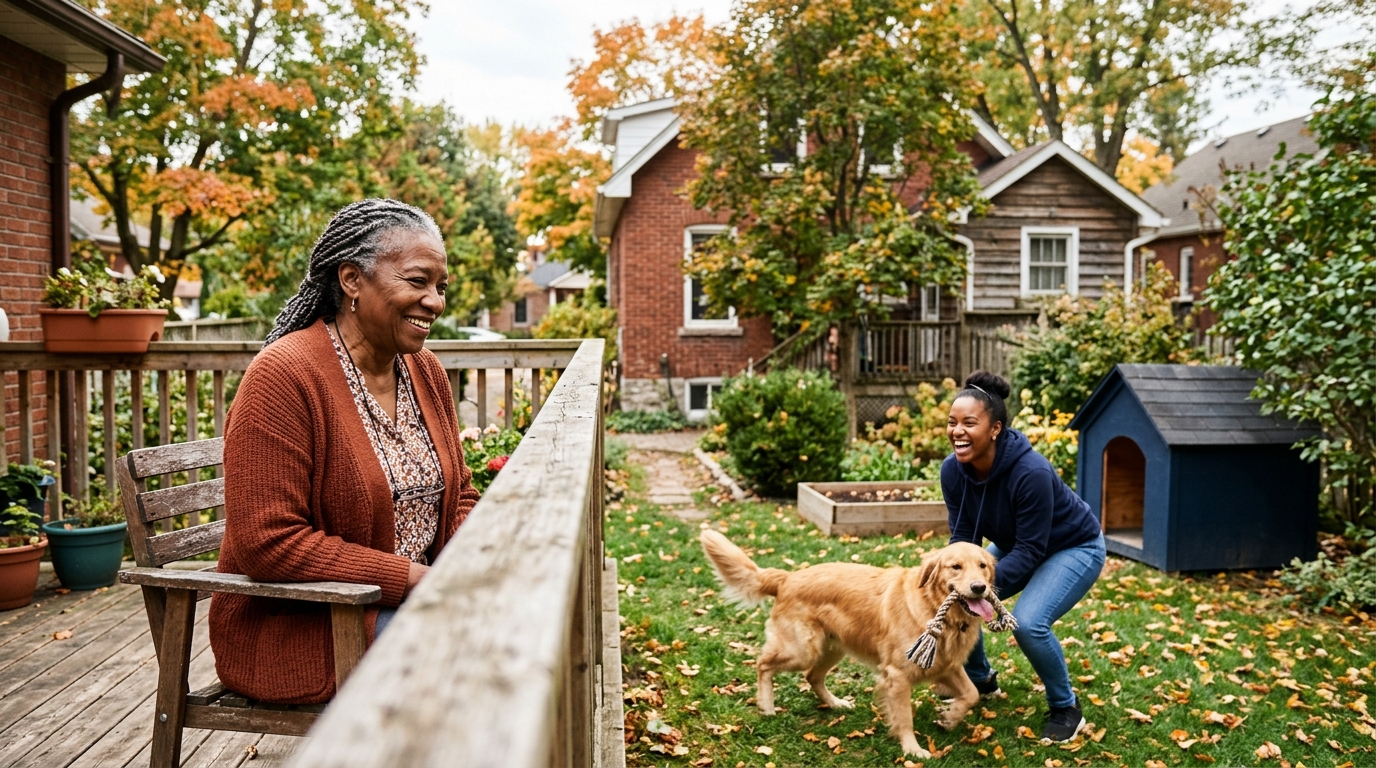
Why Pet Care Businesses Need Significant Startup Capital
Pet care is a service-based business—but it's not as low-barrier as many assume. Legitimate operations require liability insurance, proper business licensing, vehicle investments (reliable transportation for dog walking routes), equipment (grooming tables, cleaning supplies, cages or runs for boarding), and marketing to build a client base.
According to the Canadian Federation of Independent Business, service businesses like pet care require 3–6 months of operating capital before reaching profitability. Many young entrepreneurs find traditional bank loans difficult to secure without established credit or collateral.
A pet care business startup requires:
- Liability and workers' compensation insurance (mandatory for pet sitting/walking): $2,000–$4,000/year
- Vehicle purchase or upgrade for reliable transport: $8,000–$20,000
- Grooming equipment (if offering grooming services): $5,000–$15,000
- Initial marketing and website development: $2,000–$5,000
- Business licensing and permits in Ontario: $500–$2,000
- 3-month operating reserve (rent, supplies, insurance): $6,000–$12,000
Total typical startup: $23,500–$58,000.
How Much Can You Access Through a Reverse Mortgage?
Your available funds depend on three factors: your age, your home's current market value, and the reverse mortgage lender you choose. Lenders like CHIP, HomeEquity Bank, and Equitable Bank typically allow homeowners 55+ to access 15–55% of their home's equity, depending on age and property type.
| Factor | Impact on Available Funds | Notes |
|---|---|---|
| Your age | Higher age = more equity access | At 75+, you may access 50%+ of home value |
| Home value | $500K home vs $800K home | Direct multiplier; larger homes unlock more capital |
| Lender | CHIP vs HomeEquity Bank vs Equitable | Different lenders offer different percentages |
| Property type | Detached vs condo vs townhouse | Condos may have lower LTV (loan-to-value) ratios |
Example: If your Ontario home is worth $600,000 and you're 68 years old, you might access $180,000–$240,000 depending on the lender. That's more than enough to fully fund a mid-sized pet care startup plus cover operating reserves.
The Pet Care Business Model Your Adult Child Can Build
Pet care businesses typically operate on recurring revenue: monthly retainers for dog walking, weekly visits for pet sitting, or steady boarding customers. Once established (6–12 months), many operators see 60–80% gross margins.
| Service Type | Typical Ontario Pricing (2026) | Client Retention | Profit Margin |
|---|---|---|---|
| Dog walking (1 dog, 30 min) | $20–$25 per walk | 70–80% recurring | 65–75% |
| Pet sitting (daily visits) | $40–$60 per day | 75–85% recurring | 70–80% |
| Grooming (full service) | $75–$150+ per dog | 60–70% recurring | 50–65% |
| Boarding (per night) | $35–$75 per night | 50–60% seasonal | 55–70% |
A dog walker collecting $20/walk with 10 dogs = $200/day × 5 days = $1,000/week = $4,000/month gross revenue. Even at a realistic 70% margin, that's $2,800/month net—enough to make the business viable within 12 months.
Structuring a Reverse Mortgage Gift for Your Adult Child's Business
You don't lend money to your adult child from a reverse mortgage—you gift it. This eliminates repayment expectations and keeps the business finances clean. From a tax perspective, gifts (not loans) are not reported as income to your child.
According to the Canada Revenue Agency (CRA), gifts from family members are not considered taxable income and do not affect the recipient's tax return.
The structure looks like this:
- You obtain a reverse mortgage or increase your existing one
- Funds are deposited to your bank account
- You transfer funds to your adult child via gift (no promissory note required)
- Your child uses funds for business startup
- The reverse mortgage remains your sole obligation—zero impact on your child's debt
This approach protects both you and your child. Your adult child has no repayment obligation, so business cash flow stress doesn't create family tension. And you maintain full home ownership—the lender cannot contact your child or claim the business as collateral.
Real Ontario Examples: What $30,000–$50,000 Unlocks
Pet Sitting & Dog Walking Startup (Est. $28,000)
- Insurance + licensing: $3,500
- Vehicle upgrade: $12,000
- Marketing & website: $3,500
- Grooming equipment (professional grade): $5,000
- 3-month operating reserve: $4,000
- Result: Launch with 15–20 initial clients, scale to 40+ within 12 months
Full-Service Pet Grooming + Dog Walking (Est. $45,000)
- Professional-grade grooming station: $10,000
- Liability insurance + bonding: $4,500
- Vehicle: $15,000
- Marketing & branding: $4,000
- Permits & licensing: $2,000
- 3-month reserve: $9,500
- Result: Dual revenue streams; profitability within 8–10 months
Key Takeaways
- Pet care businesses require $23,500–$58,000 in startup capital that young entrepreneurs often can't access through traditional loans
- A reverse mortgage at age 62–75 typically unlocks $180,000–$400,000 depending on home value, more than enough for a full pet care launch
- Pet sitting and dog walking have 60–75% gross margins and reach profitability within 6–12 months when properly capitalized
- Gifting funds (not lending) keeps business and family finances separate and avoids complicated repayment dynamics
- Your adult child builds equity in a real business, while you maintain full home ownership and draw on your accumulated home equity
- Pet care is recession-resistant: people prioritize pet care even during economic downturns
Frequently Asked Questions
What if my adult child's pet care business fails?
A failed business doesn't affect your reverse mortgage. You remain the sole borrower and owner of your home. If the business struggles, your child simply closes it—the reverse mortgage obligation stays with you, not your child. This is very different from a traditional bank loan where the co-signer or guarantor is liable if the business fails.
Can I get a reverse mortgage specifically for business purposes?
Yes, but the structure is indirect. You obtain a reverse mortgage on your personal residence; the funds are for your personal use. Once in your bank account, those funds become yours to gift or use as you see fit. Lenders like CHIP and Equitable Bank don't restrict how you use funds after closing. However, don't lie on the application—if asked about intended use, be honest. Lenders care about your home's value and your age, not how you spend the money afterward.
What happens if interest rates spike while my reverse mortgage is outstanding?
Floating-rate reverse mortgages have upper limits, and fixed rates lock your rate permanently. At renewal or when rates spike, your balance grows due to compound interest. To protect against this, ask Rick Sekhon Reverse Mortgages about fixed-rate options, which lock your interest rate for 5–7 years. This predictability helps you plan the business support without surprise home equity erosion.
Should I require my adult child to repay the gift?
No—gift, don't lend. A formal loan creates family tension if the business struggles and repayment becomes difficult. A gift is cleaner: your child succeeds, they can offer to support you later; if they struggle, there's no debt obligation straining the relationship. From a legal standpoint, a gift also simplifies your estate later (no promissory note disputes among siblings).
What if my adult child wants to take out their own business loan later?
A clean family gift doesn't appear on their credit report. They can take traditional Small Business Loans (SBLs) or bank financing later without disclosing your gift (gifts are not debt). If they borrow from a bank at 5–7% for expansion capital when they're profitable, that's standard business growth—separate from your reverse mortgage.
How do I ensure my adult child takes the business seriously?
Condition the gift on professional setup. Before gifting funds, require your child to register a business name with Ontario's Business Registry, obtain liability insurance (proof to you), file taxes as a sole proprietor or corporation, and create a simple 12-month business plan. This ensures they're committed and protects both of you. Rick Sekhon Reverse Mortgages can explain how to time the gift (lump sum vs. staged draws) to keep your child accountable as milestones are hit.
Ready to fund your adult child's pet care dream? A reverse mortgage converts your home equity into their startup capital—while you stay in your home. Contact Rick Sekhon Reverse Mortgages for a free consultation to see how much equity you can access.
Ready to Learn More?
Find out exactly how much you could unlock from your home — free and no obligation.
Related Articles
Reverse Mortgage for Adult Child's Career Coaching Business Launch: Supporting Your Coach-Entrepreneur
Fund your adult child's career coaching or life coaching business startup with a reverse mortgage—certification, platform, and client acquisition in Ontario.
Read →Reverse Mortgage for Aging Parent's Philanthropic Legacy: Strategic Charitable Giving Before Death
Fund your aging parent's philanthropic goals with a reverse mortgage—strategic charitable giving, endowments, and legacy funding in Ontario.
Read →Reverse Mortgage for Aging Parent's Hobby Farm Expansion: Growing Your Agricultural Operation
Expand your hobby farm or small agricultural operation with a reverse mortgage—livestock infrastructure, land improvements, and equipment funding in Ontario.
Read →