
Reverse Mortgage When Adult Child Has Parkinson's Disease: Planning Progressive Home Modifications
How to use a reverse mortgage to fund accessible home modifications when your adult child has Parkinson's disease, supporting progressive mobility challenges.
When your adult child receives a Parkinson's disease diagnosis, the financial reality can be overwhelming. Beyond medical costs, you'll face the need for home modifications that evolve as the disease progresses. A reverse mortgage can provide the funding you need without disrupting your retirement income, helping you create a safe living environment for your child while supporting their independence.
Understanding Parkinson's Progressive Needs
Parkinson's disease affects movement, balance, and coordination in ways that directly impact home accessibility. Early-stage symptoms like tremors and stiffness evolve into mobility challenges, balance problems, and eventually cognitive changes. Unlike static disabilities, Parkinson's requires your home to adapt continuously over 10-20+ years.
Your adult child may need:
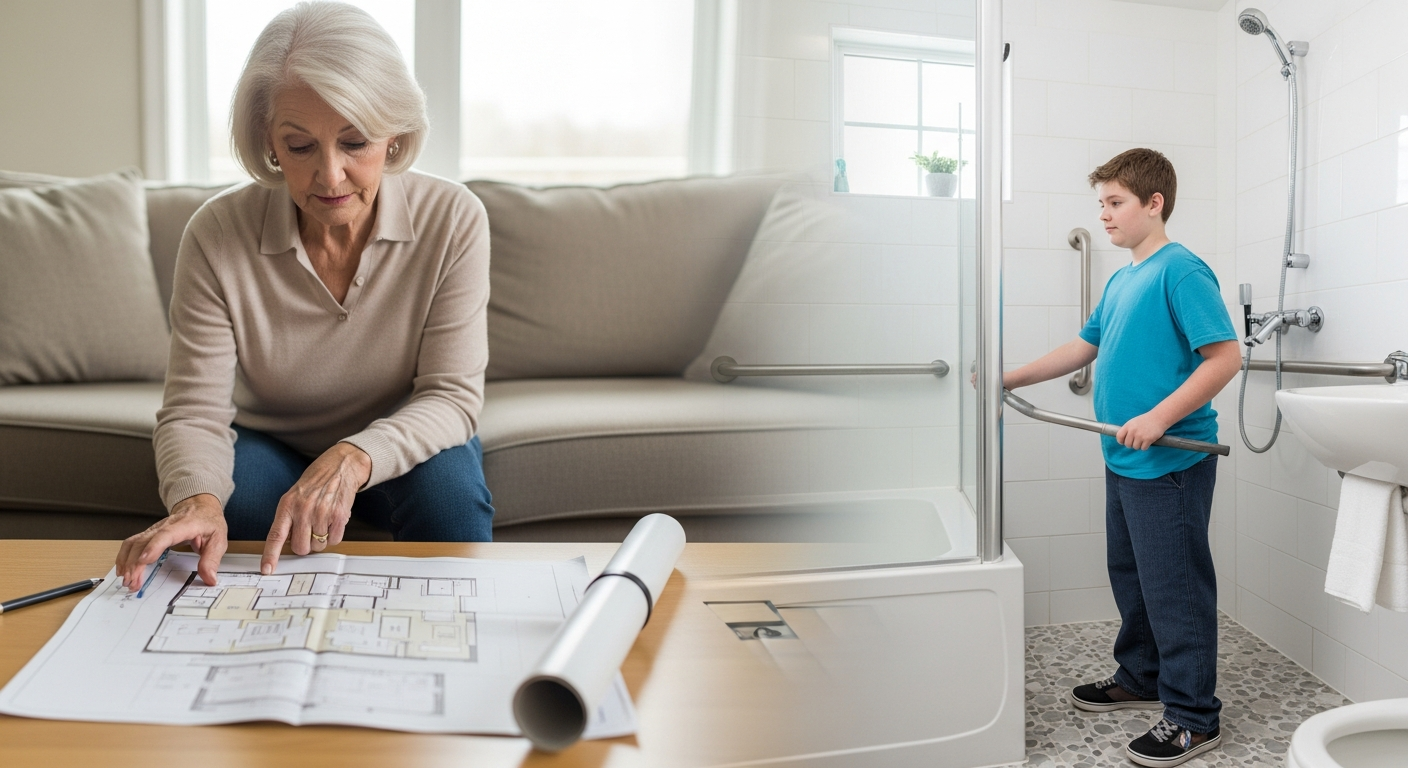
- Bathroom modifications: Grab bars, walk-in showers, raised toilets, and non-slip flooring for balance and transfer safety
- Bedroom accessibility: Lowered beds for easier transfers, accessible closets, and clear pathways for walkers
- Stair alternatives: Ramps, stair lifts, or first-floor bedroom/bathroom setup as mobility declines
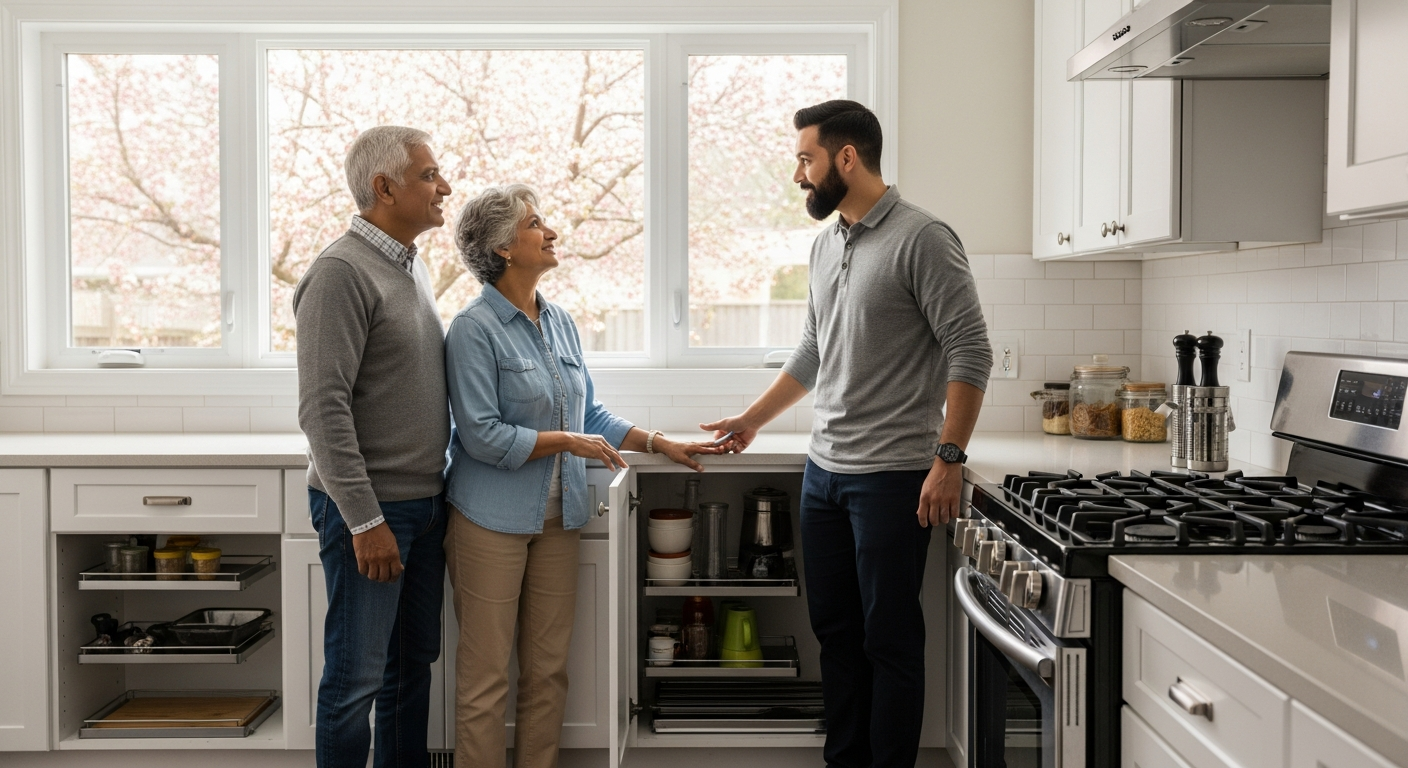
- Kitchen modifications: Lowered counters, easy-reach storage, and lever-style hardware for tremor-affected hands
- Fall prevention: Removed tripping hazards, strategic railings, and flooring transitions
- Technology supports: Smart home systems, voice-controlled lighting, and emergency alert systems
These modifications aren't one-time expenses—they're ongoing investments as Parkinson's progresses.
The Financial Challenge of Progressive Care
A single bathroom renovation for mobility might cost $15,000-$30,000 in Ontario. Add a stair lift ($3,000-$5,000), bedroom modifications ($10,000+), and kitchen adaptations, and costs escalate quickly. The challenge is that you can't predict the exact timeline of progression—some people plateau for years while others progress rapidly.
Common Modification Costs
| Modification | Estimated Cost | Typical Timing |
|---|---|---|
| Grab bars and non-slip flooring | $1,500-$4,000 | Early stage |
| Walk-in shower/bathroom renovation | $15,000-$30,000 | Early to mid stage |
| Stair lift | $3,000-$5,000 | Mid stage |
| Bedroom accessibility upgrades | $10,000+ | Mid stage |
| Widened doorways | $2,000-$6,000 | Mid stage |
| First-floor bedroom/bathroom conversion | $25,000-$60,000 | Late stage |
Traditional financing options create problems:
- Home equity lines of credit require regular payments that strain retirement budgets
- Personal loans demand income verification that retirees may lack
- Installment loans have interest rates that climb with age and health status
- Asking your adult child for money reverses the support dynamic
A reverse mortgage solves this by allowing you to access your home's equity without monthly payments, providing flexibility as needs emerge.
How a Reverse Mortgage Funds Parkinson's Modifications
With a reverse mortgage, you can:
- Access funds upfront for immediate modifications like grab bars, bathroom renovations, and ramp installation
- Use a line of credit option to draw additional funds as the disease progresses and new needs emerge
- Preserve retirement income by avoiding monthly payment obligations that would strain your budget
- Plan modifications strategically with your adult child's care team, knowing funds are available
For example, Sarah, 67, had sufficient home equity. When her adult son received a Parkinson's diagnosis at 42, she accessed $80,000 via reverse mortgage. She used $35,000 immediately for bathroom modifications and a stair lift. Two years later, when his balance declined, she drew another $20,000 for bedroom modifications. The remaining funds remain available for future needs.

Working with Your Care Team
Partner with:
- Occupational therapists: They assess functional limitations and recommend modifications aligned with your child's specific symptoms
- Physical therapists: They advise on balance support, fall prevention, and mobility equipment placement
- Accessibility consultants: They design comprehensive modifications that serve current and projected needs
- Your reverse mortgage lender: They understand how much you can borrow and help you structure access timing
Getting professional assessment ensures modifications actually serve your child's real needs, avoiding expensive changes that don't help.
Planning for Different Stages
Early Stage (0-3 years)
- Bathroom grab bars and non-slip flooring
- Accessible storage modifications
- Smart home controls for lights and temperature
- Budget: $15,000-$25,000
Mid Stage (3-8 years)
- Walk-in shower installation
- Bedroom accessibility (lowered bed, clear pathways)
- Stair lift or ramp system
- Widened doorways for walker/wheelchair access
- Accessible kitchen modifications
- Budget: $30,000-$50,000
Late Stage (8+ years)
- First-floor bedroom/bathroom setup or home expansion
- Specialized patient lift systems
- Fully accessible home layout
- Environmental controls for reduced mobility
- Budget: $40,000-$80,000+
A reverse mortgage line of credit lets you fund these stages as needed, rather than predicting costs years in advance.
Stage-by-Stage Budget Comparison
| Stage | Timeframe | Key Modifications | Budget |
|---|---|---|---|
| Early Stage | 0-3 years | Grab bars, non-slip flooring, smart home controls | $15,000-$25,000 |
| Mid Stage | 3-8 years | Walk-in shower, stair lift, widened doorways | $30,000-$50,000 |
| Late Stage | 8+ years | First-floor conversion, patient lift systems | $40,000-$80,000+ |
Important Considerations
Your adult child's involvement: Discuss the reverse mortgage openly. Your child may eventually need to understand the loan terms and repayment obligations, particularly if inheritance planning is a concern.
Home appraisal impact: Accessibility modifications don't necessarily increase home value. The reverse mortgage is based on your home's market value, not modification costs. Budget the full cost from your loan proceeds.
Future care scenarios: As Parkinson's progresses, your child might eventually need long-term care facility placement. A reverse mortgage still makes sense because it funds your current home modifications and provides ongoing support during their transition.
Care sustainability: Consider whether modifications will support your child's long-term care needs or if you'll need to transition to professional facilities. Modifications should align with your realistic long-term care plan.
Ontario-Specific Resources
Ontario offers some support:
- AoO (Accessibility for Ontarians with Disabilities) Tax Credit: Up to $20,000 in qualifying accessibility expenses
- Ontario Disability Support Program (ODSP): May help your adult child with additional care costs
- Registered Disability Savings Plans (RDSPs): Government grants for long-term care planning
- Occupational therapist assessments: Some are covered through Ontario Health
Combining these resources with a reverse mortgage creates comprehensive financial planning.
Making the Decision
A reverse mortgage makes sense when:
- You're 55+ with substantial home equity
- Your adult child has progressive care needs lasting years or decades
- You need flexibility in accessing funds as needs change
- You want to preserve retirement income for living expenses
- You're committed to aging in place and supporting your child at home
This strategy keeps your child in a familiar, accessible home environment while maintaining your financial independence.
Key Takeaways
- Parkinson's home modifications typically progress in three stages: $15,000-$25,000 early, $30,000-$50,000 mid-stage, and $40,000-$80,000+ in later stages.
- A reverse mortgage line of credit lets you draw funds as needs emerge over 10-20+ years, rather than committing to a lump sum based on an unpredictable disease timeline.
- Homeowners aged 55 and older can generally access 15%-59% of their home's appraised value, with no monthly payments required.
- Accessibility modifications don't necessarily raise a home's appraised value, so the reverse mortgage amount is based on market value, not the modification budget.
- The Accessibility for Ontarians with Disabilities Tax Credit can offset up to $20,000 in qualifying accessibility expenses, and can be combined with reverse mortgage funding.
- The loan is repaid only when the home is sold, the borrower passes away, or moves out permanently, with negative-equity protection ensuring the estate never owes more than the home's value.
Frequently Asked Questions
How much can I borrow through a reverse mortgage to fund home modifications?
Homeowners aged 55 and older can typically access 15% to 59% of their home's appraised value, depending on age and property value. Many lenders also offer a line-of-credit structure so you can draw additional funds as your adult child's Parkinson's symptoms progress, rather than borrowing everything upfront.
Will home modifications increase my home's value enough to offset the reverse mortgage?
Not necessarily. Accessibility modifications like grab bars, stair lifts, and walk-in showers improve safety and usability but don't reliably increase market appraisal value. The reverse mortgage amount is based on your home's overall market value, so you should budget the full modification cost from loan proceeds rather than expecting it to be offset by added equity.
Does a reverse mortgage affect my adult child's ability to inherit the home?
The reverse mortgage balance, including accrued interest, is repaid from your estate when the home is sold, you pass away, or you move out permanently. This can reduce the inheritance your adult child receives, so it's worth discussing loan terms and expectations with your family and an estate planning professional in advance.
Can I combine a reverse mortgage with Ontario accessibility grants?
Yes. Programs such as the Accessibility for Ontarians with Disabilities Tax Credit (up to $20,000 in qualifying expenses) and support through the Ontario Disability Support Program can be combined with reverse mortgage funds to reduce the total amount you need to borrow.
What happens if my child's Parkinson's progresses faster than expected?
A reverse mortgage line of credit is designed for exactly this uncertainty. Instead of predicting costs years in advance, you can draw additional funds as new needs emerge, whether that's an unexpected stair lift installation or an accelerated timeline for a first-floor bedroom conversion.
Do I need to make monthly payments on the reverse mortgage while modifications are ongoing?
No. Reverse mortgages do not require monthly payments, which helps preserve your retirement income while you fund modifications over time. The loan, including accrued interest, becomes due only when the home is sold, the last borrower passes away, or the borrower moves out permanently.
Next Steps
- Get a professional assessment from an occupational therapist specializing in Parkinson's care
- Consult with a reverse mortgage lender to understand your borrowing capacity and options
- Develop a modification timeline with your care team based on disease progression expectations
- Review inheritance implications with your family and estate planning attorney
- Explore Ontario accessibility grants to maximize every funding source
Supporting an adult child with Parkinson's doesn't have to compromise your retirement. A reverse mortgage provides the flexibility and resources to create a truly accessible, supportive home environment—regardless of how the disease progresses.
Ready to Learn More?
Find out exactly how much you could unlock from your home — free and no obligation.
Related Articles
Reverse Mortgage for Aging in Place With Fibromyalgia: Home Modifications for Invisible Illness
Fund home modifications for aging with fibromyalgia. Reverse mortgage enables accessible design for pain management, energy conservation, and quality of life.
Read →Reverse Mortgage for Accessible Community Kitchen: Culinary Training and Aging in Place
Convert your home kitchen into an accessible commercial culinary training space. Reverse mortgage funds renovation while creating community impact.
Read →Reverse Mortgage to Launch Home-Based Tax Prep and Retirement Planning Business
Fund your home-based tax and retirement planning practice with a reverse mortgage. Serve aging Canadians while accessing home equity in Ontario.
Read →