
Reverse Mortgage to Support Adult Child Returning Home From International Assignment
How Ontario parents can use a reverse mortgage to help adult children transition home from international work assignments, funding relocation costs and temporary housing support.
Your adult child spent years building a career abroad—and now they're coming home. Whether they're relocating for family reasons, ending an international contract, or transitioning back to Canada, the financial reality of returning home can be complex. Relocation costs, visa requirements, credential recognition delays, and temporary housing gaps can strain both your child's finances and yours. A reverse mortgage can bridge this transition, helping your family navigate the return journey without financial stress.
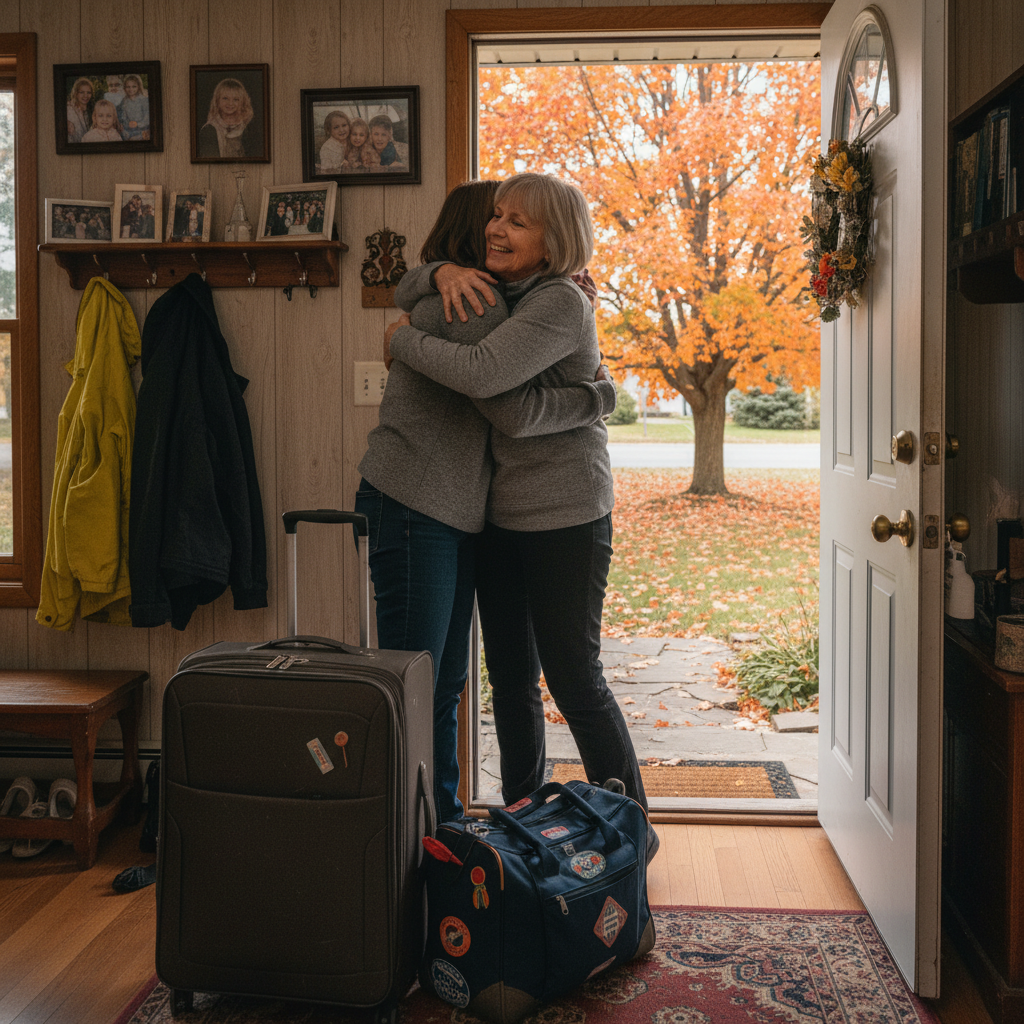
The Financial Reality of Returning Home From International Work
Adult children working internationally face unique financial pressures when returning to Canada:
- Relocation costs: International moving companies, flights, storage ($5,000–$15,000)
- Housing gaps: Timing misalignment between leaving abroad housing and arriving Canadian housing
- Credential recognition delays: Professional licensing, credential assessment, or recertification takes months ($2,000–$8,000)
- Job market re-entry: Even skilled professionals often face a "re-entry gap" of 2–6 months before stable Canadian employment
- Tax complications: Cross-border taxes, foreign asset reporting, currency conversion losses
- Temporary accommodation: Weeks or months in hotels, Airbnb, or temporary rentals while permanent housing is arranged
- Furniture & household setup: Establishing a new home in Canada from scratch ($5,000–$15,000)
For many adult children, depleting savings to cover these costs leaves them financially vulnerable in their first Canadian months—exactly when they should be building stability. As a parent, you may feel caught between wanting to help and protecting your own retirement.
A reverse mortgage lets you help meaningfully without sacrificing your financial security.
Common Return Scenarios and Reverse Mortgage Solutions
Scenario 1: The Career Pivot Return
Situation: Your child worked 5 years in Southeast Asia, building significant experience. They're moving back to Toronto to be closer to family and launch a consulting business—but they need 3–4 months to establish the business before it generates revenue.
Reverse mortgage solution:
- Temporary living support: $2,000/month × 4 months = $8,000 for rent during the transition
- Business setup costs: Home office, professional licensing, website, credentials recognition = $5,000
- Personal expenses buffer: 3 months of living costs as a safety net = $9,000
- Total: $22,000 drawn from reverse mortgage
Benefit: Your child doesn't drain savings in the critical early months. They can focus on business launch without financial panic.
Scenario 2: The Layoff/Unexpected Return
Situation: Your child worked in Dubai as an expatriate accountant. Their company downsized, and she's returning to Canada with 2 weeks' notice. Visa sponsorship ends; she needs to move home temporarily while job hunting in Canada.
Reverse mortgage solution:
- Emergency relocation: International movers, flights, temporary storage = $12,000
- Professional re-certification: CPA Ontario pathway, courses, exam fees = $4,000
- Living expenses during job search: 6 months of support = $15,000
- Total: $31,000
Benefit: Your child doesn't incur debt during a vulnerable transition. When she lands a Canadian role, she's debt-free and ready to contribute financially again.
Scenario 3: The Dual-Location Transition
Situation: Your son spent 3 years working in London (UK). He's accepted a senior role in Vancouver but also wants to spend 2 months with you in Ontario before moving west. He needs temporary housing, family time, and a cushion before his Vancouver start date.
Reverse mortgage solution:
- Relocation from UK to Canada: International moving, flights, temporary storage = $8,000
- Ontario temporary accommodation: 2-month rental = $3,500
- Vancouver setup costs: Deposit, first month's rent, furniture = $6,000
- Professional credential transfer: UK to Canadian licensing = $2,500
- Total: $20,000
Benefit: Your family gets quality time during his transition without financial stress. He's settled in both locations before his new role starts.
Funding Return Costs: What a Reverse Mortgage Covers
| Cost Category | Typical Range | Reverse Mortgage Covers? |
|---|---|---|
| International relocation (movers, flights, visas) | $5,000–$15,000 | Yes—up to full amount |
| Temporary housing (hotel, Airbnb, rental, in-home) | $2,000–$8,000/month | Yes—flexible access |
| Credential recognition (licensing, assessment, recertification) | $2,000–$8,000 | Yes |
| Job search living expenses (3–6 months) | $9,000–$18,000 | Yes—line of credit option |
| Household setup (furniture, appliances, linens) | $5,000–$15,000 | Yes—lump sum or draws |
| Temporary in-home support (groceries, utilities) | $500–$1,500/month | Yes—from line of credit |
| Tax/legal fees (cross-border, credential pathway) | $1,500–$4,000 | Yes |
Total typical return costs: $25,000–$65,000 — well within what many Ontario homeowners can access through a reverse mortgage.
Reverse Mortgage vs. Other Funding Options
| Funding Source | Suitable for Return Costs? | Pros | Cons |
|---|---|---|---|
| Reverse Mortgage | Excellent | No monthly payments; flexible timing; large lump sum | Compound interest; reduces estate |
| Personal savings | Good short-term | Instant access; no debt | Depletes retirement reserves |
| HELOC from parent | Good | Lower rates; flexible | Requires monthly payments; affects parent cash flow |
| Adult child's relocation loan | Limited | Builds child's credit | Adds debt to child's fresh start |
| Family loan | Okay but risky | No interest | Can strain family relationships if repayment unclear |
| Relocation employer assistance | Sometimes available | Employer covers some costs | Many international contracts don't include it |
For Ontario parents, a reverse mortgage is often ideal because:
- It provides substantial funds without requiring monthly payments
- It doesn't create debt for your returning adult child
- It allows flexible access as your child's needs emerge over months
- It doesn't strain family relationships by creating loans or IOUs
Special Considerations for International Returns
1. Tax Implications of Your Support
When you help a returning adult child financially, there are no automatic tax consequences for you (parent). However, your child may face:
- Foreign tax credits: If taxes were paid abroad, they can offset Canadian taxes
- Capital gains on foreign assets: If they're selling property or investments from abroad
- Currency conversion losses: If they're moving money from foreign currency
Recommendation: Have your returning child consult a cross-border tax specialist (CPA) before moving. This costs $500–$1,000 but can save thousands in tax planning.
2. Professional Credential Recognition Timelines
Different professions have different recognition pathways—and timelines vary:
| Profession | Recognition Timeline | Cost Range |
|---|---|---|
| Engineering (PEO) | 3–6 months | $3,500–$6,000 |
| Accounting (CPA) | 2–4 months | $2,500–$4,500 |
| Law (Law Society of Ontario) | 6–12 months | $5,000–$10,000 |
| Medicine (LMCC) | 6–18 months (exams required) | $5,000–$15,000 |
| Teaching (Ontario College of Teachers) | 2–4 months | $1,500–$3,000 |
Some professions require additional exams or training—which extends the timeline AND the cost. A reverse mortgage provides the financial buffer while your child navigates these processes.
3. Housing Market Timing
Your child returning to Canada may face a mismatch between their lease end abroad and available housing in Canada. A reverse mortgage solves this:
- Early-arrival scenario: Your child arrives before permanent housing is ready. The reverse mortgage covers 2–4 months of temporary rental.
- Delayed-arrival scenario: Your child is held back by visa processing or relocation delays. You cover mortgage/rent while they're still abroad.
- Housing search scenario: Your child needs flexibility to explore neighborhoods and school districts. Short-term rental funding from the reverse mortgage buys time for the right property.
A Real-World Example: Sarah's Return to Ontario
Sarah, age 31, returned to Ontario after 6 years working in Australia. Her parents, ages 68 and 70, held a $550,000 home in Toronto with minimal mortgage ($50,000).
Sarah's situation:
- Her Australian employer provided a relocation package—but it covered only moving costs to Australia, not FROM Australia
- She'd saved aggressively but wanted to preserve her $45,000 nest egg for a first Canadian home down payment
- She expected a 3–4 month job search before landing a position with her Australian experience
Parent's concern: Their retirement was solid, but they didn't want to deplete savings supporting Sarah's transition.
Solution: Sarah's parents accessed a reverse mortgage for $50,000. They structured it as:
- $8,000 for Sarah's international relocation
- $12,000 for 4 months of temporary Toronto rental
- $5,000 for professional credential recognition (Australian CPA to Canada CPA)
- $5,000 as a living expense buffer during job search
- $20,000 held in reserve as a family emergency fund
Outcome: Sarah landed a job within 3 months. She moved into her permanent apartment and began contributing financially. Her parents had helped meaningfully without disrupting their retirement or draining their emergency reserves. The reverse mortgage was structured so monthly payments didn't strain their fixed income.
Sarah's nest egg remained intact for her future home purchase.
Should You Offer Return Support? Questions to Ask
Before taking out a reverse mortgage to support your returning adult child, ask yourself:
- Can I afford it without disrupting my retirement? (A reverse mortgage should supplement, not replace, retirement income)
- Does my child have a realistic plan? (Job search timeline, credential pathway, temporary housing end date)
- Am I comfortable with compound interest reducing my estate? (This is the real cost of the support)
- Have we discussed financial boundaries? (How much, for how long, what success looks like)
- Is this temporary support or ongoing commitment? (Reverse mortgage funds are finite; ongoing support isn't sustainable)
Key Takeaways
- Total return costs for an adult child coming back from an international assignment typically range from $25,000 to $65,000, covering relocation, temporary housing, credential recognition, and living expenses.
- Ontario homeowners aged 55+ can generally access 15% to 59% of their home's appraised value through a reverse mortgage, with no monthly payments required.
- Professional credential recognition timelines vary widely—2-4 months for CPA or teaching credentials versus 6-18 months for medicine—so a reverse mortgage line of credit can flex to match the actual timeline.
- Reverse mortgage proceeds are tax-free loan advances, and there are no automatic tax consequences for the parent providing support.
- A negative-equity protection guarantee ensures the loan balance will never exceed your home's fair market value when it becomes due upon sale, death, or permanent move-out.
- Structuring support as a reverse mortgage rather than a family loan avoids creating IOUs or debt that could strain the relationship or your child's fresh financial start.
Frequently Asked Questions
How much does it typically cost to help an adult child relocate home from an international assignment?
Total return costs generally range from $25,000 to $65,000, covering international relocation, temporary housing, credential recognition, and a living expense buffer during the job search. The exact amount depends on the profession, destination city, and how long the transition takes.
Will helping my child with a reverse mortgage require me to make monthly payments?
No. Reverse mortgages do not require monthly principal or interest payments, which is why many Ontario parents use them to fund a child's transition without adding a new expense to their fixed retirement income. The loan balance and accrued interest, typically in the 6.5%-8.5% range, are repaid when the home is eventually sold or the loan becomes due.
Is a reverse mortgage or a line of credit better for supporting a returning adult child?
A line-of-credit structure is often preferable because your child's needs — credential recognition timelines, job search length, housing gaps — tend to emerge gradually rather than all at once. This lets you draw only what's needed as costs arise, rather than committing to a large lump sum upfront.
Does supporting my child financially through a reverse mortgage create tax issues for either of us?
There are generally no automatic tax consequences for the parent providing support, since reverse mortgage proceeds are tax-free loan advances rather than income. Your returning child may face separate tax considerations, such as foreign tax credits or currency conversion issues, which a cross-border tax specialist can help navigate.
What happens to my estate if I use a reverse mortgage to help my child resettle?
The reverse mortgage balance, including accrued interest, is repaid from the sale of your home when you pass away, sell, or permanently move out, which reduces the amount your heirs eventually inherit. Because home values often appreciate over time, the net impact on your estate is frequently smaller than the amount you borrowed.
Getting Started: A Reverse Mortgage for Your Child's Return
If you decide to help your returning adult child:
- Get a reverse mortgage assessment: Licensed mortgage broker will evaluate your home equity and borrowing capacity
- Discuss your child's timeline: When do they arrive? When do they expect employment?
- Structure your draws: A line of credit option allows you to access funds as your child's needs emerge
- Set clear boundaries: "I'll support you for 6 months of job searching, then you become self-sufficient"
- Celebrate the re-entry: Your financial support removes stress from the transition, letting your family focus on quality time
The Bottom Line
Adult children returning from international assignments face real financial friction—even when they're skilled and employed abroad. As an Ontario parent, you're not obligated to help, but if you choose to, a reverse mortgage provides meaningful support without monthly payments or personal income disruption.
Your returning child gets a runway to re-establish themselves in Canada without depleting their savings or going into debt. You get to support your family while protecting your retirement. Everyone wins.
Speak with a licensed broker about reverse mortgage options for your family situation →
This content is for informational purposes. Reverse mortgage terms, rates, and eligibility vary by lender. Consult a licensed mortgage broker and financial advisor for your specific situation. Tax implications for returning Canadians are complex—consult a cross-border tax specialist.
Ready to Learn More?
Find out exactly how much you could unlock from your home — free and no obligation.
Related Articles
Reverse Mortgage When Adult Child Returns Home Unexpectedly: Financial Integration
Your adult child returned home suddenly due to job loss, crisis, or life change. Learn how reverse mortgages affect shared housing, household budgets, and legal responsibilities in Ontario.
Read →Reverse Mortgage When Adult Child Moves Back Home
How to fund multi-generational housing costs when an adult child returns home. Ontario guide for parents supporting boomerang children using home equity.
Read →Reverse Mortgage When Adult Child's Startup Partner Leaves: Emergency Equity and Continuation Funding
Emergency reverse mortgage funding when startup partner abandons your adult child's business. Save viable startups and protect your child's entrepreneurial future.
Read →