
Reverse Mortgage for Accessible Guest Suite Renovations: Hosting Disabled Family Members
Fund accessible guest suite renovations to comfortably host family members with disabilities. Aging in Place guide for creating inclusive multigenerational homes in Ontario.
What if you wanted to host a family member with a disability—a parent, sibling, or grandchild—but your guest suite or spare bedroom isn't accessible, putting them at risk or forcing them to stay elsewhere? Many multi-generational Ontario families want to provide housing and support to relatives with disabilities (mobility challenges, vision loss, hearing loss, cognitive changes), but standard guest suites lack the essential accessibility features that make staying safe and independent. Creating an accessible guest suite requires strategic renovations: accessible bathrooms, wider doorways, accessible storage, grab bars, accessible kitchen access, and appropriate lighting. These renovations cost $15,000–$50,000+ but transform your home into a welcoming, safe space for disabled family members. A reverse mortgage funds these renovations, allowing you to open your home to loved ones while maintaining their dignity and independence.
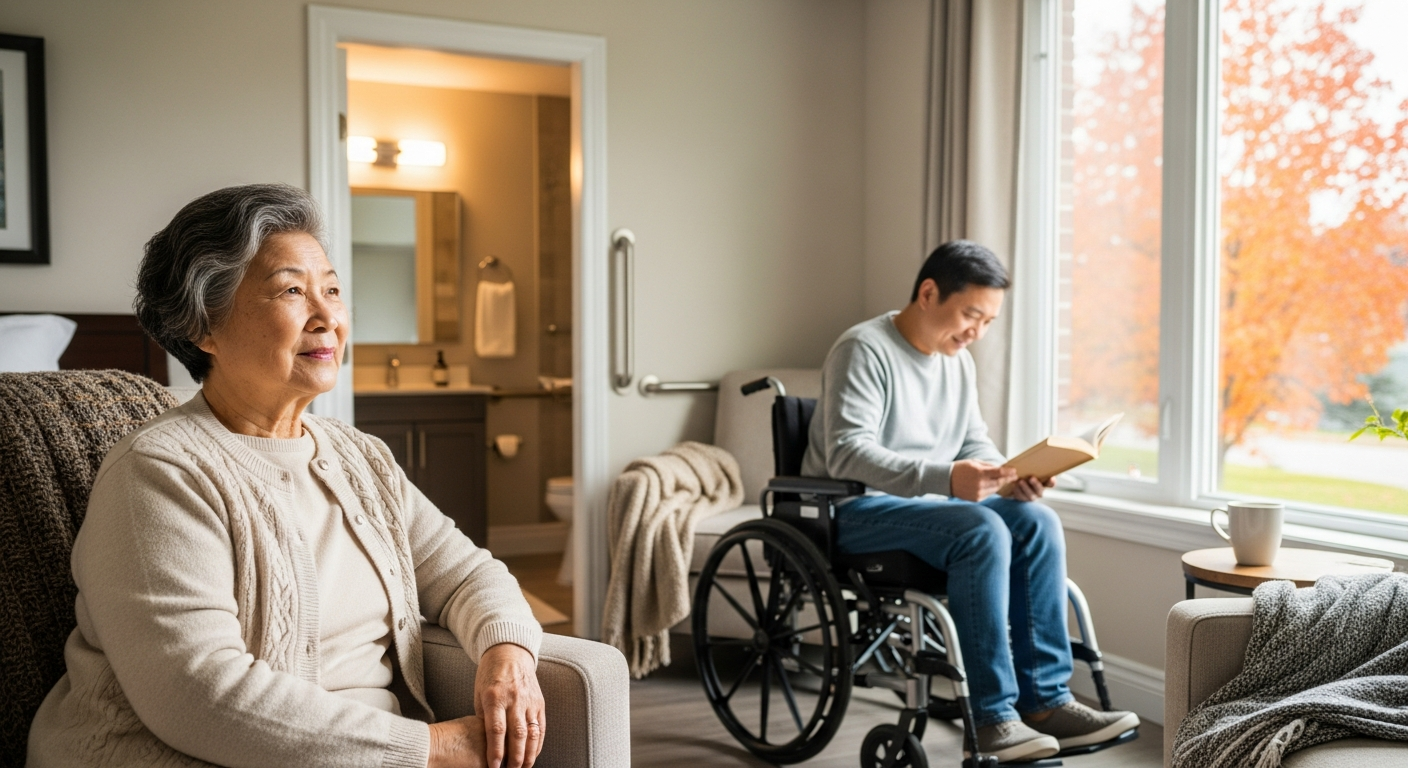
Why Standard Guest Suites Don't Work for Disabled Family Members
A typical guest bedroom is designed for temporary, able-bodied visitors. It rarely includes the accessibility features needed for longer-term stays by family members with disabilities:
Common Accessibility Gaps:
| Accessibility Need | Standard Guest Suite | Accessible Guest Suite |
|---|---|---|
| Bathroom entry | Standard 32" door; no grab bars | 36" minimum door; grab bars throughout |
| Toilet and shower access | Standard height toilet; standard tub/shower | Comfort-height toilet; roll-in shower with bench |
| Bedroom entry | Standard door; steps/threshold possible | 36" door; no-step entry from main home |
| Bed height | Standard 26" height | Adjustable or comfort-height (28–32") for wheelchair transfer |
| Storage access | Shelves and closets at standard heights | Accessible shelving (up to 48" height) |
| Flooring | Carpeting or tile with transitions | Level, slip-resistant, no transitions |
| Lighting | Single ceiling light | Multiple switches, motion sensors, dimmer controls |
| Kitchen access | Standard counters at 36" height | Lowered counters (32–34") and accessible appliances |
For family members with mobility disabilities, vision loss, or cognitive changes, these gaps create safety hazards and reduce independence. Standard guest suites force visitors to ask for help with basic activities—showering, using the toilet, accessing food, or opening doors.
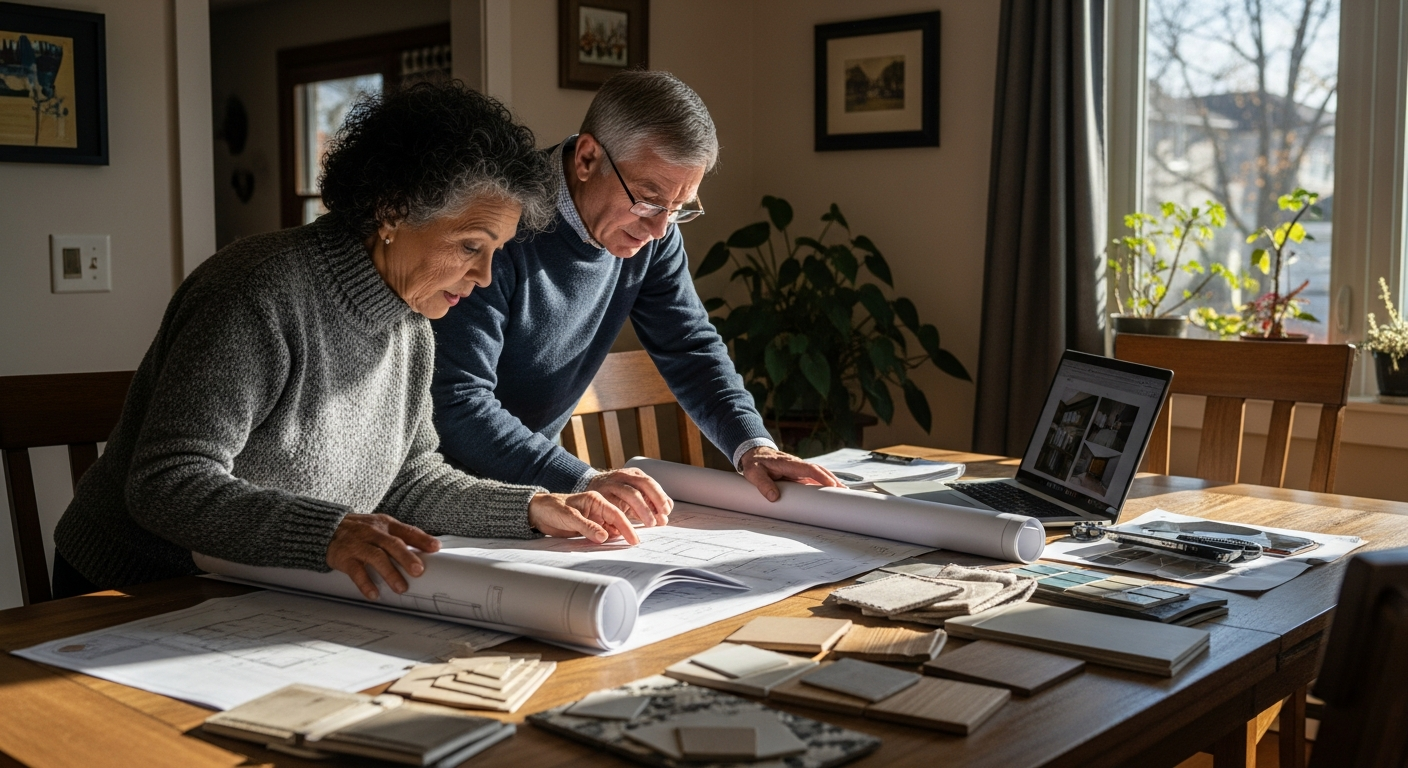
Planning Your Accessible Guest Suite
Step 1: Assess Your Family Member's Specific Needs
Before renovation, understand exactly what accessibility features your guest needs:
Mobility disabilities (wheelchair use, walker, cane):
- Wide doorways (36"+), no-step entry, accessible bathroom
- Grab bars in bathroom, bedside grab rails
- Accessible bed height (28–32") for transfer
- Accessible kitchen with lowered counters
Vision loss (low vision, blindness):
- Clear, consistent lighting throughout
- High-contrast door frames and edges
- Open floor plan without unexpected obstacles
- Accessible kitchen labels and appliance controls
- Accessible toilet paper dispenser and light switches
Hearing loss:
- Visual alert systems (door chimes, smoke alarms with strobe lights)
- Visual privacy in bedroom (not essential but considerate)
- Adequate space for sign language interpretation if needed
Cognitive changes (dementia, brain injury):
- Clear wayfinding and landmarks
- Accessible bathroom with emergency pullcord
- No tripping hazards or complex layouts
- Easy-to-use appliances and controls
Step 2: Budget Your Renovation
| Renovation Item | Low Cost | Mid-Range | High-End |
|---|---|---|---|
| Bathroom renovation (full accessible) | $10,000 | $20,000 | $35,000+ |
| Widen doorways (multiple) | $2,000 | $5,000 | $10,000+ |
| Install grab bars and rails | $800 | $2,000 | $5,000+ |
| Accessible kitchen modifications | $3,000 | $8,000 | $15,000+ |
| Flooring (slip-resistant, level) | $2,000 | $5,000 | $10,000+ |
| Lighting upgrades | $1,000 | $3,000 | $7,000+ |
| Accessibility entrance/ramp | $2,000 | $5,000 | $10,000+ |
| Total guest suite renovation | $15,000–$25,000 | $30,000–$50,000 | $60,000–$100,000+ |
Costs vary significantly based on your region (Toronto costs more than rural areas), existing plumbing/electrical layout, and scope of renovation.
Step 3: Hire an Accessibility Consultant
Before hiring contractors, consult a professional accessibility designer or Certified Aging-in-Place Specialist (CAPS). Cost: $500–$2,000 for a consultation. This investment prevents costly mistakes and ensures renovations meet accessibility standards.
Rick Sekhon Reverse Mortgages can connect you with accessibility consultants who work with renovators.
Multi-Generational Benefits of Accessible Guest Suites
Beyond hosting your specific family member, an accessible guest suite provides:
1. Future-Proofing Your Home
As you age, you may develop mobility or vision changes. Accessible renovations benefit you long-term, making your home safe for aging in place.
2. Universal Appeal to Future Buyers
When you eventually sell, accessible features appeal to a broader buyer base, including aging empty-nesters and families with disabled members.
3. Supporting Multiple Family Members
One accessible guest suite can welcome various family members—your aging parent, sibling with mobility disability, grandchild with developmental disability—over time.
4. Reducing Caregiver Burden
Family members who visit no longer need constant supervision in an inaccessible space. They're safer and more independent, reducing caregiver stress.
Real-Scenario Example
Maria's Accessible Guest Suite:
Maria, age 72, wants her adult daughter Sofia (age 42, wheelchair user) and granddaughter Elena (age 8) to stay for extended visits. Her spare bedroom is standard, and the home has narrow doorways and a single bathroom inaccessible to wheelchair users.
Renovation plan:
- Widen hallway and bedroom doorway to 36" ($3,000)
- Full bathroom renovation: accessible shower, grab bars, accessible toilet, lighting ($22,000)
- Bedroom: Install bedside grab rails, lowered accessible nightstand ($1,500)
- Kitchen: Lowered counter section for food prep in wheelchair ($4,000)
- Entryway: Build ramp to accessible entrance ($4,000)
- Total: $34,500
Reverse mortgage: Maria obtains a $35,000 reverse mortgage and funds the renovation. Cost: approximately $1,400/year in interest on the $35,000 balance.
Outcome: Sofia can now visit independently. She uses the accessible bathroom, transfers to the accessible bed, and helps prepare meals from the lowered counter. Elena's visits become longer and more comfortable because her mother isn't fighting inaccessible infrastructure the whole time. Maria's home becomes the family gathering space instead of inaccessible.
Ontario Accessibility Grants and Rebates
Before or after reverse mortgage approval, explore whether your family member qualifies for accessibility modification grants:
- Assistive Devices Program (ADP) — Covers some mobility aids and equipment
- ODSP Supports for Permanence — Funding for accessibility for ODSP recipients
- Property Tax Assistance for Accessibility (Ontario) — Some municipalities offer tax credits for accessibility renovations
- Registered Disability Savings Plan (RDSP) Withdrawals — RDSP holders can withdraw funds tax-free for accessibility renovations
Grants won't cover the full cost, but they can offset $5,000–$10,000 of your renovation expenses.
According to the Accessibility Standards for Customer Service (Ontario Regulation 429/07), businesses and public organizations must provide accessible accommodations. While homes aren't regulated the same way, the same principles apply—accessible homes enable participation and independence for family members with disabilities.
Key Takeaways
✓ Accessible guest suites cost $15,000–$50,000+ depending on renovation scope — bathroom, doorways, and flooring are the largest expenses
✓ A reverse mortgage funds renovations without monthly payments — your home equity pays for improvements that benefit your family
✓ Accessible features future-proof your home as you age — renovations benefit you long-term, not just guest visitors
✓ Consult an accessibility professional before renovation — $500–$2,000 consultation prevents costly mistakes and ensures standards compliance
✓ CHIP and HomeEquity Bank support accessibility renovations — mention accessibility needs when discussing reverse mortgage with your lender
Frequently Asked Questions
Can I make my guest suite accessible if I don't have a full bathroom attached to the bedroom?
Yes, but it's more challenging. You'll need to renovate the adjacent bathroom (or primary bathroom) for accessibility and ensure clear, accessible hallway access. This increases costs compared to an attached accessible bathroom. Consult an accessibility consultant about your home's layout.
What if my family member's specific accessibility needs are unusual or complex?
Work with an accessibility consultant to design custom solutions. You may need specialized equipment (overhead lifts, adjustable beds, specialized shower systems) costing more than standard renovations. A reverse mortgage's flexibility allows for higher-cost, personalized renovations.
Will accessible renovations reduce my home's value or resale appeal?
No. Accessible features have neutral-to-positive impact on resale value. Many buyers appreciate accessibility even if they don't currently need it. Universal design is increasingly valued in real estate.
Can I deduct accessibility renovation costs on my taxes?
This depends on the type of renovation. Medical expense tax credits may apply if the modifications are prescribed by a physician for your family member's specific disability. Consult an accountant about your situation.
What if I make the guest suite accessible but my family member's needs change?
Accessible features remain beneficial for you and future visitors. For example, if your daughter no longer needs wheelchair access but you develop mobility changes as you age, the accessible bathroom benefits you. Universal design adapts to changing needs.
Can I use a reverse mortgage for guest suite accessibility if I'm still paying a mortgage?
Yes, but the reverse mortgage lender's charge will be secondary to your current mortgage. This may affect borrowing amount or require paying off the primary mortgage first. Consult with Rick Sekhon Reverse Mortgages about your specific mortgage situation.
Want to welcome disabled family members into your home safely? A reverse mortgage funds the accessible renovations that make it possible. Get your free Ontario Reverse Mortgage Guide →
Ready to Learn More?
Find out exactly how much you could unlock from your home — free and no obligation.
Related Articles
Reverse Mortgage for Decorating and Furnishing a Guest Suite: Hosting Extended Family in Ontario
Fund a dedicated guest suite with a reverse mortgage. Create comfortable spaces for extended family visits and multi-generational gatherings.
Read →Home Accessibility on a Budget: Must-Have Modifications for Aging in Place
Guide to affordable home accessibility modifications for aging in place in Ontario. Reverse mortgage funding for critical safety upgrades.
Read →Reverse Mortgage When Home Equity Surprises You: Unexpected Property Value Growth
Your home is worth more than you thought. Discover how sudden equity growth changes your reverse mortgage strategy and borrowing power.
Read →