
Reverse Mortgage for Accessible Backyard and Outdoor Living Space Renovation
Create accessible outdoor living spaces—patios, decks, gardens, and pathways—for aging in place with a reverse mortgage funding landscape and accessibility renovations.
What happens when arthritis or mobility challenges prevent you from enjoying your backyard? Many seniors with beautiful outdoor spaces can no longer safely access them—stairs are too steep, pathways are uneven, seating is inadequate. A reverse mortgage can fund accessible backyard renovations, creating outdoor living spaces that enable you to garden, entertain, and enjoy fresh air safely while aging in place.
This article is for educational purposes only and does not constitute financial advice.

The Value of Accessible Outdoor Spaces
Outdoor spaces significantly improve quality of life for aging adults:
Health benefits:
- Fresh air and sunlight exposure (Vitamin D, circadian rhythm)
- Physical activity in pleasant environment
- Gardening as therapeutic activity (stress reduction, purpose)
- Social connection (entertaining family and friends outdoors)
- Mental health (nature exposure; sense of control and independence)
Aging-in-place advantage:
- Extends independence into outdoor activities
- Reduces falls and injuries in familiar environment
- Enables multi-generational family gatherings
- Maintains connection to home and property
- Supports active, engaged retirement lifestyle
Problem: Many seniors can't safely access their backyards due to:
- Steep deck stairs (arthritis, balance issues, pain)
- Uneven pathways (tripping hazards)
- Limited seating options
- Overgrown gardens (can't maintain)
- Lack of shade structures
- Poor lighting (safety at night)
- No accessible water source for gardening
Accessible Backyard Renovation Elements
Pathways and walkways:
- Smooth, level surfaces (no tripping hazards): $30-$50/sq ft
- Non-slip paving material (important if wet): adds $5-$15/sq ft
- Proper slope for drainage (not too steep): included in installation
- Wide enough for walker or wheelchair: 3+ feet minimum
- Handrails for longer pathways (15+ feet): $50-$100/linear foot
- Pathway lighting for safety: $200-$500
Deck modifications:
- Remove or replace steep stairs with ramp: $3,000-$8,000
- Add handrails to deck edges: $50-$100/linear foot
- Expand seating areas with built-in benches: $2,000-$5,000
- Add shade structures (pergola, awning): $2,000-$6,000
- Deck resurfacing (improved grip): $20-$40/sq ft
Patio creation:
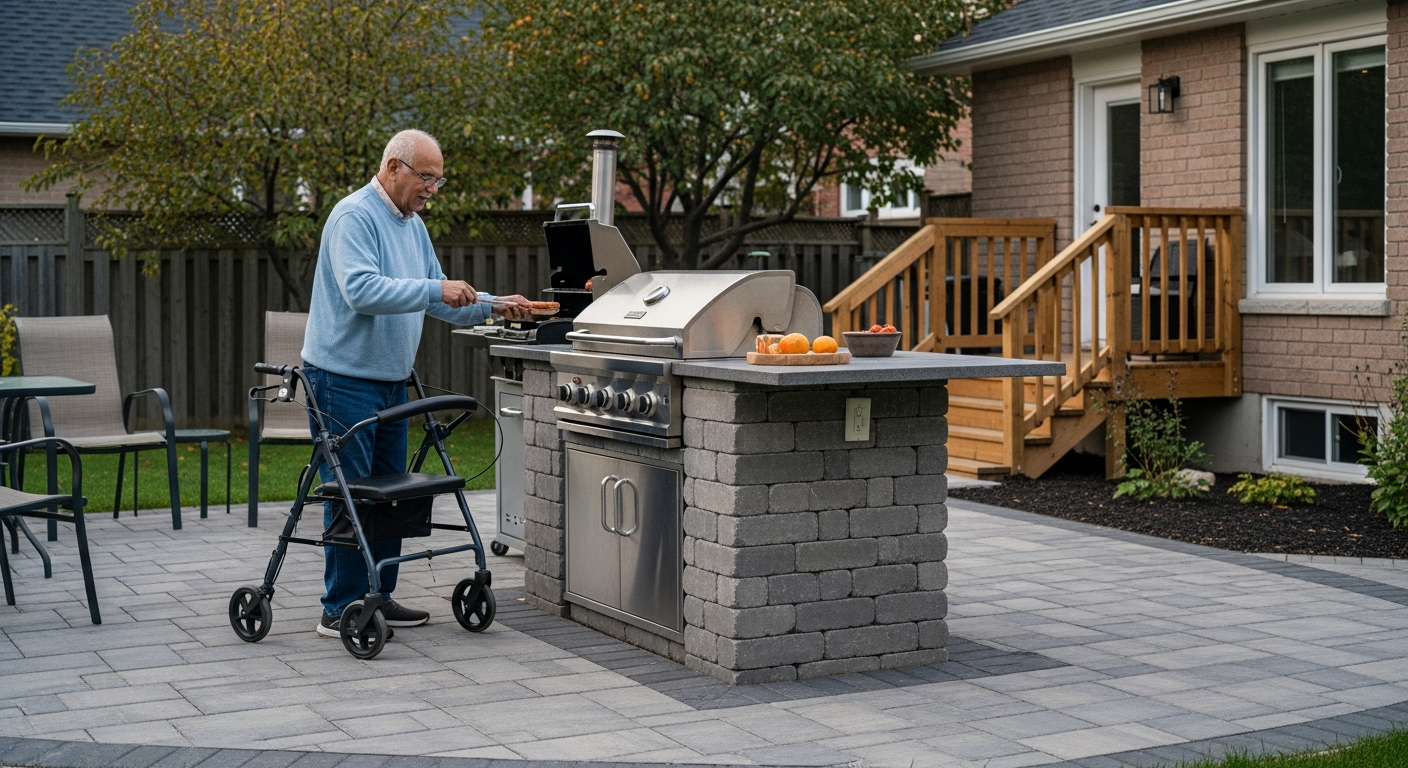
- Build accessible patio with level surface: $30-$60/sq ft
- Furniture: durable outdoor chairs with armrests, tables: $1,500-$4,000
- Shade structures: $2,000-$6,000
- Lighting and ambient features: $500-$2,000
Gardening accessibility:
- Raised garden beds (ergonomic height): $500-$2,000
- Container garden systems: $800-$2,500
- Garden seating and work station: $1,000-$3,000
- Drip irrigation system (low maintenance): $1,000-$3,000
- Shade cloth or pergola for garden protection: $1,500-$4,000
Water and shade:
- Shade structures (pergola, gazebo, shade sail): $2,000-$8,000
- Bench with backrest and armrests: $500-$2,000
- Outdoor ceiling fan (covered area): $1,000-$2,500
- Water feature or fountain (relaxation): $1,500-$5,000
Lighting:
- Solar pathway lights: $200-$500
- Low-voltage landscape lighting: $1,000-$3,000
- Motion-sensor security lights: $300-$800
- Ambient lighting (strings, uplighting): $500-$2,000
Total accessible backyard renovation: $8,000-$35,000+ (depending on scope and current condition)
| Renovation Category | Typical Cost Range |
|---|---|
| Pathways and walkways | $30-$50/sq ft |
| Deck modifications (ramp, handrails, resurfacing) | $3,000-$8,000 |
| Patio creation | $30-$60/sq ft |
| Gardening accessibility (raised beds, irrigation) | $500-$3,000 |
| Shade structures | $2,000-$8,000 |
| Lighting | $200-$3,000 |
Real-World Scenario: David's Backyard Transformation
David, age 72, Ontario:
- Active gardener; loves outdoor entertaining
- Arthritis makes climbing deck stairs painful
- Backyard overgrown; can't maintain
- Wife (age 70) enjoys gardens but also has mobility concerns
- Home value: $540,000
- Reverse mortgage capacity: ~$302,000 (56% at age 72)
- Renovation budget: $18,000
Current challenges:
- Deck stairs too steep; painful to climb
- Pathway from house to garden is uneven (tripping hazard)
- Garden beds too high to maintain comfortably
- No shade; hot in summer
- Limited outdoor seating
- Overgrown vegetation; difficult to manage
Renovation plan:
- Replace deck stairs with ramp ($4,500)
- Level and improve pathways; add handrails ($3,500)
- Build accessible raised garden beds at optimal height ($2,500)
- Create patio seating area with shade structure ($5,000)
- Install irrigation system and hardscape features ($2,000)
- Lighting and landscaping ($500)
- Total: $18,000
Outcomes:
- David and wife can safely enjoy backyard again
- Gardening renewed as therapeutic activity
- Space for entertaining family
- Reduced fall risk through improved pathways
- Maintained independence in outdoor activities
Renovation Steps and Considerations
Phase 1: Assessment (Week 1-2)
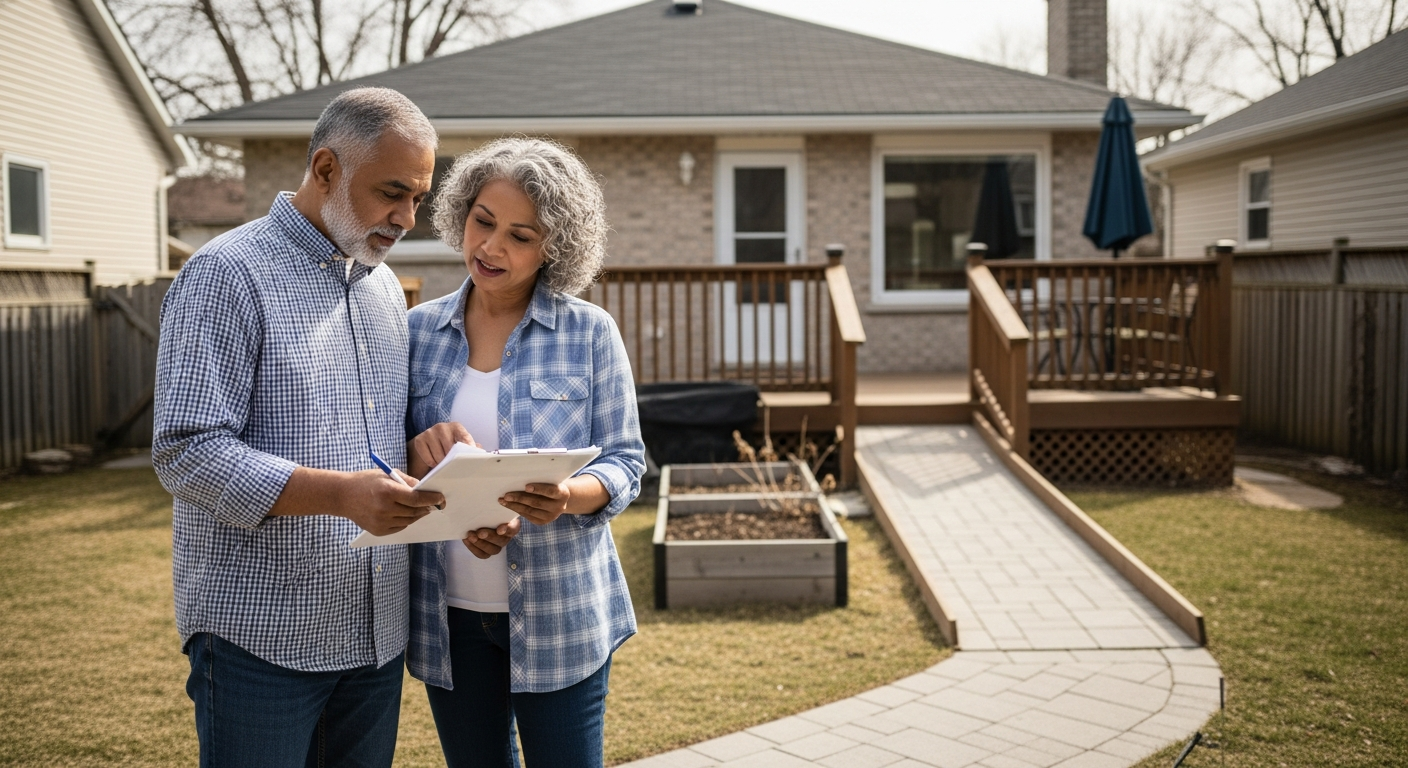
- Walk through backyard with family, identify current challenges
- Consult occupational therapist or aging-in-place specialist
- Document mobility limitations and goals
- Take photographs of existing conditions
- Create wish list and prioritize
Phase 2: Professional Planning (Week 2-4)
- Hire contractor experienced in accessibility modifications
- Get professional assessment and estimates
- Check building permit requirements (some renovations require permits)
- Discuss phasing if full renovation exceeds budget
- Review accessibility standards and safety codes
Phase 3: Construction (Weeks 4-12)
- Complete priority projects first (pathways for safety, ramps for mobility)
- Build secondary features (gardens, seating, shade) as budget allows
- Temporary disruptions during construction
- Regular site visits to ensure quality
- Final walkthrough with contractor before payment
Phase 4: Landscaping and Finishing (Weeks 12-16)
- Plant gardens and landscaping
- Install furniture, shade structures
- Lighting and hardscape finishing
- Test accessibility features; make adjustments
- Create maintenance plan
Phased approach (if budget limited):
- Phase 1 ($5,000): Pathways and stairs (safety priority)
- Phase 2 ($5,000): Seating and shade (comfort and functionality)
- Phase 3 ($5,000): Gardens and irrigation (enjoyment and sustainability)
- Phase 4 ($3,000): Lighting and finishing (ambiance and safety)
| Renovation Phase | Budget Allocation | Priority Focus |
|---|---|---|
| Phase 1 | $5,000 | Pathways and stairs (safety) |
| Phase 2 | $5,000 | Seating and shade (comfort) |
| Phase 3 | $5,000 | Gardens and irrigation (enjoyment) |
| Phase 4 | $3,000 | Lighting and finishing (ambiance) |
Tax and Financial Implications
Reverse mortgage considerations:
- Proceeds not taxable
- Don't affect OAS/GIS
- Interest accrues; paid from estate upon sale
Home renovation costs:
- Generally not tax-deductible (personal home improvement)
- Improves property value; may affect home resale
- Accessibility renovations may qualify for some grants or credits
Potential grants (Ontario):
- Canada Mortgage and Housing Corporation (CMHC) home repair programs
- Local Ontario Disability Support Programs (ODSP) accessibility grants
- Property Tax Home Buyers' Plan (varies by municipality)
- Some communities offer senior accessibility renovation rebates
Consult municipality about available grants before fully funding renovation from reverse mortgage.
Key Takeaways
- A comprehensive accessible backyard renovation typically costs $8,000-$35,000+, depending on scope and existing conditions.
- Pathways should be at least 3 feet wide with a non-slip, level surface to safely accommodate a walker or wheelchair.
- A phased approach—starting with pathways and stairs for safety, then adding seating, gardens, and lighting—lets homeowners spread a $18,000 budget across four $3,000-$5,000 stages.
- Reverse mortgage proceeds used for renovations are tax-free and do not affect OAS or GIS eligibility, since they are loan advances, not income.
- Most significant structural work—decks, patios, pergolas, ramps, and outdoor electrical—requires a municipal building permit in Ontario, while basic landscaping typically does not.
- Accessible outdoor renovations recover roughly 30-40% of cost in resale value, but the primary benefit is years of safe, independent enjoyment while aging in place.
Frequently Asked Questions
How do I know if my backyard renovation requires building permits?
Most significant outdoor renovations require permits:
- Building decks or patios: YES
- Adding structures (pergola, gazebo): YES
- Ramps over certain height: YES
- Electrical work (outdoor lighting): YES
- Excavation or grading changes: YES
- Basic landscaping and planting: Usually NO
Contact your local municipality building department for specific requirements. Permits ensure safety compliance and protect your property value.
Can I do simple improvements myself to save money?
Some projects you can DIY:
- Container planting and gardening
- Installing simple pathway mulch or gravel
- Painting deck or planters
- Installing solar pathway lights
- Arranging furniture and creating seating areas
Projects requiring professionals:
- Building or repairing decks and ramps
- Excavation and grading
- Electrical work
- Structural modifications
- Hardscaping (patios, walkways with proper drainage)
Hybrid approach: DIY simple projects; hire professionals for structural and safety-critical work.
What's the best flooring material for accessible outdoor pathways?
Ideal properties:
- Non-slip when wet
- Level and smooth (no tripping hazards)
- Durable (20+ year lifespan)
- Low maintenance
- Aesthetically appealing
Best materials:
- Stamped concrete with non-slip coating: durable, customizable, $40-$60/sq ft
- Large pavers: good accessibility, $35-$50/sq ft
- Gravel with edge containment: budget-friendly, $15-$25/sq ft (but requires maintenance)
- Composite decking: modern, non-slip, expensive, $30-$50/sq ft
Avoid: slippery tile, loose gravel, uneven bricks.
Can I garden safely with arthritis or mobility limitations?
Yes. Accessible gardening strategies:
- Raised garden beds at waist height (reduces bending): $500-$2,000
- Container gardens on tables: $800-$2,500
- Lightweight tools with ergonomic handles: $100-$300
- Drip irrigation system (no bending to water): $1,000-$3,000
- No-dig planting methods
- Sitting work station (chair-height work): $500-$1,500
Gardening remains possible and therapeutic with proper modifications.
What if I eventually move to long-term care? Will the backyard investment be worthwhile?
Backyard improvements:
- Increase home resale value (modest return, ~30-40% of cost)
- Enable enjoyable aging in place while you live there (immediate benefit)
- Create family gathering space (quality of life benefit)
- Support your well-being and mental health (measurable impact)
Even if you eventually move, years of enjoyment justify the investment. Plus, well-maintained outdoor space improves home sale when the time comes.
How do I maintain accessible outdoor spaces?
Low-maintenance approach:
- Mulched gardens vs. high-maintenance flower beds
- Native plants that thrive in your zone
- Drip irrigation (automated watering)
- Seasonal cleanup (spring/fall) vs. constant maintenance
- Professional landscaper if maintenance becomes difficult
Design for minimal upkeep: the goal is enjoyment, not constant work.
Speak to a licensed mortgage professional. Independent legal advice is required before closing a reverse mortgage in Ontario.
Get your free Ontario Reverse Mortgage Guide →
This content is for illustrative purposes only. Renovation costs, permitting, and accessibility requirements vary by location and existing conditions. Consult with contractors, occupational therapists, and accessibility specialists about your specific backyard project.
Ready to Learn More?
Find out exactly how much you could unlock from your home — free and no obligation.
Related Articles
Reverse Mortgage for Accessible Gardening and Food Security: Growing Food While Aging in Place
Fund accessible gardening infrastructure for aging in place. Learn how a reverse mortgage enables raised beds, vertical gardens, accessible tools, and food security for Ontario seniors.
Read →Reverse Mortgage for Accessible Outdoor Spaces: Garden and Patio Renovation
Fund outdoor accessibility renovations with a reverse mortgage. Create safe, beautiful garden and patio spaces for aging in place in Ontario.
Read →Aging in Place with a Reverse Mortgage: Home Modification Guide
How Ontario seniors can fund aging-in-place home modifications with a reverse mortgage — costs, top modifications, grants, and a complete planning guide.
Read →