
Accessibility Vehicle Modifications: Reverse Mortgage for Transportation Independence
Fund accessible vehicle modifications with a reverse mortgage. Guide to wheelchair-accessible vans, hand controls, and mobility solutions for aging drivers in Ontario.
Can a reverse mortgage help you afford the hand controls, wheelchair lift, or van conversion your changing mobility requires? Many Ontario seniors facing vision, hearing, or mobility changes assume they must stop driving or purchase an expensive adaptive vehicle outright. A reverse mortgage offers a third option: accessing your home equity to fund the accessibility modifications that let you maintain your independence on the road.
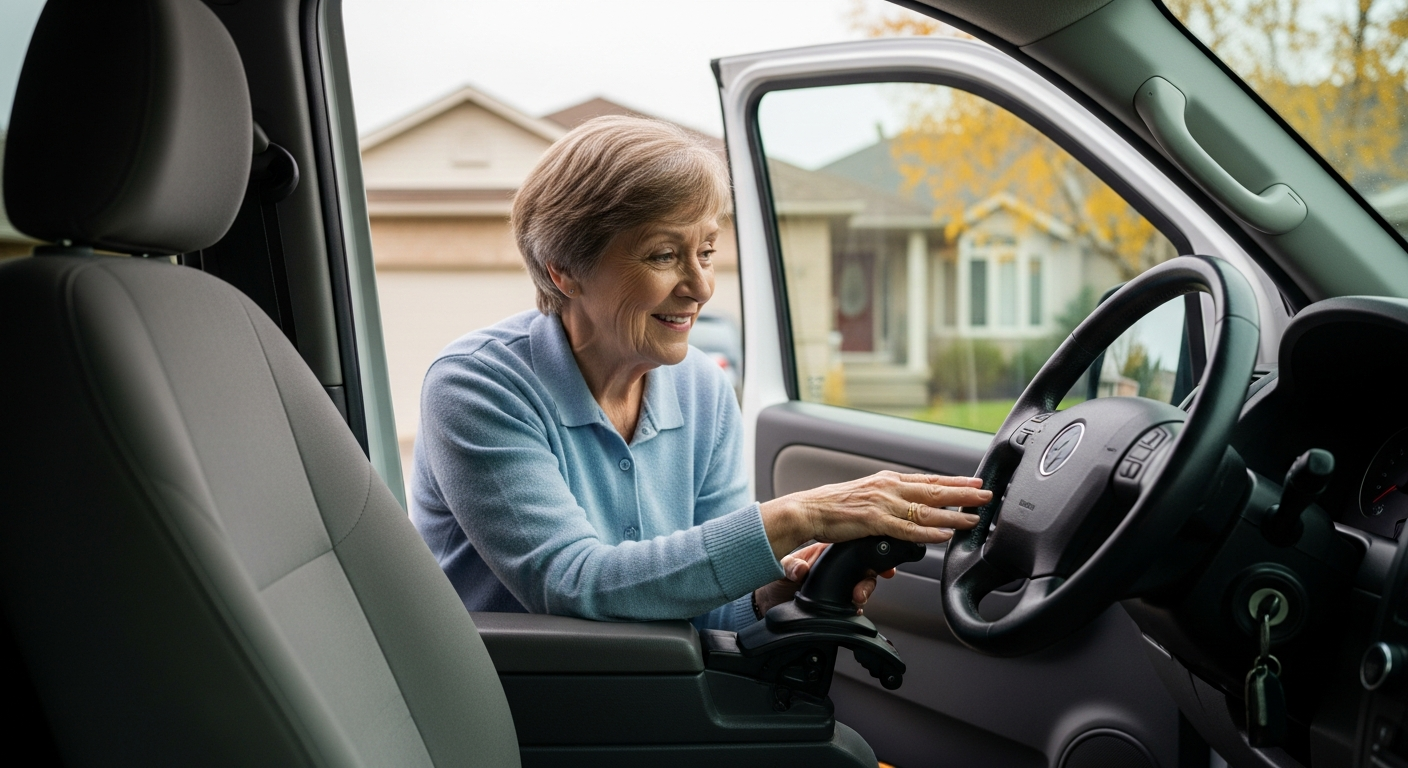
Why Vehicle Accessibility Costs Surge in Later Retirement
Aging in place often means maintaining your independence across multiple environments: your home, your neighborhood, and your vehicle. Yet vehicle accessibility modifications are rarely discussed in the context of housing equity — even though they can cost $15,000 to $80,000 or more.
According to the Government of Canada's accessibility resources, physical and sensory changes that begin in your 60s and 70s directly impact your ability to drive safely. A loss of neck mobility that makes mirror checks difficult, arthritis that makes hand steering painful, or vision changes that require higher contrast controls — all are common and all can be addressed through modification.
The challenge: these solutions are expensive, and most seniors haven't budgeted for them. A reverse mortgage lets you convert the equity in your home into the cash needed to stay mobile without forcing the sale that might otherwise end your independence.
Common Accessibility Vehicle Modifications and Their Costs
Wheelchair Accessibility: Lifts, Ramps, and Securing Systems
Wheelchair lift installation is one of the most common and expensive modifications. A full-vehicle lift system costs between $30,000 and $50,000 installed, depending on whether you retrofit an existing vehicle or purchase a factory-equipped van.
| Modification | Typical Cost | Installation Time |
|---|---|---|
| Wheelchair lift (used van, installed) | $30,000–$45,000 | 2–4 weeks |
| Wheelchair lift (new van, factory) | $35,000–$50,000 | 6–8 weeks |
| Lowered floor conversion | $20,000–$35,000 | 3–5 weeks |
| Securing system (4-point straps) | $2,000–$5,000 | 1–2 days |
| Ramp extension (portable) | $500–$2,000 | 1 day |
These costs are almost never covered by provincial disability funding, and wait-lists for government grants can stretch 18–24 months. A reverse mortgage provides immediate access to these funds without waiting.
Hand Controls and Adaptive Steering Systems
For seniors with lower-body mobility challenges or neurological conditions affecting leg control, hand controls allow full operation of the vehicle using only the hands.
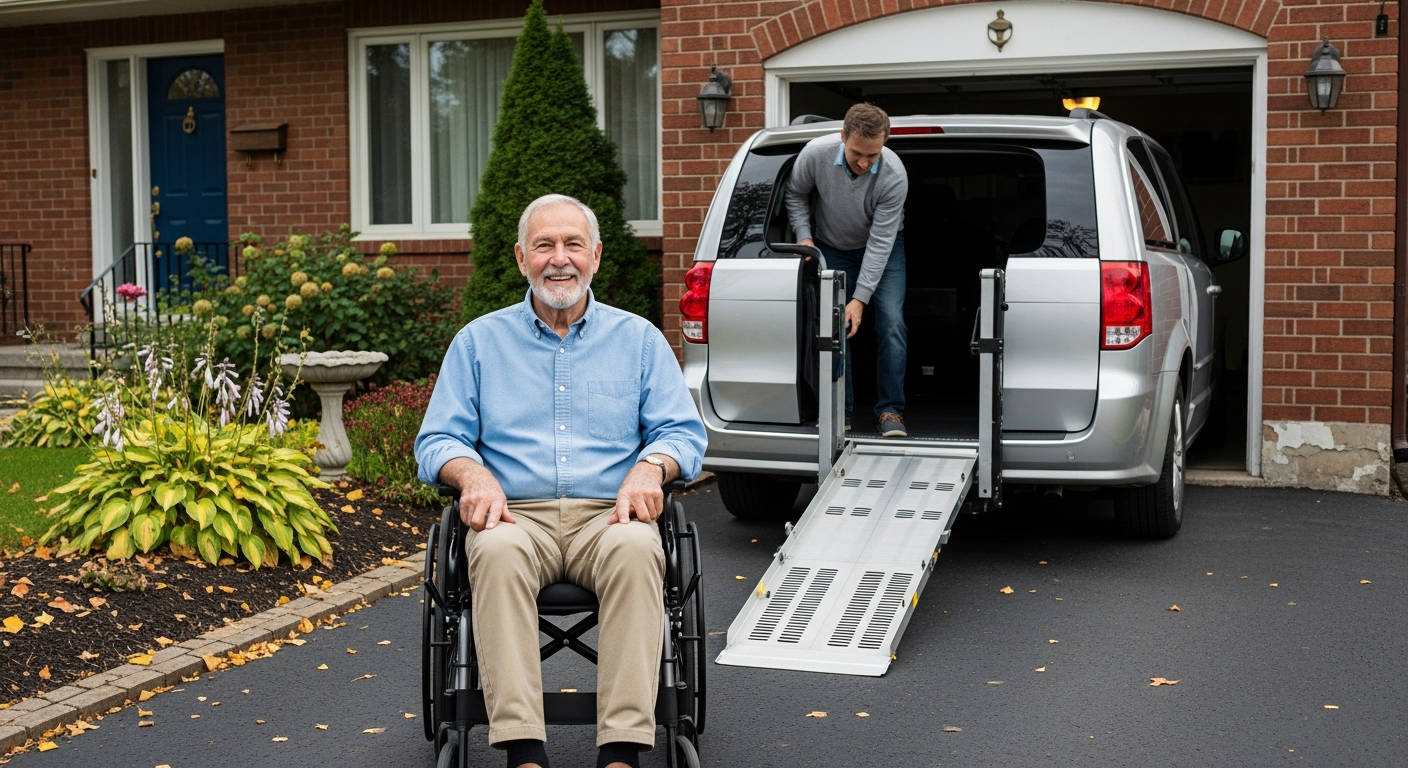
Hand control installation typically costs $3,000–$8,000 depending on:
- Whether you use push-pull or push-right-turn controls
- The complexity of integrating with your vehicle's electronic systems
- Whether additional modifications (like adapted pedals or spinner knobs) are needed
A spinner knob (a single ball attached to the steering wheel for one-handed turning) costs $500–$1,500 installed and is often a first step before full hand controls.
Vision and Hearing Accessibility Features
Backup cameras with large, high-contrast displays cost $2,000–$4,000 installed. Blind-spot detection systems cost $1,500–$3,000. These are not luxuries for aging drivers; they directly address the most common causes of accidents in seniors: difficulty seeing obstacles and misjudging distances.
Hearing loop systems for vehicles with audiological integration (directing vehicle alerts through hearing aids) cost $1,500–$3,000 and are particularly valuable if you also rely on hearing aids in your home.
The Reverse Mortgage Path to Vehicle Independence
Step 1: Get a Home Appraisal and Determine Borrowing Power
Most Ontario homeowners 55+ can borrow 15–55% of their home's value depending on age, location, and property type. A homeowner with a $500,000 home and age 70 might access $100,000–$150,000.
According to HomeEquity Bank (CHIP), borrowing capacity is determined by age, home value, and location — but not credit score or income. This means seniors who may have retired and reduced their income are not disadvantaged.
Rick Sekhon Reverse Mortgages can help you model exactly how much you can borrow and compare options across lenders like CHIP, Equitable Bank, Bloom Financial, and Home Trust.
Step 2: Choose Between a Lump Sum and a Line of Credit
Lump sum: You receive all borrowed funds immediately. This is ideal if you are ready to order your vehicle modification today and want to avoid multiple transactions.
Line of credit: You access funds as needed. This works well if you are planning modifications over several years (hand controls now, wheelchair lift later) and want to keep interest costs lower.
| Option | When It Makes Sense |
|---|---|
| Lump sum | Immediate modification needed, known total cost, want lowest processing fees |
| Line of credit | Phased modifications over 2–3 years, uncertain final cost, want interest only on used funds |
Step 3: Complete Your Modification and Maintain Your Independence
Once funds are available, work with a certified mobility specialist to design your vehicle modifications. In Ontario, certified specialists can be found through:
- Spinal Cord Injury Ontario
- Ontario Paraplegic Association
- Accessibility vehicle dealerships (major Chrysler, Ford, and Dodge dealers have specialized accessibility divisions)
Cost-of-Waiting Analysis: Why Delaying Costs More
Many seniors delay vehicle modifications, hoping government funding will materialize or assuming they will manage with rideshare services. This often backfires:
Government grant delays: Average wait time for provincial accessibility grants is 12–24 months. Over that period, you may have paid $300–$600/month for rideshare or taxi services — totaling $3,600–$14,400, which exceeds the cost of a simple modification like a spinner knob.
Safety risks: Operating a vehicle without proper accessibility controls significantly increases accident risk. A single at-fault accident can result in:
- Insurance premium increases of $500–$2,000/year
- Potential loss of driving privileges pending reassessment
- Medical costs from collision injuries
Loss of independence: Each month without proper vehicle accessibility increases reliance on others for transportation. For Ontario seniors who value autonomy, this psychological cost is often higher than the financial cost.
Reverse Mortgage Interest and Long-Term Vehicle Modification Costs
Interest on a reverse mortgage for vehicle modifications is compound, not monthly. You do not make payments while you live in your home. However, understanding the long-term cost is important.
| Scenario | Initial Borrow | Interest Rate | Balance After 10 Years | Cost of Interest |
|---|---|---|---|---|
| Hand controls only ($5,000) | $5,000 | 6.5% | $9,533 | $4,533 |
| Wheelchair lift ($40,000) | $40,000 | 6.5% | $76,262 | $36,262 |
| Combined mods ($50,000) | $50,000 | 6.5% | $95,328 | $45,328 |
These costs are significant but must be weighed against:
- 10 years of independence
- Avoided rideshare costs ($36,000–$72,000 for regular use)
- Maintained employment or volunteer work opportunity costs
No Negative Equity Guarantee Protects Your Family
One concern many Ontario homeowners have is whether vehicle modifications "count against" the inheritance their children receive. The answer is no, because of the no-negative-equity guarantee that federal regulations require in all Canadian reverse mortgages. Even if compound interest grows your loan balance above your home's value at sale, you and your heirs are protected: the lender absorbs the loss, not your family.
For complete details, see our guide on reverse mortgage inheritance protection.
Frequently Asked Questions
Can I get a reverse mortgage to modify a vehicle I don't yet own?
Yes. Many lenders will approve a reverse mortgage based on the committed modification cost, even if you are still shopping for the right vehicle. You can lock in borrowing power while you complete your research and purchase.
Does a vehicle modification affect my ODSP, OAS, or GIS benefits?
No. A reverse mortgage does not affect income-tested benefits because the funds are borrowed, not income. However, if you hold the funds in a savings account longer than 30 days, they may be counted as assets. Spend or transfer them promptly to avoid benefit complications.
What if I sell my home before the reverse mortgage is repaid?
You repay the reverse mortgage from the sale proceeds. If your home sells for more than the loan balance plus sale costs, the surplus goes to you or your estate. If you are considering selling, discuss timing with your lender.
Are vehicle modifications tax-deductible?
No. Vehicle modifications for personal use are not tax-deductible. However, if you use your vehicle for business purposes (senior services, transportation, etc.), a portion may be deductible. Consult your accountant.
How does a reverse mortgage compare to a car loan for vehicle modifications?
A traditional car loan requires monthly payments and a credit check. A reverse mortgage requires no payments while you live in your home and does not depend on credit or income. For seniors on fixed pensions, the reverse mortgage is typically more feasible and sustainable.
Ready to maintain your independence? Contact Rick Sekhon Reverse Mortgages today for a free consultation on funding your accessibility vehicle modifications. We work with Ontario seniors to match the right borrowing product to your timeline and goals.
Ready to Learn More?
Find out exactly how much you could unlock from your home — free and no obligation.
Related Articles
Reverse Mortgage for Mobility Equipment: Funding Walkers, Lifts, and Essential Accessibility Aids
Fund essential mobility equipment and accessibility aids to stay independent at home. Wheelchair lifts, walkers, grab bars, and medical equipment for Ontario seniors.
Read →Aging in Place with a Reverse Mortgage: Home Modification Guide
How Ontario seniors can fund aging-in-place home modifications with a reverse mortgage — costs, top modifications, grants, and a complete planning guide.
Read →Reverse Mortgage for Aging in Place With Fibromyalgia: Home Modifications for Invisible Illness
Fund home modifications for aging with fibromyalgia. Reverse mortgage enables accessible design for pain management, energy conservation, and quality of life.
Read →