
Your Home Appraisal Came in HIGHER Than Expected: Accessing Unexpected Home Equity in Ontario
Your reverse mortgage appraisal revealed more equity than anticipated. Understand your options for accessing this windfall and planning your next chapter.
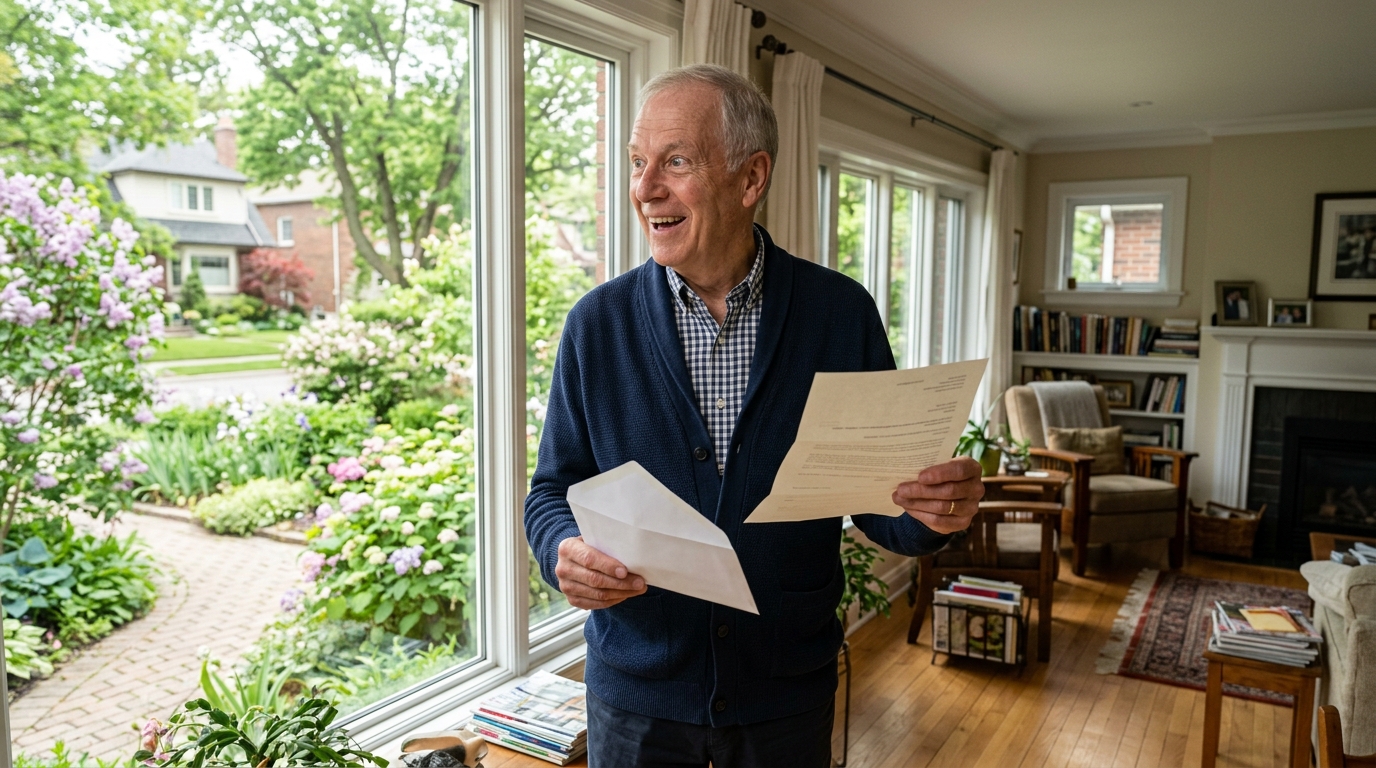
You expected your home to be worth $450,000. The reverse mortgage appraisal came back at $520,000. That's $70,000 more in equity than your property tax assessment suggested. Suddenly, options that seemed impossible are now available: fund adult child's wedding, renovate the master bathroom, take a multigenerational family trip, or simply increase your reverse mortgage amount for future security. A higher-than-expected home appraisal is a financial gift—but understanding how to maximize it requires strategy.
When Home Appraisals Surprise (Positively)
Higher-than-expected appraisals happen more frequently than seniors realize, for several reasons:
- Property tax assessments lag reality — MPAC (Municipal Property Assessment Corporation) assessments in Ontario often undervalue properties, especially in appreciating neighborhoods
- Recent neighborhood improvements — New transit, school renovations, or business district development increases surrounding property values
- Home-specific features — Assessors may miss recent renovations, special land characteristics, or value-adding features
- Market timing — Home values fluctuate; appraisals reflect current market conditions MPAC assessments don't capture
- Comparable property sales — Professional appraisers analyze recent neighborhood sales; your home may be worth more than you realized
For a 72-year-old in an appreciating Toronto or suburban neighborhood, a $50,000–$100,000 appraisal surprise isn't unusual.
According to CMHC data on property value assessments, approximately 32% of Ontario homeowners are surprised by appraisal values being 10%+ higher than their expected estimates during the reverse mortgage process.
This windfall creates both opportunity and decision-making pressure. How should you use unexpected equity?
Understanding Your Higher Equity
| Scenario | Initial Estimate | Appraisal Result | Surprise Equity | Options Created |
|---|---|---|---|---|
| 70-year-old, Toronto property | $450,000 estimate | $520,000 appraised | +$70,000 | Increases borrowing capacity significantly |
| 75-year-old, suburban home | $380,000 estimate | $425,000 appraised | +$45,000 | Funds 2–3 major renovation projects |
| 68-year-old, rural property | $320,000 estimate | $380,000 appraised | +$60,000 | Enables multi-purpose reverse mortgage |
| 72-year-old, semi-detached, gentrifying area | $400,000 estimate | $485,000 appraised | +$85,000 | Significantly increases financial flexibility |
Key insight: Additional equity directly increases your reverse mortgage borrowing capacity. Lenders typically allow 55–65% of home value as a reverse mortgage. More equity = more accessible funds.
Decision Framework: How to Use Unexpected Equity
Before deciding how to access or deploy extra equity, consider these questions:
-
How certain is this appraisal?
- Is the neighborhood appreciating steadily, or did one nearby sale skew the valuation?
- Do comparable properties support the appraisal figure?
- Would a second appraisal likely confirm this value? (You can request a second appraisal for $300–$500)
-
How does this align with your aging-in-place plan?
- Does unexpected equity enable home modifications you'd been postponing? (Yes = good use)
- Does it let you fund caregiver training, smart home technology? (Yes = good use)
- Or are you tempted to fund discretionary wants? (Requires caution)
-
What's your actual financial need?
- Emergency fund gap? (Fund it)
- Multigenerational family goal? (Consider it)
- Desire to leave larger inheritance? (Preserve equity instead)
- Healthcare cost uncertainty? (Hold in reserve)
-
What are your monthly cash flow needs?
- If you need supplemental retirement income, a reverse mortgage line of credit gives access without spending the full amount
- If you don't need ongoing cash flow, preserve equity for future aging-in-place expenses
Reverse Mortgage Options for Higher Equity

| Use Option | Amount | Timing | Risk | Best For |
|---|---|---|---|---|
| Take lump sum | Full borrowing capacity upfront | Immediate | Interest compounds from day 1 | Known large expense (renovation, debt payoff) |
| Line of credit | Draw as needed over time | Flexible; draw when needed | Interest only on drawn amount; compound on draws | Uncertain future needs; want to preserve capital |
| Monthly payment plan | Regular income supplement | Monthly installments | Predictable payments over term | Fixed income bridge strategy |
| Combination | Lump sum + line of credit | Flexible mix | Balanced risk | Most common; funds known needs + future flexibility |
Recommended approach for unexpected equity: Take a combination structure. Use lump sum for immediate aging-in-place priorities (bathroom accessibility, healthcare planning), keep remaining equity as line of credit for future needs.
Strategies for Maximizing Unexpected Equity
Strategy 1: Fund Aging-in-Place Priorities (No Regrets)
- Bathroom accessibility renovations: $8,000–$15,000
- Smart home infrastructure: $4,000–$6,000
- Kitchen modernization: $10,000–$20,000
- These investments extend independent living years; always justify themselves
Strategy 2: Pay Off High-Interest Consumer Debt
- If you have credit card balances (18–20% APR), consolidate into reverse mortgage (5–6% APR)
- Monthly cash flow improves immediately
- Frees up pension income for living expenses
Strategy 3: Create Multigenerational Opportunities
- Fund adult child education/training: $5,000–$15,000
- Support grandchild post-secondary: $10,000–$20,000
- Host family wedding at home: $15,000–$25,000
- These create lasting family memories and align with legacy values
Strategy 4: Fund Healthcare and Wellness
- Preventive dental work, hearing aids, vision care: $3,000–$8,000
- Therapy/counseling for mental health: $2,000–$5,000
- Specialized medical equipment: $2,000–$10,000
- These investments extend healthspan, not just lifespan
Strategy 5: Preserve as Emergency Buffer
- Keep $30,000–$50,000 available via line of credit
- Don't draw immediately; use as safety net
- Provides peace of mind for unexpected health crises
- Most appropriate if you don't have other financial cushion
Real Scenario: The Johnson Home Appraisal Surprise
Margaret and Tom Johnson, ages 71 and 73, owned a home in suburban Toronto. They estimated its value at $480,000 based on property tax assessment and neighborhood comps from 2022.
When they applied for a reverse mortgage in 2026, the professional appraisal came in at $585,000—a $105,000 surprise.
Their decision matrix:
-
- Healthcare emergency fund: Set aside $40,000 via line of credit (untouched buffer)
-
- Bathroom accessibility renovation: Use $18,000 lump sum (aging in place priority)
-
- Adult child's education: Gift $15,000 to grandson's nursing program (legacy value)
-
- Smart home infrastructure: Fund $6,000 (safety and independence)
-
- Emergency debt payoff: Clear $10,000 credit card balance (cash flow relief)
Total deployed: $89,000 of the $105,000 surprise equity. Remaining $16,000 stays as line of credit reserve.
Margaret and Tom's outcome: They transformed unexpected equity into concrete improvements to home, family relationships, and financial security. The extra $105,000 they didn't expect fundamentally changed what was possible in their retirement.
Tax Implications of Accessing Extra Equity
Important caveat: Different types of reverse mortgage access may have different tax implications.
- Lump sum for debt consolidation — Generally not taxable income (you're accessing your own home equity, not receiving income)
- Lump sum for renovations — Not taxable (not income; capital investment in your home)
- Monthly payment income — Typically not taxable (you're drawing down home equity, not earning income)
- Inheritance implications — Reverse mortgage debt reduces estate value; consult your accountant on impacts
According to CRA (Canada Revenue Agency) guidelines, reverse mortgage proceeds are generally not considered income for tax purposes because they represent access to your own accumulated home equity, not new earnings or gifts.
Always consult a tax professional before making decisions; individual circumstances vary.
Key Takeaways
- Higher-than-expected appraisals create 15–25% more borrowing capacity than many seniors anticipated
- Approximately one-third of Ontario homeowners see appraisals 10%+ higher than property tax assessments
- Extra equity should fund aging-in-place priorities, not discretionary wants
- Line of credit structures let you preserve equity while accessing it as needed
- Lenders like CHIP, Equitable Bank, Bloom Financial, and HomeEquity Bank base borrowing capacity on current appraisal value
- Strategic use of unexpected equity can fund healthcare, family goals, and financial security simultaneously
- Reverse mortgage proceeds are typically not taxable because they're your own home equity, not income
Frequently Asked Questions
Can I get a second appraisal if I think the first one is wrong?
Yes, absolutely. If you disagree with the appraisal, you can request a second appraisal ($300–$500) at your own cost. Lenders may accept either appraisal or order a third if they differ significantly.
What if the appraisal is LOWER than expected instead?
This is more common than high appraisals. A lower appraisal reduces your borrowing capacity but doesn't disqualify you. You can still access a reverse mortgage; it's just a smaller amount. Consult lenders like CHIP or Equitable Bank to confirm minimum amounts.
Should I automatically borrow the full amount my appraisal allows?
No. Borrow what you actually need plus a reasonable buffer (line of credit). Borrowing more than necessary increases your total interest costs without providing additional benefit.
How does a higher appraisal affect my property taxes?
It shouldn't immediately. MPAC reassesses every few years; if your municipality revalues your property based on market comparables, taxes could increase. However, this is separate from your reverse mortgage appraisal.
Can I use extra equity to gift money to adult children directly?
Yes, absolutely. You can structure your reverse mortgage to include funds for family gifting. This is a primary "Living Legacy" use case. Consult with a reverse mortgage specialist about structuring gifting into your plan.
If my appraisal is higher, does that affect my inheritance situation?
Yes and no. A higher home value increases your estate's value, which could affect inheritance tax calculations (capital gains, probate) in some provinces. However, a reverse mortgage reduces your net estate because debt is deducted. Consult your estate planning lawyer.
Received an unexpectedly high appraisal? Contact Rick Sekhon at Rick Sekhon Reverse Mortgages to discuss how to strategically deploy your additional equity to fund aging-in-place goals, family objectives, and long-term financial security in Ontario.
Ready to Learn More?
Find out exactly how much you could unlock from your home — free and no obligation.
Related Articles
Your Mortgage Won't Renew at Retirement: How a Reverse Mortgage Becomes Your Backup Lender in Ontario
At retirement, your traditional mortgage reaches renewal but lenders won't approve you without employment income. A reverse mortgage is your backup plan.
Read →Smart Home Infrastructure for Ontario Seniors: Reverse Mortgage Funding for Whole-Home WiFi, Voice Control, and Remote Monitoring
Future-proof your home with smart home technology. A reverse mortgage can fund the infrastructure that keeps you safe and independent as you age in place.
Read →When Your Beloved Pet Needs End-of-Life Care: Reverse Mortgage for Emergency Veterinary Costs in Ontario
Your senior pet faces a terminal diagnosis requiring expensive comfort care and vet specialists. A reverse mortgage can fund their final chapter without financial panic.
Read →