
Reverse Mortgage When Government Benefits Processing Delays Create Emergency Cash Flow Crisis
Service Canada delays can stretch 6-12 months. Reverse mortgage bridges income gap during OAS, GIS, CPP, or disability benefit delays without family burden.
What if your aging parent's OAS, GIS, or disability benefit application gets stuck in a Service Canada backlog—leaving them with zero income for 8, 10, or 12 months? Benefit processing delays are a growing crisis in Canada, with average wait times extending 6–12 months for complex applications. Aging parents can't wait; they need to eat, pay rent, access medication. A reverse mortgage provides emergency bridge income when government benefits are delayed.
The Service Canada Processing Crisis
Benefit processing timelines have deteriorated significantly:
OAS (Old Age Security):
- Standard processing: 4–6 weeks
- Complex cases: 3–6 months
- Backlog cases: 6–12 months
GIS (Guaranteed Income Supplement):
- Initial application: 6–8 weeks
- Complex cases: 3–6 months
- Appeals/reconsiderations: 6–12 months
CPP/CPP Disability:
- Standard application: 6–8 weeks
- Medical review required: 3–6 months
- Appeals: 6–12 months
ODSP (Ontario Disability Support):
- Initial application: 3–4 weeks
- Medical documentation review: 2–4 months
- Appeals: 6–9 months
According to Service Canada's own statistics, 15–20% of benefit applications face delays exceeding target timelines. For aging parents with no alternative income, even a standard 6-week delay becomes catastrophic.
Real Scenario: The Sudden Income Void
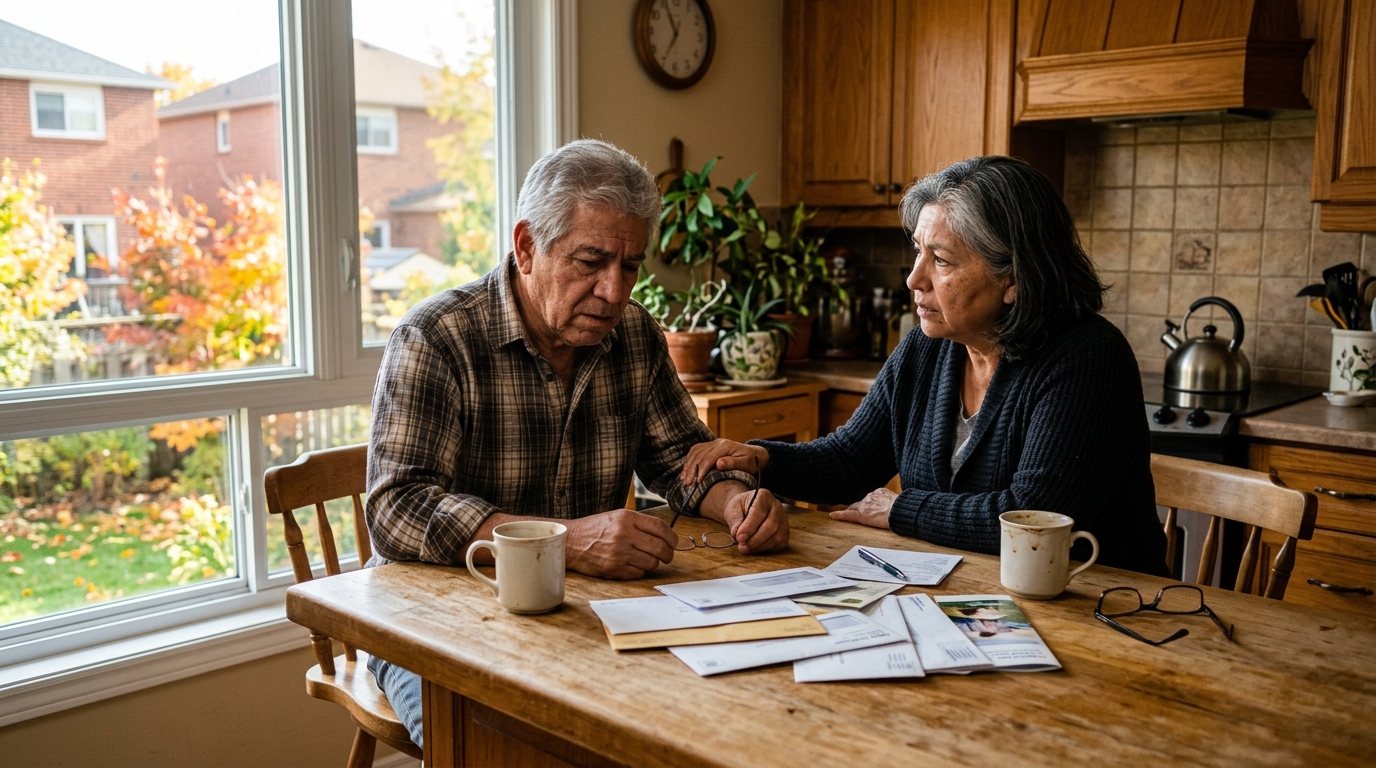
Thomas, 67, retired at age 67 (2026) expecting OAS to start immediately. He didn't realize that Service Canada requires 4–6 week processing time, and because of a question about his residency timeline, his file is flagged for 3-month review.
Thomas's situation:
- Expected income: $22,000 annual OAS ($1,833/month)
- Actual income (months 1–4): $0
- Monthly expenses: $2,100 (rent $1,200, food $500, utilities $300, medications $100)
- Shortfall: $2,100/month × 4 months = $8,400
Thomas's assets: Home worth $400,000, paid off. No savings. Adult children have their own households and can't provide emergency financial support.
Without reverse mortgage: Thomas misses rent payments. Landlord initiates eviction. Thomas moves in with adult child (against both parties' preferences). Housing stability crumbles. By the time OAS arrives, Thomas is already in crisis housing situation.
With reverse mortgage: Thomas accesses $40,000 emergency advance at age 67 (before applying for OAS). Covers 4–6 months of living expenses during benefit processing. When OAS arrives, Thomas repays reverse mortgage from his monthly benefits (or uses remaining advance as buffer for ongoing expenses).
Outcome: Continuous housing stability. No eviction. No family strain. Seamless transition into OAS receipt.
Benefit Processing Delays by Category
| Benefit Type | Standard Timeline | Complex Timeline | Backlog Timeline | Financial Impact (6-month delay) |
|---|---|---|---|---|
| OAS | 4–6 weeks | 3–6 months | 6–12 months | $11,000–$13,000 |
| GIS (additional) | 6–8 weeks | 3–6 months | 6–12 months | $7,500–$9,000 |
| CPP Retirement | 6–8 weeks | 3–6 months | 6–12 months | $8,000–$10,000 |
| CPP Disability | 6–8 weeks | 3–6 months | 6–12 months | $6,000–$9,000 |
| ODSP (Ontario) | 3–4 weeks | 2–4 months | 6–9 months | $6,000–$8,000 |
Financial impact calculation: Standard monthly benefit (~$1,800–$2,000) × 6-month delay = $10,800–$12,000 income void.
Common Causes of Benefit Processing Delays
- Documentation gaps: Incomplete residency records, missing tax returns, unclear immigration history
- Medical complexity: CPP Disability requires extensive medical review; one missing specialist report delays entire application
- Residency questions: Service Canada struggles with seniors who've spent years outside Canada
- Changed circumstances: Recent divorce, widow status, or changed income triggers re-assessment
- System overload: COVID-era backlogs continue; staffing shortages at Service Canada
- Appeals and reconsiderations: Once delayed, appeal process adds additional 6–12 month wait

Reverse Mortgage Strategy: Bridge Income During Benefit Processing
Phase 1: Anticipate Delays
Don't assume "4–6 week standard processing" will be your timeline. Apply conservatively:
- For OAS: Budget 3–6 month delay from application to receipt
- For GIS: Budget 4–8 month delay (GIS often delayed separately from OAS)
- For CPP Disability: Budget 6–12 month delay (medical review is extensive)
- For ODSP: Budget 3–6 month delay (Ontario-specific processing)
Phase 2: Calculate Bridge Income Needed
Formula:
- Average monthly living expenses (rent, food, utilities, medication)
- Minus any non-benefit income (part-time work, pensions, CPP already received)
- × months until benefit expected to arrive
- + 20% buffer (for delays extending beyond expected timeline)
Example:
- Monthly expenses: $2,100
- Non-benefit income: $0
- Expected OAS delay: 6 months
- Buffer: 20%
- Bridge amount needed: $2,100 × 6 × 1.2 = $15,120
Phase 3: Access Reverse Mortgage Before Benefit Application
Timing is critical: Apply for reverse mortgage BEFORE applying for benefits. Why?
- You'll have cash flow to manage during the processing wait
- Lenders see you're proactive, not desperate (psychology matters in application approval)
- You avoid missed payments during benefit processing, protecting credit
- You maintain housing stability and independence
Phase 4: Repay From Benefit Income
Once benefit arrives:
- Monthly benefit ($1,800–$2,000) continues
- You can pay down reverse mortgage principal from benefit income
- Or use remaining reverse mortgage balance for other aging-in-place needs
| Bridge Duration | Monthly Expenses | Total Bridge Needed | Recommended RM Advance | Repayment from Benefits (per month) |
|---|---|---|---|---|
| 4 months | $2,000 | $8,000 | $10,000–$12,000 | $500–$800 from benefit |
| 6 months | $2,100 | $12,600 | $15,000–$18,000 | $600–$900 from benefit |
| 8 months | $2,200 | $17,600 | $20,000–$25,000 | $700–$1,100 from benefit |
| 12 months | $2,300 | $27,600 | $30,000–$35,000 | $800–$1,200 from benefit |
Tax and Benefits Implications
Good news for reverse mortgage bridge:
- Reverse mortgage advance is NOT income (not taxable)
- Reverse mortgage does NOT affect OAS/GIS calculations for current eligibility
- Bridge income doesn't prevent you from subsequently receiving benefits
- No Service Canada reporting required for reverse mortgage borrowing
However: If you invest reverse mortgage funds and earn interest, that investment income IS taxable and DOES count toward GIS means testing. Strategy: Use reverse mortgage funds directly for living expenses (no investment income).

Accelerating Benefit Processing: What You Can Do
While waiting, take steps to speed application:
- Complete documentation immediately: Don't wait for Service Canada to request missing items. Submit complete file upfront.
- Include residency verification proactively: If immigration history is complex, submit documentation without being asked.
- Provide medical records early: For CPP Disability, submit full medical file at application (don't wait for Service Canada's request).
- Contact MP/MPP: Member of Parliament can request expedited processing for constituents. Not always effective, but worth attempting.
- Hire benefits advocate: Fee-only advocates ($200–$500) can review application, identify delays, and follow up with Service Canada. Cost is recovered if they accelerate benefit by 2–3 months.
Key Takeaways
- Government benefit processing delays (6–12 months) create income voids averaging $10,000–$30,000 for aging parents waiting on OAS, GIS, CPP, or disability benefits
- Reverse mortgage bridge income eliminates housing instability and financial crisis during processing wait
- Bridge advance of $15,000–$35,000 covers 6–12 months of living expenses during benefit delay
- Reverse mortgage is NOT income and does NOT affect benefit eligibility or amounts
- Strategic timing (apply for reverse mortgage BEFORE benefit application) prevents crisis and demonstrates financial preparedness
- Benefit repayment from monthly income can begin within weeks of benefit arrival, reducing long-term reverse mortgage debt
Frequently Asked Questions
If I take a reverse mortgage to bridge a benefit processing delay, and then my benefit is denied, am I stuck with the reverse mortgage debt?
Yes. Reverse mortgage is a loan, not a benefit. If benefit application is denied, you must still repay reverse mortgage debt. Mitigate risk by: (1) Having realistic confidence your benefit will be approved (consult Service Canada before applying for RM bridge), (2) Requesting lump sum advance smaller than your monthly expenses (to preserve flexibility), (3) Consulting with a benefits advocate before committing to reverse mortgage bridge strategy.
Can I use reverse mortgage bridge income to cover living expenses while waiting for CPP Disability approval, even though I'm not yet 65?
Yes. Reverse mortgage eligibility is based on age (55+) and home ownership, not benefit status. You can access reverse mortgage at age 55+ while waiting on CPP-D (any age), ODSP, or other benefits. Your age doesn't affect reverse mortgage approval.
Will a reverse mortgage advance affect my ODSP (Ontario Disability Support) application or benefits?
No. Like OAS/GIS, reverse mortgage advance is NOT counted as income by ODSP. However, if you invest reverse mortgage funds, any resulting investment income DOES count toward ODSP means testing. Strategy: Use reverse mortgage funds directly for living expenses; don't invest.
How long can I keep a reverse mortgage in "interest-only" mode while waiting for benefits to arrive?
Indefinitely. Reverse mortgage has no forced repayment schedule. You can pay interest-only (or even defer interest accrual) for months or years while waiting for benefits or other income. Once benefit arrives, you can begin principal repayment or continue interest-only as long as needed. Discuss structure with Rick Sekhon Reverse Mortgages.
Can adult children help expedite a parent's benefit processing, or does the aging parent have to handle it themselves?
Adult children can help by: (1) Gathering documentation, (2) Reviewing application before submission, (3) Following up with Service Canada (by phone or MP's office), (4) Hiring a benefits advocate on parent's behalf. However, Service Canada communicates with the applicant (the aging parent), not adult children. Adult children can assist, but can't replace the aging parent in the process.
If my aging parent passes away while benefits are processing, do my heirs receive the benefits or are they lost?
Benefits may be recoverable. If OAS/GIS application was approved but benefits weren't yet received, the estate may be owed a lump sum. CPP benefits are lost upon death (though spouses may be eligible for survivor benefits). ODSP typically ends upon death. Consult with the aging parent's estate lawyer or Service Canada directly to determine what benefits, if any, pass to heirs.
Is your aging parent facing a government benefits processing delay crisis? Reverse mortgage bridge income ensures continuous housing and living expense coverage during the wait, protecting independence and eliminating family financial burden. Contact Rick Sekhon Reverse Mortgages to structure emergency bridge funding aligned with your aging parent's benefit timeline.
Ready to Learn More?
Find out exactly how much you could unlock from your home — free and no obligation.
Related Articles
Reverse Mortgage for DEI Consulting Practice: Launching Diversity, Equity, and Inclusion Consulting in Retirement
Start a diversity and inclusion consulting practice. Help corporations and nonprofits build equitable cultures; reverse mortgage funds training, business setup, and market entry.
Read →Reverse Mortgage for Archival and Digital Preservation Consulting: Preserving Institutional History and Heritage
Launch archival consulting practice preserving records for institutions. Help libraries, archives, nonprofits; reverse mortgage funds training, tools, and market entry.
Read →Reverse Mortgage for Aging Parent as Paid Research Subject Matter Expert: Knowledge Work in Retirement
Monetize expertise as aging parent becomes paid research SME for universities. Reverse mortgage bridges income while building knowledge-sharing business.
Read →