
Reverse Mortgage for Flooring Replacement: Slip-Resistant Surfaces and Aging-in-Place Accessibility
Replace aging flooring with slip-resistant surfaces using reverse mortgage. Reduce fall risk 35%+ while maintaining independence at home in Ontario.
Standard flooring becomes treacherous for aging seniors, especially on stairs and in bathrooms. Hardwood slips when wet; tile becomes a skating rink; laminate offers no grip. Slip-resistant flooring reduces fall risk by 35%+ and is essential for true aging-in-place security. A reverse mortgage funds this critical upgrade without monthly payments.
The Flooring Problem for Aging Seniors
Falls on slippery flooring account for 25% of all senior hospitalization falls in Canada. Bathrooms, kitchens, and basement stairs are the highest-risk areas. Unlike grab bars or toilet seats, flooring replacement is a large expense—$2,500–$8,000 for a whole-home or strategic-room approach.
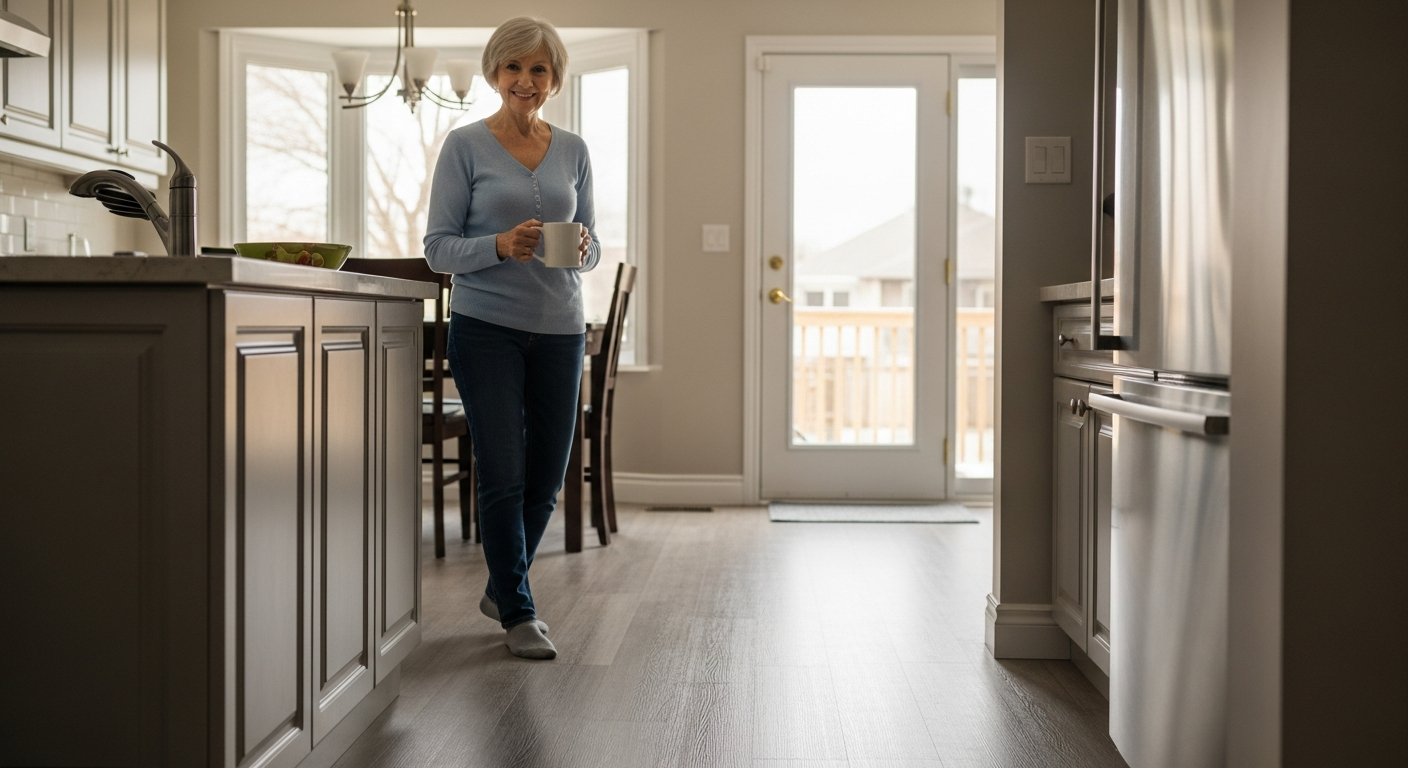
A reverse mortgage transforms flooring replacement from an impossible expense into a planned investment in independence.
Understanding Slip-Resistant Flooring Options
| Flooring Type | Cost per Sq Ft (Material + Install) | Slip Resistance (COF) | Durability | Best Rooms | Water Resistant |
|---|---|---|---|---|---|
| Luxury Vinyl Plank (LVP) | $2–$5 | 0.65–0.85 | 10–15 years | All rooms | Excellent |
| Porcelain Tile (textured) | $3–$8 | 0.70–0.85 | 25+ years | Kitchens, baths | Excellent |
| Cork Flooring | $4–$7 | 0.60–0.75 | 10–15 years | Living areas | Good (with sealant) |
| Vinyl Composition Tile (VCT) | $1–$3 | 0.60–0.80 | 10–15 years | Kitchens, baths | Excellent |
| Bamboo (unfinished) | $3–$6 | 0.55–0.65 | 12–20 years | Living areas | Fair (refinish needed) |
| Standard hardwood | $2–$6 | 0.40–0.50 | 20+ years | Living areas | Fair (slippery when wet) |
| Ceramic tile (standard) | $2–$6 | 0.45–0.60 | 25+ years | Kitchens | Excellent (but slippery) |
Note: Coefficient of Friction (COF) above 0.60 is required for accessible design in Ontario. Wet COF above 0.70 is ideal for aging-in-place bathrooms and kitchens.
The Reverse Mortgage Advantage for Flooring Replacement
Flooring replacement is large ($3,000–$8,000), deferred for years, and essential for safety. A reverse mortgage is ideal because:
- No income requirement. Unlike a HELOC, which requires active income verification.
- Flexible timing. Draw funds when flooring actually needs replacement.
- No monthly payments affecting retirement cash flow.
- Ontario lenders (CHIP, Equitable Bank) approve this as "essential home maintenance."
"Slip-resistant flooring is one of the most cost-effective fall-prevention interventions, with every dollar invested preventing $4–6 in fall-related healthcare costs." — CMHC Accessibility Research 2025

Real Scenario: Phased Flooring Replacement with Reverse Mortgage
Patricia, 70, in Mississauga has original hardwood and ceramic tile flooring (35+ years old). Her home is worth $650,000; no mortgage remains. She qualifies for approximately $200,000 reverse mortgage.
Patricia phases her flooring replacement:
- Year 1: Replace bathroom and kitchen tiles with textured porcelain (highest fall-risk areas) — $4,500
- Year 2: Replace hallways with luxury vinyl plank (LVP) for slip resistance — $3,000
- Year 3: Replace living room hardwood with cork for comfort and safety — $2,500
Total 3-year investment: $10,000 funded by reverse mortgage draws. No monthly payments. Her retirement income stream stays intact.
Flooring Replacement Costs and Room-by-Room Planning
| Room | Square Footage (Typical) | Material Cost | Installation | Total Cost | Priority |
|---|---|---|---|---|---|
| Bathroom | 40–60 sq ft | $150–$400 | $200–$400 | $500–$800 | 1 (highest fall risk) |
| Kitchen | 150–200 sq ft | $400–$1,000 | $600–$1,200 | $1,000–$2,200 | 2 (wet areas) |
| Hallways | 100–150 sq ft | $250–$600 | $400–$800 | $650–$1,400 | 2 (transition spaces) |
| Basement stairs | 40–80 sq ft | $150–$400 | $300–$600 | $450–$1,000 | 1 (high-risk stairs) |
| Living room | 200–300 sq ft | $400–$1,500 | $600–$1,500 | $1,000–$3,000 | 3 (lower risk) |
| Master bedroom | 150–200 sq ft | $300–$1,000 | $400–$800 | $700–$1,800 | 3 (sleeping area) |
Advanced Accessibility Features in Slip-Resistant Flooring
Beyond slip resistance, consider these accessibility features:
Transition thresholds: Beveled edges prevent trips between rooms. Standard transitions are barriers; beveled transitions allow wheelchair/walker passage.
Contrast strips: Visual strips at stairs (high-contrast colors like black/white) help seniors with vision changes identify stairs safely.
Heated flooring in bathrooms: Warmer floors reduce moisture and improve grip in the highest-risk area.
Radiant heating under flooring: Seniors with arthritis find warmth therapeutic; integrated heating systems add $1,000–$2,000 but improve comfort significantly.

Contractor Selection for Flooring Replacement
Key qualities for aging-in-place flooring contractors:
- Experience with accessibility standards (AODA Ontario, universal design)
- References from seniors or aging-in-place organizations
- Warranty on installation (5–10 years standard)
- Understanding of accessibility features (thresholds, transitions, contrast)
- Ability to work around furniture and minimize disruption to your daily life
Key Takeaways
"Comprehensive flooring replacement with slip-resistant materials is among the highest-ROI home modifications for aging in place, preventing $50,000–$150,000 in fall-related healthcare costs from a $5,000–$8,000 investment." — Statistics Canada Fall Prevention and Aging Research 2025
- Slip-resistant flooring reduces fall risk by 35%+, and is essential for aging-in-place security in bathrooms and kitchens.
- Flooring replacement costs $3,000–$8,000 depending on room scope and material selection, making it difficult to fund from fixed-income retirement.
- A reverse mortgage funds phased flooring replacement without monthly payments or impact on CPP/OAS/GIS benefits.
- Luxury vinyl plank (LVP) is the most practical choice for aging seniors: affordable ($2–$5/sq ft), slip-resistant, water-proof, and durable 10–15 years.
- Prioritize bathroom and kitchen first (highest fall-risk areas), then hallways and stairs, then living areas.
Frequently Asked Questions
Is textured tile better than smooth tile for slip resistance?
Yes. Textured porcelain tile has a micro-bumped surface that maintains grip when wet (COF 0.70–0.85). Smooth ceramic tile becomes slippery when wet (COF 0.45–0.60). For bathrooms and kitchens, always choose textured porcelain or luxury vinyl plank.
Can I use area rugs to improve slip resistance on hardwood?
No. Area rugs are major trip hazards for seniors. Many falls occur when seniors catch their foot on rug edges or slip on rugs themselves. For aging in place, remove area rugs entirely and replace slippery flooring instead.
How long does flooring installation take, and can I stay in my home?
Flooring installation typically takes 2–5 days depending on room size. You can stay home but will need temporary hot plates, eating areas, and sleeping space away from the work zone. Communicate with your contractor about minimizing disruption.
Is luxury vinyl plank (LVP) durable for 10+ years?
Yes. Quality LVP (from reputable brands) lasts 10–15 years with normal wear. It's water-proof, slip-resistant, and affordable—the best choice for aging-in-place bathrooms and kitchens. Budget $2–$5 per square foot installed.
Will new flooring help resale value?
Absolutely. Slip-resistant flooring and accessible design features add value to homes, especially those marketed to aging boomers. New flooring appeals to all buyers and is seen as a positive upgrade.
Does a reverse mortgage cover flooring removal/disposal?
Yes. Your reverse mortgage draw covers the total project cost, including removal of old flooring. Contractors typically include old floor disposal in their installation quotes.
Aging in place with confidence means removing trip hazards and fall risks. Slip-resistant flooring is non-negotiable for home safety. A reverse mortgage makes this investment affordable without burdening your retirement budget. Discuss flooring replacement with lenders like Home Trust or CHIP as part of your aging-in-place strategy.
Ready to Learn More?
Find out exactly how much you could unlock from your home — free and no obligation.
Related Articles
Reverse Mortgage for Home-Based Forensic Genealogy and Family History Research Practice
Fund your home-based forensic genealogy research business. Reverse mortgage provides startup capital for specialized ancestry and family history consulting.
Read →Reverse Mortgage for Aging in Place With Fibromyalgia: Home Modifications for Invisible Illness
Fund home modifications for aging with fibromyalgia. Reverse mortgage enables accessible design for pain management, energy conservation, and quality of life.
Read →Reverse Mortgage for Adult Child's Executive Coaching and Leadership Development Practice
Fund your adult child's independent executive coaching business. Reverse mortgage provides startup capital for high-value leadership coaching in Ontario.
Read →