
Reverse Mortgage for Cultural Heritage Preservation Workshop Series: Documentary Legacy Project
Document and teach your family's cultural heritage through workshops. Fund a legacy project that educates and preserves for generations in Ontario.
What if you could transform your family's cultural heritage, language, traditions, and stories into a documented legacy that educates your grandchildren and serves your broader community? Many retirees carry deep cultural knowledge—language fluency, traditional crafts, family history, immigrant experiences, spiritual practices—that risks disappearing when they pass away. A cultural heritage preservation project captures this knowledge through workshops, video documentation, written materials, and community education. A reverse mortgage can fund the production costs, allowing you to launch a meaningful legacy project that preserves, teaches, and honors your family's cultural identity while creating a lasting educational resource.
This guide explores how reverse mortgages support cultural heritage preservation as a Living Legacy.
The Urgency of Cultural Heritage Preservation
The Gap in Knowledge Transfer
According to Statistics Canada, 6.3 million Canadian seniors (65+) are members of immigrant communities or ethnic/cultural minorities. Many carry invaluable cultural knowledge:
- Language fluency (immigrant languages, endangered languages)
- Traditional crafts (textiles, cooking, building, art forms)
- Spiritual and religious practices
- Family history and immigration stories
- Oral traditions, music, storytelling
- Professional knowledge in cultural practices (herbalism, healing, traditional arts)
The Loss When Not Documented Without intentional preservation:
- Grandchildren grow up disconnected from heritage
- Language fluency drops 2–3 generations (grandchildren often don't speak parents' native language)
- Traditional practices are lost (recipes simplified, crafts forgotten, rituals lapse)
- Family identity becomes generic; cultural uniqueness fades
- Community loses cultural knowledge that enriches society
The Opportunity Documenting and teaching cultural heritage:
- Strengthens grandchildren's sense of identity and belonging
- Preserves endangered knowledge and practices
- Creates community resources (your cultural workshops serve beyond family)
- Generates intergenerational connection through shared learning
- Leaves a documented legacy—video, written, artistic—that outlasts you
Types of Cultural Heritage Projects
Language Documentation
- Video/audio recording of native language speakers
- Language teaching curriculum (for grandchildren, community)
- Pronunciation guides, written materials, digital library
- Community language classes (your workshop teaches others)
- Cost: $5,000–$20,000
Craft/Skills Preservation
- Video documentation of traditional craft (weaving, embroidery, woodworking, cooking)
- Written step-by-step guides with photos
- Materials sourcing and tool procurement
- Teaching workshops (grandchildren and community members learn the craft)
- Cost: $3,000–$15,000 (higher if materials/tools needed)
Oral History/Immigration Story Project
- Professional video/audio recording of your family's immigration story, life history
- Written transcripts and family tree documentation
- Photo digitization and organization
- Community screening/sharing events
- Cost: $8,000–$25,000 (professional production is valuable)
Spiritual/Religious Practice Documentation
- Video documentation of traditions, rituals, celebrations
- Written guides for grandchildren to continue practices
- Workshop teaching community members about your faith/culture
- Materials and supplies for ongoing practice
- Cost: $4,000–$18,000
Comprehensive Cultural Heritage Project
- Combines language, crafts, oral history, spiritual practices
- Professional-quality video, written materials, digital archive
- Community workshops and events
- Book/publication documenting the project
- Cost: $20,000–$60,000
| Project Type | Scope | Duration | Cost | Legacy Value |
|---|---|---|---|---|
| Language documentation | Native language teaching curriculum | 6–12 months | $5,000–$20,000 | Grandchildren learn; community resource |
| Craft skills video | Traditional craft with step-by-step teaching | 3–6 months | $3,000–$15,000 | Craft preserved; learnable by others |
| Oral history (professional) | Immigration story, life narrative, family tree | 6–12 months | $8,000–$25,000 | Family archive; community education |
| Spiritual practice guide | Rituals, practices, teachings documented | 6–12 months | $4,000–$18,000 | Tradition continues; teaches next generation |
| Comprehensive project | Language + crafts + oral history + spiritual | 12–24 months | $20,000–$60,000 | Complete cultural legacy; major community impact |
Real Ontario Scenarios: Cultural Heritage Projects
Scenario 1: Immigrant Parent Preserving Language and Traditions You immigrated from Korea 40 years ago. Your grandchildren (ages 6–14) speak English fluently but minimal Korean. Your cultural practices—traditional cooking, holidays, spiritual practices—are fading as your adult children adopt Canadian culture. You want your grandchildren to understand their heritage.
Project: Comprehensive Korean heritage preservation
- Video documentation of you teaching grandchildren Korean language (conversational, written, cultural contexts)
- Cooking workshop series (traditional Korean dishes with family stories)
- Holiday celebration guides (how to celebrate Korean holidays authentically)
- Family history documentation (your immigration journey, family tree)
- Total cost: $30,000
With reverse mortgage support: You access $30,000 and hire:
- Videographer to record language teaching sessions (8 sessions, $200 each = $1,600)
- Professional video editing and subtitling ($8,000)
- Cooking materials and kitchen videography ($3,000)
- Written curriculum development ($4,000)
- Community workshop setup (venue, materials): ($8,000)
- Professional transcription and translation ($5,400)
Result: Your grandchildren learn Korean from their grandmother (recorded, forever). The community has a resource for Korean language learning. Your cultural legacy is preserved and shared.
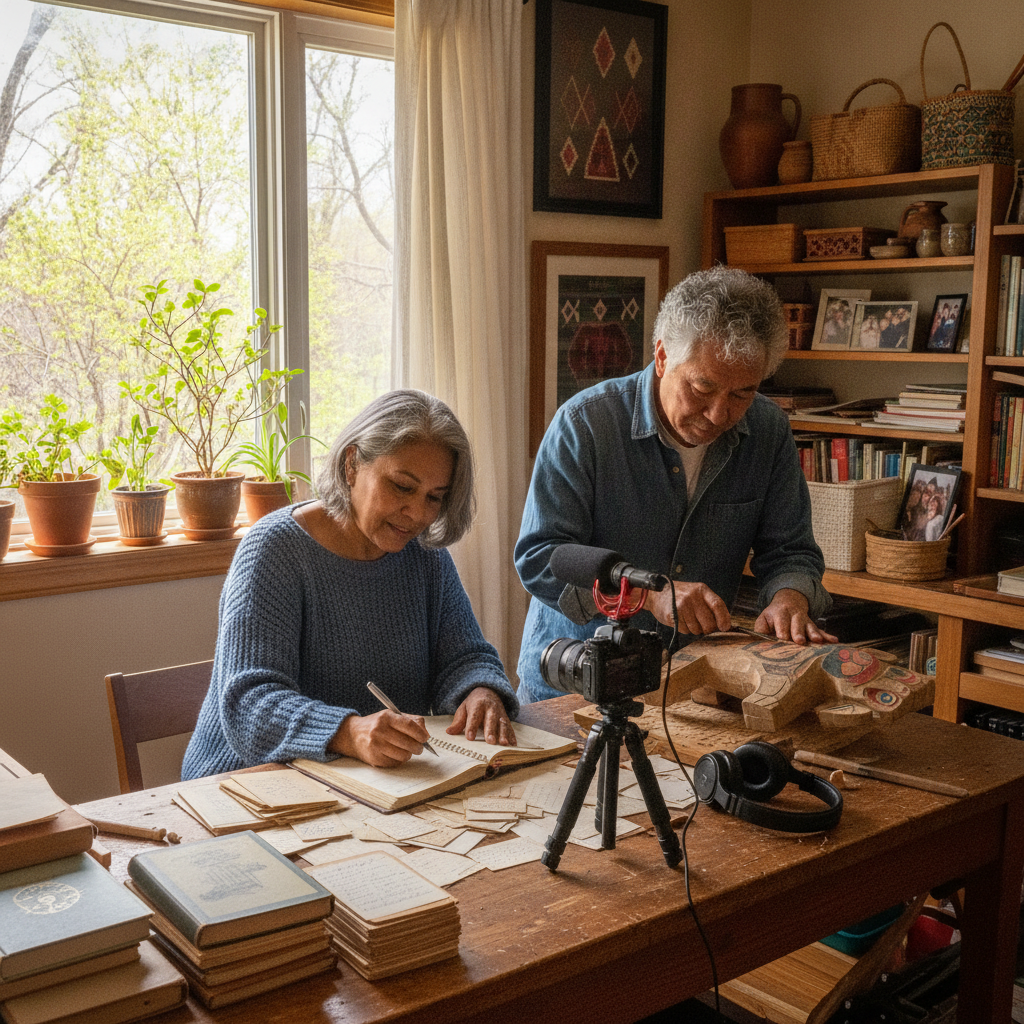
Scenario 2: Indigenous Elder Documenting Traditional Knowledge You're an Indigenous elder with deep knowledge of traditional medicines, land stewardship, spiritual practices, and oral traditions. This knowledge has been passed orally through generations but faces loss as younger community members move away or disconnect from traditions.
Project: Traditional knowledge documentation and teaching
- Professional video/audio recording of your teachings
- Written guides for harvesting, preparation, spiritual protocols
- Community workshops teaching younger people
- Collaboration with Indigenous studies program at local university
- Total cost: $40,000
With reverse mortgage support: You create:
- Documented curriculum on traditional medicine and land knowledge
- Video library accessible to community (Elders sharing knowledge with the next generation)
- Published guidebook on sustainable traditional practices
- Community workshops where you teach (and are compensated)
- Your family has a digital archive—a grandmother's legacy
The community benefits from knowledge that might otherwise be lost. Your grandchildren grow up proud of their heritage.
Scenario 3: Italian Artisan Preserving Craft Tradition You've been a traditional woodcarver/furniture maker for 50 years. Your craft is specialized—few people know how to do it. Your adult children pursued different careers; your grandchildren have never learned. Without documentation, the craft dies with you.
Project: Woodcraft heritage preservation and teaching
- Professional video documentation of your complete craft process (12 techniques, $200/video = $2,400)
- Materials sourcing guide and tool procurement ($2,000)
- Written step-by-step manuals with detailed photos ($5,000)
- Community workshop series (teaching adults interested in the craft) ($8,000)
- Work with local art schools or heritage centers ($5,000)
- Total cost: $22,400
With reverse mortgage support: You:
- Document your craft for posterity
- Teach community workshops (possibly generating modest income to offset costs)
- Invite grandchildren to learn directly from you (preserved on video forever)
- Create a searchable video library of techniques
- Leave a legacy: "Nonno's Craft" lives on
Strategic Reverse Mortgage Approach for Heritage Projects
Phase 1: Clarify Your Heritage Project
- What cultural knowledge do you want to preserve? (language, crafts, stories, practices, history)
- Who are your primary learners? (grandchildren first, then community)
- What format works best? (video, written, audio, live workshops, combination)
- How will you share it? (family archive, community classes, publication, online platform)
Phase 2: Research Production Costs
- Videography: $150–$300/hour (editing separate)
- Video editing: $50–$100/hour
- Professional transcription/translation: $100–$150/hour
- Written curriculum development: $3,000–$8,000 total
- Materials/supplies: $2,000–$10,000 depending on craft/activities
- Community workshop space: $500–$2,000/event
- Total: $5,000–$60,000 depending on scope
Phase 3: Access Reverse Mortgage Strategically
- Borrow specifically for heritage project: $10,000–$50,000 depending on scope
- Use phased draws: Fund production as it happens
- Preserve home equity for other needs
- Plan for repayment: Realistic timeline is 10–15 years; legacy project is one-time cost
Phase 4: Execute and Share
- Months 1–3: Set up production (hire videographer, schedule sessions)
- Months 3–9: Capture knowledge (interviews, workshops, demonstrations)
- Months 9–15: Edit, transcribe, write curriculum
- Months 15+: Share with grandchildren, community, and beyond
Aligning With Living Legacy Values
A cultural heritage preservation project embodies everything Living Legacy stands for:
- Gifting Knowledge: Transferring decades of cultural wisdom to the next generation
- Community Impact: Your knowledge serves not just family but your broader community
- Documented Legacy: Unlike financial gifts that get spent, documented heritage educates forever
- Identity and Belonging: Grandchildren grow up connected to their roots
- Intergenerational Connection: The project creates shared learning and bonding across generations
Funding and Partnership Opportunities
Beyond Reverse Mortgage
- Heritage grant programs: Some nonprofits fund cultural documentation
- Community foundation grants: Local foundations support heritage preservation
- Government grants: Federal/provincial programs support endangered language, indigenous knowledge, immigrant heritage
- University partnerships: Academic institutions interested in oral history, cultural studies
- Crowdfunding: Family and community can contribute small amounts
Combined Funding Model Example: $30,000 project
- Reverse mortgage: $15,000 (core production costs)
- Heritage grant: $7,000 (if approved)
- Community fundraiser/crowdfunding: $5,000
- Your personal savings: $3,000
- Total: $30,000
Ownership and Sharing
Document Your Intent
- Clarify: Is this project for family only or for community?
- Decide: Can community members access the videos/materials?
- Plan: How will you share (private YouTube, community center, library archive, publication)?
- Legacy: Who will steward this after you're gone?
Intellectual Property
- Your family's stories and knowledge are yours
- You control how they're shared (private family archive, public community resource, published book)
- Work with a lawyer if commercializing (e.g., selling a cookbook based on your recipes)
Key Takeaways
- Cultural heritage (language, crafts, traditions, stories) carried by immigrant and elder community members risks disappearing without intentional documentation—and grandchildren often grow up disconnected from their roots.
- A comprehensive cultural heritage preservation project (video, written, audio documentation + community teaching) costs $10,000–$50,000 and creates a forever legacy.
- A reverse mortgage provides flexible funding for heritage documentation without monthly payments, ideal for one-time legacy projects.
- Documented heritage (video library, curriculum, written guides) educates grandchildren, strengthens cultural identity, and serves the broader community.
- According to Statistics Canada, cultural preservation projects strengthen elder engagement, intergenerational connection, and community cohesion—benefits that extend far beyond your family.
Frequently Asked Questions
How do I choose which part of my cultural heritage to document first?
Start with what's most urgent or at-risk: languages your grandchildren don't speak, crafts practiced by you alone, stories of your immigration. Prioritize what would be most lost if undocumented. You can expand over time—phase your project across years.
Do I need professional videography, or can family members do the filming?
Both work. Professional videography looks polished and ensures technical quality; family-filmed content is often more authentic and intimate. Many projects use a blend: hire a professional for key sessions (your most important teachings) and use family cameras for casual learning moments.
Will a reverse mortgage affect my eligibility for heritage grants or community funding?
No. Reverse mortgage proceeds are not income, so they don't affect grant eligibility. You can combine reverse mortgage funding with grants and community fundraising to maximize resources.
What happens to the heritage project materials if I pass away?
This depends on how you document ownership. If you want it to remain in your family's private archive, specify that in your will. If you want it to become a community resource, document that intention—libraries, community centers, and schools might steward it. Work with an estate lawyer to clarify.
Can I generate income from teaching workshops while I'm documenting the heritage?
Yes. Many cultural heritage projects include community workshops where you teach (and are paid). This can help offset documentation costs. For example, if you're creating a language curriculum while teaching community workshops, both happen simultaneously.
How long does a comprehensive heritage project take?
A well-done comprehensive project (language + crafts + oral history) typically takes 12–24 months from planning to completion. Start small, expand as you see momentum. Your project can evolve over years; don't wait for "perfect"—start documenting now.
Moving Forward
Your cultural heritage is irreplaceable. Your language, traditions, crafts, and stories deserve to be preserved—not just for your grandchildren, but for your community. A reverse mortgage can fund that preservation, ensuring your knowledge and culture live on.
Ready to launch your cultural heritage preservation project? Start by:
- Clarifying what cultural knowledge matters most to you
- Researching production costs (videographer, editing, materials)
- Exploring funding: reverse mortgage + grants + community contributions
- Meeting with family to get buy-in and excitement
- Hiring professionals and scheduling your first session
Your home's equity can document your legacy. That's the Living Legacy you create—one that educates and inspires for generations.
Ready to Learn More?
Find out exactly how much you could unlock from your home — free and no obligation.
Related Articles
Cognitive Assessment Before Reverse Mortgage: Protecting Yourself From Exploitation
Proactive mental capacity testing before getting a reverse mortgage. Protect yourself from financial exploitation and ensure sound decision-making in Ontario, especially if you're aging.
Read →Reverse Mortgage for First-Time Homebuyers at 70+: Finally Own Your Home in Retirement
Late-life first-time homeownership with a reverse mortgage. Buy a home without mortgage payments while preserving your fixed income.
Read →Reverse Mortgage for Adult Child Facing Criminal Defense Costs: Protecting Your Retirement
When adult child faces criminal charges, reverse mortgage provides funds for legal defense without depleting retirement savings.
Read →